Intro: Tonight after I drove back to my place of work and settled into my chair after a light supper for my evening reading time, I was in a wonderful novel entitled Revolutionary Road by Richard Yates, a book that was a finalist for the National Book Award in 1962. This is my first time reading it. It is a fine read in my view. Why? For one reason, when Postmodernism’s showiness was all the rage in the 1960s, Yates wrote in the tradition of realism. He was more like John Updikde that John Barth. I enjoy many of the finest writers from the literary schools of Victorianism, Realism, and Modernism, but Postmodernism gets so solipsistic and self-absorbed that the absurdities grow tiresome.
At the end of the day, I long for stories that hold together, that cohere, that tell the truth, and address the human predicament. My favorite novels all do that. Great Expectations, David Copperfield, Madame Bovary, The Great Gatsby, The Road, All the Pretty Horses, The Crossing, and John Updike’s best novels all more than satisfy. And the short stories of Flannery O’Connor, Hemingway, Alice Munro, and Larry Brown are unbeatable. They repay reading and rereading over a lifetime; they are that profound. How can one read Chekhov just once? That would be sinful. Read his stories. Finish the last page. Then start again. It’s the same way I feel about what I wanted to write about tonight: 2 Samuel 9.

Connection to Scripture: As I was in my chair reading, part of my reading tonight was in the Old Testament book of 2 Samuel. It’s a precious part of Scripture because it is replete with stories of David’s rise to prominence and leadership. But it’s precious for another reason, too. We see David’s generosity and David’s tenderness.
I think so often we tend to focus on David as a warrior-king, as a national leader, as a man of war, etc. that we downplay David’s tenderness. Even when he had every right to be spiteful and unforgiving to the family members of a man who sought his life (Saul), we see David (not always, of course, but at least in 2 Samuel 9) be tender to those who could in no way repay him. We see, in short, a man who gave and who expected nothing in return. Stick with me as I look at the story of David and Mephibosheth.
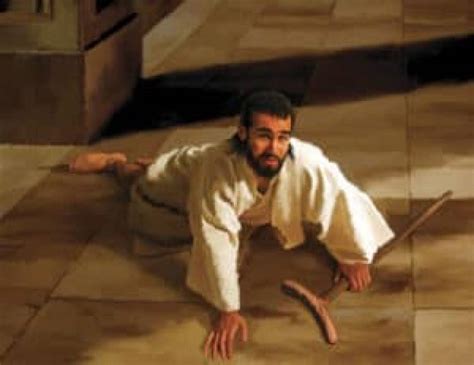
Context: Mephibosheth was lame in his feet. He was not going to be a soldier; he was not going to rise to a position of prominence because of his looks, acumen, or athleticism. Moreoever, he was the grandson of David’s former mortal enemy, Saul. Mephibosheth should have expected nothing from David except scorn and possibly vengeance or worse. But that was not David’s nature. David was not generally a spiteful man. He was a tender man, slow to anger, compassionate, forgiving of his enemies, and a man who kept short accounts with God.
Did David oftentimes have days and seasons of sin in his life for which he reaped tragic consequences? Yes, of course. The list is long. But David was a man who returned to God (Psalm 51), a man who loved the Lord and knew that the Lord always does what is right.
David’s Kindness: Verse 1 of the chapter begins:
And David said, “Is there still anyone left of the house of Saul, that I may show him kindness for Jonathan’s sake?”
How many of us would have done what David did? Here was a man who actively sought ways to do good to those whom he (David) would naturally harbor the most unforgiveness towards–the lineage of Saul. But Saul did have Jonathan, a truly good son and dear friend to David. And David wanted to honor “the house of Saul” in spite of the past.
And you know what happened, right? Mephibosheth “[would] always eat at [the king’s] table” (2 Samuel 9:10).
Why? Because of the king. Read that again: because of the king.
Encouragement: One of the motifs I try to stress to the saints in class at our church is this: all of the Bible is telling one coherent story.
Mephibosheth had nothing to offer the king. Mephibosheth was a cripple. He was weak. And yet the king (David) condescended to him.
The king came down, you see, and offered that weak and lame man a seat at the king’s table. Folks, if you don’t connect the dots, I don’t know what else there is to say: it’s right there–the gospel.
The king invites us lame and broken and unworthy to a seat at the table. And the king does it out of pure unmerited favor. It’s grace towards us Mephibosheths.
Be encouraged. He is not a king far away. He has come down to us and invites us to sup with him. That is incomparably good news.
 MIND & MATTERS
And that my friend is why I can smile. That the Lord Jesus Christ chose to save a filthy rag like me!
LikeLike
Amen.
LikeLike