
Question: What sets a godly leader apart?
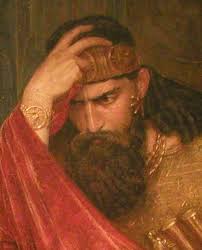
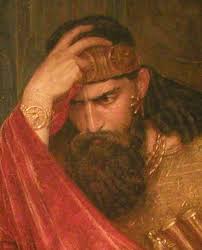
Character Study: Many people may have some familiarity with King David from the Old Testament. He was the man after God’s own heart. 1 Samuel 13:14 reads this way: “But now your kingdom [wicked King Saul’s] shall not continue. The LORD has sought out a man [David] after his own heart, and the LORD has commanded him to prince over his people, because you [wicked King Saul] have not kept what the LORD commanded you.
The New Testament, too, refers to David as a man after God’s own heart: “And when he had removed him [wicked King Saul], he raised up David to be their king, of whom he testified and said, “I have found in David the son of Jese a man after my heart, who will do all my will.’” (Acts 13:22)
In sum, then, David was God’s man.
Question: But ask the question again, What sets a godly leader apart? Focus with me upon 1 Chronicles 12. It’s a passage about David’s soldiers, his “mighty men.”
Text: 16 And some of the men of Benjamin and Judah came to the stronghold to David. 17 David went out to meet them and said to them, “If you have come to me in friendship to help me, my heart will be joined to you; but if to betray me to my adversaries, although there is no wrong in my hands, then may the God of our fathers see and rebuke you.” 18 Then the Spirit clothed Amasai, chief of the thirty, and he said,
“We are yours, O David,
and with you, O son of Jesse!
Peace, peace to you,
and peace to your helpers!
For your God helps you.”
Then David received them and made them officers of his troops. (1 Chronicles 12:16-18)
Teaching: First, notice how David “went out” to his men. That is, he was a servant-leader. He didn’t expect to be pampered. He was amidst the people, not hanging back. Second, he sought friendship with people of character. He discerned between godly and ungodly soldiers and friends. He didn’t knowingly truck with wicked men. Third, David trusted the Lord’s omniscience and sovereignty to vindicate him. In other words, David trusted God. Again, three things set David apart as a godly leader:
- David led by serving
- David distinguished noble from ignoble men
- David trusted God’s sovereignty
Encouragement: There are countless leadership lessons to be gleaned from studying Saul and David as types of leaders. Saul was self-absorbed, self-centered, narcissistic, and insecure. He trusted no one. And he ended up taking his own life. David, on the other hand, was a servant-leader. He worked hard. He “went out” to his men; that is, he didn’t put himself above them. Rather, he led by example. And David cultivated the right leaders. And David truly was God’s man. He was by no means a perfect man, but his heart was a heart for God. When it comes to leadership, these characteristics set him apart, and redound to God’s work in him, and the lessons are for us, too, whether we’re soldiers, veterans, or civilians.

 were folks to tweet/post/blog about it, it just might. See the temptation? Here’s the issue for consideration: Are we not more connected digitally than ever in history, yet perhaps more lonely than ever in history? There’s a paradox in the fact that people have hundreds, or even thousands, of virtual friends but few, if any, actual friends. It’s now in the vernacular to call people “Facebook friends.” That is revealing. When is the last time we went to dinner with our Facebook friends? We may view posts and tweets, but I wonder if we are meaningfully connected to other people.
 We’re often connected to the Web but not to each other. So, what to do? The Web is not going away, I’d venture to say. Technology will increase rather than decrease, in its availability and speed. But might we pay a price? Might we be paying it already? It bears repeating: I hear from husbands, wives, and children repeatedly: “My wife/husband/son/daughter/friend won’t talk to me. Instead they play on their iPad or phone all the time.” Again, I’m not blind to how the logic cuts both ways. Here I am writing on a computer, posting it on the Web, and hoping others will be on the Web to read it and think about it. I see the paradox. However, just like the girls gathered near that bench this weekend up at the lake, I want genuine contact, not just virtual contact. The Digital Tower of Babel is just as idolatrous as the ziggurat in Genesis 11. In the Confessions, Augustine wrote, “Our hearts are restless until they can find rest in you [God].” That’s often quoted. But what’s less explained is the context out of which Augustine wrote. Despite being raised by a Christian mother, Augustine pursued a life of sexual lust and idolatry until Christ convicted him of his sin. It was only after being convicted of his sin that he understood his own Tower of Babel, wherein he was the god at the top. Because he excelled in academia, in rhetoric, law, languages, etc. his pride led to his downfall—a constant theme in literature and in life. Yet Augustine longed for true friendship, true rest, true connection—and this was millennia before the Web.
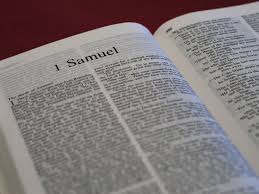 Scripture records one of history’s most moving tributes to friendship: “As soon as he [David] had finished speaking to Saul, the soul of Jonathan was knit to the soul of David, and Jonathan loved him as his own soul” (1 Sam 18:1 ESV). What you see in the subsequent pages is a story of true, rather than apparent (we’d say virtual in our day), friendship. Should we use technology to improve relationships? Yes. However, I am not confident that will occur until we scroll our feeds less, and love our neighbors more.
