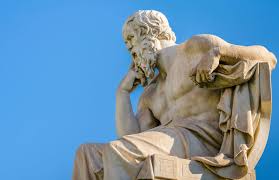
Solomonic Wisdom

BLUF: The Vanity of Self-Indulgence

Context: Ecclesiastes 2 is the passage. The context is that of wisdom literature. The wisest man, Solomon, is penning a book of wisdom. Here’s a man, but not just any man. Solomon is king. He is unspeakably wealthy. And he is pagan at this point. He is living for his flesh. He does not fear the Lord or have godliness in his sights. He worships at the altar of self. And we are to learn from his poor example. We can learn from all people—especially from those whom we do not wish to emulate. The sort of man described in Ecclesiastes 2 is just that—a type to avoid. Why? Because his love is himself—not God, not others, not the organization, not the unit, not some ideal. He is given over to self.

Text: “And whatever my eyes desired I did not keep from them. I kept my heart from no pleasure . . .” (Eccl 2:10).

Encouragement: I love the Book of Ecclesiastes for sundry reasons. One of the reasons is because of its transparency, its rawness. In Solomon, we see an Everyman. That is, he illustrates the universal human condition. We all must battle the temptation to put ourselves at the center of the story. We want to see ourselves as the protagonist, the hero. But Solomon is teaching through the Book of Ecclesiastes that it’s the fool who sets himself up as God. Why? Because we’re all sinners. Unless and until God grips us savingly, we’re idolaters. The encouragement is this: Ecclesiastes does not end with chapter 2. It ends with chapter 12. Until we arrive there, we need to keep short accounts with God who sees our motives. It’s not the wise person who worships at the alter of self; that’s the fool. The wise person knows that he/she is very much the clay and that God is the Potter. And we are wise insofar as we rest in the Potter’s hands.


Chaplain Daily Touchpoint #466: The Paradox of Wisdom (Ecclesiastes for Today, Part 3)

Intro: Currently at church, I’m beginning a 12-week series through the Old Testament book of Ecclesiastes. For many years, it has been my favorite book of the Bible. Why? To some degree, it is because it is literary and poetic in genre. It’s not a straightforward narrative of a battle, or crossing a body of water, or healing a leper, or epistolary literature about how the New Testament church is to be governed. None of that. Ecclesiastes is part of the wisdom literature. It’s more nuanced. It’s written by a man who went from hero to zero many times, and then back again—Solomon. Solomon was wise beyond his years. He gained unprecedented wealth and reign. People traveled just to come see Solomon’s Temple, his riches, his kingdom, etc.

Segue: But then you get a book like Ecclesiastes. And what you find there is a series of mood pieces and reflections upon a life that has seen many highs and many lows. In Ecclesiastes 1, for example, we read the following:

      I said in my heart, “I have acquired great wisdom, surpassing all who were over Jerusalem before me, and my heart has had great experience of wisdom and knowledge.” And I applied my heart to know wisdom and to know madness and folly. I perceived that this also is but a striving after wind.

                                             For in much wisdom is much vexation,

                                                And he who increases knowledge increases sorrow (Eccl 1:16-18, ESV)

Teaching: The paradox is striking. Here’s Solomon, wise beyond all other men, and we would think his mood would be one of joy. His heart, he writes, “has had great experience of wisdom and knowledge” (v. 16). And yet he found that they—though noble and proper pursuits—were also vanity/wind/hebel (Hb.). Even in wisdom, Solomon was well acquainted with sorrow. Because he saw into the heart of the matter, he grieved over it. That’s what he means by, “And he who increases knowledge increases sorrow” (v. 18b). It’s much more convenient to skate upon the surface of life, to doomscroll from one image to another, to plug your ears with earbuds conveying only the views with which you agree. Postman wrote years ago a wonderful book, Amusing Ourselves to Death. I have found it prophetic. How? Well, we’re living in a time when many have entertained themselves into imbecility. Ask a person what shade of red lipstick Taylor Swift is wearing today, and he or she would be engaged. But ask a person the last deep book he/she read, and enjoy the hum of crickets.

That’s what Solomon’s driving at; he understands viscerally the fallenness of the world—that wisdom entails more than a taste of sorrow, because human fallenness is the most empirically verifiable reality. Solomon knew it, and that’s part and parcel of wisdom—learning to admit the reality of fallenness in this world.

Encouragement: Learning to live with the paradox of wisdom is less easy than one might wish for. There is wisdom in hoping for good from ourselves and others. At the same time, however, there is wisdom in being realistic about human nature and knowing the condition of the flocks with which we are dealing.

Chaplain Daily Touchpoint #464: Ecclesiastes for Today (Part 2)

Text: 

I said in my heart, “Come now, I will test you with pleasure; enjoy yourself.” But behold, this also was vanity. I said of laughter, “It is mad,” and of pleasure, “What use is it?” I searched with my heart how to cheer my body with wine—my heart still guiding me with wisdom—and how to lay hold on folly, till I might see what was good for the children of man to do under heaven during the few days of their life. I made great works. I built houses and planted vineyards for myself. I made myself gardens and parks, and planted in them all kinds of fruit trees. I made myself pools from which to water the forest of growing trees. I bought male and female slaves, and had slaves who were born in my house. I had also great possessions of herds and flocks, more than any who had been before me in Jerusalem. I also gathered for myself silver and gold and the treasure of kings and provinces. I got singers, both men and women, and many concubines, the delight of the sons of man (Eccl 2:1-8, ESV). 

BLUF (Bottom Line Up Front): Know the condition of the well from which you drink. 

Context, Context, Context: Ecclesiastes is part of the ‘wisdom literature’ in Scripture. Its goal? Wisdom–to lead the wise from fruitless pursuit of wisdom under the sun to true wisdom in the Son. Solomon is a magnificent case study. He went from hero to zero many times. But he, in my view, finally got it right. Wisdom drives the Christian pilgrim to Christ, wisdom personified and incarnated. 

Connection: Who among us has not played the fool? Haven’t we all been like Eliot’s Prufrock at least once? I certainly have-more than once. Who among us has not fallen prey to pursuing stuff, promotion, popularity, power, wealth, status, etc., only to find we felt worse after the shine wore off? 

Encouragement: Solomon is one of my enduring favorites from history. Why? Because he’s an “Everyman.” He ‘gets us’ to use modern parlance. He’s shot through with our sins, our patterns, our fallenness, our proclivities. 

But here’s the good news: Chapter 12 is coming. Why’s that important? Because Solomon finally seemed to get it into his own stubborn head. Anybody else out there have the honesty to admit we’re all a lot more like Solomon than we differ from him? We pursue stuff, promotion, the approval of the sheeple, wealth, etc. There’s really no end to our idols. But what does it profit a man if he gains the whole world but forfeits his soul (cf. Mt 16:26)? The question answers itself. 

Knowing the Difference

Text: “Do not speak in the hearing of a fool, for he will despise the good sense of your words” (Pr 23:9).

This line is from the wisdom literature in Scripture; it’s Proverbs 23:9 from the pen of Solomon. He’s instructing his son in wisdom. And the thrust of wisdom is that it is rooted in the fear of the Lord, and that reverential fear drives the wise person in the right and wise way to live in this world.

The matter addressed in this verse is the issue of when to speak and when to remain silent. Part of making the wise decision comes in knowing one’s audience.

Who is the person that Solomon calls “a fool” (v. 9a)? Does the person actually want the truth? It brings to mind the famous episode of Jack Nicholson in the film A Few Good Men, when Nicholson hollered from the stand in the courtroom, “You can’t handle the truth!”

This verse from Proverbs 23:9 is not so much about being unable to endure the truth; it is rather about the difference between teachability and unteachability. The “fool” is unteachable, not in the sense that he cannot understand but rather that he refuses to understand. He does not want the truth, because it exposes him as a fool. It is a matter of his obstinacy and recalcitrance. It is not a fault in his intellect but sin holding sway over his heart, soul, and affections.

Jesus of course taught the same thing in the Gospels. “Do not give dogs what is holy, and do not throw your pearls before pigs, lest they trample them underfoot and turn to attack you” (Mt 7:6). The teaching is overt: fools do not value wisdom or truth. They insist upon doing things their way. They are, to use the Bible’s language, fools.

Knowing the difference between the foolish and the wise is integral to effective communication. The wise among us know to distinguish between the two types, when to speak and when just to remain silent.

The Good, True, and Beautiful: Some Reflections

Text: “The fear of the LORD is the beginning of wisdom; all those who practice it have a good understanding. His praise endures forever!” (Ps 111:10)

Context, Context, Context: Psalm 111 is characterized as a praise/thanksgiving psalm. Why? Because it heralds the holiness, justice, and mercy of God. It is only 10 verses in our English translations. Those 10 verses brim with praiseworthy works of God: righteousness (v. 3); grace and mercy (v. 4); provision (v. 5); covenant faithfulness (v. 6); faithfulness and trustworthiness (v. 7); redemption (v. 9); and holiness (v. 9). Then the writer does a mic drop: “The fear of the LORD is the beginning of wisdom” (v. 10a).

Teaching: Attributes of God are manifested. They are clear. They are obvious. They are irrefutable. But they’re not good news to those who suppress them and/or attempt to deny them. They are only good news to those who recognize them for the truth, goodness, and beauty that they are, and embrace them.

The reality is that many despise these truths. Just as one example, think of the 1987 ‘art’ piece by Andres Serrano, the Immersion (Piss Christ). It was a photograph of a plastic crucifix submerged in a plastic container of Serrano’s urine. Art or anger? Art or petulance? Art or just vitriol to stir up culture wars by those emanating more heat than light?

Encouragement: Solomon wrote in Proverbs 9:10 that “The fear of the LORD is the beginning of wisdom, and the knowledge of the Holy One is insight” and Psalm 111:10 reiterates this verity. Wisdom hinges upon an accurate reverential posture to the holy. The reason we have a world drowning in plastic bottles, refuse, needles, aluminum cans, and scarred and potholed roads is inseparable from the reality that people have cut themselves off from the sacred, the holy—namely, God. When they don’t value God, we should not be surprised they trash the creation. But for God’s people, we understand stewardship. We understand the value of beauty. We understand wisdom. Why? Because those concepts only make sense when God is at the center. God is the nexus for coherence, truth, goodness, and beauty. Without God, you inherit rubbish.

Chaplain Daily Touchpoint #433: On Quality

Text: “Do you see a man skillful in his work? He will stand before kings; he will not stand before obscure men” (Pr 22:29).

Questions: Have you ever reflected upon the quality of work you produce? Are you proud of it? Are you willing to have others vet it for quality? Regardless of our lane of work, do we produce work that is commendable?

Context, Context, Context: Proverbs 22:29 is a call to quality. It’s a poetic aphorism that teaches a fundamental, wise precept: Regardless of our calling, we should produce work to the best of our abilities. We should not be half-hearted people. We should give an honest day’s work for an honest day’s pay. We should not be lazy.

Think, for example, of when the Queen of Sheba came to visit King Solomon. Do you remember her words to the king? “Happy are your men! Happy are your servants, who continually stand before you and hear your wisdom” (1 Kings 10:8). Even the Queen of Sheba, a denizen of a foreign land, recognized the quality of Solomon’s early kingship. Of course, Solomon would in short order blow much of his testimony through his own selfishness, but for a while, he ruled well and ruled wisely.

Encouragement: As a chaplain and minister, I conduct scores if not hundreds of funerals each year. Funerals provide opportunities to step back and take inventory of our lives—to see what we who remain might learn about stewarding our time and vocations wisely. Do you long to stand before kings? Then work well. Work to the best of your ability. Produce quality products. Take your lane seriously and serve with distinction. Why? Because the holy evaluator of us all sees and is never fooled. And that truth should drive us to long to please him by the manner in which we perform our duties, so that we are not ashamed.

Thoughts on Foundations

When I was a boy, I was fortunate to be surrounded by builders. My stepfather amazed me in the ways he intuitively understood how anything was put together. He seemed to just “get it” when it came to construction, electrical work, masonry, etc. His father was the same way. He understood engines, masonry, roofing, wiring, et al. I was amazed. I have an affection for all of the above but I don’t have the aptitude. That’s simply not where my strengths lie.

This morning I was completing my reading through 2 Chronicles and then later found myself in Proverbs 1:7: “The fear of the LORD is the beginning of knowledge; fools despise wisdom and instruction.” And there was the same principle: the beginning. The foundation.

“The end depends upon the beginning,” is a common aphorism from the classics. It’s sage counsel. There are exceptions, of course. We all know of people who had rocky starts but then surprised us all by the way they turned out. I remember when I was still teaching full-time and had some students that I had serious doubts about, but somehow they pulled through, and I’m thrilled they did.

But in theological terms, Solomon’s aphorism is spot-on: “The fear of the LORD is the beginning of knowledge; fools despise wisdom and instruction” (Pr 1:7). If the foundation is unsound or faulty or cracked or weak, all that’s built upon it is compromised. This is why first things matter so much–our presuppositions.

Sometimes when I look at the culture, I sense that it is unraveling. Things seem to be upside-down. Somehow things that seemed to have been obvious are suddenly not obvious. And it results in things like moral crassness and loss of civility. Whatever happened to “Please” and “Thank you”? People might scoff at such things now. How antiquated, they might say. Well, yes! But what’s wrong with antiquated? Civility is better than what we have now.

But that’s exactly what Solomon was laboring to get us to understand. It’s the moral fool who scoffs at righteousness. The fool is a scoffer; he’s a mocker. He’s the smart aleck, if you will. He mocks the holy. But he’s living a life built upon a faulty foundation. How and where one begins is of crucial significance. I’m with Solomon.

When I reflect on the many times I had to dig footers and mix the concrete, I didn’t realize at the time that the same logic applied in the moral and theological world. But I look back now and am grateful.

Thoughts Upon “When to Respond”

Text:

4 Answer not a fool according to his folly,
    lest you be like him yourself.
Answer a fool according to his folly,
    lest he be wise in his own eyes. (Proverbs 26:4-5)

Questions:

  • Have you ever asked yourself if it was wise to respond to someone?
  • Have you ever responded and then later regretted doing so?
  • Have you ever not responded and later wished you had?

If you’re like I am, you probably answered yes to each of the above queries.

That’s the heart of what Solomon speaks to in the above proverb. There are times when it’s wise to just let some folks go; it’s what the Bible pictures as casting pearls before swine. Some folks are just a lost cause. You can try to teach them but you’re wasting your time. They remain bent on being obtuse, and God says to shake the dust from your sandals and drive on. Otherwise, it’s a waste of your time and theirs.

Then there are other times when not speaking to an issue is deleterious. Failing to speak up, failing to address error, etc. can sometimes be a way of the coward. I know there are many times when I sit in meetings and hear a bunch of psychobabble about how to address spiritual issues, and think to myself, I’m surrounded by moral idiots. These pop psychology bromides have about as much depth as a kiddie pool. When I’m hurting, or when another soldier is hurting, or life and death are at stake, I don’t want happy-clappy cliches; I want truth and depth.

Encouragement: When does the wise person respond, and when should he remain silent? That’s the issue in these two verses from Proverbs. The wisdom comes in learning to distinguish between audiences. Some folks are just a waste of your time and theirs; they’re not teachable. So, in sum, move on. At other times, however, the loving and right thing to do is to act with grace and courage by telling the truth–and sometimes that truth may be perceived as hard. But it’s truth that saves.

Prayer that God Honors

Context, Context, Context: Circa 1010-930 B.C. King Solomon was established as the king in Israel (2 Chr 1:1). He was the nation’s new leader, successor to his son King David. And he did what we almost never hear of nowadays: he prayed for wisdom. He turned to the fountain of all wisdom. He petitioned the Lord for wisdom.

Text: “Give me now wisdom and knowledge to go out and come in before this people, for who can govern this people of yours, which is so great?” (2 Chr 1:10).

Teaching: Verse 11 begins by recording God’s response:

11 God answered Solomon, “Because this was in your heart, and you have not asked for possessions, wealth, honor, or the life of those who hate you, and have not even asked for long life, but have asked for wisdom and knowledge for yourself that you may govern my people over whom I have made you king, 12 wisdom and knowledge are granted to you. I will also give you riches, possessions, and honor, such as none of the kings had who were before you, and none after you shall have the like.” 13 So Solomon came from the high place at Gibeon, from before the tent of meeting, to Jerusalem. And he reigned over Israel. (2 Chr 1:11-13)

God graced Solomon with more than he’d asked for. Sounds a lot like the gospel, doesn’t it?

20 Now to him who is able to do far more abundantly than all that we ask or think, according to the power at work within us, 21 to him be glory in the church and in Christ Jesus throughout all generations, forever and ever. Amen. (Eph 3:20-21)

Encouragement: Regardless of how many times I read through Scripture, a motif recurs: God destroys pride in those he calls to lead and creates in them a humble heart. Solomon was on the mountaintop here, so to speak. He was doing well. But he’d squander much of his life later because he grew proud and self-absorbed. But for now, he got it right. Humility comes before honor. And those who purport to shepherd/lead/rule well must keep short accounts with God, because there is a reckoning (Rom 14:12).

Chaplain Daily Touchpoint #377: On Wisdom (again)

Types: One can divide the world into at least two categories of people: 1) those characterized by wisdom and 2) those characterized by folly.

When I was a boy, I was very close to my grandparents. I have always gravitated to people of depth. And they were certainly that–people of depth. They may not have had lots of letters after their names but, believe me, they were wise. The aphorisms that issued from their lips were among the most shaping influences upon my life. Now that I’m a grandpa, I aim to pass that wisdom on to my own grandchildren. Our kids are grown now, so they are making their own ways in life, but my bride and I hope and trust that the Lord will grip them in His sovereignty and that they, too, will lead lives of inculcated wisdom.

Connection: In the wisdom literature of Scripture, Solomon penned these four masterpiece lines:

A faithful witness does not lie,
    but a false witness breathes out lies.
A scoffer seeks wisdom in vain,
    but knowledge is easy for a man of understanding.
Leave the presence of a fool,
    for there you do not meet words of knowledge.
The wisdom of the prudent is to discern his way,
    but the folly of fools is deceiving
. (Pr 14:5-8)

Teaching: I know that some folks struggle with poetry. So here is the prosaic expression of Solomon’s wisdom:

  • Faithfulness is wed inextricably to honesty
  • Mockers do not want wisdom; they ‘scoff’ at it
  • The wise person will flee that folly
  • Discernment is a characteristic of the wise man/woman

Encouragement: If I could have any people who have died returned to my life for their wisdom and love, it would be my grandparents and my father-in-law. Why? Because they were wise, discerning people. They did not suffer fools. May we be blessed by surrounding ourselves with wise, discerning, godly influences.