Introduction: Have you ever longed to see soul change wrought in yourself or another? That is, have you had the experience of an enduring longing–a deep plea–to see genuine and enduring heart change in yourself or another person? I would think most of us have. I certainly have.
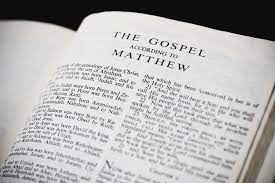
Connection to a Very Familiar Passage in History: With a group of fellow pilgrims, I am going through the Gospel of Matthew line-by-line. And in some of my studies, I was camped out in Matthew 3. This is the time period when John the Baptist is the last of the Old Covenant prophets and is calling out: “Repent, for the kingdom of heaven is at hand” (Mt 3:2, ESV). Like many of you probably, I have read that line hundreds of times. But when you slow down and meditate on what unfolds in Matthew 3, you begin to see that yes, preachers of righteousness like John the Baptist often faithfully herald the truth, but only God is sufficient to change hearts.
What do I mean? In v. 5 of the same chapter, we see how “Jerusalem and all Judea and all the region about Jordan were going out to him” (Mt 3:5). Even the Pharisees and Sadducees were coming to John’s baptisms (Mt 3:7) but it is clear that those same Pharisees and Sadducees coming out were not genuinely changed; they were onlookers, spiritual spectators, unbelievers in the truth.
How do we know they were unbelievers? Because they played the spiritual resume card. They trusted in their ethnic and/or educational and religious pedigree and genealogy. Did John the Baptist baby them? Did he compromise the command of God for sinners to repent and believe the gospel?
Here was John the Baptist’s seeker-friendly sermon:
“You brood of vipers! Who warned you to flee from the wrath to come? Bear fruit in keeping with repentance. And do not presume to say to yourselves, ‘We have Abraham as our father,’ for I tell you, God is able from these stones to raise up children for Abraham. Even now the axe is laid to the root of the trees. Every tree therefore that does not bear good fruit is cut down and thrown into the fire” (Mt 3:7b-10).
Seeker-friendly? Hardly. It was Truth 101, with no attempt at soft selling Christianity’s non-negotiables: repentance of one’s sin and fleeing to Christ in the gospel.
Why did John the Baptist not hold back? Why didn’t he nuance his speech to soften the intellectual and visceral impact of his message? Because he knew that God was able from those stones to raise up children for Abraham (Mt 3:9). That’s a literary way of saying, “God has no need of anything–especially your pride in your lineage, ethnicity, education, religiosity, pomp, or social standing.”
The Principle: What God requires of all who will come to Him is something which God alone grants: genuine humility, repentance of sins, and saving faith. Humanistic efforts are too sin-soaked to ever redeem; they only serve to condemn us.
Connections to Us All: So many of us have been disappointed in ourselves and/or in those we care about because we thought that we or another person wrought genuine heart change. But we discovered that our flesh was too weak. Or we found that we were right back in a sin pattern. Or we saw those we love return to erring ways leading to destruction. To use a biblical metaphor, we saw ourselves or others as dogs who return to their vomit.
Encouragement: Recently at church, the discipleship pastor and brother in the Lord taught the congregation from Jeremiah 17. He focused perfectly on Jeremiah’s emphasis on man’s deeply sick human heart and of our constant need to trust in God alone who is sufficient to circumcise the human heart, to grant true repentance and faith, and that trusting in man or humanistic schemes will invariably disappoint. Jason was spot-on in his teaching from Jeremiah.
Jeremiah’s message is the same message as John the Baptist brought. Flee to the gospel. Come to the Redeemer, who is Christ. Trust not in anything or anyone else to change your nature. Only God is sufficient for this work, and He will do it.
 MIND & MATTERS