
Introduction: Recently I have been reading the New Testament epistle of Jude. It’s a tiny little book in the canon of 66 books of Scripture. It comes just before the book of Revelation, and it is packed with divine marching orders. I call them the 3 W’s: wisdom, warning, and work.
Three Needs: Can we all agree that the world could use some wisdom about now? Some days when you read the news and study the trajectory of Western culture, it would be rather easy to admit that we seem to have lost our way, to concede that our age is one characterized by folly rather than wisdom. When you step back and study the history of thought, you see cultures rise and fall; you see eras of discovery and innovation, but also eras of moral decline and civilizational collapse. Think, for example, of the Renaissance. It was a time where man rediscovered the classics of antiquity wherein he went ad fontes (back to the sources) in literature, theater, and the arts. In earning degrees in English, we read Shakespeare, Dante, Cervantes, Luther, Chaucer, and countless other seminal writers because what has been termed the Great Conversation continues through the ages by the sharpest minds and sharpest pens. This has been perhaps the greatest reason for studying and the Classics. We read and study Shakespeare, Dante, Cervantes, etc. because their works explore the human condition profoundly.
In my years in Europe, when I visited the various locations and viewed works of Michelangelo, for example, I (like the others with me) felt both great humility and great respect. Why? Because when you stand under his paintings or you gaze upon the sculptures, you realize that you’re in the presence of genius. You realize that he saw and understood things in ways that transcended his lifespan. He grasped life’s mysteries in ways very few people ever will, and he shaped, carved, invented, painted, and wrote with a mind, hands, and imagination that reflected God’s ways.
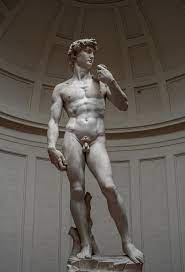
When I saw the sculpture of Michelangelo’s David the first time in Italy, it changed my life. Is that melodrama? No, it was the power of art to move the mind and soul. It was hours of my life whereby the pathos of art stirred the mind and imagination in ways that bridged souls across centuries. It connected worldviews about God and man, about the Creator and us creatures. But where are the Michangelos of today? Where are the Bachs in music? Where is the Shakespeare or Cervantes of today? Instead, we have TikTok and memes.
Connections to Jude (his 3 W’s): Jude was the half-brother of the Lord Jesus. He was initially a skeptic of Christ’s claims, but he (Jude) eventually became a passionate defender of the Christian faith. That’s what his letter is about in many ways–apologetics, offering a reasoned defense of the Christian worldview. Jude warns believers: “Beloved, although I was very eager to write you about our common salvation, I found it necessary to write appealing to you to contend for the faith that was once for all delivered to the saints. For certain people have crept in unnoticed who long ago were designated for this condemnation, ungodly people, who pervert the grace of our God into sensuality and deny our only Master and Lord, Jesus Christ” (Jude 3-5, ESV). He warns us to be discerning. Why? Because there be creepers about! The imagery is crystal-clear: watch out for the snakes. In short, we have been warned.
Second, Jude tells believers to work at it. “Contend” is the term he uses. In Greek, it’s the verb for “to agonize” or “to wrestle” (αγωνίζομαι). Again, the imagery is not a mystery: wrestle, labor, strive, articulate, herald, and defend the truth. Don’t be lazy; work.
Third, Jude calls us to wisdom: “But you, beloved, building yourselves up in your most holy faith and praying in the Holy Spirit, keep yourselves in the love of God, waiting for the mercy of our Lord Jesus Christ that leads to eternal life. And have mercy on those who doubt; save others by snatching them out of the fire; to others show mercy with fear, hating even the garment stained by the flesh” (Jude 20-23, ESV).
Jude calls believers to build themselves up, but he tells us how: via the Scriptures. Through the revealed Word of God. By way of biblical prayer. By loving the brethren. By showing mercy while simultaneously being a prophetic voice to those we can influence. It’s all right there in those three verses.
Encouragement: Though very short (just 25 verses), Jude is pure gold. 3 W’s: warning, work, and wisdom. All worthwhile things require labor, we all know that. But if we are in the Lord’s army, may we be known for godly wisdom, for heeding the warnings we’ve been given about the cosmic spiritual battle, and work the fields we have before us, as our days are numbered.
 MIND & MATTERS