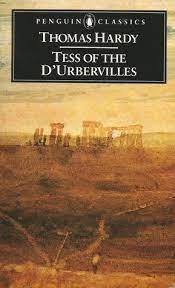
I have been under the weather of late, and so have had to take a knee away from fellow soldiers, and surround myself instead with a myriad of medicines to try and kill this latest round of coronavirus. I have had Tess to keep me company, though. I finished it again this evening. Not a fast-paced novel to be sure, but it contains some of the most beautiful nature writing I know of in English. Below is an example:
The only exericse that Tess took at this time was after dark; and it was then, when out in the woods, that she seemed least solitary. She knew how to hit to a hair’s-breadth that moment of evening when the light and the darkness are so evenly balanced that the constraint of day and the suspense of night neutralise each other, leaving absolute mental liberty. It is then that the plight of being alive becomes attenuated to its least possible dimensions. She had no fear of the shadows; her sole idea seemed to be to shun mankind–or rather that cold accretion called the world, which, so terrible in the mass, is so unformidable, even pitiable, in its units.
On these lonely hills and dales her quiescent glide was of a piece with the element she moved in. Her flexuous and stealthy figure became an integral part of the scene. At times her whimsical fancy would intensify natural processes around her till they seemed a part of her own story. Rather they became a part of it; for the world is only a psychological phenomenon, and what they seemed they were. The midnight airs and gusts, moaning amongst the tightly-wrapped buds and bark of the winter twigs, were formulae of bitter reproach. A wet day was the expression of irremediable grief at her weakness in the mind of some vague ethical being she could not class definitely as the God of her childhood, and could not comprehend as any other (75).
I differ markedly with Hardy on theological questions about God, but for the revealing of character via imagery and setting, Hardy is stunning. He recognizes beauty; he recognizes the spectacle of creation, but his naturalism occluded his seeing, at least from my view, the author of beauty.
 MIND & MATTERS