Principle: Recognizing our unrighteousness drives the humble to Christ’s righteousness offered to them in the gospel. Righteousness comes to us from God in the person and work of Christ; it never arises naturally from the flesh/sinful nature.
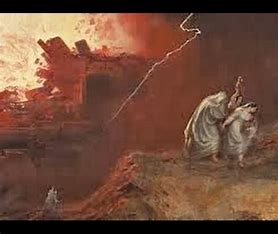
Text: Genesis 18:22-33
So the men turned from there and went toward Sodom, but Abraham still stood before the Lord. Then Abraham drew near and said, “Will you indeed sweep away the righteous with the wicked? Suppose there are fifty righteous within the city. Will you then sweep away the place and not spare it for the fifty righteous who are in it? Far be it from you to do such a thing, to put the righteous to death with the wicked, so that the righteous fare as the wicked! Far be that from you! Shall not the Judge of all the earth do what is just?” And the Lord said, “If I find at Sodom fifty righteous in the city, I will spare the whole place for their sake.”
Abraham answered and said, “Behold, I have undertaken to speak to the Lord, I who am but dust and ashes. Suppose five of the fifty righteous are lacking. Will you destroy the whole city for lack of five?” And he said, “I will not destroy it if I find forty-five there.” Again he spoke to him and said, “Suppose forty are found there.” He answered, “For the sake of forty I will not do it.” Then he said, “Oh let not the Lord be angry, and I will speak. Suppose thirty are found there.” He answered, “I will not do it, if I find thirty there.” He said, “Behold, I have undertaken to speak to the Lord. Suppose twenty are found there.” He answered, “For the sake of twenty I will not destroy it.” Then he said, “Oh let not the Lord be angry, and I will speak again but this once. Suppose ten are found there.” He answered, “For the sake of ten I will not destroy it.” And the Lord went his way, when he had finished speaking to Abraham, and Abraham returned to his place. (Genesis 18:22-33, ESV)
Context: This is likely familiar turf to folks who know Scripture. But for any who might be rusty, this is part of the historical record wherein God destroyed much of Sodom and Gomorrah in the 2000s B.C.
Sodom and Gomorrah are regions in Israel adjacent to the Dead Sea, southeast of Jerusalem. The reasons God was going to destroy them were part of judgment for sin. Abraham, the father of the faith because he believed God and was counted therefore as righteous, was a type of mediator who believed God: “And he [Abraham] believed the LORD, and he [God] counted it to him [Abraham] as righteousness” (Gen 15:6).
In addition to being a type of the Messiah who was to come in the person and work of Jesus Christ, Abraham petitioned for God to spare the righteous and only judge the wicked in Sodom and Gomorrah. Abraham asked God, “Will you indeed sweep away the righteous with the wicked?’ (Gen 18:23). Abraham pleads with God that the 50 righteous people who are—surely—within the culture be spared (v. 24).
Then Abraham did some more math, subtraction specifically. How about if 45 righteous people are there? Would God relent then (v. 28). Then Abraham further tightened his qualifications: How about 40? Then, how about 30? Then, how about 20? Finally, Abraham says to God, “Suppose ten are found there” (v. 32).
God, gracious to sinners but steadfast and holy in his nature, says he will not destroy the righteous. That is not God’s nature.
The result? God rescues Lot (Abraham’s nephew) and two of Lot’s children. Abraham witnessed God grant grace to sinners. How? By leaving a remnant to be witnesses to grace.
Now, fast forward through the history of redemption: What was the world’s response when the Messiah came? Did all the world flee to him in repentance and faith as the Redeemer? Hardly. They stripped him, crowned him with briers/thorns, mocked him, spat upon him, stripped him publicly, and had him nailed to a cross in Jerusalem on a Friday (Matthew 27:27-31). But what was happening? What does all this have to do with Abraham and his intercession on behalf of the supposedly righteous in Sodom and Gomorrah?
The New Testament is explicit: “For our sake he [God the Father] made him [God the Son, Jesus the Messiah] to be sin who knew no sin, so that in him [God the Son, Jesus the Messiah] we might become the righteousness of God” (2 Corinthians 5:21).
Encouragement: All of Scripture coheres, you see. It is telling one unified historical and redemptive true story of what God has done and is doing in his world to redeem a people for himself so that they might be salt and light to the rest of the world. Abraham knew there were no righteous people in Sodom and Gomorrah or anywhere else. Why? Because Abraham understood human nature. None of us is righteous. If we are to be forgiven by the thrice-holy God, it will only be because we have received an alien righteousness imputed to us by God himself, the redeeming Messiah, Jesus Christ.
And that is why Paul’s words in 2 Corinthians 5:21 are so encouraging. They explain what God has done. God was made sin and took the punishment in order that we sinners might flee to him, the true ark of God, and be saved from the flood and wrath of judgment.
 MIND & MATTERS