
I have read Hamlet more than any other play. Each time I go through it, it goes through me. There’s a reason it is the most performed, most studied, most turned-into-film play in the world. Each culture is drawn into its depths. It speaks to the deepest problems of evil, human sin, and the question of redemption. It is pervaded by death, too. Act 5 is among the bloodiest passages in the annals of literature. If you want Disney sentimentality, don’t read Shakespeare’s Hamlet.
Educated people will be familiar at a minimum with the most famous soliloquy in world literature, uttered by Prince Hamlet, when he’s weighing the most existential of questions, namely, amidst all his suffering, amidst all the sin and lies and betrayal, is it worth it to keep going? Is life worth living? That is his question:
To be, or not to be, that is the question:
Whether ’tis nobler in the mind to suffer
The slings and arrows of outrageous fortune,
Or to take arms against a sea of troubles
And by opposing end them. To die—to sleep,
No more; and by a sleep to say we end
The heart-ache and the thousand natural shocks
That flesh is heir to: ’tis a consummation
Devoutly to be wish’d. To die, to sleep;
To sleep, perchance to dream—ay, there’s the rub:
For in that sleep of death what dreams may come,
When we have shuffled off this mortal coil,
Must give us pause—there’s the respect
That makes calamity of so long life.
For who would bear the whips and scorns of time,
Th’oppressor’s wrong, the proud man’s contumely,
The pangs of dispriz’d love, the law’s delay,
The insolence of office, and the spurns
That patient merit of th’unworthy takes,
When he himself might his quietus make
With a bare bodkin? Who would fardels bear,
To grunt and sweat under a weary life,
But that the dread of something after death,
The undiscovere’d country, from whose bourn
No traveller returns, puzzles the will,
And makes us rather bear those ills we have
Than fly to others that we know not of?
Thus conscience doth make cowards of us all,
And thus the native hue of resolution
Is sicklied o’er with the pale cast of thought,
And enterprises of great pitch and moment
With this regard their currents turn awry
And lose the name of action (III, i, 56-88).
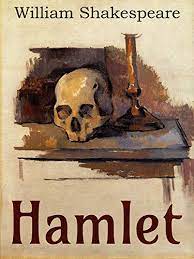
Hamlet’s questions, complaints, and frustrations play out Job-like throughout the play. We see the lies of his uncle. We see the lies of his mother. We see the Ghost of his father, King Hamlet, who summons Prince Hamlet to avenge his (the father’s) murder. We see sycophants who seek the favor of leadership. We see it all in Hamlet. We see a man who is nearly overcome by the prevalence of evil and suffering. And yet …
In Act V, we hear Prince Hamlet say this (and this is key to his earlier questions and the questions of the play):
“There is special providence in the fall of a sparrow” (V, ii, 220-21).
Why is that so important? Because Prince Hamlet recognizes that evil is under the sovereign hand of God. I would argue that Shakespeare had in mind here Matthew 10:29-31 where Christ says to his people:
Are not two sparrows sold for a penny? And not one of them will fall to the ground apart from your Father. But even the hairs of your head are all numbered. Fear not, therefore; you are of more value than many sparrows.
See the image there? God knows the sparrow. God ordains their birth, life, provision, and death. God knows the number of hairs upon our heads. Why should God’s people, therefore, not fear? Because they know God and are known by God.
The Alternative: The worldviews that deny God have no such hope. Whether those worldviews go by the name of secularism, progressivism, naturalism, atheism, paganism, humanism, monism, scientism, Oneism, or any other ism (system) that rejects the triune God of Scripture, they all share a jettisoning of reason for hope. Why? Because bad things just happen but there’s no one there to fix them, to redeem them, to use them for good. Hitlers and Maos and Stalins and Pol Pots and Margaret Sangers just happen because there is no Judge of the earth who always does what is right. To put it plainly, if God does not exist, our complaints are dead on arrival because no one is listening.
Encouragement: When Prince Hamlet is killed via the poisoned tip of Laertes’ sword, Prince Hamlet again uses imagery straight out of the Bible to describe his dying wish to his faithful friend Horatio:
“As th’ art a man, Give me the cup. Let go. By heaven, I’ll ha’t! O God, Horatio, what a wounded name, Things standing thus unknown, shall live behind me! If thou didst ever hold me in thy heart, Absent thee from felicity awhile, And in this harsh world draw they breath in pain, To tell my story” (V, ii, 343-49).
See the imagery? The drinking of the cup. The cup would bring death. In Scripture, it’s the cup of God’s wrath meted out upon Christ the Son. In Hamlet, it’s the innocent Prince Hamlet slain for the sinful deeds of others. It’s the gospel, folks.
Why and how is this encouragement? Because in Christ alone, there is hope and the promise of redemption from evil and suffering because of the One who drank the cup of God’s wrath for the evil done by sinners.
 MIND & MATTERS