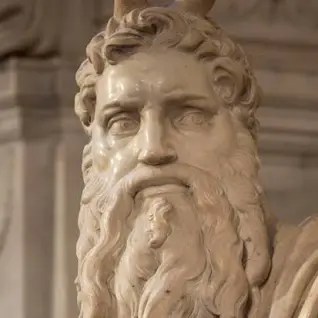
Moses’ life was replete with ironies. Think, for example, of his origin and early years. He was hidden by his mother for three months when he was an infant (Ex 2:2). Think of that, the child that was initially hidden from view would be the visible human focus of an entire nation of people.
Also, think upon his upbringing. He was discovered by Pharaoh’s daughter and was raised in privilege (though a Hebrew) in Pharoah’s house. He was reared in palaces to later spend decades of his life wandering in desert sands.
What’s more, he was both fearful at times but vengeful at others. In Ex 2:14, e.g., the text reads,
Then Moses was afraid, and thought, “Surely the thing is known.”
He flees to Midian out of fear of his own people murdering him because they knew of his (Moses’) earlier murder (Ex 2:14). Irony after irony after irony.
When I think upon Moses’ stratified life, I see a man who was often his own hero and his own nemesis. He loved his people and protected them. But he also was often quick-tempered, impetuous, and violent.
He was a shepherd by training; yet he himself was often a fugitive.
He longed for God to show His glory to him, yet he was granted only a cleft in the rock from which to gaze upon the glory of the Lord. God covered His glory to spare Moses (Ex 33:22).
When I think upon Moses, a takeaway for me is that he is representative of us all. We have these opposing natures within us–to shepherd, for example, but also to avenge.
He was slow of speech, yet he penned the Pentateuch. Deuteronomy is replete with Moses’ sermons.
Irony upon irony in this great man of God.
Moses, dear, precious man of God, you still minister to us, proving exactly what a New Testament man of God penned years later in Romans 15:4, “For whatever was written in former days was written for our instruction, that through endurance and through the encouragement of the Scriptures we might have hope.”
 MIND & MATTERS