Intro: When I was a boy, I cannot remember where I first saw it, but I memorized it years and years ago and have been unable to forget it. It is commonly known as the “Serenity Prayer.” The title says it all, doesn’t it? It goes something like this: “Lord, grant me the serenity to change the things I can, accept the things I cannot change, and the wisdom to know the difference.” I’ve heard variations of it my entire life, but you get the gist of it. That’s not too shabby. It’s a call to wisdom.
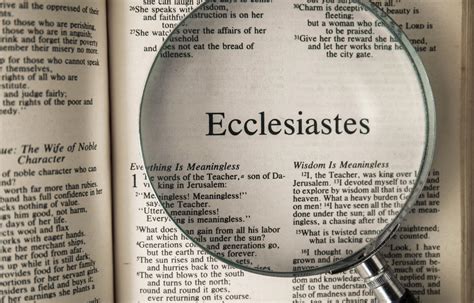
Connection to Scripture: Hebel/hevel is the Hebrew term for what is often translated into English as “vanity” in Ecclesiastes. Why is that significant for us? Well, it’s to teach us to learn how to accept some measure of futility in things we cannot change. For as long as I can remember, Ecclesiastes has remained my favorite book of Scripture. I think it’s because Solomon is so interesting to me. He’s a textbook case of gaining the whole world and losing his soul, and then (finally) regaining it. He was a deeply flawed man in many ways. He was also a profoundly wise man. The label of “Solomonic wisdom” endures for a reason. He was brilliant at times.
In Ecclesiastes 2 Solomon wrote this:
24 There is nothing better for a person than that he should eat and drink and find enjoyment[c] in his toil. This also, I saw, is from the hand of God, 25 for apart from him[d] who can eat or who can have enjoyment? 26 For to the one who pleases him God has given wisdom and knowledge and joy, but to the sinner he has given the business of gathering and collecting, only to give to one who pleases God. This also is vanity and a striving after wind. (Eccl 2:24-26, ESV)
There’s that word again: vanity or hebel/hevel. Its closest synonyms are breath/vapor/mist. The idea seems to be the temporariness of human endeavors, whether joyful or sorrowful. A New Testament parallel is found in James’ letter: “yet you do not know what tomorrow will bring. What is your life? For you are a mist that appears for a little time and then vanishes” (James 4:14, ESV).
The more I study Ecclesiastes, the more profound I discover it to be. The short book is to drive us to wisdom. Its theme is found overtly stated in its last two verses: “The end of the matter; all has been heard. Fear God and keep his commandments, for this is the whole duty of man. For God will bring every deed into judgment, with every secret thing, whether good or evil” (Eccl 12:13-14, ESV).
Encouragement/takeaway: I don’t purport to speak for others, just for myself here, but when I survey the current climate of what could be dialogue and wisdom, it is very often something quite different—a great deal of squawking, bromides, cognitive dissonance, and slander. Not a great deal of wisdom. That’s where Ecclesiastes’ wisdom is enduringly germane. Will we get back to basics, to fundamentals, to reasonableness? Or will we continue down the slope of outrage and the Jerry Springerdom of Dumbville? Scripture calls out to us to be a people of wisdom rather than folly. We can learn a great deal from Solomon’s pen, if we but pay attention.
 MIND & MATTERS