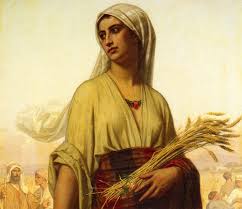
Introduction: There are a few books I would argue are perfect. Scripture is the Book of books, of course. But in terms of delivering a story perfectly, I don’t know how one might improve upon the book of Ruth. It goes from emptiness to fulfillment, deprivation to blessing, and from want to plenty. It begins in barrenness and ends in fruitfulness and rejoicing at a birth.
But what I would like to do here in brief is explore one idea–namely, how believers are to persevere in the Lord when spiritual darkness and the devil appear to be winning.
Historical Context: 1000s-900s B.C. A dark time in Judah. This was the time of the judges, i.e., before wicked Saul and King David were the nation’s monarchs. There was a “famine in the land” (Ruth 1:1, ESV). So a family from Bethlehem in Judah fled to Moab. The family consisted of Elimelech, his wife Naomi, and their two sons Mahlon and Chilion. The boys married Moabite women, Orpah and Ruth. But eventually the two sons died and Naomi’s husband all died. Naomi was left with only her two daughters-in-law, in the foreign land of Moab.
This was quite the predicament–a widowed woman, stuck in a region that was not her own because there was famine in her own land for a season, and now she has two daughters-in-law whose husbands have died. Naomi is indeed a woman in want. She’s lost both her own husband and her two sons.
Who would provide? Where was God in all this? Who would provide? Why this series of misfortunes piled one upon another? Naomi became bitter, convinced that the Lord was against her. Otherwise, this suffering would not have been so devastating. She even told Orpah and Ruth, “Do not call me Naomi; call me Mara, for the Almighty has dealt very bitterly with me” (Ruth 1:20, ESV). From pleasantness to bitterness, that’s what Naomi was teaching. She believed that God had brought this suffering upon her (v. 21).
Questions for Us: Have you ever experienced feelings and/or thoughts like that? Have you ever thought that the Lord was against you? Have you ever been tempted to give in to the idea that all is lost, that things will not improve, and that you’re now given over to bitterness rather than blessing? Have you ever been tempted to think (even if you would not say it out loud) that the forces of spiritual darkness have won?
If we are honest, probably most of us can identify with Naomi in her state of suffering as revealed in Ruth 1.
Don’t Miss This: My favorite lines in the first chapter of Ruth are these two: “Then they [Orpah and Ruth] lifted up their voices and wept again. Orpah kissed her mother-in-law, but Ruth clung to her” (Ruth 1:14, ESV).
But Ruth clung. Orpah, for reasons Scripture does not reveal explicitly, returned to find another husband, so she could become a wife and mother. Orpah, in other words, departed. But Ruth clung. Ruth was, to be cliche, in it for the long haul. She was, to use one of my favorite thinker’s verbs, “resolved.” Ruth was going to see it all through with her mother-in-law Naomi, come what will.
Encouragement: But Ruth clung. That short phrase is packed with theology about enduring, about not losing faith in the God of providence, about trusting in the goodness of God. Maybe this is only for me, I don’t know, but I long to be Ruth-like in at least this respect. When all seemed lost, she clung–not just to her mother-in-law whom she loved, but to the Lord over all of it.
 MIND & MATTERS