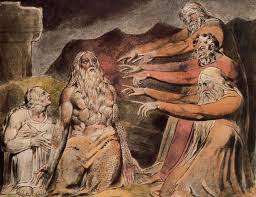
Introduction: It is among the oldest of narratives. It is the narrative of Job in Scripture. It deals with some of the toughest and most existential questions we ask as people: 1) Why such evil?; 2) How do I trust in the goodness of God amidst such formidable suffering?; and 3) What does wise faith in the true and living God look like?
Because I love the wisdom in the Book of Job, I am having to battle for brevity here. This is, after all, just a blog. But here’s the bottom line up front regarding how the Book of Job begins. Job was truly a good man. He was “blameless and upright, one who feared God and turned away from evil” (1:1). Right there in the very first verse, so much theology and wisdom is packed.
Why do I say that? Because God is showing you the themes of the book from the very beginning. The problem of being ‘good’ in a world that is plagued by sin and suffering, but also–and this is crucial–that Job “feared God.” Why’s that so important? Because the fear of the Lord is the beginning of wisdom (Pr 9:10). Most people fear other people, but Job was wise. His fear was of the Lord. That is a point not to be minimized.
Fear of man leads to people-pleasing and manipulation and other sins. But Job’s fear was of God. He had an accurate theology. Therefore, his anthropology was solid.
And in the very first chapter of Job, God summons Satan and asks him, “Have you considered my servant Job, that there is none like him on the earth, a blameless and upright man, who fears God and turns away from evil?” (1:8).
Many folks have a misreading of Job. They think Satan was the one who initiated Job’s trials. Not true; God did. God set it all in motion. He not only allowed it, but He ordained it. God is the sovereign, not Satan. (Don’t miss that.)
And in verses 13-19 of Job 1, Job’s life was obliterated. His sons, daughters, sheep, servants, and more were killed. And his property was destroyed.
We think we have bad days? Just read the narrative of Job!
Job’s Response:
Then Job arose and tore his robe and shaved his head and fell on the ground and worshiped. And he said, “Naked I came from my mother’s womb, and naked shall I return. The Lord gave, and the Lord has taken away; blessed be the name of the Lord.”
In all this Job did not sin or charge God with wrong. (Job 1:20-22)
Encouragement/takeaway: The next 41 chapters of Job are going to explore the themes nested in chapter one. It’s all there–goodness, suffering, theodicy, the righteousness of God, the craftiness of Satan, heartbreak, tragedy, loss, redemption, restoration, agony, ecstasy, and more. For now, just think on this: “Job did not sin or charge God with wrong” (1:22). Job trusted the Lord to be the Lord; Job was going to learn that God was not and is not afraid of honest questions. And God is good. Job ends on a high note–with benediction and praise. For now, though, just follow Job’s unfolding tests, and connect them to yours, and lean into–not away from–the God who rules all of history. Every square inch of it. God knows. God sees. And God is good.
 MIND & MATTERS