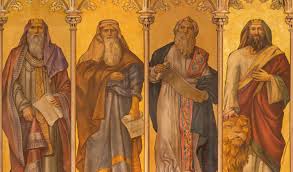
Questions: What comes to mind when you hear the word prophet? One who predicts future events? Bravery? Truth-teller? Forth-teller?
In Scripture, all of those attributes are true. Think of Elijah, Elisha, Jeremiah, Ezekiel, Daniel, and John the Baptist, as just some examples. Each man was used by God to tell the truth forthrightly; each man was brave; each man did speak of future events that would and did take place, etc.
Now think of the text below from 2 Kings:
10 They set up for themselves pillars and Asherim on every high hill and under every green tree, 11 and there they made offerings on all the high places, as the nations did whom the Lord carried away before them. And they did wicked things, provoking the Lord to anger, 12 and they served idols, of which the Lord had said to them, “You shall not do this.” 13 Yet the Lord warned Israel and Judah by every prophet and every seer, saying, “Turn from your evil ways and keep my commandments and my statutes, in accordance with all the Law that I commanded your fathers, and that I sent to you by my servants the prophets.”
14 But they would not listen, but were stubborn, as their fathers had been, who did not believe in the Lord their God. 15 They despised his statutes and his covenant that he made with their fathers and the warnings that he gave them. They went after false idols and became false, and they followed the nations that were around them, concerning whom the Lord had commanded them that they should not do like them. 16 And they abandoned all the commandments of the Lord their God, and made for themselves metal images of two calves; and they made an Asherah and worshiped all the host of heaven and served Baal. 17 And they burned their sons and their daughters as offerings and used divination and omens and sold themselves to do evil in the sight of the Lord, provoking him to anger. 18 Therefore the Lord was very angry with Israel and removed them out of his sight. None was left but the tribe of Judah only. (2 Kings 17:10-18)
Teaching: Israel once again fell into idolatry and apostasy. They failed to believe God and follow his revealed covenantal promises. They sinned, and they grew increasingly callous. They sacrificed their children by burning them atop idols. The list is long of their abominations. And yet, God sent his servants the prophets. And what was their duty? To call the people back to God, to holiness, to restoration.
Encouragement: As I’ve said countless times to our people, “Soft preaching makes hard people; hard preaching makes soft people.” That is undisputable. If you tickle ears and pimp people sentimentally, you’re a hireling and coward. God hates such shenanigans. God calls his servants the prophets to tell the truth, to serve the Lord, to fear God and love the sheep of his pasture. The fear of man is a snare. If we’re God’s shepherds, we’re to fear the Lord and serve the Lord. And that baseline will shape the trajectory of our ministries because that’s the solemn office to which some of us are called. The crux comes in having people with enough discernment to distinguish between hirelings out for their own fame and fortune and the true men of God who are laboring to please the Lord Jesus and to serve his bride, the true church.
 MIND & MATTERS