Bottom Line Up Front: Self-Sacrifice for the Truth: Love People Enough to Warn Them
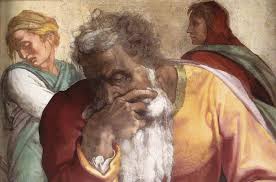
Text: In Jeremiah 7, the great Old Testament prophet Jeremiah spoke the word of God to the people he loved:
7 The word that came to Jeremiah from the Lord: 2 “Stand in the gate of the Lord’s house, and proclaim there this word, and say, Hear the word of the Lord, all you men of Judah who enter these gates to worship the Lord. 3 Thus says the Lord of hosts, the God of Israel: Amend your ways and your deeds, and I will let you dwell in this place. 4 Do not trust in these deceptive words: ‘This is the temple of the Lord, the temple of the Lord, the temple of the Lord.’
5 “For if you truly amend your ways and your deeds, if you truly execute justice one with another, 6 if you do not oppress the sojourner, the fatherless, or the widow, or shed innocent blood in this place, and if you do not go after other gods to your own harm, 7 then I will let you dwell in this place, in the land that I gave of old to your fathers forever.
8 “Behold, you trust in deceptive words to no avail. (Jer 7:1-8, ESV)
Encouragement/takeaway: Recently when teaching the saints, I was again struck by the consistent teaching of God in Scripture about the costs involved for being a person of truth. Jeremiah endured a staggeringly difficult prophetic ministry. But he was God’s man in his season. He was one of many in a long line of Godly men and women, who had counted the costs, and who took up the struggle, casting it all on the providence of God. Jeremiah loved his people enough to tell them the truth, to try and reach as many as God would enable him to reach, to say hard things but with a loving heart/motive; namely, their salvation and redemption. Jeremiah told the people not to trust in deceptive words. He preached that message again and again. And you’ll remember what happened; most ‘shot the messenger,’ if you will. Most didn’t want the truth. Instead, most put their heads in the sand, and divine judgment fell upon the nation. But Jeremiah was proven to be right, was ultimately preserved by God, and went down as one of the greatest of the prophets of God. Do we think our generation is smarter than Jeremiah’s? The question answers itself. There’s sacrifice involved in loving people enough to tell them the truth, and to do so lovingly.
Intro: I perused the morning headlines from my computer: Epstein this and Epstein that; a massive drug overdose in Baltimore, MD; Netanyahu resolved to keep attacks going; more and more money for Ukraine’s protracted defeat, etc.
It is clear that many leaders like nothing quite so much as the swamp, their own power, and the sowing of chaos. The orchestrated chaos ensues, tribalism is the predictable reaction, and the bureaucracy grows bigger and more sinister. If you just step back and take it all in, it is sickening.
Question: Always like this? That is, has it always been like this? Short answer: Since Genesis 3, it has been like this. Genesis 3 records the Fall of man. Rather than obeying God’s wisdom, Adam and Eve chose the serpent’s way. Instead of God defining good and evil, our federal head opted he knew better. The first Adam fell.
Results? God “drove out the man [Adam], . . . east of the garden of Eden . . . (Genesis 3:24, ESV). Banishment, that was the result. Adam (and all he represented) was banished east of Eden. If Genesis 3 were not clear enough, Moses is yet more explicit later: “The LORD saw that the wickedness of man was great in the earth, and that every intention of the thoughts of his heart was only evil continually” (Genesis 6:5, ESV). This is just one example of hundreds in Scriputure of what’s known in theology as man’s depravity, man’s fallenness.
Segue: This is why, dear reader, it is so disheartening when people who claim to be Christians act in ways contrary to the ways of God. They profess to be regenerate people, redeemed people, but their actions belie that profession. Christ told us that we would know trees by their fruit (Matthew 7:16-20; Luke 6:53-55). He wasn’t teaching a lesson related to dendrology; He was teaching what my precious-but-now-deceased grandmother would have expressed this way: “What’s down in the well comes up in the bucket.”
As a friend of mine reminded me recently, each day has its own trouble. As Christ Himself taught us in His Sermon on the Mount, “Therefore do not be anxious about tomorrow, for tomorrow will be anxious for itself. Sufficient for the day is its own trouble” (Matthew 6:34, ESV).
My enduring favorite book of Scripture remains Ecclesiastes. Admittedly, it is a highly literary and poetic book, and I tend to favor literary genres, not just chronologies or records of the numbers of tribes, etc. But Solomon, in the masterful book of Ecclesiastes, wrote the following:
What has been is what will be, and what has been done is what will be done, and there is nothing new under the sun. 10 Is there a thing of which it is said, “See, this is new”? It has been already in the ages before us. 11 There is no remembrance of former things, nor will there be any remembrance of later things yet to be among those who come after. (Ecclesiastes 1:9-11, ESV).
Prayer: Lord, I pray for Your true people. Open their eyes. Remove the scales. Likewise, purge the evil. Reveal it for what it is in all its lies and hypocrisy. Encourage Your saints, mighty resurrected King. Amen.
Intro: Have you ever seen something that was clear as day, but you could not make others see it? Have you ever thought something was so obvious, but you could not enable others to grasp it? Have you ever just scratched your head and thought, “Surely, folks cannot be this obtuse, this blind, and this cowardly!”?
We’ve all surely seen the simulacra and emojis that illustrate the feeling.
But what’s amazing is the prevalence of the blindness. Spiritual blindness, in particular.
Scripture speaks to it … I was in Romans 11. The Apostle Paul writes this way about it–about blindness, spiritual obtuseness, a hardening of the soul, a cataracts of the eyes:
The elect obtained it, but the rest were hardened, 8 as it is written,
“God gave them a spirit of stupor, eyes that would not see and ears that would not hear, down to this very day.”
9 And David says,
“Let their table become a snare and a trap, a stumbling block and a retribution for them; 10 let their eyes be darkened so that they cannot see, and bend their backs forever.” (Romans 11:8-10, ESV)
This darkening of their eyes is a judgment for their rejection of the truth. They have a “spirit of stupor,” God says of them via the Apostle Paul. And they have ears but cannot hear.
Takeaway: The reality is that there really is no end to some people’s blindness, obtuseness, and hardheartedness. The good gets banished and crucified, and evil is rewarded. And the evil system just rocks right along without so much as a hiccup. God help us.
Introduction: Recently in teaching from Matthew’s Gospel account of Christ, one of the takeaways I labored to bring before the class was the beauty of brokenness. It’s a familiar theme to students of the Word, and I speak on this theme often. It’s not because I’m a one-trick pony; it is because I find that it is a consistent theme of Scripture. God emphasizes it throughout the Bible.
Case study: Even unbelievers may know at least a little something about the Apostle Paul, for example. But before he came to be renamed Paul, he was Saul of Tarsus. He was a brilliant man, a Pharisee, very zealous, but utterly lost spiritually. Here is just one example of how the Apostle Paul understood his spiritual life as divided upon this axis– before God saved him vs. after God saved him:
For am I now seeking the approval of man, or of God? Or am I trying to please man? If I were still trying to please man, I would not be a servant of Christ.
For I would have you know, brothers, that the gospel that was preached by me is not man’s gospel. For I did not receive it from any man, nor was I taught it, but I received it through a revelation of Jesus Christ. For you have heard of my former life in Judaism, how I persecuted the church of God violently and tried to destroy it. And I was advancing in Judaism beyond many of my own age among my people, so extremely zealous was I for the traditions of my fathers. But when he who had set me apart before I was born, and who called me by his grace, was pleased to reveal his Son to me, in order that I might preach him among the Gentiles, I did not immediately consult with anyone; nor did I go up to Jerusalem to those who were apostles before me, but I went away into Arabia, and returned again to Damascus.
Then after three years I went up to Jerusalem to visit Cephas and remained with him fifteen days. But I saw none of the other apostles except James the Lord’s brother. (In what I am writing to you, before God, I do not lie!) Then I went into the regions of Syria and Cilicia. And I was still unknown in person to the churches of Judea that are in Christ. They only were hearing it said, “He who used to persecute us is now preaching the faith he once tried to destroy.” And they glorified God because of me. (Galatians 1:10-24, ESV)
In plain terms: First, we can say that Paul saw that the default position of the insecure man is to labor to please man. That is, when one’s longing is to gain the approval of man instead of the approval of God, one reveals his true posture and focus of worship. It’s a play for popularity and power rather than a zeal for God or obedience to God. Paul admitted that used to be his method of operation. But God was gracious to Paul, and revealed to him his own insecurity and his own pride.
Second, we can say that God used Paul’s learning to benefit others; he labored in pouring himself out for others, as Christ did for His sheep. Paul labored to teach, preach, and write in such a way as to reach people: “To the weak I became weak, that I might win the weak. I have become all things to all people, that by all means I might save some,” Paul writes (1 Corinthians 9:22, ESV).
Third, we can say that God received the glory because of the faithfulness of the Apostle Paul. That’s what verse 24 means, that people “glorified God” because of Paul. In other words, faithfulness paid spiritual dividends.
Associated thoughts & observations: Psalm 51:17 reminds us, too, of the beauty of brokenness: “The sacrifices of God are a broken spirit; a broken and contrite heart, O God, you will not despise.” That will not gain you power and prestige in the eyes of men, but it’s what God blesses. Paul knew it. And the Lord Jesus knew it. He became the sacrifice for His people, you see.
It’s the same principle as you find throughout Scripture. In Jeremiah, for example, will we learn from this verse the beauty of brokenness:
“For after I had turned away, I relented,/and after I was instructed, I struck my thigh;/I was ashamed, and I was confounded,/because I bore the disgrace of my youth” (Jeremiah 31:19, ESV)
Encouragement/takeaway: I cannot speak for the experience of others in today’s world. But I can speak of what God has revealed in Scripture, and it is plain that for those men and women God delights in using, He breaks them. Just ask Job. And Joseph. And Saul the Pharisee>Paul the Apostle. Just ask the Apostle Peter, who suffered some very “rocky’ moments. Just ask Daniel and his three friends. Just ask David, a very fallen man, but the man God used for glorious purposes (eventually, people saw that Saul was a judgment on them for their sin). Just ask the Apostle Matthew. Just ask Doubting Thomas. Just ask Moses. Just look to the Lord Jesus Himself, who was despised and rejected, smitten by God, and afflicted (Isaiah 53: 3-4).
God creates beauty out of brokenness. God redeems, yes, but He does so via the crucible of suffering. Our duty is to trust the Lord, especially when it seems darkest. For even the darkness is overcome by the One who is light Himself.
Intro: One of the resources we have as Army chaplains I have found to be so helpful for one, single strength–its focus on specifics. A tendency some have in ministry is to try and cram vast amounts of theology, doctrine, church history, apologetics, evangelism, and discipleship into each effort. I have certainly erred many times in trying to cram too much, too soon, into places where my efforts were premature. The soil, to use Jesus’s own metaphor, first must be prepared by God’s Spirit; otherwise, we’re just wasting effort. In a passage on battling spiritual defeat, this resource took me to a passage in Revelation 20. If you’ll follow along, it may resonate with you, too.
Connection to Everyday Life: Have you ever been in a season where it seems Satan is winning? Have you ever felt frustrated because you see ostensibly good men and women resigning themselves to a spirit of defeatism? Have you ever looked around for Godly spiritual allies and instead found that most have just resigned themselves to go along to get along, as if they’ve said, “Oh well; this is just the way it’s got to be, I guess”? I have. I don’t like living in that sort of headspace. Everything in my being longs for good to win, for the truth to prevail over lies, for the light to expose and banish the darkness. But at times, it’s all too obvious that we live in a postlapsarian, fallen world.
The Biblical Account: Then I read Revelation 20:1-15 again. This is the passage where Satan is bound by God. Satan is bound, then cast into the pit of judgment. And then the righteous heralds, those who’d been beheaded and those who had labored in telling the truth, those who had remained faithful, etc. were brought back and restored before God and the world. Satan was defeated; the righteous were rewarded; and God sets things to rights.
Encouragement: To return to my opening description, the Apostle John was specific in his teaching here: God and righteousness ultimately prevail, and darkness is exposed. If you’ve ever been in a place where you’re tempted to think all is lost, that darkness wins, return to the Word. In short, think along these lines: Lord, You are the Sovereign One. No one else is. Not Satan, not the powers of hell, and not the schemes of man. Quicken my spirit with Your Spirit. For the Lord God almighty reigns. And God sees. Amen.
Hireling: (noun)–One who works solely for compensation, especially a person willing to perform for a fee; one who is hired, or who serves for wages; esp., one whose motives and interests in serving others are wholly gainful.
Similar: mercenary
Proposition: Spiritual lodestars for sheeple worship, too: themselves.
Empirical observation: Sheeple follow right along, into the pit.
Historical context: Many soldiers and families may take off and/or have off a day or two over the next few days as part of America’s national Independence Day holiday. So, I thought it appropriate to reflect upon how much we owe our forebearers, especially those who, as is written in our Declaration of Independence, pledged to one another [thei]r Lives, [thei]r Fortunes and [thei]r sacred Honor.” There are many who are serving in difficult environments, separated from those they love and who love them. Remember them, as you enjoy your burgers and dogs and beverages. Maybe pick up a volume of history, and learn about those who served with honor. Maybe send a letter/email/text to a military member or veteran or his/her family. It doesn’t take much to touch someone.
I love it when I see military installations across our nation with the U.S. flag displayed, and when I drive home on weekends, I love seeing it when it’s displayed properly from people’s private residences. The colors of the flag are laden with symbolism we should know and appreciate, as are the number of stars and stripes.
Text: In Scripture, we are told “Blessed is the nation whose God is the Lord, the people whom he has chosen as his heritage!” (Psalm 33:12, ESV)
Encouragement/takeaway: Freedom of religion is a staggeringly crucial American freedom. We are free to believe as we will. But as for me and my household, we desire the blessing of the Lord. On this Independence Day weekend, my prayer is that my whole nation would seek blessing from God, not independence from Him.
Question: Do we underestimate the spiritual forces at work among us?
Text: And Deborah said to Barak, “Up! For this is the day in which the LORD has given Sisera into your hand. Does not the LORD go out before you?” (Judges 4:14, ESV).
Context: The Book of Judges covers a largely dark set of time in Israel’s history (1300s B.C.) in which the nation fell away spiritually from the true and living God. They instead became like other nations, given over to pagan idolatry. But God sent judges (hence, the title of the book) to call Israel out of apostasy and rebellion and into obedience and divine favor. But very often most people refused to trust the Lord; instead, they pursued the vilest of behaviors, abandoning the Lord, persecuted the truth-tellers in their midst, and God eventually sent various judges to call them to spiritual sobriety.
The question that the prophetess and judge Deborah asked was rhetorical and immensely provocative: “Does not the LORD go out before you?” In other words, do you not understand and believe that spiritual forces are at work amidst us? Do you doubt God and His providence? Do you doubt that there are active spiritual forces of darkness that hate God and are actively trying to sabotage truth and righteousness?
The New Testament also has countless reminders of the reality of spiritual warfare: “For we do not wrestle against flesh and blood, but against the rulers, against the authorities, against the cosmic powers over this present darkness, against the spiritual forces of evil in the heavenly places” (Ephesians 6:12, ESV).
Encouragement/takeaway: This is not a spiritually neutral universe. As sentient and thinking creatures, we’re cast into a drama of good vs. evil, light vs. darkness, and God vs. Satan. Homo sapiens means just this: “man of thinking/thinking man.” That is why God calls His people again and again: “Come now, let us reason together, says the Lord: though your sins are like scarlet, they shall be as white as snow; though they are red like crimson, they shall become like wool” (Isaiah 1:18, ESV).
Questions: Have you ever underestimated the power of evil? That is, have you ever had to say to yourself, perhaps after discovering the dark truths about someone/something, “I cannot believe it! There’s just no way. Surely, I am mistaken”? I have. From my lane as a chaplain and spiritual leader, it is deeply saddening to discover way too often that there are many wolves posing as sheep. But we are told in Scripture that this would be the case. We are also told what to do.
Texts:
“I know that after my departure fierce wolves will come in among you, not sparing the flock; and from among your own selves will arise men speaking twisted things, to draw away the disciples after them” (Acts 20:29-30, ESV).
That was the Apostle Paul speaking to the Ephesian elders. Paul knew this truth viscerally—in his guts. He knew that evil posers were inevitable. And Paul loved his people enough to try and equip them for the battles that were ahead. Paul saw what others did not, if you will; he could see where things were headed.
“Be sober-minded; be watchful. Your adversary the devil prowls around like a roaring lion, seeking someone to devour” (1 Peter 5:8, ESV). This second teaching of the same principle is not from the Apostle Paul but rather from the Apostle Peter. Peter, a man who so often in his early Christian life went from hero to zero, often on the same day/night. But in the end, Peter proved himself the real deal.
The very Apostle who had denied the Lord Jesus three times, this fallen but redeemed man, went on to write two magisterial epistles, and to preach some of the greatest sermons in the church’s history. And what is one of Peter’s recurring themes? It’s one of the same ones as Paul’s: don’t underestimate the relentlessness of evil. Peter uses the image of a roaring lion to teach us.
Encouragement/takeaway: One of my favorite trips my father took me on years ago when I was a graduate student was a trip to Kenya and Tanzania. We saw the lions hunt on safari. We saw them take down gazelles and zebras, and lick their bloody lips after swallowing steaming viscera. When you witness something like that, and you feel the heat, and you imbibe the smells, it literally gets into you; it teaches you.
That’s what Peter was driving at. Lions are kings of the jungle for a reason. They devour; they kill; they are relentless. And if you’re a Christian, don’t underestimate the powers of darkness, as they are leonine; they walk softly, but that’s because they’re prowling and forever on the hunt, seeking to devour.















 MIND & MATTERS