Chaplain Daily Touchpoint #248: The Matter of Anthropology

Bottom line up front: Pilgrimage as shaping metaphor

Text (Psalm 121, ESV):

I lift up my eyes to the hills.
From where does my help come?
2 My help comes from the Lord,
who made heaven and earth.

3 He will not let your foot be moved;
he who keeps you will not slumber.
4 Behold, he who keeps Israel
will neither slumber nor sleep.

5 The Lord is your keeper;
the Lord is your shade on your right hand.
6 The sun shall not strike you by day,
nor the moon by night.

7 The Lord will keep you from all evil;
he will keep your life.
8 The Lord will keep
your going out and your coming in
from this time forth and forevermore.

Questions/teaching: How important is one’s anthropology (doctrine of man) when it comes to mission effectiveness? I would wager that most folks would concede it is central. The question of “What is man?” is unavoidable. Failure to accurately define man, his nature, his purpose, his origin, his destiny, etc. results in mission creep, death by a thousand cuts, bureaucracy, and ineffectiveness. Currently in the military, a healthy restructuring is occurring wherein we are training to become lighter, faster, more lethal, and more maneuverable. But that entails recognizing what people are like; in other words, it means dealing with anthropology (the doctrine of man). In the military, one of the regulations currently en vogue is Holistic Health and Fitness (FM 7-22). Is spiritual readiness central for us Service Members? Even according to the Army, it is:

A spiritually fit individual is generally productive at work and performs assigned tasks with a high degree of effectiveness and efficiency. The confidence of identity provided through spiritual readiness practices enables the person to not only endure challenging and stressful situations, but provides purpose and meaning for the conduct of normal tasks. Just as a drop in productivity and performance can potentially indicate behavioral health issues, they can also indicate a spiritual readiness concern. While an individual’s moral and ethical reasoning might not change or deviate, his or her performance and productivity might waiver. This is also true when mission requirements prevent attendance at spiritual readiness events or hinder personal spiritual readiness practices. Creating conditions that encourage personal spiritual readiness practices can facilitate sustained performance and productivity for both individuals and a team. Monitoring of duty assignments can also prevent the same person from experiencing repetitive schedule conflicts which prevent attendance at spiritual readiness events (FM 10-35).

A return to the question: How important is one’s anthropology (doctrine of man) when it comes to mission effectiveness? Wise soldiering will recognize and implement spiritual readiness by fostering a climate wherein the reality of man’s spirit is addressed openly and wisely. If you are raising a generation of Soldiers who can articulate who they are, where they came from, where they’re headed, and why, then you have a combat multiplier. The converse likewise applies: If you capitulate to the wrong anthropology where generations of Soldiers cannot articulate who they are, where they came from, where they’re headed, or why, then we should not be surprised at the moral melee that results.

Encouragement/takeaway: Effectiveness and efficiency were the terms H2F employed. Scripture pictures it as simply biblical anthropology. Man is created in the image of God, either male or female, and we’re designed by the master Designer. He formed not only you and me, but all created things, things in heaven, on earth, and under the earth. And we’re to use our hearts, minds, souls, and strength to the best of our abilities because we’re not just matter in motion. We are spiritual pilgrims who are the creations of the infinite-personal God who does all things well.
3-Sentence Zinger from Jonathan Edwards

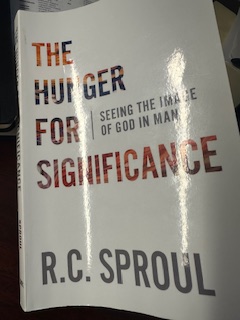
Introduction: I was reading R.C. Sproul’s The Hunger for Significance: Seeing the Image of God in Man, and came across this zinger from one of the best minds and hearts I’ve been blessed to discover through his writings: Jonathan Edwards.

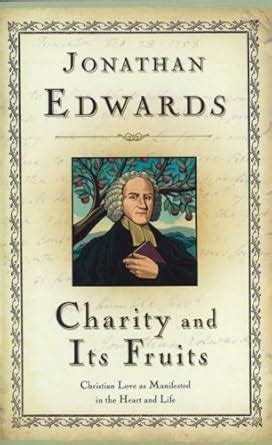
Edwards’ zinger: “If love is the sum of Christianity, surely those things which overthrow love are exceedingly unbecoming to Christians. An envious Christian, a malicious Christian, a cold and hard-hearted Christian, is the greatest absurdity and contradiction. It is as if one should speak of dark brightness, or a false truth” (from Edwards’ Charity and Its Fruits).

Encouragement: I read an article recently that claimed that biblical Christianity is again on the rise in the places where it is most persecuted. As one who studies a great amount of church history, the article did not surprise me. That has been the pattern throughout church history. When truth is most hated by the secular system, it spreads. Persecution is used by God to spur true Christians to seriousness and commitment.

Easy times, on the other hand, result in watered-down, mind-numbingly shallow and/or false Christianity, which is no Christianity at all. That is where many places are–hollow shells of the theology their members once laid claim and allegiance to. Those are the kinds of places Satan adores; they’re no threat to him or his legions of demons.

But what Sproul is driving at in his book, and what Edwards expressed in his inimitable ways in his many works, is that genuine Christianity is unstoppable. Why? Because it’s true. Because it’s rooted in the God who walked out of the grave, conquering death, the tomb, demons, Satan, and hell. And it’s rooted in the God who loved sinners enough to both die and live for them.

Chaplain Daily Touchpoint #247: (2) Wise Things for Which to Ask God

Bottom line up front: Two (Wise) Things for Which to Ask God

The text is Proverbs 30:7-9 (ESV):

7 Two things I ask of you;
deny them not to me before I die:
8 Remove far from me falsehood and lying;
give me neither poverty nor riches;
feed me with the food that is needful for me,
9 lest I be full and deny you
and say, “Who is the Lord?”
or lest I be poor and steal
and profane the name of my God.

What (2) Things: What two things does the wise person ask God for? One was distance between him and falsehood/lying (v. 8a). What a prayer! He’s praying for his own integrity and for his name to not to be associated with anything but honor. I say again, what a prayer. Second, he asked the Lord for “neither poverty nor riches” (v. 8b). How rare is that? Very unmaterialistic. Why does the wise man pray for that? Because he knows his own weaknesses. He knows that man’s default posture is one of idolatry. We want the gifts but not the Giver.

Encouragement/takeaway: I say very often to myself and to those close to me something along these lines: “Some passages are easy to preach but hard to live.” This is one of them. Why? Because we can all be tempted to prevaricate in order to be liked instead of telling the truth and being hated. The lie just seems so easy sometimes.

And second, sinful desires: “For all that is in the world—the desires of the flesh and the desires of the eyes and pride of life—is not from the Father but is from the world” (1 John 2:16) and it is impossible in our own strength to vanquish those desires. Ergo, the Christian is to seek the things of God via renewing his mind (Romans 12:1-2) and delighting himself in the ways of God (Psalm 37:4).

Chaplain Daily Touchpoint #246: Consistency is Key

Bottom line up front: Consistency is key.

Illustration: When I was earning my B.A. and M.A. in English many moons ago, I worked many jobs to put myself through school in those years. One of my jobs was as a carpenter’s assistant. Though I am not naturally gifted in carpentry, I have a deep respect for carpentry. I learned a great deal about the craft in those years. One of the blessings that came my way during those years was being an assistant to a master carpenter named Lyman. Lyman had a long, silver, grizzly beard, and he sipped coffee all day long from his large, very dented, very worn Stanley thermos. He wore suspenders and a button shirt, and he carried a thick carpenter’s pencil in his right breast pocket. He wore faded and worn jeans, and he always wore suspenders over his button shirt. He rolled his own cigarettes from a tin of tobacco. When he rolled his cigarettes, he always knew I’d be watching him. Though I have never been a smoker, I was mesmerized by the smoothness and grace with which he rolled the tobacco into the papers, licked the cig quickly, lit it with his Zippo, and enjoyed his time during our breaks. Lyman was as consistent and faithful in his work, his craft of carpentry, and in his dedication as any man I’ve ever known. When I look back on those years now, I’m amazed how many years have gone by, and by how much Lyman impacted me. He was truly a remarkable (and remarkably consistent) man.

Context: Psalm 119 is an acrostic poem of 22 letters, each section beginning with the subsequent letter of the Hebrew alphabet. As a whole, the psalm is a psalm of praise; it praises God’s Word and God’s law. The psalm, quite lengthy by standards of Hebrew poetry, is comprised of 176 verses.

Text: “I hate the double-minded, but I love your law” (Psalm 119:113, ESV).

Takeaway/encouragement: What does my old buddy Lyman have to do with Psalm 119:113? Much. Lyman was consistent. You could set your clock by him if you’d had to. When the sun was up, or if weather permitted him (and us) to work in carpentry at all on workdays, he’d be there. He’d measure, cut, nail, stand up walls, lay on the level, snap the chalk line, and we’d nail some more. He’d roll his cigs and enjoy his smoke. He’d sip coffee from his old Stanley thermos. He was single-minded in his dedication, calling/purpose. He was consistent. What a testimony. God says in Psalm 119:133 that he hates double-mindedness. Many people mislabel God as a soft Santa Claus-like figure who dispenses joys and trinkets for spiritual infants, but that’s not the God of Scripture. Here, God says that he “hates.” And one of the things he hates is “the double-minded.” All the psalmist is teaching is that God loves and awards those who labor (Lyman-like) in their obedience to his (God’s) law and Word. Simple. Not easy, but simple.

Chaplain Daily Touchpoint #245: A Call for Wisdom

Introduction: In some of my studies, I am in Paul’s letter of Ephesians. Structurally and theologically, no matter how many times I study Ephesians, I stand amazed. At its most basic level, it divides into two theological sections. Chapters 1-3 are indicative chapters; that is, they tell Christians what God has already accomplished. Chapters 4-6 are the imperative chapters; that is, they tell Christians what we are to do. In short, Ephesians is structured along this model: Since God has done A,B,& C, his people are to do X,Y, & Z.

Text:

6 Let no one deceive you with empty words, for because of these things the wrath of God comes upon the sons of disobedience. 7 Therefore do not become partners with them; 8 for at one time you were darkness, but now you are light in the Lord. Walk as children of light 9 (for the fruit of light is found in all that is good and right and true), 10 and try to discern what is pleasing to the Lord. 11 Take no part in the unfruitful works of darkness, but instead expose them. 12 For it is shameful even to speak of the things that they do in secret. 13 But when anything is exposed by the light, it becomes visible, 14 for anything that becomes visible is light. Therefore it says,

Awake, O sleeper,
and arise from the dead,
and Christ will shine on you
.”

15 Look carefully then how you walk, not as unwise but as wise, 16 making the best use of the time, because the days are evil. 17 Therefore do not be foolish, but understand what the will of the Lord is. (Ephesians 5:6-17)

Pauline Paradigm: Paul is such a masterful writer. Look at the contrasts he has in the section above:

  • Empty words (bloviating) vs. Truth/depth
  • Darkness vs. Light
  • Drivel/filler vs. Discernment/wisdom
  • Secrecy/darkness vs. Transparency/light
  • Foolishness vs. Wisdom

Encouragement/takeaway: The beauty of imperatives is their simplicity. Not their ease, but their simplicity.

God’s people are not to settle for empty words, bloviating, drivel, filler, folly, and ramblings.

They’re instead to expose such perversions. In Paul’s words, “Look carefully then how you walk, not as unwise but as wise, making the best use of the time, because the days are evil. Therefore do not be foolish, but understand what the will of the Lord is” (Eph 5:15-17, ESV).

God condemns foolishness and he commands his people to be discerning and wise instead.

One Foot in Eden: Thoughts Upon Ron Rash’s Novel

Trying to be unbiased about a story and setting one loves so fully is less than easy. Set in South Carolina and parts of western North Carolina, Rash’s novel is simple structurally: there’s been a murder; there’s been an affair. It’s in a sense a “whodunit?” Where’s the body? Is it buried? If so, how was it accomplished and by whom? Can the sheriff prove it?

There’s no lack of lying and Southern protectiveness about one’s past, one’s property, or one’s privacy.

As to describing the crushing infiltration of the massive monstrous electric company clearing the region of its history and identity (not to mention its trees, creeks, streams, wildlife, and simple farms), Rash excels. Perfect.

Rash’s greatest strength is his ear for spoken upstate SC and WNC language. He’s a fine ear. The dialogue of his characters, especially the interior monologues of his characters, demonstrates that.

Rash also is dialed when it comes to the complexity of family tragedy. This book is not written at the level of one of Faulkner’s masterpieces about Thomas Sutpen, that’s certain, but Rash is adept at dramatizing how our families are all fractured. Each family has at least one beloved who is estranged, arguably with good reasons.

Again, I concede my prejudice in favor Rash’s setting in this book. His characters, too, I respected. Why? Well, they were real. Warts and all.

A Paean to Jimmy for Sam Cooke’s Beauty in Song

Some days I step back, so to speak, and realize the blessings God has sent to me via certain friends. One such buddy is Jimmy.

Though from very different regions of the country, though raised quite differently, we both married well. The Lord provided brides who made us better husbands, better men.

Jimmy encourages me consistently. Today, for example, we were texting and he sent me this gem above from Sam Cooke. Why? To remember the good stuff. As we say in the MRT (Master Resilience Trainer) world, “Hunt the good stuff.” That’s what this song from Sam Cooke reminds me to do, and it was a reminder from Jimmy today.

Few singers did it with more soul, more life, more pathos and joy than Sam Cooke.

My thanks to Jimmy for your friendship, your encouragement, and for your (almost always) solid taste in music. I’ll try to forgive your penchant for 80s ‘music’:-)

Now … back to Sam Cooke’s musical gems.

Chaplain Daily Touchpoint #245: Some Thoughts Upon the Widening Cultural Gap

In my times in London, I’ve always enjoyed riding “The Tube” of the London Underground. Each time the train’s doors open, you hear the warning: “Mind the Gap!” That’s wise counsel.

For those with eyes to see and ears to hear, the West is amidst a cold civil war. It is a war of ideas, of course. To use a cliche, ideas have consequences.

Like the lyrics from one of my enduring favorite bands expressed it in “A Day In the Life,” “I read the news today, oh boy . . . .”

Well, I read the news today, too, but it wasn’t about a lucky man who’d made the grade. A day from our contemporary lives is more likely to reveal that millions of Americans apparently want a borderless nation. I don’t mean to patronize such people, but may I call their attention to definitions? A nation without borders is not a nation.

It’s interesting that they don’t see their cognitive dissonance. They lock their car doors. They lock the doors in their homes. They keep their pets on leashes or on their property, behind fences, etc. But yet they don’t seem bothered by illegal aliens entering the nation illegally, raping, pillaging, murdering, etc. That is, until the evil comes to their home. Then suddenly, reality gets real clear. But it’s too late then.

So much for “Mind the Gap!” counsel.

Will we mind the gap before it’s too late? I hear some thinkers pontificate that it’s already too late. I do not accept that. Defeatism is suicide. If you’ve already given up, I’m not sure what one might say to you. I guess you can stream more videos until your heart stops beating and eventually die. But the reality is that you died long ago, when you gave up. Let us not give in to despair. Some folks do have eyes to see and ears to hear. Not all are fools and stooges.

Paul wrote in Philippians 4:8 (ESV), “Finally, brothers, whatever is true, whatever is honorable, whatever is just, whatever is pure, whatever is lovely, whatever is commendable, if there is any excellence, if there is anything worthy of praise, think about these things.”

That’s wisdom. That’s minding the gap. That’s not ostrich-like, head-in-the-sand Pollyannaism. That’s wisdom for those who are in Christ, for those who think God’s thoughts after him, for those whose minds are being renewed (Romans 12:1-2).

Will we mind the gap? Will we recognize that blind guides lead the foolish into the ditch (Matthew 15)? As Solomon writes again and again, “Does not wisdom call? Does not understanding raise her voice?” (Proverbs 8:1, ESV). In other words, will we mind the gap?

Chaplain Daily Touchpoint #244: Less Is More

Bottom line up front: Less Is More

Text: At that time the disciples came to Jesus, saying, “Who is the greatest in the kingdom of heaven?” And calling to him a child, he put him in the midst of them and said, “Truly, I say to you, unless you turn and become like children, you will never enter the kingdom of heaven. Whoever humbles himself like this child is the greatest in the kingdom of heaven. (Matthew 18:1-4, ESV)

Context: As I have continued teaching through Matthew’s gospel line-by-line over the past year or so, it is amazing to me how often we find Christ has to humble us. I’ve probably read Matthew’s gospel over 50 times over the last year, trying to be sure I follow the storyline that the apostle lays out. Teaching it verse-by-verse forces me to slow down. When one is a fast reader, it is easy to read right past something that I should not have. And when it comes to Scripture, there’s never a passage to neglect. This is the Book of all books.

About the passage above (Matthew 18:1-4), J.C. Ryle wrote, “Would we know whether we are really converted? Would we know the test by which we must try ourselves? The surest mark of true conversion is humility. If we have really received the Holy Ghost, we shall show it by a meek and childlike spirit” (Ryle, Expository Thoughts on Matthew).

Humility. Not exactly sinners’ default posture, is it? Nope. We like to think we’re better than the next fellow, don’t we? We thrive upon comparison, at seeing the speck in other people’s eyes. Meanwhile, we’ve got logs the size of redwood trees in our own.

But Christ just kept hammering home that non-negotiable: humility.

He says to his disciples that they’ll never enter the kingdom of heaven without it (v. 3).

I remember saying of my father-in-law that he lived the best sermon I ever heard preached. What did I mean? Simply that he was among the greatest and simultaneously humblest men I’ve ever known, respected, and loved. And I have no doubt that he heard a heavenly welcome that went something like this: “Well done, good and faithful servant.”

What Trust Looks Like: Reflections upon Matthew 17:14ff

Introduction: This Sunday I will again be teaching the saints as we gather again under the authority of the Scriptures. We are exploring Matthew 17:14-27. A few of the themes God addresses in this passage follow:

  • ‘Levels’ of faith
  • the nature of spiritual warfare
  • the sovereignty of God

Questions: One of the questions that fascinates me in this passage is, How ironic is it that Peter, James, and John just descended the Mount of Transfiguration where Christ alone had received the glory via the cloud, the Father’s voice, Jesus’ face shining like the sun, the radiance of his garments, etc. and yet the next episode revolves around some of the disciples’ little faith?

All of these manifestations surely stirred the theology of Moses, Elijah, Peter, James, and John. The books of Exodus, Revelation, and Elijah’s ministry in the Old Covenant surely were brought immediately to their minds and hearts. But when verse 14 begins the transition, we see that some of the disciples apparently had weak faith. Why do I say that? Because Jesus said it: “O faithless and twisted generation, how long am I to be with you? How long am I to bear with you?” (Mt 17:17, ESV) That’s a stinging rebuke from the Lord Jesus. No ‘meek and mild’ Jesus stuff there.

A man had come to some of Jesus’ disciples for the healing of his (the man’s) son. The boy, according to verse 15, had seizures. Perhaps he was what we might call epileptic, I don’t know. But in verse 18 of the text, Jesus “rebuked the demon” that plagued the boy, and in verse 20, Jesus rebuked his own disciples for their little faith. I write all this to ask this question: How ironic is it that Peter, James, and John just descended the Mount of Transfiguration where Christ alone had received the glory via the cloud, the Father’s voice, Jesus’ face shining like the sun, the radiance of his garments, etc. and yet the next episode revolves around some of the disciples’ little faith?

I think the teaching is clear: Our ‘levels’ of faith ebb and flow. I cannot speak for others, but I know if I’m honest that there are times in my life when I’ve relied on myself and my strategies to make things shake out like I desired. And very often the Lord has seen fit to take me to the mat. He’s closed doors that I desired to walk through. Looking back, God’s ways were right and mine were selfish and wrong.

Then there have been times when I trusted the Lord at levels that were much greater, where I lived out a total reliance upon the providence and direction of God. I even wrote a novella with that theme: Lily is about an English teacher who seeks to find her way when God seems to hide his face.

A second question that interests me in this passage is, What do we see in this episode about spiritual warfare? There is no paucity of wacky stuff out there about spiritual warfare, but much of it is, in my view, far afield from what Scripture teaches. Nevertheless, it is clear that God allows demonic influence in the world in order to show his (God’s) glory and his power over the demonic realm. It seems to me the whole point of Matthew 17:14-21 is that our faith is to be in the Lord Jesus Christ because he (God the Son incarnate) is sovereign over weak faith, strong faith, illness, the demons, and evil. That seems to me the point. It’s the same lesson as God was teaching at the Mount of Transfiguration, namely, for us to get our eyes upon Jesus–that Christ is bigger than our crises.