Hope in the Christian Life

Bottom line up front: Hope for the believer.

Introduction: Ever studied the life and ministry of the apostle Paul? Formerly named Saul of Tarsus, Paul was a scholar among scholars, a former Pharisee, a maker of tents, unmarried, a former zealous persecutor and murderer of Christians, and eventually, by the work of God alone, converted to the apostle Paul. He became arguably the greatest Christian of church history. He authored nearly 2/3 of the New Testament, planted church after church, was made an apostle to the Gentiles by Christ himself, mentored countless people in the Christian faith (Timothy, e.g.), and penned theological truths that Christians still plumb the depths of today.

This morning after PT, for example, I was reading and pondering Romans 8:18-19. Those verses read like this: “For I consider that the sufferings of this present time are not worth comparing with the glory that is to be revealed to us. For the creation waits with eager longing for the revealing of the sons of God” (Romans 8:18-19, ESV). Let that sink in, especially considering Paul’s sufferings. We remember those, right? The passage from 2 Corinthians 11 bears revisiting and thinking through:

But whatever anyone else dares to boast of—I am speaking as a fool—I also dare to boast of that. 22 Are they Hebrews? So am I. Are they Israelites? So am I. Are they offspring of Abraham? So am I. 23 Are they servants of Christ? I am a better one—I am talking like a madman—with far greater labors, far more imprisonments, with countless beatings, and often near death. 24 Five times I received at the hands of the Jews the forty lashes less one. 25 Three times I was beaten with rods. Once I was stoned. Three times I was shipwrecked; a night and a day I was adrift at sea; 26 on frequent journeys, in danger from rivers, danger from robbers, danger from my own people, danger from Gentiles, danger in the city, danger in the wilderness, danger at sea, danger from false brothers; 27 in toil and hardship, through many a sleepless night, in hunger and thirst, often without food,[b] in cold and exposure. 28 And, apart from other things, there is the daily pressure on me of my anxiety for all the churches. 29 Who is weak, and I am not weak? Who is made to fall, and I am not indignant?

And yet … Despite all his sufferings, Paul writes in Romans 8 that the Christian is one characterized by believing the promises of God, looking to God in hope. Why? Because of God’s steadfastness, because of God’s faithfulness. The great preacher Martyn Lloyd-Jones wrote, “If the creation has an earnest expectation, surely the Christian believer should have nothing less than that.”

Encouragement/takeaway: Unlike false worldviews, Christianity does not deny suffering. It deals with it head-on. Scripture is the story of the God who was “pierced for our transgressions” and “crushed for our iniquities” (Isaiah 53:5). The Messiah was called a man of sorrows. And yet, Christians are more than conquerors because of this one true and living God. The triune God of Scripture ransoms sinners from every tribe, language, people, and nation in order that we who wait with eager longing wait in hope. I say again, in hope.


Chekhov’s Greatest Story?

The Reader, a superb film, alludes to the masterful Chekhov story, “The Lady with the Dog,” several times. I concede my appreciation for the acting skills of both Ralph Fiennes and Kate Winslet, and the film The Reader. But my focus here is on the story itself, not the film, which explores different themes altogether.

But it is my love for Chekhov’s story, “The Lady with the Dog,” that inspires this. It is one of the stories I’m currently teaching my university students, in my short story course. There are many true masters of the short story form, and Chekhov remains one of its best exemplars.

The story revolves around an affair of sorts (it’s not prurient) between Gurov and Anna. Both are married to other people. But both Gurov and Anna are caught; they long for something their lives have not satisfied. What it is, exactly, is a profound question for exploration.

If you’ve not read Chekhov in a bit, pick up a volume of his short stories and plays, and discover understated wisdom and beauty.

Crow Upon Dead Pine

Sunny days on the 800-meter track, I count on seeing the tall, sun-bleached, woodpeckered pine, long dead but still standing, and the black crows that land upon its brittle limbs and call to one another, and just as swiftly take flight again in a black wash of silent lift, and I pause on the sandy track and watch, as if Edgar Allan Poe’s apostles watched from the skeletal bough, high under this Spring cerulean sky, to see if I noticed. I did. It’s the small things–that aren’t.

Chaplain Daily Touchpoint #214: Faithfulness

Bottom line up front: It is hard to argue with faithfulness.

Clarification: What do I mean by faithfulness? A general pattern of consistent fidelity to Scripture and God’s revelation via one’s Christian witness. It is likely that many of us know folks who have made professions of faith in Christ, have perhaps been members (at least on paper) of a Christian church of some stripe, may’ve been baptized, may’ve even done work related to Christian missions, etc. but have since departed from the faith they once professed. One would find it hard to find current evidence of having ever been regenerated and saved by God. Their labors seem altogether consumed with things other than the gospel of Christ. That’s the reality of many.

Alternative: But I would like to look at the other side, too, the side of faithfulness, the side wherein you see perseverance in the faith once for all delivered to the saints, the side where you see a pattern of fidelity to God and his revelation. Psalm 71 is such an example. In this psalm, we see the picture of one who continues to trust the Lord, even and especially when Satan and forces of the wicked speak against him. Here are verses 7-21 of the 71st psalm:

I have been as a portent to many,
but you are my strong refuge.
8 My mouth is filled with your praise,
and with your glory all the day.
9 Do not cast me off in the time of old age;
forsake me not when my strength is spent.
10 For my enemies speak concerning me;
those who watch for my life consult together
11 and say, “God has forsaken him;
pursue and seize him,
for there is none to deliver him
.”

12 O God, be not far from me;
O my God, make haste to help me!
13 May my accusers be put to shame and consumed;
with scorn and disgrace may they be covered
who seek my hurt.

14 But I will hope continually
and will praise you yet more and more.
15 My mouth will tell of your righteous acts,
of your deeds of salvation all the day,
for their number is past my knowledge.
16 With the mighty deeds of the Lord God I will come;
I will remind them of your righteousness, yours alone.

17 O God, from my youth you have taught me,
and I still proclaim your wondrous deeds.
18 So even to old age and gray hairs,
O God, do not forsake me,
until I proclaim your might to another generation,
your power to all those to come.
19 Your righteousness, O God,
reaches the high heavens.

You who have done great things,
O God, who is like you?
20 You who have made me see many troubles and calamities
will revive me again;
from the depths of the earth
you will bring me up again.
21 You will increase my greatness
and comfort me again.

Encouragement/takeaway: In a world where words sometimes do not mean very much because you know the source to be untrustworthy, in a world where there’s no-fault divorce, in a world where today’s headlines are tomorrow’s shred for the landfill or recycle bin, it is good to see that God does not change. He remains consistent yesterday, today, and forever. That is why all those who are in Christ are commanded to persevere in the truth. In short, we are to be faithful. Why? Because our faithfulness should redound and point to the faithfulness of the One who ransomed us. We remember the powerful words and example of Paul in 1 Thessalonians, don’t we: “Now may the God of peace himself sanctify you completely, and may your whole spirit and soul and body be kept blameless at the coming of our Lord Jesus Christ. He who calls you is faithful; he will surely do it” (1 Thess 5:23-24, ESV). Faithfulness.

Encouragers in Our Midst (Part II)

Bottom line up front: Encouragers in Our Midst (Part II):

What follows are three interrelated and true stories:

First, J. J. is one of my buddies who, when I see him, even from a distance, he smiles that J. smile, and you know he’s going to have a word of kindness at hand. We joke with him that it’s because he spent a career in sales. He knows how to grip-n-grin with the best of them. He just might be able to sell snow to an Eskimo. But when I’m around him, I come away feeling motivated. I nicknamed him BB years ago, for Brother Barnabas, my encourager. Even this last Sunday before the guest speaker taught on missions, J. and I joked and shook hands and embraced, and we both were energized by our time together as we discussed theology, writing, and our families.


Second, D. D. is unique among my encouragers in that he stands out for his intellectual curiosity and biblical discernment. This past Sunday, he asked, “You know, Jon, we talk a lot about Jonathan Edwards, Spurgeon, Augustine, Luther, Calvin, and others from church eras past. And we laud men like R.C. Sproul and John MacArthur in the 20th and 21st centuries, but who else do you think will be remembered and matter in the long run, people of that caliber?” I praise God for D., a man who perceives the dearth of wise biblical teachers and shepherds in our day and is perceptive enough to ask such searching and important questions. I am continuing to think through his question, even now. He encourages me via his concern for depth and his commitment to Scripture.


From Scripture, I think it impossible to write upon the topic of encouragement without writing of the friendship between David and Jonathan. It was unique in that David’s nemesis was wicked King Saul, Jonathan’s father. Scripture records their friendship this way: “As soon as he had finished speaking to Saul, the soul of Jonathan was knit to the soul of David, and Jonathan loved him as his own soul” (1 Samuel 18:1, ESV). Then there’s the famous covenant between the noble Jonathan and the harried David:

12 And Jonathan said to David, “The Lord, the God of Israel, be witness![a] When I have sounded out my father, about this time tomorrow, or the third day, behold, if he is well disposed toward David, shall I not then send and disclose it to you? 13 But should it please my father to do you harm, the Lord do so to Jonathan and more also if I do not disclose it to you and send you away, that you may go in safety. May the Lord be with you, as he has been with my father. 14 If I am still alive, show me the steadfast love of the Lord, that I may not die; 15 and do not cut off[b] your steadfast love from my house forever, when the Lord cuts off every one of the enemies of David from the face of the earth.” 16 And Jonathan made a covenant with the house of David, saying, “May[c] the Lord take vengeance on David’s enemies.” 17 And Jonathan made David swear again by his love for him, for he loved him as he loved his own soul.

18 Then Jonathan said to him, “Tomorrow is the new moon, and you will be missed, because your seat will be empty. 19 On the third day go down quickly to the place where you hid yourself when the matter was in hand, and remain beside the stone heap.[d] 20 And I will shoot three arrows to the side of it, as though I shot at a mark. 21 And behold, I will send the boy, saying, ‘Go, find the arrows.’ If I say to the boy, ‘Look, the arrows are on this side of you, take them,’ then you are to come, for, as the Lord lives, it is safe for you and there is no danger. 22 But if I say to the youth, ‘Look, the arrows are beyond you,’ then go, for the Lord has sent you away. 23 And as for the matter of which you and I have spoken, behold, the Lord is between you and me forever.” (1 Samuel 20:12-23, ESV)

Folks familiar with Scripture will know what the sign was and how things turned out for David due to wicked Saul’s temporary victory. But ultimately, the story is an exploration of the encouragement bolstered by a genuine friend. Jonathan and David were the real deal in a world of fakes and posers. And both men gave and received encouragement from one another and from God, whom they served. The story is of course also a foreshadowing of how the kingdom of darkness is dispelled by the kingdom of light, but that is for another article.

Takeaway/encouragement: Failure is not falling down, but staying down, it has been said. I’ve certainly failed at things over my years, but I hope for myself (and for you) that we don’t fail to appreciate the encouragers in our midst; may their tribe increase.

Thank God for the Barnabases

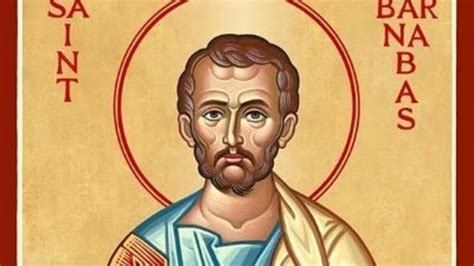
“Son of encouragement/consolation.” That’s the meaning of Barnabas in Greek. Why does that matter? Well, speaking just for myself, the Baranabases in my life are almost unspeakably precious because they enter my life like beautiful lances of sunlight, lighting matters up physically, viscerally, and existentially. Perhaps an example will illustrate what I mean.

Because of my career in the military, I see my family very little. I am separated from them due to my job, and so I only get a few hours with them each week. I love what I have been blessed to do in the military but this lifestyle is not for the weak; it exacts some tolls from one’s life and his family–especially in terms of long periods of time apart. So, the few hours I get with the people I love most are precious. And over the years, my bride has become more and more precious to me. She has grown so much biblically, intellectually, and spiritually (we both have), that our conversations have taken on new levels of depth and meaning and connection.

Today as we returned from lunch at our favorite local Italian place, I was pulling us into the garage and we were talking about Moses in Exodus 14, and what was happening there. In short, this is the chapter where Moses and the children of Israel are caught “between Migdol and the sea” (Ex 14:2, ESV). The people of Israel are at a crossroads. They will either fail to trust the Lord and return to bondage under wicked Pharaoh in Egypt, or they will trust the Lord and see God deliver them and show them–once again–that he is the Lord, and he is faithful.

Response of a people who underestimate and/or fail to trust God: You can probably guess the majority report. Most failed to trust the Lord. Instead they were quite content to return to a position they knew was traitorous to the truth of the God they professed to trust. This is the response recorded in Scripture:

11 They said to Moses, “Is it because there are no graves in Egypt that you have taken us away to die in the wilderness? What have you done to us in bringing us out of Egypt? 12 Is not this what we said to you in Egypt: ‘Leave us alone that we may serve the Egyptians’? For it would have been better for us to serve the Egyptians than to die in the wilderness.” (Ex 14:11-12, ESV)

Here they are, the words of the man who trusts the Lord:

These words from Moses, the very human but largely faithful shepherd, a man who led and loved his people: “Fear not, stand firm, and see the salvation of the LORD . . .” (Ex 14:13, ESV).

Did you catch that? Moses trusted the Lord. He knew God would deliver his people. The people’s duties were to trust the Lord rather than the schemes of men, obey God’s servant (Moses) rather than the wicked ways of Pharaoh, Egypt, and the serpentine ways of darkness.

And so there CJ and I were, parked in the car in the garage, still speaking about Exodus 14, of being between Migdol and the sea, and the tears came to my eyes, as they often do when I speak with her about such precious truths, and she said, “Fear not, stand firm, and see the salvation of the LORD.”

And I knew–yet again–that God sent her to me as a Barnabas in my life.

In Part II, I will write about two friends from church who are likewise Barnabases, men who invariably bring light when the spiritual forces of darkness descend like clouds, but for now, I will pause. Hopefully, Part II tomorrow.

Praise God for the Barnabases in our lives. Grace upon grace.

Impressions

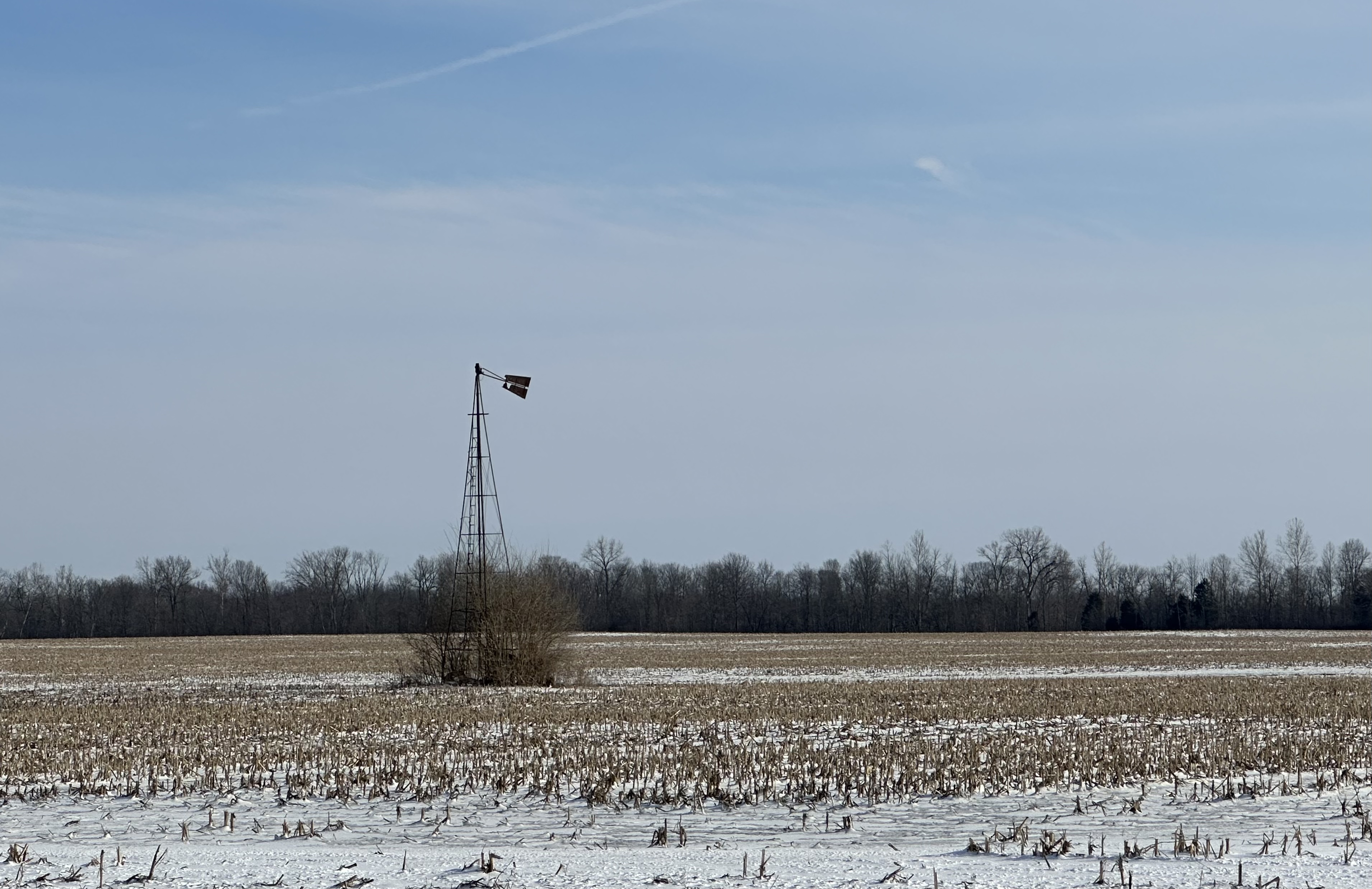
On a recent trip to the Midwest, my affection for moving landscapes led to my stopping the rental car I was driving and pulling off the side of the country road I was on in Indiana, pulling out my old iPhone and taking a few pictures (see below). They do not do justice to the powerful impressions the Midwest made upon me that cold morning.

As l looked out, my years of reading seemed to bubble up amidst the cold. Psalm 8 came to mind:

O Lord, our Lord,
    how majestic is your name in all the earth!
You have set your glory above the heavens.
    Out of the mouth of babies and infants,
you have established strength because of your foes,
    to still the enemy and the avenger.

When I look at your heavens, the work of your fingers,
    the moon and the stars, which you have set in place,
what is man that you are mindful of him,
    and the son of man that you care for him?

Yet you have made him a little lower than the heavenly beings
    and crowned him with glory and honor.
You have given him dominion over the works of your hands;
    you have put all things under his feet,
all sheep and oxen,
    and also the beasts of the field,
the birds of the heavens, and the fish of the sea,
    whatever passes along the paths of the seas.

O Lord, our Lord,
    how majestic is your name in all the earth!

Detractors? I can hear detractors now: “What? Just ice and snow blanketing fields of harvested corn in Indiana?”

Well, yes. But how can one not be moved by even that? How is it not beautiful? What does it say if we don’t pause and appreciate moments and scenes like this?

Willing Blindness?

For as long as I can remember, Ecclesiastes has been a book to which I return again and again. It is probably my favorite of the 66 books of Scripture. There is so much wisdom in Ecclesiastes, I am eager to teach it. (My view is that you don’t really know a subject until you can teach it clearly and accurately.)

Solomon states the theme in his conclusion: “The end of the matter; all has been heard. Fear God and keep his commandments, for this is the whole duty of man. For God will bring every deed into judgment, with every secret thing, whether good or evil” (Eccl 12:13-14, ESV).

So, we cannot say that Solomon was unclear. He tells us plainly what the “end of the matter” is–to fear the Lord and to keep his laws. Why? Because God is light and he brings all backroom, closeted, nefarious, and hidden things to light. God exposes. God is the God of transparency. There is no hiding from God. Why? Because God knows all and will reveal all. God delights in openness and transparency.

Questions: But do schemers like the light? Do they want the light of holiness to shine upon their ways? Do they welcome transparency? Or do they instead thrive upon whispers and off-the-grid meetings? The questions answer themselves, do they not?

Encouragement: Ecclesiastes is integral to the Wisdom Literature of Scripture. Its focus is wisdom. And wisdom is inseparable from God and God’s ways. God exposes things to the light. That is why Christians are called to be people of light who expose the darkness.

May God be gracious to raise up and sustain a people of wisdom, courage, and light so that the deeds of darkness might be exposed in the light of his holiness.

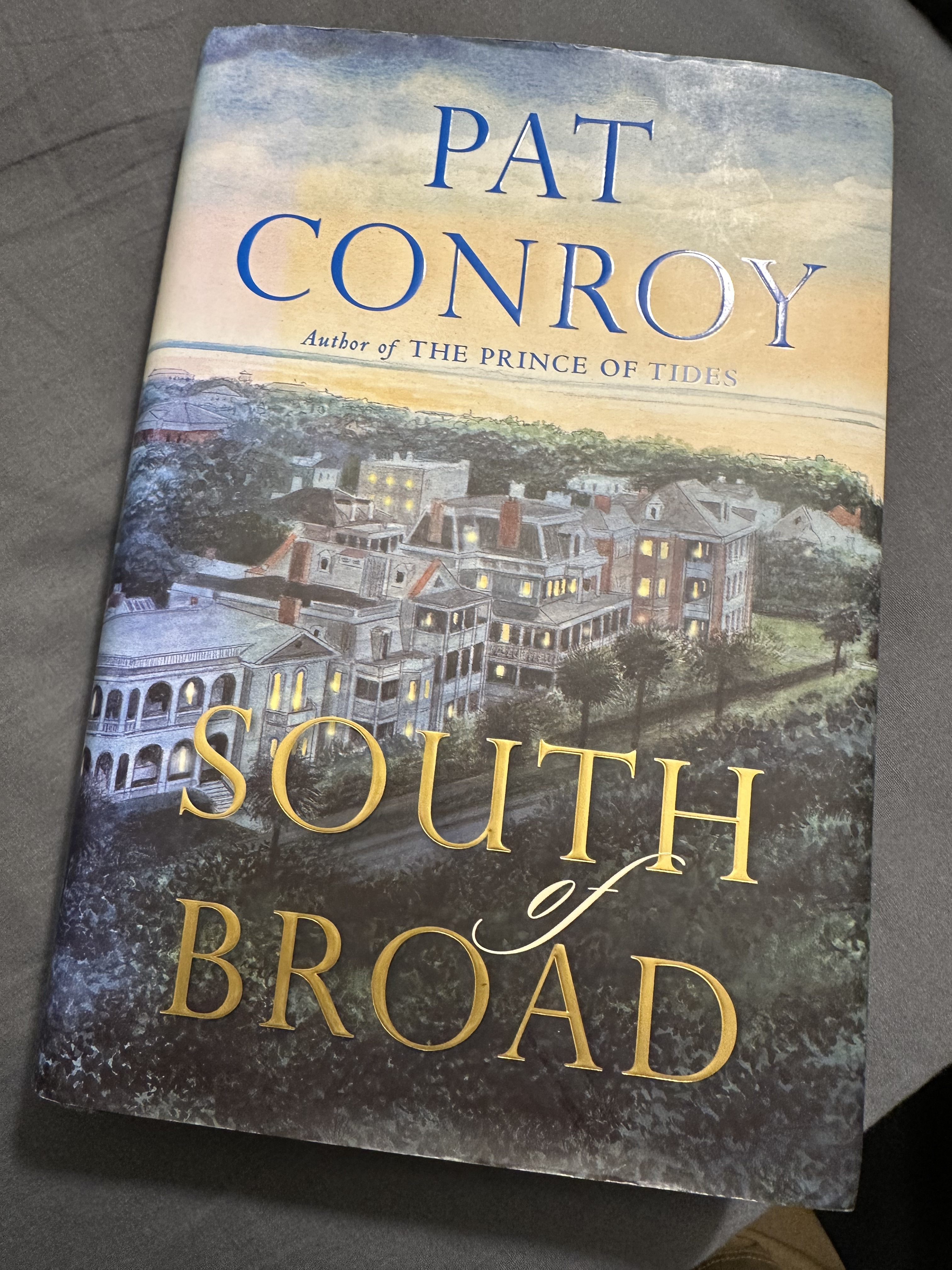
South of Broad with Pat Conroy

For 40 years now I have read Pat Conroy. When my spirit wanes, when the world is too much with me late and soon, when I need to remember the smells of sea, feel the squish of the low country, and imbibe Southernness to remember where my soul’s life hatched, again and again I return to the books of Pat Conroy.

He created characters that rival Dickens’ characters. Pip longed for Estella; Leo longs for Sheba. Dickens had his London and southeastern England; Conroy has his Charleston, Beaufort, and the marsh.

Having spent much time of late in airports, and aboard planes, it has been as refreshing as I could have hoped to again swim in Conroy’s language and drama-filled Southernness, and reconnect with the water, wind, and ways of language. This masterful storyteller moves my soul.

If I remember correctly, South of Broad was Conroy’s last work of fiction. For me, it was truly enjoyable. It covered familiar Conroy themes–abusive church figures, the dangers of ritualism/traditionalism, family secrets, the necessity of beauty, and the perils and joys of following one’s calling.

A Constant Question (that has been answered clearly)

Bottom line up front: The message of forgiveness and hope is to go to all. Some will believe and some will be saved-all who believe.

Intro: It is probably the most important Christian book of theology ever written. Why? Well, because it is God-breathed. It is of course the New Testament book of Romans, penned by the apostle Paul c. the mid-50s A.D., just a few years after the life, crucifixion, death, burial, and resurrection of the Lord Jesus Christ.

I appreciate the way one theologian summarized Romans: “The power of the gospel lies in the cross, in the doctrine of justification by faith in a crucified Redeemer.”

Context: A perennial issue that troubles some people is the relationship between divine sovereignty and human freedom. Since God is sovereign in salvation, why should we evangelize? Why labor to be salt and light in a sinful and darkened world, in other words, since God already has planned the past, present, and future of his cosmos? It’s a good question, but the answer is found in Scripture. We don’t have to scratch our heads but only study what the Bible teaches. So again, here’s the question: “Since God is sovereign in salvation, why should we evangelize? Why labor to be salt and light in a sinful and darkened world, in other words, since God already has planned the past, present, and future of his cosmos?”

Questions and answers: How does Scripture answer this? Here are just some of the many places in Scripture where God answers this question:

  • “For I am not ashamed of the gospel, for it is the power of God for salvation to everyone who believes, to the Jew first and also to the Greek” (Rom 1:16, ESV).
  • “For whoever is ashamed of me and of my words in this adulterous and sinful generation, of him will the Son of Man also be ashamed when he comes in the glory of his Father with the holy angels” (Mark 8:38, ESV).
  • “All that the Father gives me will come to me, who ever comes to me I will never cast out” (John 6:37, ESV).
  • “For God so loved the world, that he gave his only Son, that whoever believes in him should not perish but have eternal life” (John 3:16, ESV).

What do we see in every case here? Several things: 1) The gospel is to go to all, to be proclaimed to all people. That means all races, both genders, rich and poor, young and old; all; 2) Some will reject the truth; this should be obvious to anyone who has shared the gospel; 3) Some will believe and be saved; and 4) God keeps all who are genuine believers; Christ will not ‘lose’ them or ‘cast them out.’

This issue of divine sovereignty and human responsibility is answered in Scripture itself. We need only study Scripture and submit to its authority as the Word of God.

Connection to Spiritual Fitness in the Military: In the Army, we’ve a regulation (AR 165-1) that states: “Moral Leadership Training applies Army values, the enduring social commitments embodied in our nation’s founding documents, applicable legal statutes, military regulations, professional standards and traditions, and related concepts to enhance moral standards and resilience, strengthen character, promote American identity, and empower leaders with credibility” (AR 165-1, Section IV, 9-9).  

Did you catch it? Morality is invariably taught in any system. The writers of our regulations simply term them Army Values. But there they are in black letters: Loyalty, Duty, Respect, Selfless service, Honor, Integrity, and Personal Courage. And we are commanded to teach them, to inculcate that morality through the ranks.

Encouragement/takeaway: Just as the Christian must submit to the authority of Scripture in all things, the Soldier must abide by his lawful regulation(s). Just as the Soldier is to abide by the regs, the Christian submits to God’s Word. Just as perennial issues are addressed in our Army Regulations (ARs), so are theological issues addressed in Scripture for all who will simply study it carefully.