In teaching my students, one of the books of short stories I am using is Sherwood Anderson’s Winesburg, Ohio. In my estimation, it is a masterful collection for several reasons. First, Anderson’s exploration of character. He noticed the details, the turns of phrase his people spoke, their ticks and patterns. Masterful. Second, the stories are pithy. No extra, clumsy, unnecessary words. Some stories, like “Paper Pills,” for example, are only two-to-three pages long. But they are packed with brilliance. Third, there’s an ache of familiarity in these stories that makes you go, “Ah, yes; I know that experience” that great literature elicits.
Salute, Mr. Anderson. I see why Hemingway lauded you before he was later regretfully so unkind to you.
Bottom line up front: It is cliche now because Santayana’s words are repeated so often: “Those who do not learn from history are doomed to repeat it,” but how much more important is it that Christians learn from the history of redemption? Here’s what I mean.
Examples: I was again reading through 1 Chronicles in the Old Testament. It is admittedly not the most enjoyable part of Scripture. It is just what its name denotes–a chronicle, so there is a great deal of recordings of lineages, family lines, and data. But it also contains some magnificent insights, but you have to pay attention. It is important to keep in mind the teaching of the New Testament, and how it fulfills the Old Testament and explains it: “For whatever was written in former days was written for our instruction, that through endurance and through the encouragement of the Scriptures we might have hope” (Rom 15:4, ESV). Written for our instruction. That is key. Written for our instruction.
The early parts of 1 Chronicles focus upon Saul as an example of a wicked king, a wicked ruler, a shell of a man. Saul was in it for Saul, not for the Lord. Saul was a judgment upon the people for their trusting in man rather than in the Lord:
Then all the elders of Israel gathered together and came to Samuel at Ramah and said to him, “Behold, you are old and your sons do not walk in your ways. Now appoint for us a king to judge us like all the nations.” But the thing displeased Samuel when they said, “Give us a king to judge us.” And Samuel prayed to the Lord. And the Lord said to Samuel, “Obey the voice of the people in all that they say to you, for they have not rejected you, but they have rejected me from being king over them. According to all the deeds that they have done, from the day I brought them up out of Egypt even to this day, forsaking me and serving other gods, so they are also doing to you. Now then, obey their voice; only you shall solemnly warn them and show them the ways of the king who shall reign over them.” (1 Sam 8:4-9, ESV)
By the time we get to 1 Chronicles, Saul has been revealed to the discerning to have been a wicked man, a duplicitous leader, an insecure person, and a judgment upon the people. He hates David because he knows David is God’s man and he (Saul) cannot bear it.
Saul is later wounded in battle and eventually commits suicide, but even that was under the sovereignty of God: “So Saul died for his breach of faith. He broke faith with the Lord in that he did not keep the command of the Lord, and also consulted a medium, seeking guidance. He did not seek guidance from the Lord. Therefore the Lord put him to death and turned the kingdom over to David the son of Jesse” (1 Ch 10:13-14, ESV). Writtten for our instruction.
Encouragement/takeaway: It connects so appropriately to our day, does it not? California is burning up because of the policies of the Left, but the locals reinstall the same failures in office to be their career politicians, their Sauls. Meanwhile, the earth literally is scorched. Yet the people don’t learn. God ordains Sauls in our lives in order to awaken us, to “quicken” us, to say, “You are being used as fools and the sufferings are to lead you to repentance and faith in the truth. Will we learn from history? Will we see that these things are written, as it were, for our instruction–or will we watch it all burn? Because as Scripture reminds us time and time again: “Do not be deceived: God is not mocked . . .” (Gal 6:7, ESV).
Bottom line up front: Folly is inextricable from the suppression and denial of God; wisdom is linked inextricably to God and following God’s revealed will.
Illustration: I was reading the regulations for the Chaplain Corps recently and thinking of them in light of Scripture. It is uncanny how even our nation’s military reflects biblical wisdom. For example, the Army’s Chaplain Corps’ regulations include the acronym S.A.C.R.E.D. The letters denote spirituality, accountability, compassion, religious leadership, excellence, and diversity.
I thought through the characteristics listed in the regulation regarding accountability. It read, “Encourage individuals to make sound moral and ethical decisions.”
Issues: In order to make sound moral and ethical decisions, there must be an objective standard of reference for morals and ethics. That standard must be transcendent, unchanging, and holy. What worldview provides that? Is it the shifting sands of secularism? Is it popular vote? Is it force or compulsion?
In the biblical worldview, you have the fountain of all wisdom who is transcendent, unchanging, and holy. To provide some examples:
“For I the LORD do not change” (Mal 3:6, ESV).
“God is not man, that he should lie, or a son of man, that he should change his mind” (Num 23:19a, ESV).
“Holy, holy, holy is the LORD of hosts; the whole earth is full of his glory!” (Is 6:3, ESV).
Encouragement/takeaway: As David reminds us in the Psalter, “The fool says in his heart, ‘There is no God'” (Ps 14:1a, ESV). Worldview is destiny. And what the biblical worldview provides is the unchanging foundation upon which objective moral values and ethics stand. Remove that and armies fall; inculcate that and discover the benediction of God.
Introduction: “Your sins will find you out.” I heard that for years as a boy before I learned where the phrase came from. It comes from Scripture: “But if you will not do so, behold, you have sinned against the LORD, and be sure your sin will find you out” (Num 32:23, ESV). It is a terror to the wicked but a comfort to the righteous.
Illustration: Today as I was studying Genesis 38, I saw that truth played out in history. Genesis 38 is the tragic story of Judah and Tamar. Not knowing that Tamar was his daughter-in-law (she had her face covered because she was pledged to Shelah in marriage; she was slated to marry him when he came of age), Judah slept with her. Tamar made Judah pledge to her by way of his signet, his cord, and his staff:
And she said, “If you give me a pledge, until you send it—” 18 He said, “What pledge shall I give you?” She replied, “Your signet and your cord and your staff that is in your hand.” So he gave them to her and went in to her, and she conceived by him. 19 Then she arose and went away, and taking off her veil she put on the garments of her widowhood. (Gen 38:17-19, ESV)
Tamar became pregnant. This of course would not be kept secret. When it could no longer be kept under wraps, it was told Judah, Your daughter-in-law has become pregnant by someone other than the man betrothed to her. But the reality was that Judah himself was the father, because he slept with her, thinking she was a prostitute, not his future daughter-in-law:
24 About three months later Judah was told, “Tamar your daughter-in-law has been immoral. Moreover, she is pregnant by immorality.” And Judah said, “Bring her out, and let her be burned.” 25 As she was being brought out, she sent word to her father-in-law, “By the man to whom these belong, I am pregnant.” And she said, “Please identify whose these are, the signet and the cord and the staff.” 26 Then Judah identified them and said, “She is more righteous than I, since I did not give her to my son Shelah.” And he did not know her again. (Gen 38:24-26, ESV)
But the Truth Came Out: Judah’s ways were disclosed. He had folks fooled for a while, but the truth came out. He was not righteous. He was wicked. It took some time, but eventually people discovered what he was like. The signet, the cord, and the staff revealed him to be the scheming one, the one hiding behind a mask, not his future daughter-in-law. May we be encouraged to keep short accounts with the Lord.
One Coherent Story. The Bible is one coherent story with the Christ of God as the hero. God’s hero does what all true heroes do–he endures immense sufferings, trials, betrayals, and evils. Here’s what I mean.
Today I was again reading the last 15 chapters of Genesis. The main character is Joseph in these chapters. Joseph was one of the 12 sons of Jacob/Israel. He was also Jacob’s/Israel’s favorite: “Now Israel loved Joseph more than any other of his sons . . .” (Gen 37:3, ESV).
But here’s what I mean about the Bible being one coherent story and what I mean about Joseph being a foreshadowing of Jesus, the Christ of God.
Here are several ways Joseph is a forerunner and foreshadowing of Jesus, the Christ of God:
He is the seeker of rebels: “I am seeking my brothers,” he said. “Tell me, please, where they are pasturing the flock” (Gen 37:16, ESV).
He was conspired against by those who should have loved him: “They saw him from afar, and before he came near to them they conspired against him to kill him” (Gen 37:18, ESV).
He was cast down into the pit: “Come now, let us kill him and throw him into one of the pits” (Gen 37:20, ESV).
He was publicly stripped of his clothing: “So when Joseph came to his brother, they stripped him of his robe . . .” (Gen 37:23, ESV).
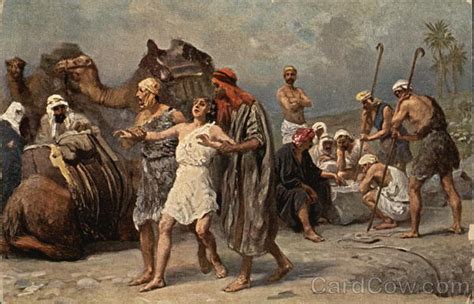
He was sold for shekels: “And they drew Joseph up and lifted him out of the pit, and sold him to the Ishmaelites for twenty shekels of silver” (Gen 37:28, ESV).
A goat/lamb was slaughtered and blood applied to a robe as a picture of sacrifice: “Then they took Joseph’s robe and slaughtered a goat and dipped the robe in the blood” (Gen 37:31, ESV).
Anyone who has eyes to see and ears to hear and has read the New Testament, or at least the gospels, should grapple with these foreshadowings of the Christ of God, and marvel at the Bible’s coherence. It is one coherent story wherein every detail is significant because it is crucial to the whole.
Encouragement/takeaway: God is a God of details. He knows the fine print of every atom. Why? Because it’s his world. He made it. He knows our every thought, our every prayer, our every song, our every tear, our every everything. If you feel persecuted today by the machinations of schemers, be encouraged. Why? Just because of some silly psychological pep-talk? No. But because God knows all. Because God is good. Because God ordained Joseph’s sufferings as part of his education in what it means to be God’s man rather than a man who is in love with the applause of sinners. Seek to please the Lord, because it is to the Lord we will all answer. It is all part of God’s one coherent story of redeeming sinners for his glory and our good.
Bottom line up front: In a fallen world where sinful men betray one another, God still keeps his covenantal promises.
Historical context: Genesis 25 is a truly awesome chapter in redemptive history. Why? We see the outworking of the covenantal faithfulness of God to the patriarch Abraham.
How? God had promised Abraham that God would use Abraham to bless the world. In fact, the blessing would be comparable to the amounts of stars in the night sky and sand upon the shores of the world’s seas (Gen 22:17).
Throughwhom? The son of promise. God promised Abraham, “But I will establish my covenant with Isaac” (Gen 17:21). It is important to remember that Abraham had multiple sons. There were many: Ishmael, Simram, Joshan, Medan, Midian, Ishbak, Shuah (Gen 25:1). But Isaac was the son in the immediate through whom God’s covenant faithfulness would lead to the fulfillment: Christ.
And in Genesis 25:5 we read this amazing line: “Abraham gave all he had to Isaac.” See it? The gives all things to the son he loves. Sound familiar? It should. Why? Because it is the foreshadowing of God the Father giving all things to his beloved Son (Mt 28:18).
Paul makes it even more explicit:
15 To give a human example, brothers: even with a man-made covenant, no one annuls it or adds to it once it has been ratified. 16 Now the promises were made to Abraham and to his offspring. It does not say, “And to offsprings,” referring to many, but referring to one, “And to your offspring,” who is Christ. 17 This is what I mean: the law, which came 430 years afterward, does not annul a covenant previously ratified by God, so as to make the promise void. 18 For if the inheritance comes by the law, it no longer comes by promise; but God gave it to Abraham by a promise. (Gal 3:15-18, ESV)
Encouragement/takeaway: All of Scripture coheres. Why? It reveals one inextricable story of God’s plan of redemption. When you read Scripture, you are given an insight into the greatest true story ever told because it reveals what God has done and is doing to redeem a people for himself. And this story is full of the covenant faithfulness of the unchanging and trustworthy God.
Bottom line up front: Our plans are never so wise as we fancy them; the Lord’s plans are best, and if we are wise, we will follow them.
Example: Tonight I was in one of my favorite passages of Scripture, Genesis 24. It’s the story of Isaac and Rebekah. But it is much more than a love story. It is the story of the providence and faithfulness of God to those who trust him. Here’s what I mean.
Abraham had been a man called out of Ur (present-day Iraq) to believe the only true and living God, and Abraham believed God, and God counted his faith in the word of God as righteousness: “And he [Abram] believed the LORD, and he counted it to him as righteousness” (Gen 15:6, ESV). In short, justification came to Abram as it does to all–by grace alone, through faith alone, in God alone.
Abraham’s wife (Sarah) died later on, and Abraham (believing the covenantal promises of God) wanted the Lord to provide a wife for his son, Isaac. So Abraham sends his servant to discover the right woman for Isaac, back to Abraham’s home territory to find the right woman the Lord will provide. And the unfolding events are beautiful. Just let sink in the depth of the words of Abraham’s servant as he seeks to honor his master and the God of Abraham:
14 Let the young woman to whom I shall say, ‘Please let down your jar that I may drink,’ and who shall say, ‘Drink, and I will water your camels’—let her be the one whom you have appointed for your servant Isaac. By this I shall know that you have shown steadfast love to my master.”
15 Before he had finished speaking, behold, Rebekah, who was born to Bethuel the son of Milcah, the wife of Nahor, Abraham’s brother, came out with her water jar on her shoulder. 16 The young woman was very attractive in appearance, a maiden whom no man had known. She went down to the spring and filled her jar and came up. 17 Then the servant ran to meet her and said, “Please give me a little water to drink from your jar.” 18 She said, “Drink, my lord.” And she quickly let down her jar upon her hand and gave him a drink. 19 When she had finished giving him a drink, she said, “I will draw water for your camels also, until they have finished drinking.” 20 So she quickly emptied her jar into the trough and ran again to the well to draw water, and she drew for all his camels. (Gen 24:14-20, ESV)
Knowing that God was keeping his covenantal promise, verse 27 of Genesis 24 is absolutely beautiful: “Blessed be the Lord, the God of my master Abraham, who has not forsaken his steadfast love and his faithfulness toward my master. As for me, the Lord has led me in the way to the house of my master’s kinsmen.”
Encouragement/takeaway: We often have many plans in our heart/core, but it’s the Lord who is sovereign. “The lot is cast into the lap, but its every decision is from the Lord” (Pr 16:33, ESV). That should be the Christian’s great conviction and comfort. The Lord knows us better than we know ourselves.
Over the recent past I have been teaching through Matthew’s gospel, and we are all currently in Matthew 14 where Christ is told of the beheading of John the Baptist. Then, Christ teaches Peter and others about the proper locus of the Christian’s trust. Christ fed the 5,000, plus women and children, after multiplying the five loaves and two fish. And he did it to such a degree that 12 baskets full were left over (Mt 14:20). The point of course was that God is the sovereign provider. Men will let us down. We have been disappointed by others, and we have likely disappointed others ourselves.
Then you come to one of the most dramatic episodes in the NT wherein Peter, often more impulsive than wise, sees Christ walking on the surface of the Sea of Galilee/Lake Gennesaret, and he pleads with Christ, “Lord, if it is you, command me to come to you on the water” (Mt 14:26). At first Peter, too, walked on the water, just so long as he kept his focus upon Christ. But you know the story, right? He began focusing on the wind and the whitecaps of waves, and found himself crying out to Christ, “Lord, save me” (Mt 14:30).
Christ did just that: he saved Peter from drowning, in several senses of that word. And the result of those others in the boats that witnessed all of it: “And those in the boats worshiped him [Christ], saying, “Truly you are the Son of God” (Mt 14:33).
Encouragement/takeaway: Peter learned to trust the One who was and is wholly in command, and who is not only in command but is also truly good. Peter had his confidence in command bolstered but through trials. Lord, increase our faith in You.
All eyes were on New Orleans. Many eyes, anyway. College football is one of America’s golden calves, and the 91st Sugar Bowl between UGA and Notre Dame had to be rescheduled due to the Islamic terrorist attack that has so far resulted in the murders of nearly 20 people and injuries of scores more. The investigations, as the saying goes, are ongoing.
Questions: How does any reasonable person believe that murdering people by driving a Ford truck, outfitted with ISIS flags, into crowds of civilians, is evangelism? How is this reasonable? Well, it isn’t, of course. It is evil. But what one cannot say, however, is that Islamists like this man don’t make their theology visible.
What the world will always have to grapple with is this: worldview is destiny. People’s theology is always evidenced by behavior. Belief is known by behavior. We reveal our theology; it invariably is made visible.
In Christianity alone, peace comes because God himself in the second person of the Trinity (Christ the Son) is our peace. Christ made peace by the cross:
5 Therefore, since we have been justified by faith, we have peace with God through our Lord Jesus Christ. 2 Through him we have also obtained access by faith into this grace in which we stand, and we rejoice in hope of the glory of God. 3 Not only that, but we rejoice in our sufferings, knowing that suffering produces endurance, 4 and endurance produces character, and character produces hope, 5 and hope does not put us to shame, because God’s love has been poured into our hearts through the Holy Spirit who has been given to us. (Romans 5:1-5 ESV).
It’s the work of God in Christ, you see: “and through him to reconcile to himself all things, whether on earth or in heaven, making peace by the blood of his cross” (Colossians 1:20 ESV).
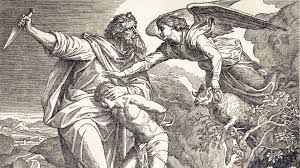
So long as men demand violence by sacrficing their sons on altars of human sin, rivers of blood will continue. When men repent and believe upon the Lord Christ and his cross, their hearts will be made new, and then they will begin to understand shalom/peace.
Terror in the Big Easy. Current reports claim at least 15 people have been murdered and dozens more are injured. We seldom hear and/or know how to grapple with the spiritual and emotional trauma that accompanies such events, but that trauma exists.
Who knows if we will ever know the truth about the perpetrator(s)? llegal(s) or U.S. citizen(s)? His and/or their (in case there’s a network at play) religion? The worldview undergirding the murders?
Connection: Today when I returned to my work location, I was reading in the Pentateuch. Moses penned this about man’s fallenness:
The Lord saw that the wickedness of man was great in the earth, and that every intention of the thoughts of his heart was only evil continually. And the Lord regretted that he had made man on the earth, and it grieved him to his heart (Gen 6:5-6 ESV).
It’s easy to rip verses out of context, so let us not do that. At its most fundamental level, what God is teaching here is that human depravity is real and universal. It is what’s known in theology as total depravity. A few of the scores of passages that teach it follow. Well, for the sake of brevity, just consider Romans 3:10-18 . . .
10 as it is written:
“None is righteous, no, not one; 11 no one understands; no one seeks for God. 12 All have turned aside; together they have become worthless; no one does good, not even one.” 13 “Their throat is an open grave; they use their tongues to deceive.” “The venom of asps is under their lips.” 14 “Their mouth is full of curses and bitterness.” 15 “Their feet are swift to shed blood; 16 in their paths are ruin and misery, 17 and the way of peace they have not known.” 18 “There is no fear of God before their eyes.” (Rom 3:10-18 ESV)
Questions: How might atheism answer this? Ah, it’s just matter in motion. Random molecules bumping into other molecules. Nothing to see here but matter in motion. Stop all your whining.
How might Critical Race Theory and the Wokesters answer this? The perpetrator(s) was/were ‘oppressed.’ Who’s to blame? Invariably, those answers will be whites, the patriarchy, America, the West, Christianity, and the privileged. This drivel is as predictable as cold in winter and heat in summer.
How does Christianity answer this? Man is a rebel against the holy. Unless and until he is regenerated by the sovereign power of God, it’s a world of Cains rather than Abels. But thanks be to God, whose message is to go to all,
Today, if you hear his voice, do not harden your hearts as in the rebellion. (Hb 3:15 ESV)







 MIND & MATTERS