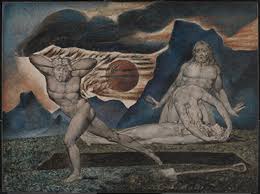
I was having a discussion recently about Cain, about his hard heart, about his murder of his brother (Abel), about his (Cain’s) punishment, and about his (Cain’s) mark. The passage is found in Genesis 4.
Two types: Shepherd/herdsman (Abel) & Farmer/worker of the soil
“Abel was a keeper of sheep, and Cain a worker of the ground” (Gen 4:2, ESV).
Fratricide/murder of a brother:
3 In the course of time Cain brought to the Lord an offering of the fruit of the ground, 4 and Abel also brought of the firstborn of his flock and of their fat portions. And the Lord had regard for Abel and his offering, 5 but for Cain and his offering he had no regard. So Cain was very angry, and his face fell. 6 The Lord said to Cain, “Why are you angry, and why has your face fallen? 7 If you do well, will you not be accepted? And if you do not do well, sin is crouching at the door. Its desire is contrary to you, but you must rule over it.”
8 Cain spoke to Abel his brother. And when they were in the field, Cain rose up against his brother Abel and killed him. 9 Then the Lord said to Cain, “Where is Abel your brother?” He said, “I do not know; am I my brother’s keeper?” 10 And the Lord said, “What have you done? The voice of your brother’s blood is crying to me from the ground. 11 And now you are cursed from the ground, which has opened its mouth to receive your brother’s blood from your hand. 12 When you work the ground, it shall no longer yield to you its strength. You shall be a fugitive and a wanderer on the earth.” 13 Cain said to the Lord, “My punishment is greater than I can bear. 14 Behold, you have driven me today away from the ground, and from your face I shall be hidden. I shall be a fugitive and a wanderer on the earth, and whoever finds me will kill me.” 15 Then the Lord said to him, “Not so! If anyone kills Cain, vengeance shall be taken on him sevenfold.” And the Lord put a mark on Cain, lest any who found him should attack him. 16 Then Cain went away from the presence of the Lord and settled in the land of Nod, east of Eden. (Gen 4:3-16 ESV)
Questionswe could ask: 1) Why did God have regard for Abel’s offering? 2) Why did God not have regard for Cain’s offering? 3) Is the firstborn of Abel’s flock more valuable vis-a-vis devotion to God? 4) Why was Cain “very angry” (Gen 4:5b) when God asks him in verse 7, “If you do well, will you not be accepted?”
It seems that Cain had a heart that was hostile to God’s rule. In modern parlance, we might term Cain the classic case of hardheartedness. He’s a rebel against God, and he’s a rebel against his brother. He is a case of moral defiance. He makes his theology visible by way of his sullenness towards God and his violence towards man.
Yet we see God still act with grace and mercy towards the murderer Cain. God marks him:
“If anyone kills Cain, vengeance shall be taken on him sevenfold.” And the LORD put a mark on Cain, lest any who found him should attack him. Then Cain went away from the presence of the LORD and settled in the land of Nod, east of Eden.” (Gen 4:15-16 ESV)
Encouragement/takeaway: I think it is quite easy to distance ourselves from Cain too quickly. We may be tempted to overestimate our goodness. We may be tempted to think we’d never be like Cain; we’d of course be “the good guy” (Abel). But is that true? How many of us have resented others? How many of us have hated our brother in our heart? How many of us have sulked before God, going, “Why, Lord?” I won’t speak for others, because I’m guilty of all of the aforementioned. And yet God was gracious and merciful to Cain. He preserved him for a season. We are debtors–great debtors–to God’s mercy.
It is a trope, really, that as we age, time seems to pass more quickly. That has certainly been my experience. As I have taken a few days off from work, I have some time to reflect upon this past year and other matters. A few musings follow:
We are thrilled at our daughter’s wedding coming soon. I think CJ and I are at least as excited–probably more–than our daughter. We already view her soon-to-be hubs as our son, and so … let’s do this.
Bring on the grandbabies! We long to be wonderful grandparents. My bride and I had stellar grandparents. Their imprints upon our lives remain upon us, and we talk of our grandparents still. I know of few people who influenced us both as powerfully as our wonderful grandparents. And we long to pay that track record of godly loving wise care on to our own grandchildren.
I was able to serve another year in military ministry and serve on a mission field that I love. The military is formidably secular, and so I am ever grateful that the Lord has sustained me on a field where I can try to break through the empty walls of secularism and try to reach fellow soldiers with the truth of redemption that is found in Christ alone and the saving gospel.
I was able to watch our son continue to pursue his passion for music and continue to develop. Our family is steeped in music, and I think our boy may make his mark in the musical world.
My family and I continue to be blessed by way of our Sunday school class and what the Lord has done in and through them. I have been in ministry a great many years now, and there is nothing quite like the fellowship of brothers and sisters in Christ, and being able to be a small part of God’s work upon a flock of God that you love.
I was able to baptize another soldier after he graduated from Ranger school. I have a special affection for him because he is among the most remarkable young men I have ever had the opportunity to serve in military ministry. He is physically strong, intellectually strong, but most of all, he is a man who is spiritually strong, and I think he will continue to make his mark upon soldiers and civilians because of the plans God has for him.
I was able to baptize a couple from our Sunday school class, too, at our church. I continue to see God grip people and call them to obedience to his revealed will. Friendships are formed; roots grow deeper; and the truth spreads, just as God says it will.
I was able to read and/or re-read scores of books this year while on my travels. Among my favorites were Dostoyevsky’s The Brothers Karamazov (again), several biographies of Spurgeon, lots of church history volumes by Robert Godfrey, John Frame, and Tom Nettles, Jonathan Edwards, Jonathan Franzen’s books, more Dickens (I never tire of Dickens’ works); Shakespeare’s plays, The Master and Margarita, Gettysburg, and more.
We lost our old German shepherd Brewster after his many years with us. He lived a long, long life. I have had dogs my entire life. I do not remember ever not having dogs. And I have loved every one of them, but Brewster, old buddy, you had a piece of my heart that I cannot put into words. We hiked many a mile together, and you chased many deer, and you were as loyal and faithful as one could ever long for, and I love and miss you at a visceral level. Thank you for your love.
I would be remiss were I not to pay homage to the one who allows me to do what I love, and somehow keeps us all on the straight path–my Carrie Jane. For any successes I may have, I do not think they would happen unless she were right there with me. She prays for me; she loves me despite all my sins and shortfalls; she endures much separation from me due to my career in the military; and yet she pulls it all off like a champ.
I could go on with the list, of course, but 10 seems like a good place to stop for now. Bring on 2025. Merry Christmas.
This morning when I came downstairs, CJ was in her chair and was finishing her read-through this year of the Scriptures again. She uses the chronological plan, too, and loves it. Why? Because it is the sequential revelation of what God is doing through redemptive history. Anyway, here is the story:
“May I read this aloud to you? It’s Revelation 19 till the end,” she asked.
“Of course,” I said. I love few things as much as reading, and I love it when my wife reads aloud to me. We invariably have deep discussions after the readings.
She began reading. I listened and followed along in one of my own Bibles. In Revelation 19, I listened as she read of the rejoicing in heaven and of the marriage supper of the Lamb. (The apostle John’s education at the feet of Christ is literary pathos and majesty unlike anything else in Scripture.)
Then she got to Revelation 20 and the apocalyptic language of the 1,000 years, and the judgments at the great white throne. Then she read Revelation 21 about the new heaven and new earth, and finally Revelation 22, and of Christ’s final words to John, about how the consummate story concludes and of how we are to press on, looking to God’s revealed Word, knowing that Christ knows all, and the scrolls will be opened ultimately, and how all hinges upon what we do when confronted with the truth.
After she finished reading, we talked about weighty concepts and views of the millennium, of Babylon, of the New Jerusalem, of how many read but do not understand, of biblical shepherds versus hirelings, of the trustworthiness of Scripture, and on and on.
CJ and I have been a team for decades. But there are few things I love about her as much as when I am able to come home from my career in the military, find her in her chair when I come downstairs in the morning after a night’s sleep, her worn Bible on her lap, our Cavalier King Charles Spaniel (Lady) beside her, her black marble eyes shining as I approach them both, and we can read Scripture together and dialogue about ultimate things.
The nose of the plane had just lifted. This was the last leg of a journey home after being with fellow soldiers in Pennsylvania. I was so tired, I knew I would be asleep in minutes.
She was in the aisle seat on the row behind me. It was a Delta flight, a short one back to my work location. I had slept very little the night before and continued to battle bronchitis that has remained in my lungs for a month now. Normally I read on flights, but I was so tired this day, I intened to close my eyes and rest. Then it came.
EEEeeeeeeccccchhhh!!!! The woman in the aisle seat on the row behind me began having an epileptic seizure. She flailed, foamed at her mouth, kicked at the seats, and was helpless to do anything but endure. The flight attendant rushed to the phone in the galley at the front, called the flight deck, and shouted, “We have a medical emergency!” into the phone receiver.
EEEeeeeeeccccchhhh!!!! The woman’s thrashing continued. The flight attendant asked loudly, “Is there a doctor on the plane?!” No one came forward. No one spoke. All of us just sat. Some turned their heads to stare at this woman who was clearly in agony. We felt helpless.
The pilot lowered the nose of the plane and returned us to our terminal. The flight crew called the EMTs and paramedics. The pilot, to his great credit, remained very calm. He came on the speaker: “Ladies and gentlemen, this is your pilot speaking. We are returning to the gate because we have a passenger who is not feeling so well. This should take about 30 minutes or so for us to taxi and get her medical help. Thank you for your patience.”
He was so understated, he could have been a Brit. Not feeling so well. Meanwhile the screaming continued. The flight attendant rifled through the seizing woman’s purse for any medication or contact information she might use. She retrieved only two cell phones and was somehow able to contact the woman’s son to let him know his mother was going to be taken to Grady in Atlanta via ambulance from the airport.
The screaming continued and the plane’s passengers otherwise were deathly silent. We were of no help. I tried to pray, grasping to say silently to the Lord what He already knew–that this woman was in agony and she needed help. Mercy, Lord, mercy. IbegYou.
Finally we arrived back at the gate. The door was opened. Two paramedics entered with a rollup gurney. They tried to communicate with the woman, but she remained uncommunicative. The flight attendant updated the paramedics on what had happened, gave them and the EMTs (they were just outside the door) a summary of what had happened, the woman’s purse, and the two cell phones.
The pilot came back on the intercom. “Ladies and gentlemen, this is your pilot again. We have gotten the passenger medical attention. It may take another thirty minutes or so, and we should be able to be on our way shortly. We apologize for this inconvenience and appreciate your patience.” He was the textbook definition of grace under pressure.
Eventually we were able to take off and we landed safely. We were about 90 minutes later than our original slated arrival time, but it did not matter to me. I had watched this poor woman go through agony right behind me, and I was of no help. I felt so small. It seemed that so much of life was out of my control, that life was tenuous, that all can change in an instant. I wanted desperately to see my wife and tell her I loved her and to hug my children. And I am thinking still of that woman who shrieked in agony on the plane, and of whether she got to the ER at Grady in time, and of her life and the life of her son, and I wanted to say, I don’t know exactly what, except that I am sorry, and that I learned from your suffering, and that I am doing my best to tell a bit of your story.
Reading Abbey’s Desert Solitaire this evening as vehicular traffic roared outside my window on I-81, the irony was formidable. In 36 hours I had gone from sable surreys driven by bearded men with their women in skirts and Mennonite haubes beside them to semi-trucks with Case, Caterpillar, and John Deere painted on their hauling trailers.
After a day spent with fellow soldiers in the Lancaster County, PA region recently, I was able to drive some local roads. The land seemed to summon my soul. Not just the land, but the Mennonite communities that stewarded it.
The rolling hills, the surreys, the fields of corn, and orchards of apples. On and on they rolled. The soil was black and pungent. A richness as beautiful as woman.
Introduction: This morning I was in one of my favorite sections of Scripture–Isaiah 42. Why is it a favorite? Well, it is magnficent in its subject matter. It is about God’s unfolding covenantal purpose to bring the Redeemer, what the passage terms the Lord’s chosen servant.
Words matter. The reality of God’s choosing in Scripture is overt. The reality of God’s covenants in Scripture is overt. The reality of promise and fulfillment in Scripture is overt. And Isaiah 42 contains all of those.
Verse 1 of the chapter is straightforward: “Behold my servant, whom I uphold, my chosen, in whom my soul delights; I have put my Spirit upon him; he will bring forth justice to the nations” (Isaiah 42:1, ESV).
Question: Why should we care? Well, how’s this for a start? Since God has spoken, we should listen. The alternative is that there’s no divine revelation, and you are just molecules in motion. How comforting. But honest people know the deal; they know they’re not just molecules in motion. That’s why laws are legislated; that’s why people vote for ‘justice’, despite how imperfectly they understand that term or its foundation/genesis. Honest people know.
Connection to Our Day: I was listening to a podcast recently of a woman who was raised in Islam, later fled for her life, embraced atheism for a season, then came to see to the despair of atheism, and has now been gripped by the gospel, and is a writer and Christian thinker. (Her name is Ayaan Hirsi Ali; she is easy to find on the social media of your choice.) In her being interviewed by an atheist host, I was impressed with her kindness and patience with the solipsism of her interviewer, with the ways in which he contradicted himself whilst remaining blind to it. It reminded me of how often we sinners do that. We complain of injustice, but we have scant idea of who defines justice and just how just holiness is.
Connection to the New Testament: Then my mind took me right to the glaring connections to the gospel. Just a few of the places that Isaiah 42 and the interview reminded me of follow. Remember now, God’s choosing, God’s servant, God’s covenant, and redemption:
Again Jesus spoke to them, saying, “I am the light of the world. Whoever follows me will not walk in darkness, but will have the light of life” (John 8:12, ESV).
“As long as I am in the world, I am the light of the world” (John 9:5, ESV).
“And I, when I am lifted up from the earth, will draw all people to myself” (John 12:32, ESV).
Encouragement & Takeaway: Back in Isaiah 42, Scripture records these words of God: “I am the LORD; I have called you in righteousness” (v. 6a, ESV). And then this wisdom:
“Behold, the former things have come to pass, and new things I now declare; before they spring forth I tell you of them.” (Isaiah 42:9, ESV)
God revealed the future in the past, in other words. He is the covenant-making, covenant-keeping God. He promised his servant, the suffering servant, the conquering servant, the servant-savior of sinners. And that promised servant and savior is also the redeemer, you see, and it’s why Christmas holy days are upon us, because Christ has come. He is the hero of the one coherent story.
Intro: There’s a character in the Bible with whom I have often tracked. His name is Hezekiah. In Isaiah 38, Scripture records that Hezekiah fell ill, deathly ill. And he did what many of us do when our health takes a turn for the worse: he called out to the Lord for mercy and restoration. That is a natural reaction. This was Hezekiah’s prayer to the Lord:
“Please, O LORD, remember how I have walked before you in faithfulness and with a whole heart, and have done what is good in your sight.” And Hezekiah wept bitterly. (Isaiah 38:3, ESV)
But it is so tempting to read that and think that’s the whole story. It isn’t. Yes, Hezekiah was often a good and noble ruler. But there were also times when Hezekiah very much missed the mark of God’s standard. For example, we read in 2 Chronicles 32:25 this indictment:
But Hezekiah did not make return according to the benefit done to him, for his heart was proud. Therefore wrath came upon him and Judah and Jerusalem. But Hezekiah humbled himself for the pride of his heart, both he and the inhabitants of Jerusalem, so that the wrath of the LORD did not come upon them in the days of Hezekiah. (2 Chronicles 32:25-26, ESV)
Takeaway & Encouragement: Maybe I’m the only one, but have you ever met folks whose sense of their own importance rubbed you the wrong way? Sure, we all have. But if we are honest, we all could use more humility. God has so much to say in Scripture about how pride is a killer.
“When pride comes, then comes disgrace, but with the humble is wisdom” (Proverbs 11:2, ESV).
“One’s pride will bring him low, but he who is lowly in spirit will obtain honor” (Proverbs 19:23, ESV).
“Pride goes before destruction, and a haughty spirit before a fall” (Proverbs 16:18, ESV).
I think Hezekiah is given the sections of Scripture he’s given to teach, among other things, that our best days and ministries are accomplished when we are humble before the Lord and humble before people. God both raises people and brings them low, and part of His reasoning for doing so is to demonstrate our need of humility in service. The Army Values term it “selfless service.” That concept did not originate with the Army but with God.
Introduction: Biblical and archaeological scholars have often agreed that Job and Genesis were penned nearly simultaneously. Among other things, their themes so often overlap when it comes to perhaps the most difficult of issues for all of us–the problem of evil and suffering.
Job is, among other things, the historical account addressing these issues: Given that there is so much suffering, is God good and does God actually rule all things in accordance with His will?
Connections to Our Days: When I read the news online and witness some of the atrocities, I don’t know how folks cannot understand the gravity of the situation. When I read of Laken Riley’s murder at the hands of an illegal alien, it breaks my heart, because I, too, have a daughter about that age. When I read how a U.S. Marine Daniel Penny vet fought a battle and saved innocent people on a New York subway, rather than rewarding the good man, many want to crucify the good man, and portray the thug as the innocent victim. It goes on and on. Justice has been turned upside down, seemingly at the hands of the most corrupt and ruthless. Truth is banished and corruption is rewarded.
Then in Job this morning I read this:
13 “With God are wisdom and might; he has counsel and understanding. 14 If he tears down, none can rebuild; if he shuts a man in, none can open. 15 If he withholds the waters, they dry up; if he sends them out, they overwhelm the land. 16 With him are strength and sound wisdom; the deceived and the deceiver are his. 17 He leads counselors away stripped, and judges he makes fools. 18 He looses the bonds of kings and binds a waistcloth on their hips. 19 He leads priests away stripped and overthrows the mighty. 20 He deprives of speech those who are trusted and takes away the discernment of the elders. 21 He pours contempt on princes and loosens the belt of the strong. 22 He uncovers the deeps out of darkness and brings deep darkness to light. 23 He makes nations great, and he destroys them; he enlarges nations, and leads them away. 24 He takes away understanding from the chiefs of the people of the earth and makes them wander in a trackless waste. 25 They grope in the dark without light, and he makes them stagger like a drunken man.
Takeaway and Encouragement: God does indeed rule over nature, people, and all things. He is the giver of wisdom. He both withholds water and sends floods. He raises up rulers and he sends rulers away. He makes folly overt (v. 20). He makes bureaucrats laughable (v. 21). And v. 23 hit me like a train: “He makes nations great, and he destroys them . . . .” That should grip us. But does it? It is my view that God has been graciously–unspeakably gracious–to this nation despite our heinous sin. It remains to be seen how we will respond at such a time as this. But it is surely beyond time for the true church to be salt and light, by living lives in keeping with our profession in the God who rules all things for the glory of His name.










 MIND & MATTERS