Depth or Kitsch?

Intro: For some time now, I have been studying Matthew’s gospel especially and comparing it to John’s letters. Matthew focuses mainly upon the pattern of promise and fulfillment. The Old Testament promised the coming Savior-Messiah, and Christ was and is the Savior-Messiah. Again and again, Jesus demonstrates that He was and is the hinge of history. To give just three examples:

22 All this took place to fulfill what the Lord had spoken by the prophet:

23 “Behold, the virgin shall conceive and bear a son,
    and they shall call his name Immanuel” (which means, God with us). (Matthew 1:22-23, ESV)

And the following:

and assembling all the chief priests and scribes of the people, he inquired of them where the Christ was to be born. They told him, “In Bethlehem of Judea, for so it is written by the prophet:

“‘And you, O Bethlehem, in the land of Judah,
    are by no means least among the rulers of Judah;
for from you shall come a ruler
    who will shepherd my people Israel.’” (Matthew 2:4-6, ESV)

And the following:

17 “Do not think that I have come to abolish the Law or the Prophets; I have not come to abolish them but to fulfill them. 18 For truly, I say to you, until heaven and earth pass away, not an iota, not a dot, will pass from the Law until all is accomplished. 19 Therefore whoever relaxes one of the least of these commandments and teaches others to do the same will be called least in the kingdom of heaven, but whoever does them and teaches them will be called great in the kingdom of heaven. 20 For I tell you, unless your righteousness exceeds that of the scribes and Pharisees, you will never enter the kingdom of heaven. (Matthew 5:17-20, ESV)

Promise and fulfillment, again and again and again.

And John, arguably Jesus’s closest friend, has recurring themes of Christology, too—namely, that God’s people should be wise. He tells us to “test the spirits to see whether they are from God” (1 John 4:1, ESV). He tells us that “whoever is not from God does not listen to us. By this we know the Spirit of truth and the spirit of error” (1 John 4:6b, ESV).

And most folks know Jesus’s almost-last words to Peter: “Feed my sheep” (John 21:17b, ESV).

John’s themes are consistent: Jesus as the hinge of history and Jesus as wisdom incarnate.

Encouragement: Since Christ is wisdom; since Christ is the fulfillment of OT prophecies; and since wisdom is to be sought and inculcated, are not shepherds to feed the flock of God? Is not the church to be a place of wisdom and depth? Is it not clear in Scripture, that shepherds are to feed/shepherd the flock of God (1 Peter 5:2)? Feed, not pimp. Feed. That requires depth. Spiritual nutrition, not Skittles.

Because we’re in an unspeakably shallow time in the West, where “worshiptainment” is the pattern, and depth is scoffed at, God’s people need to be known by their spiritual maturity and discernment, not their aping and mimicry of pop culture. In this holiday season, what opportunities we have to celebrate the grace and wisdom of God via depth rather than settling for kitsch.

But What about Suffering?

For every worldview, perhaps the greatest problem it faces is the problem of suffering. I have never met anyone so dishonest that he denies the reality of suffering. Everyone experiences it. All suffer. No one gets a pass.

For some women, it comes in the form of being unable to bear children. For some parents, it comes in the form of enduring the death of their children. My own family endured this, and it was horrible. Even when we ‘lose’ our children while their mothers still carry them, it is excruciating. For other people, suffering comes in the forms of cancer, Parkinson’s, or diabetes. For others, suffering comes in the way of ‘accidents’ involving motor vehicles, or drunk drivers, or death due to another’s crimes. The list could go on and on.

“Why?” we ask. “If God exists; if God is good, then why? How can a good God allow such levels of suffering?” These are all excellent questions, and they deserve to be sufficiently addressed. Though libraries of wisdom have been written on the topic, what I offer below is a streamlined overview, and at the end, the only worldview that answers the problem of suffering.

Worldview:Problem:Practitioners:Means of Dealing with Suffering:
New AgeSufferingShirley MacLaine; Swedenborg; Carlos CastenadaVisualization; meditation; crystals; higher consciousness.
IslamSufferingMuhammad;  Erdogan (president of Turkey); Osama bin LadenJihad (“fight” or “struggle” or “submission”) to obey Allah with a view that one’s works sufficiently merit salvation by the impersonal Allah.
JudaismSufferingNoam Chomsky; Saul Bellow; Bernie SandersSabbath observance; obedience to the Torah; prayer; good deeds.
AtheismSufferingLenin; Stalin; Mao; Hitler; Richard Dawkins; Freud; Margaret Sanger (founder of Planned Parenthood)Man is material in motion. To complain of suffering is nonsense in a secular worldview. Rocks don’t complain. Cosmic dust does not write symphonies or novels.
ChristianitySufferingJesus; C.S. Lewis; Apostle Paul; da Vinci; Billy Graham; Jonathan Edwards; Martin Luther; Flannery O’Connor; John Calvin; Cervantes; Bonhoeffer; WilberforceSuffering is real and horrific, but no suffering was more unjust than the betrayal, death, and crucifixion of the only holy one—Jesus. Through sinners’ repentance and faith in the person and finished work of Jesus, the Christ, suffering can and will ultimately be made right. Because Christ lives and intercedes for His people, all who are in Him likewise will live. He is the One who became sin for all who flee to Him in repentance and faith. He lived a life of perfect obedience. He satisfied the wrath of God against sin as the all-sufficient one-time sacrifice. The work of Christ at Calvary is the most important event in history. And suffering can be endured because there is the personal redeeming God over it, and over all things. Man is not just matter in motion, but a soul and body loved by the infinite-personal God.

Chaplain Daily Touchpoint #179

BLUF: Another reason to believe.

Of the biblical writers, I very much track with the apostle John’s style of writing. I think it is because he is such a master of imagery and antithesis in literature. He uses the metaphors and concrete images of light and bread and water, etc. for the Lord Jesus. And he uses manifold antitheses or foils to illustrate contrasts: light vs. darkness; holiness vs. sin; hearing vs. deafness; sight vs. blindness, etc.

Connection to Scripture: In John’s first letter, he writes the following:

That which was from the beginning, which we have heard, which we have seen with our eyes, which we looked upon and have touched with our hands, concerning the word of life— the life was made manifest, and we have seen it, and testify to it and proclaim to you the eternal life, which was with the Father and was made manifest to us— that which we have seen and heard we proclaim also to you, so that you too may have fellowship with us; and indeed our fellowship is with the Father and with his Son Jesus Christ. And we are writing these things so that our joy may be complete. (1 John 1:1-3 ESV)

Here John indicates they “touched” the Lord Jesus, that he (Jesus) was and is the “word of life,” that the Lord Jesus was “made manifest to us,” and that by being grafted into the Lord Jesus, Christian fellowship is the overflow and joy. I think it is one more reason why the Lord’s Supper is so powerful. We “feed upon” the Lord Jesus’s person and work by the Spirit of God. We celebrate what he accomplished in the past; we look forward to what he will sum up when he comes again; we have fellowship because we are indwelled by the Spirit who searches all things.

Encouragement: Another reason to believe, you see. It’s the religion of history because it’s centered on the God who rules history. It is His story. Over the holidays, some folks may attend a church or a Bible study or a Christmas ceremony of some fashion. Odds are, they may not otherwise come again until next year. As we go through this holiday season, may God’s people feed upon the deep things of God. May the true church overflow with God-saturated fellowship, so that the world will say, “Behold, those people know the real God.”

Literary Zinger for Today

Eudora Welty cut linguistically to the heart of things. Here’s an example:

“Of all human moods, deliberate imperviousness may be the most quickly communicated–it may be the most successful, most fatal signal of all. And two people can indulge in imperviousness as well as in anything else” (from Welty’s “No Place for You, My Love”).

Chaplain Daily Touchpoint #178: It Only Makes Sense

BLUF: Because God is light, He is the wholly trustworthy being. It only makes sense to trust Him.

Intro: It should go without saying, but sometimes it can be hard to trust many people. It is possible to become cynical. I used to have a peer who had retired from one of Atlanta’s police investigative units and he would tell me, “Jon, everyone is guilty; it’s just a matter of finding the evidence.” He did not say it jokingly. He had grown calloused and skeptical of every human institution, and he left each job he undertook a bitter man.

Segue: This morning I was reading some wisdom from the apostle John about how and why to trust God: “This is the message we have heard from him and proclaim to you, that God, is light, and in him is no darkness at all” (1 John 1:5 ESV).

John was of course Jesus’ closest friend. He knew Jesus. They hung out. He learned from the Holy One of God. He suffered immensely for bearing witness to Christ as Lord. He penned 1 John, 2 John, 3 John, Revelation, and the book of John—not exactly a small contribution to the canon of Scripture.

Encouragement: As we are amidst the holidays (the term came from holy days, by the way) it is a good time to focus upon the wholly trustworthy God whose incarnation of the Son is the very raison d’etre for Christmas and the holy days. Happy holidays. As you celebrate, may you and I contemplate the Light of all lights, the One in whom is no darkness at all.

While I Studied …

Today was just about perfect. The saints from class came out and helped us minister to one of the men from class.

We enjoyed a sweet time of fellowship, co-labor, and a good meal afterwards.

Then ran some errands with CJ and came home to study for teaching tomorrow, and watched my beloved deer.

Saw a lot of pretty ones today from the back porch, even this pretty boy:

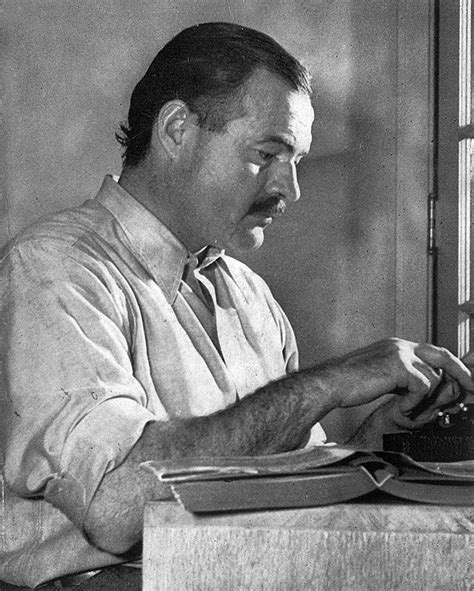
Wednesday Word from Hemingway

“All good books are alike in that they are truer than if they had really happened and after you are finished reading one you will feel that all that happened to you and afterwards it all belongs to you; the good and the bad, the ecstasy, the remorse and sorrow, the people and the places and how the weather was.”

Thoughts Upon Thanksgiving Eve

BLUF: Gratitude only makes sense if the world is personal. 

Explanation: If man is reduced to matter only (molecules in motion), then the idea of rendering thanks at Thanksgiving, or at any other time, is pure drivel. But because all people are made in the image of God (Genesis 1:27), rendering thanks is the most appropriate action sentient creatures should demonstrate. 

The Bible’s Poetry Says It Best: Psalm 8 expresses this reality:

1 O Lord, our Lord,
    how majestic is your name in all the earth!
You have set your glory above the heavens.
2     Out of the mouth of babies and infants,
you have established strength because of your foes,
    to still the enemy and the avenger.

3 When I look at your heavens, the work of your fingers,
    the moon and the stars, which you have set in place,
4 what is man that you are mindful of him,
    and the son of man that you care for him?

5 Yet you have made him a little lower than the heavenly beings[b]
    and crowned him with glory and honor.
6 You have given him dominion over the works of your hands;
    you have put all things under his feet,
7 all sheep and oxen,
    and also the beasts of the field,
8 the birds of the heavens, and the fish of the sea,
    whatever passes along the paths of the seas.

9 O Lord, our Lord,
    how majestic is your name in all the earth!

Takeaway & Encouragement: Gratitude is a virtue, near the top of the virtues, in fact, for good reason. It demonstrates the correct relationship between wisdom and humility. We render thanks because of benediction and also trials, knowing that behind both is the sovereign and holy God by whom all things exist and were created (Colossians 1:16). Happy Thanksgiving to all, and may it be rendered on each day, not just one Thursday a year.