Eliot’s Poetry, God’s Wisdom, & a Summons

The world turns and changes,

But one thing does not change.

In all of my years, one thing does not change,

However you disguise it, this thing does not change:

The perpetual struggle of good and evil (T.S. Eliot, “The Rock”)

When I reread that recently, it struck me like never before. Why? I think it may because I read some articles from various cultural prognosticators and their themes were the same. And you might surmise what those predictions were. One side of the culture in our nation has openly declared they will cause massive disruptions if this election does not go their way. They’re promising destruction and upheaval that will make their riots ostensibly related to George Floyd and all the BLM violence, and the burning down of police precincts, and the destruction of private property, and the barricading of zones, etc.  seem like warm-up exercises.

And that terrifies me. Why? Because I would like to think that America has enough wisdom and self-discipline to not have another hot Civil War.

I would argue that we’re in a cold Civil War already. The polarization is so clear that I do not think you can reconcile parties that have completely different views of reality. When you have an entire party that thinks you can have a nation without borders, you cannot reason with such a person. (Isn’t it ironic that when the criminal shows up on such a person’s private property and loots, the criminal is met by walls, security, resistance, guns, law enforcement, and punishment?)

But somehow that paradigm is inappropriate at the national level? Anyone else go, “Huh?” That’s what I mean by a cold Civil War. The values of the conflicting worldviews are irreconcilable. One way will prevail. Neutrality is a myth.

All this is just another way of stating what the poet Eliot was driving at in verse. There are such things as good and evil. To quote the Old Testament prophet Isaiah, “Woe to those who call evil good and good evil, who put darkness for light and light for darkness, who put bitter for sweet and sweet for bitter!” (Isaiah 5:20 ESV).

When you have a culture that insists upon folly, divine judgment falls. It’s what is known in theology as oracles of woe. They are judgments of God upon the recalcitrance of people. But they have a purpose—to turn us to our senses and the righteous ways of God.

Encouragement: Here’s what I long for folks to understand: God desires to do good unto His people, but humility always comes before honor:

13 Oh, that my people would listen to me,
    that Israel would walk in my ways!
14 I would soon subdue their enemies
    and turn my hand against their foes.
15 Those who hate the Lord would cringe toward him,
    and their fate would last forever.
16 But he would feed youwith the finest of the wheat,
    and with honey from the rock I would satisfy you.” (Psalm 81:13-16 ESV)

Moral Leadership

BLUF: Moral Leadership Training (MLT) is unavoidable; it is only a matter of which morality is being instilled. Per Army Regulation 165-1, “Many moral issues affect the lives of Soldiers, Civilians, and Families, impacting effectiveness of service, command climate, unit readiness and cohesion. The commander uses MLT [Moral Leadership Training] to promote unit readiness, good order and discipline, warrior ethos, spiritual fitness, positive moral choices and Soldier and Family care” (Section IV, p. 27). It should be obvious, but the West, America, and the Army are amidst a cataclysmic cultural and moral sea change. A crucial series of questions will invariably be explored, and some set of values will take precedence. Again, it is only a matter of which values, and which morality will be atop the pyramid.

Will the values be those rooted in the unchanging truths of Scripture, or will they be the shifting opinions of individual men and women whose feet are planted firmly in mid-air? By what standard will values be inculcated in any culture and in a nation’s armies? These are not unimportant questions; they are profoundly important.

I remember when I was a young, enlisted Soldier many years ago, and days and nights when the drill sergeants were teaching us young scouts the basics of land navigation. We’d go out into those hills of Ft. Knox, KY and we’d plot points using protractors, pencils, maps, and our Army-issued compasses. But I was most enjoyed about navigation was terrain association. We would pick major objects that served as solid points of reference; that way, if and when we got turned around at night (and we did), or if the fog had set in, or we had plotted incorrectly, we could always go back to the benchmark, to that fixed point, and say, “Ah, now I see where we went wrong. Let’s start over and be sure we fix our eyes on that which is immovable.”

Those ‘basic’ lessons are fundamentals for a reason. We all need a fixed point. It’s the same regarding Moral Leadership Training (MLT); it’s not a matter of if a morality is being inculcated but only a matter of which one. “Jesus Christ is the same yesterday and today and forever” (Hebrews 13:8 ESV). I sense that we are in a day when there’s a lot of heat and passion about these ideas but often much less light and wisdom. My prayer is that wisdom would be sought and heeded. The fixed point of truth is still where it has always been; the question is, will we have the humility and wisdom to abide by it?

Putting to Silence the Ignorance

Introduction: Recently I was with fellow soldiers in Indiana. Because I have the affections of a country boy, I love my times in America’s heartland. Churches dot the region. And the folks are generally friendly. Though I know nothing about cars or racing, those pastimes are obviously important to a lot of folks from that region. And engines, trucking, and logistics industries thrive there—things like Cummins, and myriad trucking companies, and companies like FedEx and Amazon, etc. But what I love most is the land—the long and wide plaids of fields. When I’m flying into Indy on clear days, Indiana appears as an earth-tone plaid, with seemingly endless furrows, and the trees that border the massive fields this week were ablaze with autumnal pride, as if pumpkins were in their boughs, so orange was the blaze.

Questions: What does this have to do with theological encouragement? I mean, shouldn’t I write about all the political sloganeering and pandering and the stoked animosity? Isn’t that what’s important?

Well, it is not unimportant, I would say. I do think American citizens should vote. And as a Christian, I think we are obligated to vote for the candidate that more closely has demonstrated biblical values-like the sanctity of life, the protection of biblical marriage, the end of all the DEI and woke madness and folly, and the upholding of law and order. Yes.

But what I relearn each time I’m across the country is that the folks with whom I dialogue are so much nicer, so much more humane, so much richer and more complex than political sloganeering would have us believe.

Even folks with whom I might disagree are generally kind people. Sure, there’s always the obnoxious guy/gal; that person’s in every crowd. But generally, folks are just folks. They have a family, friends, work a job/vocation, try to go on vacations occasionally, feed their pets, buy groceries in their zip code, some go to church, and are just normal folks. They’re doing their best to keep a lid on their emotions as they see polarization tempt them towards invective, but by and large, they resist.

So, here’s my encouragement: It comes from the pen of the apostle Peter, writing less than 30 years after the crucifixion and resurrection of Christ:

For this is the will of God, that by doing good you should put to silence the ignorance of foolish people. (1 Peter 2:15 ESV)

We can succumb to the temptation to parrot slanderous bromides; we can descend into tribalism and us vs. them emoting, but we shouldn’t. How do those means invariably play out? Not well. Why not act the way God commends—by “doing good” so that we “put to silence the ignorance of foolish people”? In the end, folly is not a winning strategy. Wisdom is called wisdom for a reason, and folly is called folly for a reason, and trees are known by their fruit.

Upon Looking Out Upon the Fields

What is it about an image that plows one’s imagination and returns one’s soul to affections pastoral and powerful? Let me explain.

I had just returned to my lodging after teaching fellow soldiers. I changed out of my uniform and into shorts and tennis shoes and a t-shirt. The sun was still out and the afternoon sky was clear. I looked out across the fields. A John Deere tractor was moving broadside across my field of vision several hundred meters away, but the day was so clear, the sky a seemingly limitless blue, and the hardwood trees limning the fields showcased autumnal colors of amber, cider, orange, and rust. A cloud of dust followed just behind the tractor from where the farmer plowed.

It was several moments before I realized I had lost track of time. I may’ve even been looking through the window with my mouth open, I was so taken. Suddenly I was a boy again, and inhaling the sweet rich smells of the soil, and I could smell the trees, and feel the airs of autumn, and the odors of harvested corn, and see the imprints of the hooves of whitetails as they fed upon the corn, and feel the footfalls of my boots as their soles pressed almost silently in fields freshly plowed, and behold doves as they criss-crossed the fields of autumn and gleaned like Ruth, and feel autumnal breezes come with October and November, and leaves from oaks and hickories fluttered down, twirling from the boughs like God’s colors of confetti.

It was impossible to say what was reality and what was memory and imagination. The tractor made long furrows, the cloud of dust close behind. There was a richness here that cut lines in my heart as visceral as the furrows that stretched before my eyes, and I longed to never outgrow bucolic beauty that plucks the strings of my soul.

Good Back in Indy: A Visual Reminder

I have seen a lot of airports. Some are like Indy’s–clean, friendly, and with a USO that is super-clean and staffed with friendly volunteers. Other airports are, well, fertile grounds for significant improvement.

When I landed recently, I went to the USO to grab some water and a bag of pretzels while I waited for my ruck to appear at baggage claim. Two ladies at the counter had me sign in, show my military ID, and I was good to go.

I sipped on the water, munched some pretzels, and perused the walls. It was again encouraging to see patches I’ve worn myself or still wear. The years have gone quickly, at least upon reflection. For non-military folks, these patches may not resonate with you. But for military folks, they often come to mean a great deal. They serve as visual reminders of guys with whom you served or still serve, of countries you’ve been in, of combat theaters of operation, of permanent duty stations, of temporary duty stations, of guys who did not return the way they left, or of a nation that is different than the one we left, and on and on.

When I looked at the rifle, I reflected upon my days in KY, with some great guys there, and remembered a chaplain that came to mean a great deal to me, and of my seminary years when I worked more than was healthy and slept aImost none at all, and of a few professors who were the real deal.

When I look at the boar’s head, and at 48th’s lightning bolt, and at 3ID, I think of my home state and how I’ve been blessed to serve alongside so many great guys, and of the opportunities I’ve had, and of many, many sweaty days and nights around the globe.

3 Corps will always have a special place in my affections because of Afghanistan and my time there, and some great memories of God gripping people.

The “Big Red One” was my first patch, and brings back countless memories of times with buddies in Germany, Switzerland, England, Hungary, Italy, Czechoslovakia, Austria, deploying to Bosnia as a young soldier, and being shaped by amazing NCOs like SSG F. Reynolds and skiing the Alps with my buds from Vilseck, Germany.

If I had stayed longer in the USO, I would have found other patches I have worn, patches from Iraq or from the 201st, but I had to grab my ruck from baggage claim and continue my next leg of the trip.

I remain grateful for this ministry and this calling. Salute.

The Invisible Isn’t Really Invisible (you just have to pay attention)

Slice of Life: This past weekend, I was blessed to be part of a team from my unit to work Oktoberfest at our location. We grilled bratwurst and frankfurters, and watched our fellow Soldiers and Families enjoy the festivities. I was struck with one impression more than any other: When you really pay attention to people, you see what’s important to them. I saw men I know from daily operations, but when you see them pushing their sons and daughters in strollers, and when you watch dads carry their toddler daughters on their shoulders to the bounce houses, or when you watch Soldiers dab sticky strawberry ice cream off the chubby cheeks of their children, you see where their heart is. This is why Soldiers train, and work, and endure family separation, and grind it out. It’s the moments like these that don’t make the headlines, that don’t get ceremonies, that don’t make the broadcasts—these are the main reasons we do what we do. Our MTOE does not issue us spiritual resilience; it’s therefore incumbent upon us to foster a spiritual foundation that is the bedrock of truth, not just silly bromides about resilience.

I loved the whole weekend, even though my wife and kids were hundreds of miles away. And it was our anniversary, too. Almost two and half decades of being a Family now, and I called my wife afterwards, and we wished one another a Happy Anniversary, and both understood that we endure separations like this for my military career because it’s an investment in Soldiers and their Families. (These times will be remembered, I assure you, by those boys and girls that stuffed themselves on wurst and pretzels and bounced till their little bodies were exhausted.) And when we learn to value the spiritual realities undergirding any enduring institution, we will be better for it. God created the family (Genesis 1:27-28) and blessed it. We are a wise people when we heed the Designer’s manual.

Happy Anniversary (from a distance)

Another year has come and gone, another anniversary, as I miss my Carrie Jane. I had to be away yet again due to military life, but we spoke over the phone, and you are singing at church and are in your element, and I am in mine.

Shakespeare’s Sonnet 116:

Let me not to the marriage of true minds

Admit impediments; love is not love

Which alters when it alteration finds,

Or bends with the remover to remove.

O no, it is an ever-fixèd mark

That looks on tempests and is never shaken;

It is the star to every wand’ring bark

Whose worth’s unknown, although his height be taken.

Love’s not time’s fool, though rosy lips and cheeks

Within his bending sickle’s compass come.

Love alters not with his brief hours and weeks,

But bears it out even to the edge of doom:

If this be error and upon me proved,

I never writ, nor no man ever loved.

When I look back over decades of life together now, and understand providence not just as a theological doctrine but as light unto my path, I am grateful–for your patience with me, for your forgiveness, for your putting up with my weird ways, for your dedication, loyalty, and commitment to home and our children, and for the ways we laugh at things only we understand.

I knew when I saw you all those years ago–with your jeans on and your black sandals, and your pretty toes, and your long piano fingers, I knew then you’d be my Carrie Jane. And all these years later, you still are. Happy anniversary.

A Book about Spurgeon’s Struggle … Wow!

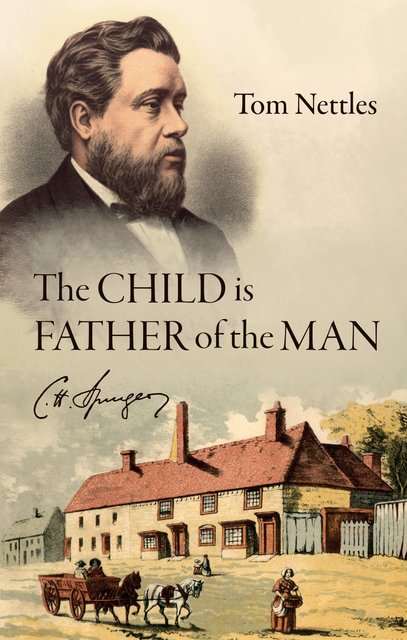
I have been on a Spurgeon kick again. I read one of Tom Nettles’ books on Spurgeon this week. It was, like Nettles’ other books, meticulously researched and biblical. Its title: The Child Is Father of the Man: C.H. Spurgeon. Highly recommended.

But I was blessed to stumble upon Eswine’s book on Spurgeon’s struggles with depression, too. It was so beautifully written and so pastoral in its compassion for the inimitable preacher, Charles Haddon Spurgeon, I cannot sing its praises sufficiently.

As I read it, I thought so often of men I have looked up to, men in Christian ministry, but who wrestled with demons of darkness, or with spiritual heaviness, that they dared not share publicly. Or maybe this struggle is personal with you, too, as with some dear ones I have in mind.

Perhaps you, or someone you know, could benefit from this short book. Short, I say; you can read it in an hour or so, if you will not distract yourself. And Eswine’s writing, his deftness with language, summons you to read and savor his well-chosen words. Wow, what a precise, pastoral, powerful book.

Spiritual Ambushes

Text: It is among the most dramatic episodes in the history of redemption–Christ’s temptation by the devil. It is recorded at length in Luke 4:1-13 and Matthew 4:1-11. For today, I will focus on Luke’s recording of it. Here’s the context: Jesus (God the Son) was led by God the Holy Spirit “in the wilderness for forty, days, being tempted by the devil” (Luke 4:1-2 ESV). There you have the bottom line up front. We know who led Jesus (God the Holy Spirit); we know where the mission took him (the wilderness), and we know the why (to be tempted by the devil).

And Jesus was tempted by the devil with three things: hunger, power, and pride. “If you are the Son of God, command this stone to become bread,” the devil said to Jesus. That’s the temptation to give in to hunger. “To you I will give all this authority and their glory, for it has been delivered to me, and I give it to whom I will. If you, then, will worship me, it will all be yours,” the devil said to Jesus. That’s the temptation unto power. And lastly, “If you are the Son of God, throw yourself down from here, for it is written, ‘He will command his angels concerning you, to guard you . . .’” the devil said. That’s the temptation unto pride.

I think we would all agree those are no small temptations—hunger, power, and pride. And Jesus had not eaten for forty days. Yet He endured and overcame. How did Jesus respond to each temptation? How should that shape how we respond? How ought we to respond when the devil or evils come to us via temptations?

Encouragement: In 2 Corinthians 12, Paul records how “a thorn was given him in the flesh, a messenger of Satan to harass [him], to keep [him] from becoming conceited” (2 Corinthians 12:7 ESV). Paul pleaded with God over and over to remove it, but God left it. To teach him (and to teach all who would follow Christ) what it means to endure and prevail. Be encouraged; you have a Redeemer who endured and overcame so that you and I might look to Him in repentance and faith, knowing that He is more than able, so that His people are more than conquerors.

Back to Basics

Recently a peer of mine came to me with something in his hand.

“I got you this,” he said, extending his hand.

It was a small booklet from the American Bible Society. It’s a series of short devotions rooted in Scripture.

I have gone through it several times now. What I appreciate most about the booklet is the prayer that precedes the teaching for each day. It is simple and straightforward: “Lord God, quiet my soul and open my mind and heart to receive your Word. Amen.”

More and more often, I have to step away from current events, for my own sanity. How much word salad can one be expected to endure? How much more proof of chaos in the streets will it take before people say, “Enough!” How much more money will it take to buy a dozen eggs at your local market before folks say, “This is crazy”? All that to say, this is why I appreciated so much the prayer before the teaching: “Lord God, quiet my mind and heart to receive your Word. Amen.”

Because there are times when my soul is anything but quiet. There are times when my heart is so troubled, so filled with grief, so aghast at what is happening, that I can know the truth of Scripture but not exemplify it because I feel overwhelmed by trending events.

Of course, I could try and appear like I’m above it all by referencing familiar passages:

do not be anxious about anything, but in everything by prayer and supplication with thanksgiving let your requests be made known to God. And the peace of God, which surpasses all understanding, will guard your hearts and your minds in Christ Jesus (Philippians 4:6-7 ESV)

or

The thief comes only to steal and kill and destroy. I came that they may have life and have it abundantly. (John 10:10 ESV)

Yes, I know those passages, too. I have taught them many, many times. But the reality is that I do find times when I am nervous, when I am unsure of how unstable things are being made by the puppeteers, by those who are enemies of all righteousness.

Then the refrain hits me again: “Lord God, quiet my mind and heart to receive your Word. Amen.”

Encouragement: I was reading earlier this morning from David’s poems in the Psalter:

Restore to me the joy of your salvation,
    and uphold me with a willing spirit.
(Psalm 51:12 ESV)

What a simple, straightforward, and powerful prayer. Yes, Lord, and quiet my mind and heart to receive your Word.