Books for Those Who Love the Written Word

I have a few connections at church and other places who appreciate the written word. I have people in uniform who likewise share the itch. And I have others who have retired, but who still devour the written word. What’s more, I have a longing for depth on behalf of the Christian church. There are saints who are withering on the vine because they are starved for intellectual stimulation. I track with those people’s longings. If I am not stimulated intellectually, I quickly check out and go off to feed myself again.

For as long as I can remember, I have had a passion for reading, and there are other bibliophiles out there, too. With them (and others) in mind, I share some of what I am reading. The goals? First, to say, “You’re not alone.” Second, to say, “There is depth out there; come along.” Do not lose hope.

A Few Qualifiers:

First, I read multiple volumes simultaneously.

Second, I read seven main genres (but occasionally expand/contract these).

Third, the usual genres into which I divide my reading follow:

  1. Bible/biblical history/biblical cultures (one never masters the Book of all books; it sets the standard)
  2. Theology/philosophy/worldviews
  3. Literary fiction (mostly, the classics. Sometimes, however, I read certain writers that speak to me irresistibly, that are not yet recognized as canonical; I can share those names, if there is interest.)
  4. Literary drama (Sophocles, the Bard, Aeschylus, Euripedes, etc.)
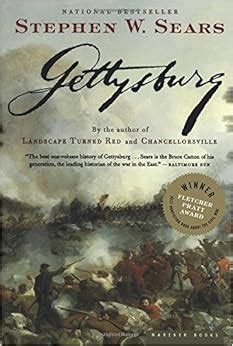
  5. History (I’m a soldier, and devour military history, and especially war memoirs/diaries/stories/novels, but I’m currently reading Sears’ Gettysburg, e.g.)
  6. Culture (the history of ideas/worldviews/trends/prognostications, etc.)
  7. Poetry (currently I’m on a John Donne and Elizabeth Bishop wave again)

On my reading agenda this week are the following volumes:

Ambrose Bierce: The Life and Mysterious Disappearance of the Famous American Author

Sears’ Gettysburg
Chesterton’s The Everlasting Man

Conroy’s South of Broad

I’m currently reading the gospel of Matthew (ESV English translation) over and over as part of my intake of Scripture.

Expect It

Intro: At our church, I am currently leading a study through the gospel of Matthew, and we are currently in chapter 12 of that book. It is a chapter of increasing conflict wherein many religious leaders and others reveal their hatred, jealousy, and resentment of Christ—even when Christ is healing, forgiving, and doing good to people daily. There is something important here.

God the Son incarnate did not please everyone, and His followers won’t either. There will be resistance to the truth; count on it. Despite the evidence, despite transformed lives, despite His grace towards sinners, despite physical healing He did as evidence of His divinity and His compassion for maimed, broken, fallen people like we are, He was hated. The hatred many demonstrated towards Him reveals as much about the fallen and hostile human heart/affections (Jonathan Edwards uses the term ‘affections’ wisely to convey the disposition of our wills) to the holiness of God.

Takeaway: Expect resistance to goodness and truth. Some people simply thrive upon evil. Isaiah 48:22 says, “There is no peace,” says the LORD, “for the wicked.” But God’s people are to overcome evil with good. I love the way Paul phrases it: “Brothers, do not be children in your thinking. Be infants in evil, but in your thinking be mature” (1 Cor 14:20, ESV).

Walt Whitman’s Wisdom for Today?

Illustration: Recently my wife and I watched a film from 1989 that starred Robin Williams entitled Dead Poets Society. Williams plays an inspiring English teacher at a boys’ preparatory school. The boys are high school-aged young men, laboring to discover who they are, who they are meant to be, ravished by hormones and ambitions, etc. Anyway, Williams, their English teacher, connects with them on not just cerebral levels but he is gifted at connecting with them emotionally, spiritually, and viscerally. He is one of those teachers we sometimes receive once in a lifetime, a teacher who makes the world rich in color, the one who makes love poems not something to memorize for the exam but who makes you discover that beautiful poems are friends and lovers. Williams’ skills in pedagogy make all the difference, to use Frost’s language.

There’s a scene where Williams chooses Todd, an introverted cerebral boy, to “sound [his] “barbaric yawp over the rooftops of the world.” In other words, Todd is to shout as if he were trying to get someone’s attention in Perth, Australia but he’s standing in Toledo, Ohio. Todd’s got to dig deep, if you will, and discover that passion of which he is capable but also afraid. Eventually, however, through some difficult growing pains, Todd begins to learn the lessons his English teacher is laboring to teach him and the other pupils. It has to do with seeing what is there but having the courage to actually see it rather than run from it.

What a Whitman Poem Has to Do with Today: The American poet Walt Whitman served as a nurse in America’s Civil War. Whitman was a rather colorful individual and I do not care to get into his bio here, but I do want to include a poem from him and see if you might connect what Whitman was driving at in this war poem from 159 years ago and events you see unfolding today. Here’s “Cavalry Crossing a Ford”:

A line in long array where they wind betwixt green islands,

They take a serpentine course, their arms flash in the sun—hark to the musical clank,

Behold the silvery river, in it the splashing horses loitering stop to drink,

Behold the brown-faced men, each group, each person a picture, the negligent rest on the saddles,

Some emerge on the opposite bank, others are just entering the ford—while,

Scarlet and blue and snowy white,

The guidon flags flutter gayly in the wind.

The images are straightforward enough. Cavalry troops are crossing a water barrier, a ford. Their course is “serpentine’’—a rather interesting word choice, is it not? We behold horses, men with tanned skin, and we see flags (guidons) fluttering. It’s a scene that freezes motion via precise language.

Questions: Is it possible that we’re once again amidst a cold Civil War in America and the West? Is it possible that tribalism is rearing its head? Is it possible that theological and philosophical sides have their guidons out front (hint: the symbolism of flags/heraldry is not to be underestimated), and that they’re demanding allegiance? Is it possible that sides are mounting like cavalry, maybe not in the form of horses, but in the form of legislation and force? You see, folks, if you have been blessed with a teacher who can help open your eyes to see what’s before you, you will be moved. It will change you, hopefully for the better, hopefully to choose the right and good ways, rather than the ways that lead to death (Proverbs 8:36).

The Failure of Atheism

Illustration: Recently I listened to two atheists discuss how atheism has failed, and that they fear the West may likely crumble if it insists upon atheism/secularism. But what interested me even more was how shocked the audience members were at this discussion. It was as if they had never connected the dots in their thinking, that secularism/atheism has its feet firmly planted in mid-air. There is no fixed point in atheism. Because there is no fixed point, no transcendent anchor, what remains is opinion/preference. This seems so simple to understand, but it is taking the West so very long to wake up to the insanity of a progressive/secular/atheist utopia. Folks, when you hear people promise heaven on earth, run. Why? Because terror is at the gate. Like Arnold’s poem phrases it, ignorant armies clash by night. Darkness is the predominant metaphor, not light.

The Anchored Lighthouse: The alternative to the insanity of atheism is Christianity. Why? Because it’s Christ or chaos. If that sounds reductionistic, I welcome someone to prove otherwise. We are in a time of moral chaos because we are trying to sail ships on a sea of darkness. There is no fixed point, no anchor, no lighthouse that is unmoving. But the great truth of Christianity is that there is a fixed point, an anchor, a lighthouse that is not only unmoving, but also holy and who redeems. Will you listen to just one verse from David in Psalm 27:1, ESV: “The LORD is my light and my salvation; who shall I fear? The LORD is the stronghold of my life; of whom shall I be afraid?”

Folks, that is not braggadocio or bravado or any such thing. That is a poetic way of saying that God is the anchored lighthouse, that God is the unmoving and transcendent, that God is the fixed point, that God is the Light amidst the darkness. It has always been the choice between Christ or chaos, and the wise person understands the times and knows what he/she ought to do.

While Reading Tonight …

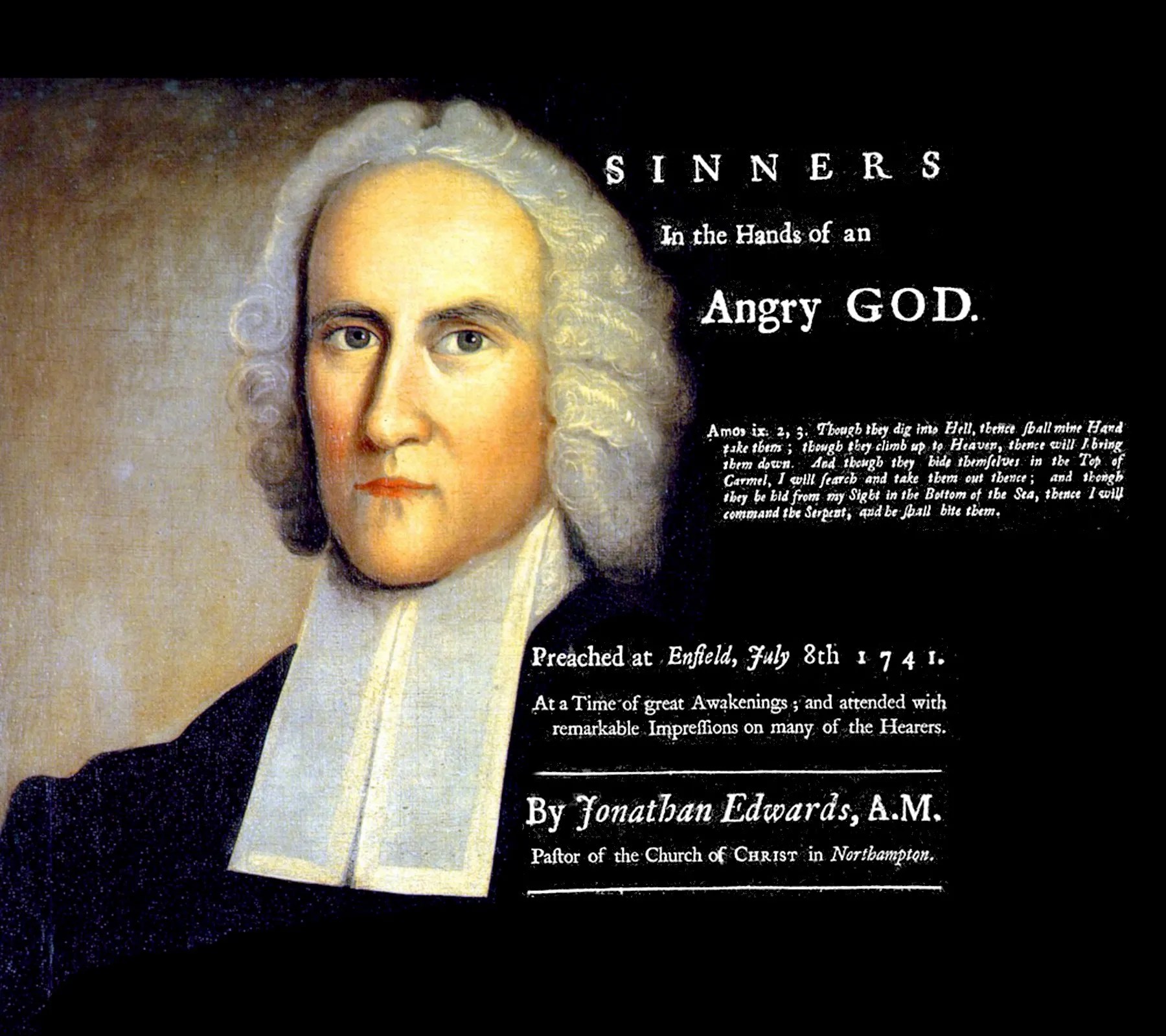
While reading tonight I was in the middle of a long chapter on the reasons Jonathan Edwards preached with deadly concern for himself and his hearers about the biblical doctrine and reality of eternal hell/conscious torment for rejection of God’s grace.

And the writer penned this:

“. . . Edwards preached the doctrine of hell that none should doubt the infinite criminality of refusal to love an infinitely lovely being” (Nettles, The Privilege, Promise, Power, & Peril of Doctrinal Preaching, 61).

Love that phrase from Nettles, “that none should doubt.”

See, folks? That’s a pastor’s concern and deep love for his people. That none should doubt. That’s part of what it looks like to love your people enough to shepherd them–not just to collect a check for “being a pastor” but to actually invest in your people by being with them, stewarding them, shepherding them, caring for them, visiting them, loving them, feeding them truth.

The biblical shepherd preaches and teaches on hell in order to shepherd God’s people into the light of heaven rather than the flames of hell. These are not metaphors.

Pastor Edwards, you good and faithful doulos.

My Current (4) Books:

I do not go long without rereading Jonathan Edwards.

  1. I have not discovered a theologian whose mind was as alive to God, or who wielded a pen as deft with language, as that of Edwards. His HWR is a masterpiece.

2. Victor Hanson is perhaps the most respected historian writing today, and this volume (like his other books) bears out his deserved reputation.

3. For fiction I am reading one from several years back that I somehow never got to. So far, it is excellent.

4. Fourthly, I am reading another of Tom Nettles’ books. He was my favorite lecturer in church history during my seminary years. Again, highly recommended. If you want to see what preaching is supposed to be, read this book, and then lament over what passes for preaching from most pulpits today.

I Came Across This Zinger

In studying to teach on Matthew 12 this coming Sunday, I was perusing some of my notes and books and Bibles. Inside the front cover of one of my Bibles, I found a quote written down from years ago, but I cannot remember who wrote it. It was nonetheless powerful:

“Our world is not divided by race, color, gender, or religion. Our world is divided into wise people and fools. And fools divide themselves by race, color, gender, or religion.”

“The way of a fool is right in his own eyes, but a wise man listens to advice” (Proverbs 12:15, ESV).

One View Will Triumph, but Which?

“You are what you love because you live toward what you want.” I underscored that line in some of my reading. It reminded me of one the most helpful pieces of counsel I received years ago from a fellow minister: “People do what they want to do.”

When I heard Charlie say that my initial reaction was one of, “Okay, and?” But as the years have worn on and I have suffered some slings and arrows in ministry, and have learned a few things, his words carry more power than ever for me. He expressed what Smith expressed in his book You Are What You Love, namely, that we are inescapably teleological/purpose-driven creatures. We will live toward something—whether that’s God, self, family, career, power, wealth, or whatever.

When one surveys the polarization of the West today, the divisions could not be more overt:

BordersVs.Borderlessness
Prosecution of CrimeVs.Thugocracy; Nihilism
Traditional FamilyVs.Eradication &/or Mockery of Traditional Family
Sanctity of Human LifeVs.Infanticide; Abortion of ‘Undesirables’
Fiscal ResponsibilityVs.Debt, Debt, & More Debt
CharacterVs.Skin Color; Pronouns; Group Identity

And so, I ask myself, what does it appear the West is living toward? The dividing lines are so clear, but what they reveal (one of the things, anyway) is that the two ways are irreconcilable. It’s either revival or bust, as one pundit phrased it. Either we are going to prosecute crimes or we’re not. Either we believe that children should be raised by their mother and father, or that’s just silliness, and all of world history should be ignored. Either we judge people by their character, or we judge them based off the pigment of their skin or how many colors they’ve painted their hair. But the principle remains the same: irreconcilability. One or the other worldview will triumph. We live toward what we want. My hope and prayer for my nation, and for what’s left of Western Civilization, is that we once again return to want the right things.

Living with Uncertainty?

Theme: Living with Uncertainty

Illustration: Because I do not watch TV and restrict paying too much attention to mass media, I knew little of the strikes going on currently by America’s longshoremen. It seems they, too, are reeling from the downturn in our economy of the last three years or so. If you know anything about trade, you know that shipping is essential.

America is wide open to any who will cross, and it is not hard to understand why we are so often struck by the news of more rapes, more murders, more assaults, more robberies, more looting, etc.

Plus, we have a former POTUS nearly murdered on camera. Twice.

And now, America’s military in the Middle East is on high alert due to Iranian missiles being launched into Israel, and continued terrorism from Hezbollah and other Islamic groups.

And another $8 billion are made available to Ukraine. Is anyone else scratching his head? Borderlessness for America, and no funds for soldiers to cover down on America’s soldiers, but another $8 billion for Ukraine and their borders and defense?  

Parts of western NC, eastern TN, GA, SC, and FL are still under water, and lives have been eclipsed and livelihoods devastated by Helene, yet politicians continue with more of the same insanity. Even the most tranquil minds must go, “Huh?” at the current state of affairs.

Politicians go, “It’s his/her fault,” ad infinitum. It’s just more of the same each day. We print money that is worth less and less, and we finance other countries, and the wars just go on and on, and many people get rich. I love soldiering with all my heart, but real life is not like the movies.

Many people are expressing uncertainty. Regardless of political leanings, regardless of what color jersey your team wears, folks are nervous, and there is a massive erosion of confidence in current leadership. How should we then live?

Takeaway:  First, we are told up front that there would be wars and rumors of wars (Matthew 24:6).

Second, we are led by sinners (Romans 3:23). Even wise leaders are but vessels of clay (see Isaiah 18).

Third, leaders (as incompetent or evil as some are) remain under the sovereign rule of God: “The king’s heart is a stream of water in the hand of the LORD; he turns it wherever he will” (Proverbs 21:1, ESV).

Fourth, man’s deepest problem is not the current war or the ones after that, but it is his wicked heart in rebellion against his Creator (Genesis 3:6-8; Ephesians 2:1-3; Jeremiah 17:9; Romans 3:10-19).

Perhaps my favorite nugget of wisdom from some people who influenced my worldview is this:  “What’s down in the well comes up in the bucket.” Yes and amen.

When exiles from Eden slaughter one another for money and power, it’s but more testimony to the veracity of God’s indictment and to his offer of redemption—for all who will come in repentance and faith.

A Man & His Speech

Illustration: Born and raised a Southerner, my love for many Southern ways abideth still. Stereotypes exist for valid reasons oftentimes, and I certainly fit many of the stereotypes of heretofore “Southern” ways–religiously Christian, fond of the outdoors, a lover of the traditional family, patriotic, etc. I am unashamed of these characteristics. I still speak with my grandparents in my spirit, though they died years ago. I still say “Yes, sir” and “Yes, ma’am” to my elders and to my superiors. If I did not, my conscience would be pricked. These are not sentimental vestiges of times gone with the wind, etc. but are characteristics I want to see in my own children and grandchildren. The ways in which we speak to one another reveal a great deal more than words’ denotations and connotations.

Connection to Scripture: This week I am studying Matthew 12 as part of our ongoing study of that gospel. We are going through the entire book verse-by-verse with the goals of biblical literacy, transformation, discernment, and biblical courage. Today as I was reading Matthew’s gospel yet again, I was struck again by the clarity and bluntness of Christ’s teaching about the tongue.

You remember the setting, right? The Pharisees in this passage reveal their hatred and jealousy of Jesus. Here is one example of their hatred of him: “But the Pharisees went out and conspired against him, how to destroy him [Jesus]” (Matthew 12:14, ESV).

Then Jesus utters some of the most powerful, enduring words in world history: ” . . . for the tree is known by its fruit. You brood of vipers! How can you speak good, when you are evil? For out of the abundance of the heart the mouth speaks. The good person out of his good treasure brings forth good, and the evil person out of his evil treasure brings forth evil” (Matthew 12:33b-34, ESV).

In modern parlance, some could adequately term that a mic drop. Bam! Christ calls these people snakes, a brood of vipers. Why? He saw that their lives were mainly “evil treasure.” And how they spoke revealed their hearts, their natures. Death and life are in the power of the tongue (Proverbs 18:21).

“For out of the abundance of the heart the mouth speaks” (Matthew 12:34b, ESV). The half-brother of the Lord Jesus reiterates the same principle:

If we put bits into the mouths of horses so that they obey us, we guide their whole bodies as well. Look at the ships also: though they are so large and are driven by strong winds, they are guided by a very small rudder wherever the will of the pilot directs. So also the tongue is a small member, yet it boasts of great things. How great a forest is set ablaze by such a small fire! And the tongue is a fire, a world of unrighteousness. The tongue is set among our members, staining the whole body, setting on fire the entire course of life, and set on fire by hell. (James 3:3-6, ESV)

A couple of the blessings of my current position in ministry are my bosses, both of whom have more military experience than I do, more accomplishments than I do, and men who do not have to brag about their accomplishments; those accomplishments speak for themselves. But a characteristic they both share is that they know how to use the tongue wisely. Their speech reveals their character. When I must go to them at times with hard news regarding soldiers or situations, I’m invariably met with equipoise and almost always humor. They are masters at not letting small things become big things. All that to say, how we speak to one another is more important than I think we realize. Many times I have wished I had a retract/undo button for something I have said, but alas, no do overs. That “abundance of the heart” that Christ refers to, at least for this guy, needs a great deal of tending to, as my grandparents would have said in their old Southern speech.