Wisdom from Daniel (Part 4)

Currently in Texas awaiting my next flight, I am once again studying the Old Testament book of Daniel. In today’s time I focused upon chapter 4 wherein Daniel once again proves to be a truth-teller to Nebuchandnezzar. Daniel does at least three things: 1) he interprets the king’s dream and its future fulfillment via precise detail and accuracy; 2) he (Daniel) serves as a paragon of godly wisdom amidst a culture of fools; and 3) we see that wisdom and humility are inextricable.

Daniel’s words:

20 The tree you saw, which grew and became strong, so that its top reached to heaven, and it was visible to the end of the whole earth, 21 whose leaves were beautiful and its fruit abundant, and in which was food for all, under which beasts of the field found shade, and in whose branches the birds of the heavens lived— 22 it is you, O king, who have grown and become strong. Your greatness has grown and reaches to heaven, and your dominion to the ends of the earth. 23 And because the king saw a watcher, a holy one, coming down from heaven and saying, ‘Chop down the tree and destroy it, but leave the stump of its roots in the earth, bound with a band of iron and bronze, in the tender grass of the field, and let him be wet with the dew of heaven, and let his portion be with the beasts of the field, till seven periods of time pass over him,’ 24 this is the interpretation, O king: It is a decree of the Most High, which has come upon my lord the king, 25 that you shall be driven from among men, and your dwelling shall be with the beasts of the field. You shall be made to eat grass like an ox, and you shall be wet with the dew of heaven, and seven periods of time shall pass over you, till you know that the Most High rules the kingdom of men and gives it to whom he will. 26 And as it was commanded to leave the stump of the roots of the tree, your kingdom shall be confirmed for you from the time that you know that Heaven rules. 27 Therefore, O king, let my counsel be acceptable to you: break off your sins by practicing righteousness, and your iniquities by showing mercy to the oppressed, that there may perhaps be a lengthening of your prosperity.” (Dan 4:20-27, ESV)

Just Give It Time: No matter how many times I read Daniel, I always somehow think, “Maybe this time, Nebuchadnezzar will learn his lesson before all the suffering . . .” but of course, he doesn’t. The history is what it is, as the saying goes. One day Nebuchadnezzar is strolling his grounds and feeling quite satisfied with himself, and it is clear that he feels untouchable, as if he’s a self-made man. But then verses 30-33 change his plot:

and the king answered and said, “Is not this great Babylon, which I have built by my mighty power as a royal residence and for the glory of my majesty?” 31 While the words were still in the king’s mouth, there fell a voice from heaven, “O King Nebuchadnezzar, to you it is spoken: The kingdom has departed from you, 32 and you shall be driven from among men, and your dwelling shall be with the beasts of the field. And you shall be made to eat grass like an ox, and seven periods of time shall pass over you, until you know that the Most High rules the kingdom of men and gives it to whom he will.” 33 Immediately the word was fulfilled against Nebuchadnezzar. He was driven from among men and ate grass like an ox, and his body was wet with the dew of heaven till his hair grew as long as eagles’ feathers, and his nails were like birds’ claws.” (Dan 4:30-33, ESV).

It just took some time, you see, to see that Nebuchadnezzar’s heart had not really changed yet. He discovered that God humbles the proud and delights to exalt the humble. The truly humble, not the posers. False humility is a satanic scheme and God hates it.

Encouragement/takeaway: All of Scripture is to be interpreted Christologically. So when we study Daniel, we see the Christian worldview in microcosm. We see exile due to human sin; we see persecution of the faithful remnant; we see judgment of individual sin and judgment of nations; we see the provision of God (Daniel and his friends were provided for and saved on multiple occasions–from death, persecution, lions, fire, etc.). But most of all we see the Lord of history, God the Son, who is with his people, who preserves them, who delivers them from the mouth of lions, who fulfills the prophetic word, who unites the biblical storyline by being the Word become flesh, who comes to take upon himself the sins of his people in order to redeem them as a ransomed bride fit for the king. He was/is the most humble servant and forever and always the thrice-holy King of kings.

Wisdom from Daniel (Part 3)

Introduction: You will be made to care. That has become almost cliche in our day. Why? Because the increasing influence of government over people’s everyday lives is massive. And the religion of the government is overt. There is always a god of the system. Always. It is just a matter of whether it’s the one and only true God of Scripture or if it’s yet another idol. If you get nothing else from this, get this: There is only one true and living God. The fact that government has to force false gods upon people is evidence that its system of pagan idolatry is intellectually empty of the God of Scripture, and forever doomed to fail to redeem a people; it will only enslave them. For redemption to occur, the one true and living God who is the Redeemer must do it. It was the exact same thing in Daniel’s day. Follow me.

Historical context: Nebuchadnezzar had a dream that he could not understand. He ordered the so-called Chaldean wise men to interpret his dream for him. They could not, even under threats of death (Daniel 2). Enter Daniel. Remember now, Daniel was a prisoner, a Jew, a believer in the one true and living God, and Daniel is now being brought into the orbit of the pagan Babylonian ruler, Nebuchadnezzar, to do what others cannot. There will be no gray area here, no nuance. This is straight-up do or die time.

Daniel asks his friends to pray to the one true and living God for him, as Nebuchadnezzar is now looking to Daniel to see if he can interpret Nebuchadnezzar’s dream. And God gave Daniel wisdom, yet again. Daniel’s response was praise: “To you, O God of my fathers, I give thanks and praise, for you have given me wisdom and might, and have now made known to me what we asked of you, for you have made known to us the king’s matter” (Dan 2:23, ESV).

Because Nebuchadnezzar takes Daniel’s explanation to be one of approbation, the king elevates Daniel to serve in his court and Shadrach, Meshach, and Abednego are likewise given positions of authority (Dan 2:48-49). And one might think it ends well here, but no; it all goes to Nebuchadnezzar’s head. The oldest story in the world occurs. Pride precedes one’s fall.

Nebuchadnezzar has an idol fashioned, and he commands all to bow down and worship it. You see it? The religion of the government, enforced at the point of force. It’s the same old story. You will be made to care, in Daniel’s day and in our day and in each day. The government, when it’s living lies, will force the masses to participate in false religion. Yet God always has a faithful remnant who will not bow. And that, dear reader, is my prayer for our generation: May God raise up a faithful remnant who will not bow to the lies. The fiery furnaces of chapter 3 of this book are sure to come in our day, too, because God tests us. We shall see who stands and who bows to the idols. More to come tomorrow.

More Wisdom from Daniel (Part 2)

This morning as I sat in the airport and surveyed my surroundings, almost every head was bent downward to a screen. Information flow was constant. Glowing screens in people’s palms, on their laps, on the walls, above our heads on monitors. Such an ominous-sounding word: monitor. Everything seems recorded as if for future purposes. But almost no one was looking anyone else in the eye. Something, it seems to me, is being lost therein. A diminishing of personhood is occurring wherein the gadgets of convenience have become taskmasters for mindlessness.

I pulled out my copy of Scripture, as I had time still before my flight arrived. I was in Daniel again. I reread chapter one again where Nebuchadnezzar changed the names of his captives. But verse 17 of the opening chapter gave me such encouragement. Even after refusing the Babylonian diet, and after only vegetables and water for ten days, verse 17 reads “God gave them learning and skill in all literature and wisdom, and Daniel had understanding in all visions and dreams.”

And in verse 19, Daniel and his three friends “stood before the king.” Catch that? Prisoners were given wisdom from God, and stood before the king. But all that occurred after they were first courageous. They first were obedient. They first counted the costs.

Information is one thing. Wisdom is quite another. Courage is necessary.

Daniel and his friends stood before the king. As wise men. As those who were set apart for a special purpose. Almost as if they were to bear witness to the truth. Almost as if God was using them for his good and holy purposes. He who has ears to hear, let him hear.

Wisdom from Daniel

Principle: He who controls the dictionary controls the world.

Introduction: If the principle seems abstruse, it is not. It is rather quite simple but simultaneously profound. Follow me. I am currently reading through the book of Daniel again. For those unfamiliar with the book, it is both a history book but also a book of prophecy and apocalyptic literature. Many, many commentaries have been penned about the book of Daniel, some of them solid and others quite bizarre. I am about as conservative as they come, so you’ll not get any whacko ‘insights’ from me. I wish only to focus for today on a few verses from the first chapter of Daniel. Here’s the historical context: Due to the sin and recalcitrance of Israel and Judah, they had been invaded, conquered, and exiled. Daniel and other Jews (many folks are nominally familiar with the history of Shadrach, Meshach, and Abednego, e.g.) were taken as prisoners and exiles to Nebuchadnezzar’s Babylon (present-day Iraq). And when chapter one of Daniel opens, here’s what is so significant: Nebuchadnezzar does two things to Daniel, Hananiah, Mishael, and Azariah. He indoctrinates them in the literature and language of the Chaldeans (Dan 1:4) and he changes their names to Belteshazzar, Shadrach, Meshach, and Abednego (Dan 1:7).  

Do you see why that is so important? Because he who controls the dictionary controls the world. These boys were now exiled away from home; they were being indoctrinated with the worldview of a pagan system; and their names were changed. Nothing has changed, you see. We’re again in a world where we are being forced to deny reality and call people what they’re not. Up is now down; down is up. Men vanquish women’s sports because we can’t say what a woman is nowadays for fear of being labeled an extremist or Hitlerian. We’re told men are ‘birthing persons’ now and that we should get our wisdom from Hollywood starlets with an X account and an opinion about world economies. Does anyone else just look around some days (okay, every day) and go, “Huh? What? These people?”

Encouragement:  A lot of people know Daniel 1:8, and for good reason. Here’s the text: “But Daniel resolved that he would not defile himself with the king’s food, or with the wine that he drank. Therefore he asked the chief of the eunuchs to allow him not to defile himself.” That may sound like a small thing, but it’s not. It is crucial. Daniel knew the war he was in was much more than physical. He was now exiled, he was now being indoctrinated with paganism, he was even commanded to change his diet. But Daniel purposed in his heart, if you will, he resolved not to capitulate, not to defile himself. Why? Because Daniel was wise; he knew that he who controls the language of a culture controls the world. When you have a culture where words are policed and you’re forced to affirm madness as sagacity, you know you’re amidst utter folly. This is one of the many reasons and ways Daniel is so instructive for our day. May God be pleased to raise up wise warriors like Daniel in our time.

Just a Song, but Sometimes It Is More than Enough

There are certain voices that, when they come to you via your speakers, or when you see the singer(s) live, or when you are riding down the road with the windows down and the wind stretches your face in sheets of speed, the songs, the lyrics, the rhythm, the memories, take you to places that both surpass language and necessitate it–like watching a poem and wanting to speak it for another to share. Just so you know that others get it.

Such is my time with ZBB when he and his team sing the combo of “Free” and Van Morrison’s “Into the Mystic.”

I have seen both artists. And there is something about music that is done this well that … Well, if I have to explain it, you just don’t get it.

Indomitable Still …

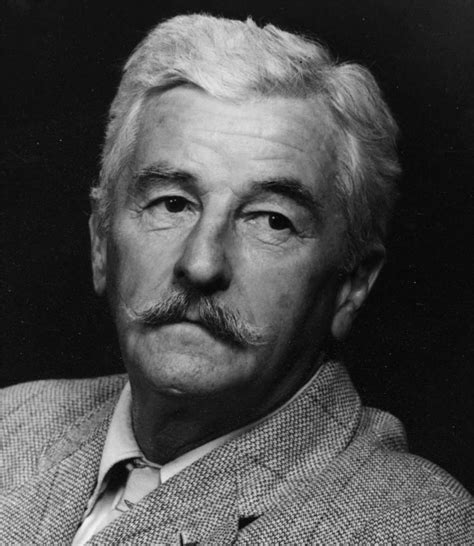
Tonight as I looked over my notes for Sunday and felt the thick viscous unmoving air of August’s motionless heat and gloaming I pulled from my shelf a man’s writings I’ve not outgrown, for his pen captured me as a boy with Quentin Compson and Darl and Flem Snopes and Thomas Sutpen and Dilsey, and I planted my literary foot again in Yoknapatawpha County’s mud and dust and linguistic lushness. Your pen moves me still.

Maker & Keeper: God Is Not a Politician

Principle: God is the Perfect Promise Maker because He Is the Perfect Promise Keeper

It amuses us, does it not, to hear politicians spout endless promises in efforts to pimp the foolish into trusting them to redeem what the disasters they themselves have wrought? Suddenly the border is important; suddenly taxes are too high; suddenly national security is important, etc. The list goes on and on. Would it not be nice to know someone who not only makes promises of weal but also keeps them?

Connection to Ezekiel 36: In Ezekiel 36, God speaks through his servant Ezekiel. And God does it “for [his] holy name” (Ez 36:21, ESV). Listen to God’s words of promise to vindicate his holiness and to create a clean people, a people who love the Lord, a people whose hearts have been circumcised, and to lead them at the hand of the good shepherd:

22 Therefore say to the house of Israel, Thus says the Lord God: It is not for your sake, O house of Israel, that I am about to act, but for the sake of my holy name, which you have profaned among the nations to which you came. 23 And I will vindicate the holiness of my great name, which has been profaned among the nations, and which you have profaned among them. And the nations will know that I am the Lord, declares the Lord God, when through you I vindicate my holiness before their eyes. 24 I will take you from the nations and gather you from all the countries and bring you into your own land. 25 I will sprinkle clean water on you, and you shall be clean from all your uncleannesses, and from all your idols I will cleanse you. 26 And I will give you a new heart, and a new spirit I will put within you. And I will remove the heart of stone from your flesh and give you a heart of flesh. 27 And I will put my Spirit within you, and cause you to walk in my statutes and be careful to obey my rules.[a] 28 You shall dwell in the land that I gave to your fathers, and you shall be my people, and I will be your God. (Ez 36:22-28, ESV).

Takeaway: It is important to rightly interpret the Old Testament (and all Scripture) in the light of the whole metanarrative of the Bible. Ezekiel was writing to an exiled people. But he was giving them promises from the Lord about restoration, redemption, and a faithful one who would guide them. In the near sense, God would return the Jewish exiles to Israel under Ezra, Nehemiah, and others. They would return to their land. But the faithful shepherd did not come until the second person of the triune God took on flesh and dwelled among us (John 1). The good shepherd is Christ himself, who took on flesh (Philippians 2:6-11) and came in the fullness of time (Galatians 4:4). God made promises of his Spirit that would indwell a particular people. He made those promises in Ezekiel. And in Christ, they are fulfilled. Unlike slithering politicians whose forked tongues lull the foolish into servitude, God both promises and delivers, and the warrant is none other than Christ.

Ezekiel for Today (Part 5/5)

Theme: Lost Sheep, False Shepherds, Judgment, & the Good Shepherd

Introduction: If you want a story that finds an audience in each generation, tell a story involving false shepherds, those in leadership roles who are supposed to feed the sheep of God but who, instead of serving as godly selfless leaders, seek their own comfort, their own glory, and their own legacy. They seek neither the nurture of the sheep, nor their strengthening. Rather, they view the sheep as means to their own selfish ends. Nothing has changed.

Text:

 Son of man, prophesy against the shepherds of Israel; prophesy, and say to them, even to the shepherds, Thus says the Lord God: Ah, shepherds of Israel who have been feeding yourselves! Should not shepherds feed the sheep? You eat the fat, you clothe yourselves with the wool, you slaughter the fat ones, but you do not feed the sheep. The weak you have not strengthened, the sick you have not healed, the injured you have not bound up, the strayed you have not brought back, the lost you have not sought, and with force and harshness you have ruled them. So they were scattered, because there was no shepherd, and they became food for all the wild beasts. My sheep were scattered; they wandered over all the mountains and on every high hill. My sheep were scattered over all the face of the earth, with none to search or seek for them. (Ezekiel 34:1-6, ESV)

Connections to Our Day: One of my enduring concerns is the utter lack of discernment in the Christian church. We have both sheep and shepherds who remain shallow, undiscerning people. Why is that? It’s bromidic to say that we get the leaders we deserve. But that does not solve the problem. I think, for example, of how my spiritual cup overflows when I read the sermons of Jonathan Edwards, Charles Spurgeon, and Lloyd-Jones. Where are sermons like that nowadays? Rather than doctrinal, biblical, theologically rich sermons, we are subjected to drivel, something one could rattle off with a few moments with a web browser and a beginner’s concordance. Folks, we should not settle. Why? Well, Scripture is clear:

  • Hebrews 13:17 says that pastoral leaders “will give an account.”
  • Ezekiel 3:17 records how God makes biblical shepherds as “watchmen” for the house of Israel.
  • Ephesians 4 is so clear: “And he gave the apostles, the prophets, the evangelists, the shepherds and teachers, to equip the saints for the work of ministry, for building up the body of Christ, until we all attain to the unity of the faith and of the knowledge of the Son of God, to mature manhood, to the measure of the stature of the fullness of Christ” (Eph 4:11-13, ESV).

But God … I admit, it is easy to grow discouraged at the shallowness from so many pulpits today. Where are the deep shepherds? Why so much fluff instead of depth? Why vanilla talks instead of oracular manna of redeeming grace?

Encouragement: The good news is that God knows, God hears, and God is the good shepherd. Will you listen to Ezekiel 34:

For thus says the Lord God: Behold, I, I myself will search for my sheep and will seek them out. 12 As a shepherd seeks out his flock when he is among his sheep that have been scattered, so will I seek out my sheep, and I will rescue them from all places where they have been scattered on a day of clouds and thick darkness. 13 And I will bring them out from the peoples and gather them from the countries, and will bring them into their own land. And I will feed them on the mountains of Israel, by the ravines, and in all the inhabited places of the country. 14 I will feed them with good pasture, and on the mountain heights of Israel shall be their grazing land. There they shall lie down in good grazing land, and on rich pasture they shall feed on the mountains of Israel. 15 I myself will be the shepherd of my sheep, and I myself will make them lie down, declares the Lord God. 16 I will seek the lost, and I will bring back the strayed, and I will bind up the injured, and I will strengthen the weak, and the fat and the strong I will destroy. I will feed them in justice.

17 As for you, my flock, thus says the Lord God: Behold, I judge between sheep and sheep, between rams and male goats. 18 Is it not enough for you to feed on the good pasture, that you must tread down with your feet the rest of your pasture; and to drink of clear water, that you must muddy the rest of the water with your feet? 19 And must my sheep eat what you have trodden with your feet, and drink what you have muddied with your feet?

20 Therefore, thus says the Lord God to them: Behold, I, I myself will judge between the fat sheep and the lean sheep. 21 Because you push with side and shoulder, and thrust at all the weak with your horns, till you have scattered them abroad, 22 I will rescue my flock; they shall no longer be a prey. And I will judge between sheep and sheep. 23 And I will set up over them one shepherd, my servant David, and he shall feed them: he shall feed them and be their shepherd. 24 And I, the Lord, will be their God, and my servant David shall be prince among them. I am the Lord; I have spoken. (Ezekiel 34:11-24, ESV)

Takeaway: Scripture is realistic, you see. Because God knows what we are like. He knows that most will settle for drivel rather than depth. Ergo, God sends the true Shepherd, the greater David, the one whose voice the sheep will hear and follow. The good shepherd was and is Christ, who came in the fullness of time, to fulfill what all other under-shepherds and/or hirelings cannot do. Therefore, let the redeemed of the Lord say so, and gather as the called-out ones, the ones who recognize the king in all his beauty, the beauty among the ruins.

Ezekiel for Today (Part 4/5)

Principle: God’s Constant Warnings: The Watchman-Prophet

Text: Ezekiel 33

Context: Like the rest of Ezekiel’s book, chapter 33 is a series of prophetic warnings to a stubborn and rebellious people. But here is where I want to focus for today: God has not left himself without abundant warnings about judgments to come. He raised up this prophet (Ezekiel) to speak, preach, teach, act out in dramatic and symbolic fashion (God even took the life of Ezekiel’s wife), etc. for one formidable purpose–to warn of God’s coming judgment.

The chapter begins,

33 The word of the Lord came to me: “Son of man, speak to your people and say to them, If I bring the sword upon a land, and the people of the land take a man from among them, and make him their watchman, and if he sees the sword coming upon the land and blows the trumpet and warns the people, then if anyone who hears the sound of the trumpet does not take warning, and the sword comes and takes him away, his blood shall be upon his own head. He heard the sound of the trumpet and did not take warning; his blood shall be upon himself. But if he had taken warning, he would have saved his life. But if the watchman sees the sword coming and does not blow the trumpet, so that the people are not warned, and the sword comes and takes any one of them, that person is taken away in his iniquity, but his blood I will require at the watchman’s hand.

Verse 7 again says God has “made [Ezekiel] a watchman.”

Verse 10 commands Ezekiel to warn the people.

Verse 12 commands Ezekiel to preach to the people.

In verses 23-33, God commands Ezekiel to pronounce God’s judgment upon the people for their repeated refusals of God, and recounts God’s calling to them through the voice of his prophets like Ezekiel and Jeremiah.

And verse 33 sill rings in my ears each time I read it: “When this comes–and come it will!–then they will know that a prophet has been among them (Ez 33:33, ESV).

I don’t know how such clarity does not shatter people’s recalcitrance.

Takeaway: No one can protest, “I didn’t know. God never showed me his will. I had no idea of judgment or sin.” Every mouth is stopped before the holiness of God. We all are stopped short of any defense; we are all Adams in the garden, fleeing God’s holy eyes.

And yet God seeks to reclaim sinners. It is a marvelous work of pure grace that God would save anyone. And yet he does. SDG.

It’s Goose for the Win: “Hungersite”

Hope
It’s bent like rope
I’m growing tired
Of hauling on yesterday

Closed
Is that how it goes
Well I might be rusted
But brother, I’m here to stay

Is it time to shed our weapons yet my friend
Is love we’ve drawn away in our groundless low
Can we step out of the wreckage yet my friend
Running all against their hungry sight
Hanging on
They’ve taken all
But we won’t lay that down

Breath
Don’t it let
Just a little closer
I know it’s now nearing view

There
It’s only air
Nothing tethered to the garment
We’re climbing through

Is it time to shed our weapons yet my friend
Is love we’ve drawn away in our desperate low
Can we step out of the wreckage yet my friend
Running all against their hungry sight
Hanging on
They’ve taken all
But we won’t lay that down

Is it time to shed our weapons yet my friend
Is love we’ve drawn away in our trembling low
Can we step out of the wreckage yet my friend
Running all against their hungry sight
Hanging on
They’ve taken all
But we won’t lay back down

Searchin’ for that heart of gold.