This is Part 3/5 based upon the Old Testament book of Ezekiel. Today I want to focus on just one thing: How we treat truth is invariably reflected in culture. In plain terms, as goes truth, so goes culture. Follow me.
Question: Do you like being lied to? Does anyone? The questions answer themselves.
Context: In the late 500s B.C. when Ezekiel was God’s prophet to speak the truth to a nation in captivity due to their wickedness, he (Ezekiel) was charged with the perilous duty of speaking stinging words to those who did not like his message. Why they did not like his message revealed, of course, the heart of the problem. Listen to God’s words to Ezekiel. How would you like to receive this WARNO:
Text:
1The word of the Lord came to me: 2 “Son of man, prophesy against the prophets of Israel, who are prophesying, and say to those who prophesy from their own hearts: ‘Hear the word of the Lord!’ 3 Thus says the Lord God, Woe to the foolish prophets who follow their own spirit, and have seen nothing! 4 Your prophets have been like jackals among ruins, O Israel. 5 You have not gone up into the breaches, or built up a wall for the house of Israel, that it might stand in battle in the day of the Lord. 6 They have seen false visions and lying divinations. They say, ‘Declares the Lord,’ when the Lord has not sent them, and yet they expect him to fulfill their word. 7 Have you not seen a false vision and uttered a lying divination, whenever you have said, ‘Declares the Lord,’ although I have not spoken?”
8 Therefore thus says the Lord God: “Because you have uttered falsehood and seen lying visions, therefore behold, I am against you, declares the Lord God. 9 My hand will be against the prophets who see false visions and who give lying divinations. They shall not be in the council of my people, nor be enrolled in the register of the house of Israel, nor shall they enter the land of Israel. And you shall know that I am the Lord God. 10 Precisely because they have misled my people, saying, ‘Peace,’ when there is no peace, and because, when the people build a wall, these prophets smear it with whitewash,[a]11 say to those who smear it with whitewash that it shall fall! There will be a deluge of rain, and you, O great hailstones, will fall, and a stormy wind break out. 12 And when the wall falls, will it not be said to you, ‘Where is the coating with which you smeared it?’ 13 Therefore thus says the Lord God: I will make a stormy wind break out in my wrath, and there shall be a deluge of rain in my anger, and great hailstones in wrath to make a full end. 14 And I will break down the wall that you have smeared with whitewash, and bring it down to the ground, so that its foundation will be laid bare. When it falls, you shall perish in the midst of it, and you shall know that I am the Lord. 15 Thus will I spend my wrath upon the wall and upon those who have smeared it with whitewash, and I will say to you, The wall is no more, nor those who smeared it, 16 the prophets of Israel who prophesied concerning Jerusalem and saw visions of peace for her, when there was no peace, declares the Lord God. (Ezekiel 13:1-16, ESV)
Takeaway/Encouragement: When we harden ourselves against the truth, we are (to use some less than technical theological language) spitting in the wind. But if/when we respond as wise creatures, as humble sinners, as people in need of holy, graceful correction and redemption, we find the Rescuer of our souls. In a world deluged by lies, may we be a people of truth. Why? Because as goes truth, so goes culture.
Principle: Why knowing God’s attributes matters for you.
Question: Have you ever heard someone say, “God can do anything”? I should think you have. But is that true? Let me give you a hint: it is not true. Before you deem me a heretic, will you just listen to Scripture? According to Scripture, there are many things God cannot do.
“For I the LORD do not change” (Malachi 3:6, ESV).
“God is not man, that he should lie, or a son of man, that he should change his mind” (Numbers 23:19, ESV).
“Jesus Christ is the same yesterday and today and forever” (Hebrews 13:8, ESV).
“Let no one say when he is tempted, “I am being tempted by God,” For God cannot be tempted with evil, and he himself tempts no one” (James 1:13, ESV).
In plain terms, there are multiple things we sinners can do that God cannot do—change, lie, fluctuate, and sin. God cannot do any of those things. Why? Because God is unchangeably holy and perfect in all his attributes.
Encouragement: In a world of empty promises, there is One who cannot lie (God). Why? Because he is holy, holy, holy (Isaiah 6:3). Because he is Faithful and True (Revelation 19:11). And for all who will heed the call of wisdom, you will find God–the perfect, wise, holy, and saving God; he says to you, “Come to me, all who labor and are heavy laden, and I will give you rest” (Matthew 11:28, ESV).
Historical setting: Late 500s B.C. Babylonian exile. Ezekiel was a Jewish exile, along with countless others. God was using one wicked nation to judge another wicked nation. (Let that sink in: God uses other wicked nations and forces to judge one’s own.)
Ezekiel had been deported to Babylon (present-day Iraq) as part of God’s judgment upon Israel and Judah. Yet God still spoke truth through his prophets (Jeremiah and Ezekiel were prophets at the same time). Ezekiel (“God’s strength”) was 30 years old when God began his [Ezekiel’s] prophetic ministry, a significant year, when you know of Christ’s genesis for his public ministry.
Example: Chapter 8 of Ezekiel is one of the saddest commentaries upon the recalcitrance of sinners. Ezekiel is given the vision of abominations in the temple back in Jerusalem, Israel. What was supposed to be a sacred space, a place of worship of the true and living God, was instead a den of iniquity, filled not with God’s people but with vileness, polytheism, and rampant idolatry. Sound at all familiar?
Then we get God’s words to Ezekiel: “Therefore I will act in wrath. My eye will not spare, nor will I have pity. And though they cry in my ears with a loud voice, I will not hear them” (Ez 8:18, ESV).
Why will God act in wrath? Because God hates sin and must judge it (Ps 11:5). Why will he not spare? Because God disciplines those he loves (Heb 12:6). Because God’s longsuffering patience has a purpose: “Or do you presume on the riches of his kindness and forbearance and patience, not knowing that God’s kindness is meant to lead you to repentance” (Rom 2:4, ESV).
In chapter 8 of Ezekiel, Ezekiel is made to see the levels of abomination to which people can and did sink in their rejection of God–“creeping things and loathsome beasts” (v 10); false worship involving liturgies (vv. 11-12); cults of sexuality (vv. 14-15); worship of stars, sun, and moon (vv. 16-17), and more. The very place that God had called to be set apart for worship of the true and living God the Creator had been perverted into the worship of creation and twisted into worship of the creation rather than the Creator (Rom 1).
And yet God has this faithful man, the prophetic truth-teller Ezekiel, to demonstrate visually and audibly the holiness of God, the sinfulness of the people, and the judgments that must be executed upon wickedness. Why must judgments be executed? Because God is holy. Because God detests wickedness. Because God loves. Because God is love and he loves that which is good and detests that which is evil.
Takeaway: And if we don’t understand the cross of Christ is the ultimate example of God’s demonstration of the aforementioned, we are just as hardhearted and recalcitrant as the exiles to whom Ezekiel first spoke.
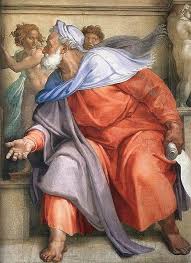
Intro: In the reading plan I use currently I am in the book of Ezekiel. It remains one of the most trying and spectacular books of Scripture to me. Wheels within wheels, the prophet of God being commanded to shave his head as an object lesson, the hardness of people’s hearts to the truth Ezekiel is sent by God to herald, the valley of dry bones, and so much more. But there’s something that gripped me this time through like never before: it was the holiness and exaltation of God and the way believers exult in that and the corollary of the rejection and mocking of God by the heathen and ensuing judgment. When Ezekiel ministered, the culture was dissolving then, too, due to men’s sin, but Ezekiel was called nonetheless to be faithful to warn the people.
Here’s what I mean when I talk about the holiness and exaltation of God and the way believers exult in that and the corollary of the rejection and mocking of God by the heathen and ensuing judgment. Just look at Ezekiel’s response to God in the opening chapter:
22 Over the heads of the living creatures there was the likeness of an expanse, shining like awe-inspiring crystal, spread out above their heads. 23 And under the expanse their wings were stretched out straight, one toward another. And each creature had two wings covering its body. 24 And when they went, I heard the sound of their wings like the sound of many waters, like the sound of the Almighty, a sound of tumult like the sound of an army. When they stood still, they let down their wings. 25 And there came a voice from above the expanse over their heads. When they stood still, they let down their wings.
26 And above the expanse over their heads there was the likeness of a throne, in appearance like sapphire;[g] and seated above the likeness of a throne was a likeness with a human appearance. 27 And upward from what had the appearance of his waist I saw as it were gleaming metal, like the appearance of fire enclosed all around. And downward from what had the appearance of his waist I saw as it were the appearance of fire, and there was brightness around him.8 Like the appearance of the bow that is in the cloud on the day of rain, so was the appearance of the brightness all around.
Such was the appearance of the likeness of the glory of the Lord. And when I saw it, I fell on my face, and I heard the voice of one speaking.
Encouragement & takeaway: All that symbolic language is to show us something important about the appropriate response to God’s revelation of himself: We are to humble ourselves or God will do it for us.
Ezekiel, in the last verse, falls on his face. He bows. He is prostrate before God. That’s the appropriate posture.
When I survey current events, what I don’t see is humility or reverence for God. Quite the opposite, of course, is the reality. But there is a pattern in history, you see. Ozymandias boasted; now, his statues lie in ruins. Nebuchadnezzar boasted, and he was brought quite low, to be like a four-footed beast, in fact. Caesars boasted; and now Rome is a city filled with ruins for tourists who study Caesars as footnotes of antiquity. And we of course have the boasters of today who tell you they’ll solve all your problems if you will just give them more power over your life. On and on it goes. Will we learn anything from the proper posture to God’s revelation?
Because of what I do for a financial living, I cannot comment on things political. I am a mere soldier and I adore the U.S. Constitution. I am a patriot to my core. But one might well make the case that the Divided States of America are less a republic than we have been since Reconstruction and/or even the late 1700s. One might easily make the case that America has become a thugocracy and/or a banana republic, or an oligarchy rather than a nation of laws. There’s a reason why House of Cards was so popular of a television series. It portrayed a cultus of people devoid of shame, a people who purported to be meta-people, beyond judgment by us little people. Well, we shall see if judgment is real.
One could even make the case that we are in a state of idiocy wherein an entire political party in the Divided States of America is openly running as communists/socialists–a party whose platform is abortion for any reason up until and including the moment of birth; open borders (another way of saying borderlessness/chaos); promulgation of groupthink/alphabet jihad (LGBTQIA+); the continued erasure of women (men with ponytails and implants now box women into unconsciousness in the Olympics and are rewarded with medals for valor/skill), etc. The list goes on. This makes the games in Rome look tame. But here we are. This is an entire half of the Divided States of America. This stuff.
A man is running for vice-president who lied about his service in the military, and half of the country yawns as if it’s no big deal. The guy let his state burn at the hands of BLM, a communist/Marxist group who does nothing for the demographic whose skin color they pimp.
One of my favorite songwriters penned this about the cracks in the walls of people’s worldviews:
Ring the bells that still can ring Forget your perfect offering There is a crack, a crack in everything That’s how the light gets in
We asked for signs The signs were sent The birth betrayed The marriage spent Yeah, and the widowhood Of every government Signs for all to see
I can’t run no more With that lawless crowd While the killers in high places Say their prayers out loud But they’ve summoned, they’ve summoned up A thundercloud They’re going to hear from me
Ring the bells that still can ring Forget your perfect offering There is a crack, a crack in everything That’s how the light gets in
The words are from Leonard Cohen’s “Anthem.”
One might appreciate his refrain: “There is a crack, a crack in everything/That’s how the light gets in.”
One might be wise to petition the heavens, the Maker of the heavens and of all things, and that His light get in. Why? Because the rivers of iniquity have overflowed their banks and the prophets are being put away and the carnivals of reprobation are stringing trapezes to Baal and Asherah, and a civilization is dancing its jig of damnation.
I suppose that politics is a necessity in a fallen world, but I despise the swampiness of the whole thing. It seems just when you think things cannot get any more duplicitous and rottener, it comes to light that those who want to govern lie about their resume. “Stolen valor” is a term known well to us military types because it reveals the worst parts of some people, people who want glory but not the necessary courage, people who long for applause but not the work.
In Matthew 10, Jesus is teaching his apostles about the omniscience of God and about the duplicity of men: “So have no fear of them, for nothing is covered that will not be revealed, or hidden that will not be known” (Mt 10:26, ESV). The same principle is throughout Scripture. Think, for example, of this from Numbers: “ . . . . and be sure your sin will find you out” (Num 32:23, ESV).
Encouragement: For anyone who is intellectually honest, he/she must readily concede that it is easy to grow discouraged when he/she sees the seemingly bottomless pit out of which some people crawl. There seems to be no shame anymore. People just expect lies. And the love of many is growing cold. It is therefore incumbent upon God’s people to live lives of integrity. We are not to steal valor. We are to live with true faith and allegiance. All will be disclosed, you see. All. And that is more than sufficient reason to live lives that are above reproach (cf. 1 Timothy 4:16; Titus 1:6-9).
Sometimes only a poem will do. Tonight it was from Shelley’s pen: “Ozymandias” cuts to the quick with each reading.
I met a traveller from an antique land, Who said—“Two vast and trunkless legs of stone Stand in the desert. . . . Near them, on the sand, Half sunk a shattered visage lies, whose frown, And wrinkled lip, and sneer of cold command, Tell that its sculptor well those passions read Which yet survive, stamped on these lifeless things, The hand that mocked them, and the heart that fed; And on the pedestal, these words appear: My name is Ozymandias, King of Kings; Look on my Works, ye Mighty, and despair!” Nothing beside remains. Round the decay Of that colossal Wreck, boundless and bare The lone and level sands stretch far away.
“A fourteener,” a sonnet about Ramses II, pharaoh of Egypt for 67 years during the 1400s B.C.
***There is more wisdom in that line than in most graduate school seminars. In other words, God knows not just the sparrows but all things.
As Christ says in Matthew 10, “Are not two sparrows sold for a penny? And not one of them will fall to the ground apart from your Father. But even the hairs of your head are all numbered” (Mt 10:29-31, ESV).
Secularism is bankrupt at every level. It cannot explain origin, meaning, morality, or teleology. But in the biblical worldview, we understand why we demand meaning, we know where we came from, we know what the core problem is (sin), and we understand our teleology/purpose. He who has ears to hear, let him hear. Shakespeare’s lines above in the world’s most famous play echo the very teaching of Christ.
Historical example: I am currently reading through the book of Jeremiah. In chapter 29 Jeremiah is once again revealed to be a true prophet of God amidst a culture replete with false prophets. Jeremiah is telling the people of Judah who are being exiled to Babylon (present-day Iraq) that, even when they are exiles, they are to seek the welfare of the city. That is, regardless of how bad one’s culture is, God’s people are to seek to do good to all men.
“But seek the welfare of the city where I have sent you into exile, and pray to the LORD on its behalf, for in its welfare you will find your welfare” (Jer 29:7 ESV).
We find the same principle of doing good unto all repeated in the NT: “So then, as we have opportunity, let us do good to everyone, and especially to those who are of the household of faith” (Gal 6:10 ESV).
Folksy wisdom might express this principle this way: Bloom where you are planted. This is easy to quote but hard to live. We all tend to think the grass is greener just over that next hill. But sometimes just over that next hill is a septic tank.
Encouragement: Where God has us, let us seek the welfare of the city. That is, let us better our environs rather than desecrate them. How can we do that? By seeking the welfare of whatever city God has us in.



 MIND & MATTERS