Leadership Lessons from 1-2 Samuel (Part 4):

Bottom Line, Up Front (BLUF): David’s forgiveness of his and God’s enemies is a picture of God’s forgiveness of sins of all those who flee to Christ in repentance and faith.

Historical Context: Wicked King Saul had committed suicide (1 Samuel 31:4); David had been anointed by Samuel to be the rightful king, the one of God’s choosing (1 Samuel 16). Now the king of Judah, what might you think David would do? What would a wise ruler do?

Listen to 2 Samuel 2:1: “After this David inquired of the LORD . . . .” Remarkable. If he had been a lesser man, he would have made everything about himself. He would have been narcissistic. He would have found himself amidst braggadocio.

But that’s not what we see. David knew he was a great sinner; he never got “too big for his britches,” if you will. He knew his promotion was all of God’s grace.

What’s more, David forgave his and God’s enemies, and even praised the ones who had been loyal to King Saul, wicked though he was, while he (Saul) had been the people’s ruler. In other words, don’t miss this: the king was forgiving sinners. Sound familiar? Sound like the gospel?

Encouragement: When we recognize that we are sinners, we come to understand and grasp the profundity of what it means to be debtors to the grace of God. It’s the gospel right there in 1-2 Samuel, guys, and it is beautiful to behold.


Leadership Lessons from 1 Samuel (Pt. 3)

Bottom Line, Up Front (BLUF): Our theology inescapably manifests in our choices.

Illustration: 1 Samuel 16 is the classic passage of David being anointed king (God’s choice) over and against wicked King Saul (the people’s choice):

The LORD said to Samuel, How long will you grieve over Saul, since I have rejected him from being king over Israel? Fill your horn with oil, and go. I will send you to Jesse the Bethlehemite, for I have provided for myself a king among his sons” (1 Samuel 1:1, ESV).

Questions: Why not Saul? Why was he rejected? What theological views did Saul demonstrate that revealed his true nature? And what was it about David? How was he so crucially different from Saul?

Saul failed to live as God’s man, a king who reflected God’s good rule and reign over his people. Saul had an outward appearance that was only a veneer; his heart and mind were never converted to the ways of God. He was “all suit,” we might say, but devoid of godly substance.

And why David? David was of the tribe of Judah, a precise type and forerunner of the ultimate King of kings who would come (Christ). David was a shepherd by nature. David, though a great sinner, was a converted man. David was God’s choice.

Encouragement: We sinners tend to look on what Scripture calls the “outer appearance” (1 Samuel 16:7 ESV). We tend to fall for sound bites and talking heads. Many people are pimped by smooth talkers like Saul. They lack biblical discernment and therefore get the leaders they merit.

But God intervenes, you see, graciously, to provide leaders of his choosing, and graciously acts to call a people to himself, to point the way to the King of kings, the only One who is totally faithful and true (Revelation 19:11, ESV).

The Appropriateness of Gratitude

Precept for Reflection: Why is gratitude so linked to joy/fulfillment? 

One of my favorite writers penned this line: “O Thou who has given us so much, mercifully grant us one more thing–a grateful heart” (George Herbert). 

Have you ever met an inveterate malcontent, someone who traffics in resentment and anger? Usually, ingratitude is not far from the picture. Ungrateful people tend to be quite sad people. And grateful people tend to manifest joy/fulfillment. 

Sure, we all have reasons to be resentful, angry, and sad over injustices, unfairnesses, or misdeeds done to us; I am no stranger to those feelings either. But if we allow those emotions to overwhelm us, they atrophy the joys we might otherwise discover. 

Scripture: I appreciate Scripture’s teaching on this issue. Paul was writing from prison. (Don’t miss that: prison!), and he penned these words: Finally, brothers, whatever is true, whatever is honorable, whatever is just, whatever is pure, whatever is lovely, whatever is commendable, if there is any excellence, if there is anything worthy of praise, think about these things (Philippians 4:8, ESV). 

I am no Pollyanna; I’m quite aware of human nature and of what we call in theology human depravity. But I’m also aware of the role of gratitude for the blessings that come to us by the kind providence of God. 

Encouragement: Yes, the world is a mess. Yes, we’re amidst a cultural/values civil war in the West. Yes, these are times charged with peril. How much more important, then, is it that believers manifest gratitude for being able to bear witness to the good news that God has come to save sinners? And we certainly qualify for that label.

Humility or Humiliation? Thoughts upon 1 Samuel (Pt. 2)

Introduction of Theme: It is as old as time itself, this lesson, but we minimize it to our peril: “Pride goes before destruction, and a haughty spirit before a fall” (Proverbs 16:18 ESV). But wicked King Saul did not learn that until it was too late for him. God removed the kingdom from Saul and anointed the man (David) after his (God’s) own heart. God, in other words, installs leaders but also removes them.

Context: God had commanded Saul to “devote to destruction all” that they (the Amalekites) had. Israel was not to spare them, but to be fully obedient to wipe out the Amalekites because of their great wickedness. Israel was supposed to be faithful to do what God had called them to do; part of that was vanquishing evil and the ways of wickedness (1 Samuel 15:1-3).

Saul’s Sins: But Saul was not faithful to do what God commanded. Saul “spared Agag and the best of the sheep and of the oxen and of the fattened calves and the lambs, and all that was good, and would not utterly destroy them” (1 Samuel 15:9 ESV).

But there is another crucial verse in chapter 15 I think we often overlook. It’s verse 12b: “Saul came to Carmel, and behold, he set up a monument for himself and turned and passed on and went down to Gilgal.”

To whom did Saul erect a monument? To himself.

Saul’s god was himself, and it cost him the kingdom.

Encouragement: God delights in exalting the humble and humbling the proud. “Whoever exalts himself will be humbled, and whoever humbles himself will be exalted” (Matthew 23:12 ESV).

Willful Blindness: Thoughts Upon 1 Samuel (Pt. 1)

‘Willful blindness’ is “a legal term that describes when someone intentionally avoids knowing facts that could make them liable for a wrongful act. It’s also known as conscious avoidance.”

Putting one’s head in the sand, in other words, so as not to see what should otherwise be obvious to the honest and seeing person.

Over recent days I have again read 1 Samuel with profound appreciation. 1 Samuel addresses so many issues that pertain to us each and every day. It addresses leaders. It addresses pastor-shepherds. It addresses selfishness vs. selflessness. It addresses pride vs. humility. It addresses, perhaps above all, one of the most enduring themes in literature and history–the contrast between appearance and reality. Let me explain.

in 1 Samuel 14, Jonathan (the son of wicked King Saul) was the real deal. He was a good man, a warrior, a follower of the one and only true God, and he served as the foil to his despicable father, Saul, who was the opposite of his son–a wicked man, a moral coward, a false convert, etc.

In the fourteenth chapter of 1 Samuel, Jonathan goes out with his armor-bearer to battle the pagan Philistines. Jonathan and his armor-bearer are given victory by the Lord, and it appeared that God was vanquishing the enemies of God via his servant Jonathan.

But this is where Jonathan’s wicked father Saul intervenes. He makes it about him (Saul), not about God. And this is how you recognize, how you see the false shepherd. He’s in it for himself, not for the sheep.

If you’re not willfully blind, you will see it. Saul said, “Cursed be the man who eats food until it is evening and I am avenged on my enemies” (1 Samuel 14:24a ESV). See what Saul did? He made it all about himself. The Philistines were not so much God’s enemies as Saul’s enemies. Saul’s concern was his own legacy rather than the glory of God and faithful stewardship of the sheep.

If that were not clear enough, the chapter ends with this: “There was hard fighting against the Philistines all the days of Saul. And when Saul saw any strong man, or any valiant man, he attached him to himself” (1 Samuel 14:52 ESV).

See it? Saul was a moral coward and so he hid behind strong men, valiant men, that he thought would serve as shields amidst his machinations and schemes. And in the very next chapter, God rejects Saul.

He who has ears to hear, let him hear (Matthew 11:15 ESV).

Muse: The Music of David Crosby

It's been a long time comin'
It's goin' to be a long time gone.
Appears to be a long time,
Yes, a long, long, log time
Before the dawn.

Turn, turn any corner.
Hear, you must hear what the people say,
You know there's something that's goin' on here,
That surely, surely, surely won't stand the light of day.
And it appears to be a long,
Such a long, long, long time before the dawn.
Speak out, you got to speak out against
The madness, you got to speak your mind,
If you dare.

But don't try to get yourself elected.
If you do you had better cut your hair.
'Cause it appears to be a long time,
Before the dawn.

It's been a long time comin',
It's been a long time gone.
But you know, the darkest hour,
Is always just before the dawn.
And it appears to be a long time,
Such a long, long, long time before the dawn.

Here’s a video of David performing towards the end of his life:

I do not go with his politics.

Do not.

But he had a gift for harmony, for melody, for writers, and for getting to the heart of those who love lyrically rich music.

Miss you, David. And … thank you.

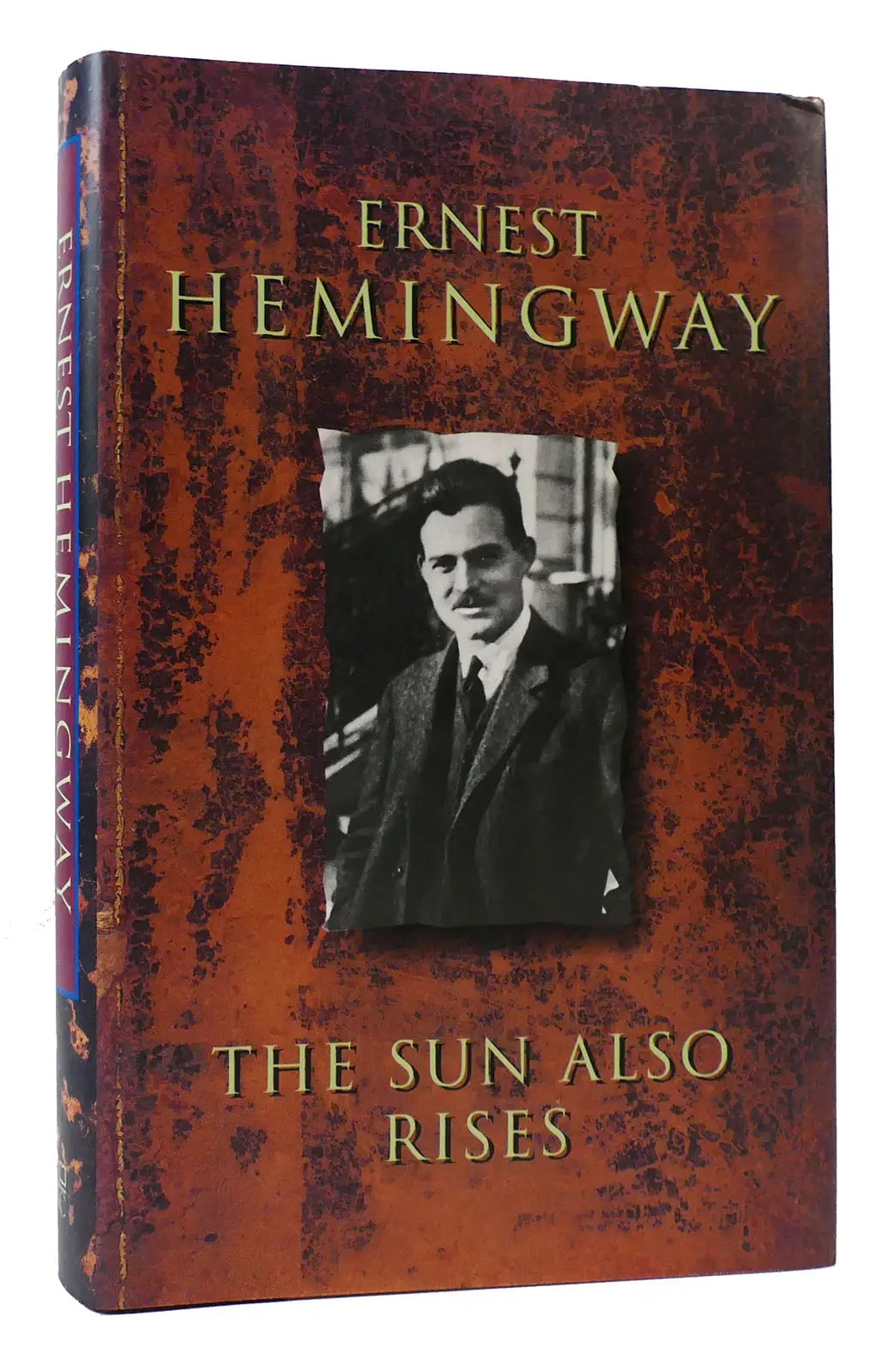
Thoughts upon Hemingway’s The Sun Also Rises (again)

Due to the fallout, delays, and cancellations related to the most recent Microsoft/CrowdStrike attack, and the ensuing ‘interferences’ (let the reader understand; it is coming again around election time, just watch), I read Hemingway’s breakthrough novel The Sun Also Rises again. This is my fourth or fifth time through it, I think, and probably my favorite so far.

I especially appreciate the inscription at the beginning of the book from the King James Version of Scripture. It is taken from Ecclesiastes, my enduring favorite of the 66 books of Scripture:

One generation passeth away, and another generation cometh; but the earth abideth forever… The sun also ariseth, and the sun goeth down, and hasteth to the place where he aros… The wind goeth toward the south, and turneth about unto the north; it whirleth about continually, and the wind returneth again according to his circuists…. All the rivers run into the sea; yet the sea is not full; unto the place from whence the river come, thither they return again.

All the goeth and whirleth and turneth Elizabethan English is gone, but the principles of Ecclesiastes are clear as ever.

I prefer Hemingway’s short stories (that was his strongest work, in my estimation), but he cuts right to the point in The Sun Also Rises, too. The story explores “the lost generation,” of post-WWI writers and artists, those who endured the effects of WWI’s massive horrors, and who felt empty and lost, exiles from Eden.

Though Hemingway never appeared to repent and flee to Christ in the gospel, he did at least dramatically illustrate how so many go through life, skating upon the surface, and he proved exactly what Solomon taught in Ecclesiastes, about the ephemerality of so many people’s lives–just going through the motions until it’s too late.

More Cyber ‘Glitches’: Delayed in Seattle

“Your flight was cancelled. Our apologies. Delta.”

That was the email I received. Then, when I got to the airport, returned my rental car, and tried to figure out what to do, it got even more interesting. My flight was truly cancelled. Not delayed. Just completely cancelled. Well, this was becoming more fun by the minute. My checked luggage was ostensibly going to Atlanta, but how would it or I arrive back at post?

I pulled out my laptop and tried to see if the ‘news’ sites could bring any clarity or help. As close as they came was to write that Microsoft/CrowdStrike were responsible. Okay, but what price will Microsoft/CrowdStrike pay for cancelled flights, delayed flights, lost luggage, sleeplessness, rental car expenses, Ubers, etc? I’m guessing $0.

I went to a coffee kiosk, purchased a black coffee and sandwich, and sat down. Breathe. Again. Breathe.

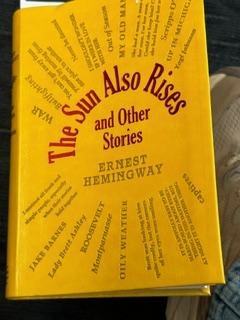
I finished my items, and knew I needed to find a bookstore. Fortunately, Seattle’s airport had a decent bookstore with a Classics section. I found a volume containing Hemingway’s debut novel as well as a few of his short stories. I have now read almost the entire thing through as I try to grin through this lovely adventure courtesy of Microsoft/CrowdStrike, and see when exactly I might return to post.

For now, though, I am finishing up the wonderfully sad story of Jake Barnes, Brett Ashley, and the lost generation. How fitting: lost. Kind of like the wisdom of this current situation.

Perspective

“In his hand are the depths of the earth; the heights of the mountains are his also. The sea is his, for he made it, and his hands formed the dry land” (Psalm 95:4-5 ESV).

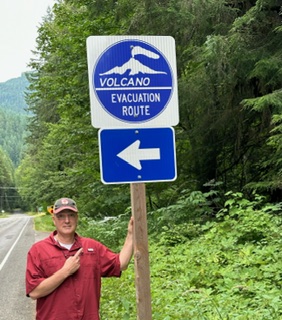
Pictures from Washington (Pt. 2/2)

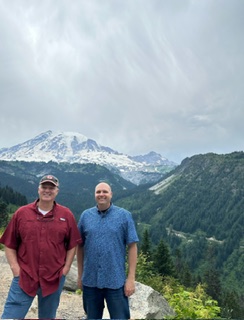
“Of all the fire mountains which, like beacons, once blazed along the Pacific Coast, Mount Rainier is the noblest” (John Muir, 1901).

Mt. Rainier and surrounding areas. In a word, spectacular:

Thankful for the afternoon to hang with a few peers from the Army and Air Force and explore the Seattle/Tacoma/Mt. Rainier area. Great views, good food, and solid fellowship. My cup is full.