In our continued study of Matthew’s gospel, we are currently in chapter 9 where the Christ heals two blind men (vv. 27-31) and where he heals a man unable to speak/mute (vv. 32-34). The passages break into two distinct principles–1) the embrace of Jesus as the fulfillment of the promised Messiah (vv. 27-31) and 2) the rejection of Jesus despite the evidence and the remaining curse for rejection of the truth (vv. 32-34).
Quote: R.C. Sproul penned and preached a lifetime of profound biblical truths, one of which is this gem: “When there’s something in the Word of God that I don’t like, the problem is not with the Word of God, it’s with me.”
Encouragement/Takeaway: The people we study in Scripture are no different than people today. It is not lack of evidence preventing people from believing the truth; it is simply a moral obstinacy and rejection of the obvious. But here is the beauty, folks: Some will believe; some will come to the truth; some will be redeemed. Therefore, we go to all proclaiming the truth in the blessed assurance that some will come to the way, truth, and life who is Christ the Lord.
Blessings and curses are simply the natural outworkings of people’s responses when confronted with the truth.
When I departed Atlanta’s airport the sun was up but blurred by unrelenting heat and haze. The city’s buildings, nested along her overcrowded highways, were as vittles steaming in a southern kettle.
The flights to the West were good, however. The lady at the Delta counter was friendly, dressed in her blue blouse, with an azure rubber wedding band on her left hand. At the TSA Pre ✔ counter the old man with a beer belly and white mustache waved me through quickly. It was apparently evident to him I was military. He barely scanned my military ID card. My rucksack did not signal inspection either as it went through the coffin-like tunnel that, to me anyway, elicits images of a horizontal PET scan.
Once upon the plane I retrieved Smith’s You Are What You Love. I had just begun it an hour or so before but could tell it was my kind of book–biblical, Reformed, and replete with literary allusions, my favorite of which was from Eliot:
We shall not cease from exploration
And the end of all our exploring
Will be to arrive where we started
And know the place for the first time (T.S. Eliot, “Little Gidding”)
Made it out West and am about to turn in for the evening after a few more pages of Jeremy Cooper’s fine novel Brian. Cooper’s somewhat new to me but I am enjoying his Anglican understatement, especially when it comes to themes explored profoundly by Walker Percy, John Updike, and others.
The thought about calling (at least for some): “This is what we were made for: to love what God loves. Our telos brings us back to our beginning. And we were made to be sent” (You Are What You Love, p. 189).
This week I am studying a passage from Matthew 9:18-26 where Christ does at least two things: 1) he restores a girl to life and 2) he heals a woman who had suffered a blood issue; apparently, she bled profusely.
I am familiar with the passage. I have heard it referenced, preached, and alluded to many times. But this is I think the first time I have focused just upon the two miracles that are recorded here. For purposes of today I want to focus on just one principle, namely, the contrast between the woman who came up behind Jesus and touched the fringe of his garment (v. 20) and the faith in Christ she demonstrated versus the scoffing and disbelief of the crowd surrounding the dead girl whose father was a ruler in the synagogue (vv. 18, 25).
The woman with the issue of blood is an embodiment of the sinner’s complete brokenness and utter reliance upon the grace of God in Christ. And Christ both received her and healed her.
The ruler of the synagogue implored Christ to raise his deceased daughter, and when Christ does just that, the crowds “laughed at him” (v. 24) out of their disbelief.
Here’s the rub: Genuine belief in the person and work of Christ entails casting ourselves upon the mercy and grace of God, that he is who he says he is and proves himself over and over to be. But some folks just want a show; they do not come to Christ as Lord, but Christ as someone less than what he is: Lord.
The woman was healed, made well, and Christ knew her savingly. The crowd who witnessed the results of Christ raising of a corpse (v. 25) wanted a show, mere entertainment. There is a world of difference between those who want a show and those who want the Lord.
I got to the pond before dawn. Above the pines there was the glowing orange of promise. The sun would be visible in moments now. I could smell the water. Two herons were at the deep end of the pond, still as a portrait, watching me. The red-winged blackbirds fluttered into a tree above me, squawking at my presence.
I walked some in the grass along the banks. Finally I retrieved a rod and put a topwater lure on and cast out beyond the tip of a felled tree that has yielded fish consistently. Cast, retrieve, cast. No bites yet. Beyond the tips of my shoes, I glimpsed two turtles connected, one atop another, just inches below the water’s surface. My movement startled them, and the mounted one took them into deeper water.
The promised sun showed itself above the pines now and a soft breeze picked up. Cast, retrieve, cast. Still no bites, and the day promised to bring high temps and a punishing sun.
At lunch I decided to take a break and get a walk in. I snapped some photos of trees I found beautiful, despite the dry days of late.
We need rain badly, but for now it is simply hot and dry.
When I returned to the water, a fellow soldier was jogging around the water. He was muscular, barrel-chested, with red hair and freckles. He looked like what I imagined an adult Opie Taylor would have looked like had he become a bodybuilder.
I completed a reading of Helprin’s collection of short stories, A Dove of the East and Other Short Stories. Helprin is remarkable on multiple levels. He’s a prolific author of literary fiction; he’s a seasoned soldier; he’s a political conservative; and he’s one of America’s finest living writers. His stories are unlike anyone else’s I know of. One might be set in NYC and the next one is set in Tel Aviv. Like Helprin himself, his characters are well-traveled, well-read, and unafraid.
Nothing speaks so loudly as irony. Those who talk about “safe spaces” and tolerance and love, etc. will stop at nothing to execute their evils upon the most vulnerable.
No borders, no enforcement of law, no moral restraint, no God; just power and savagery and violence. It’s Cormac McCarthy’s Blood Meridian day in and day out and the sheeple stand by and watch it happen.
The reality is horror, of course, but the leftists/secularists/progressives will not stop.
You will be made to care.
When the mob shouted, “We’re coming for your children!” they were not jesting.
You will be made to care. Behold, the consequences of ideas.
People who don’t know their Bibles might say, “How can this happen? People sleeping with children? People sleeping with animals? People without conscience?” Yes, reader, yes; Scripture is replete with warnings about this, because when people reject God, reject His revealed will, reject His moral law, reject His design, reprobation ensues, judgment falls, and there is no bottom to man’s depravity. What’s more, those who say they’re for righteousness are cowering in the corners, assuming and hoping the evil won’t come for them. But it will, because Satan has nothing to fear from cowards. May God raise up courageous, biblical warriors for righteousness. If people don’t have eyes to see the evil upon them, they’re willfully blind.
“Truth is heavy, so few men carry it,” is an aphorism I keep in my mental and spiritual rucksack.
Connection to today: Recently we had another suicide of another NCO that is near to many here. As chaplains we invariably are brought into the conversation about the loss of still another warrior, often to try and bring spiritual balm to a sad situation. It does not matter how many books I have read on suicide prevention, how many certifications I have in suicide interdiction and prevention, how many courses I have taught in suicide prevention, etc. The reality is that Soldiers continue to take their own lives, often via violent means. We walk a fine line as chaplains because we are charged with spiritual and religious support for Soldiers and Families, among other responsibilities, but the reality is that few leaders have the courage to address the truth that is being denied in so many areas. We are spiritual beings. But spirituality must have intellectual and visceral content; it cannot be a vague ‘spirituality’ that is impersonal and/or devoid of empirical content.
Wisdom from Francis Schaeffer: This week I reread Schaeffer’s classic work, How Shall We Then Live? In it, Schaeffer cut right to the heart of the issue of what I am addressing here: “Nietzsche knew the tension and despair of modern man (no matter what he says he is), cries out for a meaning that can only be found in the existence of the infinite-personal God, who has not been silent but has spoken, and in the existence of personal life continuing into eternity” (HSWTL?, p. 180).
Encouragement & Application: See what Schaeffer recognized? Man is designed by God for meaning, connection, and significance. Those are all found in the gospel. Why? Because man is not, contrary to secular humanism’s lies, a cosmic accident. He is created in the image of the infinite-personal God. But secularism has no answer for modern man’s hopelessness because it cuts the umbilical cord of man from his Maker, who is God. Man is severed. He is thrust adrift with no means of explaining his own existence. What will it take for us a culture to return to our Creator, Redeemer, and Lord? May we have the intellectual and spiritual courage to admit what is overt. I am just one among many fine chaplains and Soldiers who is long weary of having Soldiers go out this way.
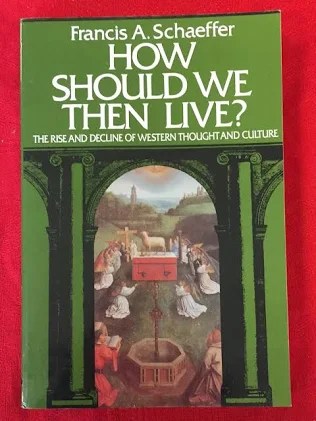
Schaeffer’s influence on understanding intellectual history/the history of ideas is remarkable. This week, I reread his masterpiece How Should We Then Live? Below are just (3) of the book’s myriad nuggets of wisdom:
“Nietzsche knew the tension and despair of modern man. With no personal God, all is dead. Yet man, being truly man (no matter what he says he is), cries out for a meaning that can only be found in the existence of the infinite-personal God, who has not been silent but has spoken, and in the existence of a personal life continuing into eternity”(HSWTL, 180).
“If there is no aboslute moral standard, then one cannot say in a final sense that anything is right or wrong. By absolute we mean that which always applies, that which provides a final or ultimate standard. There must be an absolute if there are to be morals, and there must be an absolute if there are to be real values. If there is no absolute beyond man’s ideas, then there is no final appeal to judge between individuals and groups whose moral judgments conflict. We are merely left with conflicting opinions” (ibid, 145).
“To make no decision in regard to the growth of authoritarian government is already a decision for it” (ibid, 257).
Question: Ever heard someone object to the biblical doctrines of man’s depravity and God’s election by posing a question along these lines: “But what about the innocent man on a remote island who has never heard the gospel? That would be ‘unfair’ for God not to save him.”
Sure, we all have heard questions like that. It can be helpful to ask the person asking the question to show you an ‘innocent’ person. Who is innocent among us? Will we listen to what Scripture actually teaches?
They are all corrupt, they do abominable deeds; there is none who does good (Psalm 14:1b, ESV).
How about the next two verses of Psalm 14:
The Lord looks down from heaven on the children of man, to see if there are any who understand, who seek after God.
They have all turned aside; together they have become corrupt; there is none who does good, not even one (Psalm 14:2-3, ESV).
How about Isaiah? Maybe he has a different message than David:
We have all become like one who is unclean, and all our righteous deeds are like a polluted garment (Isaiah 64:6a, ESV).
How about Moses? Maybe he has a different message than David and Isaiah:
The LORD saw that the wickedness of man was great in the earth, and that every intention of the thoughts of his heart was only evil continually (Genesis 6:5, ESV).
How about Paul? Maybe he has a different message than David, Isaiah, and Moses:
And you were dead in the trespasses and sins in which you once walked, following the course of this world, following the prince of the power of the air, the spirit that is now at work in the sons of disobedience—among whom we all once lived in the passions of our flesh, carrying out the desires of the body and the mind, and were by nature children of wrath, like the rest of mankind (Ephesians 2:1-3, ESV).
How about Christ Himself? Surely, He will have a different message than David, Isaiah, Moses, and Paul:
And this is the judgment: the light has come into the world, and people loved the darkness rather than the light because their works were evil (John 3:19, ESV).
Connection to Amos as a Forerunner of the Good News: Amos 3:7 entails a profound truth: God does not hide Himself or His message of redemption through judgment; He sends prophets to speak for His truth:
For the LORD GOD does nothing without revealing his secret to his servants the prophets (Amos 3:7, ESV).
In plain terms, God is a communicating God. To use Schaeffer’s phrase, God is not silent.
There is no innocent person on a deserted island. Why? Because there are no innocent people. We are all sinners by nature. That’s the point of the verses above, and countless others in the 66 books of Scripture.
But all of the Bible coheres. It tells one unified story of what God has done in Christ for all who will hear, repent, and believe:
But God, being rich in mercy, because of the great love with which he loved us, even when we were dead in our trespasses, made us alive together with Christ—by grace you have been saved (Ephesians 2:4-5, ESV).
Encouragement: Christ has done what we neither would do nor could do. And He bids us sinners welcome, or to use poetic biblical language, to taste and see that the LORD is good (Psalm 34:8, ESV).
Introduction: If each prophet of the one and only true and living God has his unique oratorical style, Amos’ is surely among the most memorable: “For three transgressions of . . . and for four, I will not revoke punishment.” You find it, among others, repeated in Amos’ book of the Old Testament: 1:9, 11, 13; 2:1, 4, 6, etc. The point, of course, is emphasis. It’s a poetic way of saying, “Don’t miss this.”
But don’t miss what exactly? Judgment for sin.
Historical Context: Amos was a shepherd-farmer in the 700s B.C., during the time of Uzziah, the time of the prophet Isaiah. Economically, Amos lived in a time when Israel and Judah were materially prosperous. But accompanying all that material wealth was massive spiritual corruption. As the people became fat with material blessings, they were spiritually bankrupt. And so, God calls this man to speak forth truth, to be a prophetic voice in his generation, to tell the people: God judges sin, so don’t think there’s not a cost to your spiritual rebellion. You will be made to care, in other words.
Listen to just three of the warnings from Amos’ opening salvo:
For three transgressions of Damascus, and for four, I will not revoke the punishment, because they have threshed Gilead with threshing sledges of iron (1:3, ESV).
For three transgressions of Edom, and for four, I will not revoke the punishment, because he pursued his brother with the sword and cast off all pity (1:11, ESV).
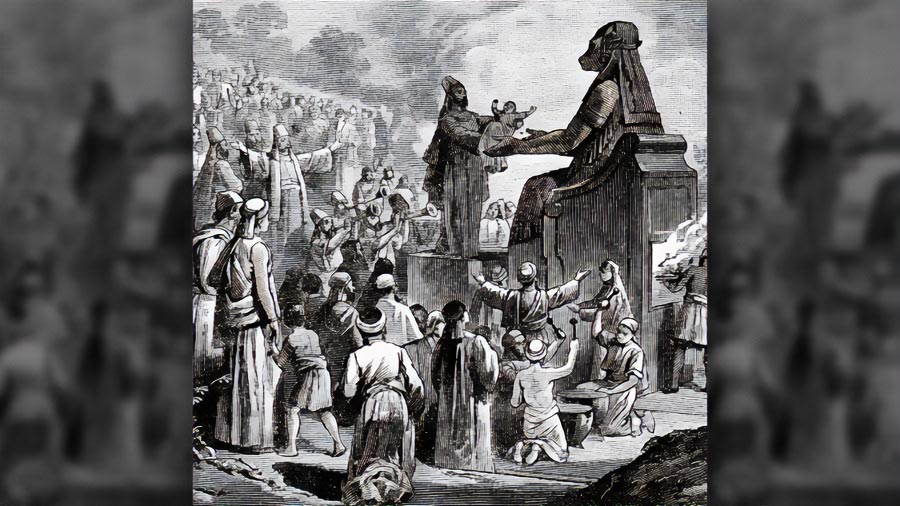
For three transgressions of the Ammonites, and for four, I will not revoke the punishment, because they have ripped open pregnant women in Gilead, that they might enlarge their border (1:13, ESV).
Connections to Today: Sounds like today’s violence, terrorism, invasion, and illegality, doesn’t it? Because it is. And what happened then is what will happen now: God’s judgment of our sin.
Amos was a shepherd who spoke forth the word of God to stubborn people who were under judgment for their sin.
Why did Amos do this? To be faithful to God’s call. To love people enough to tell them the truth. So that people would be saved from the wrath of God’s holy and just judgment.
Takeaway & Encouragement: The role of the prophet is a tough one, you see, because it entails speaking God’s truth to a morally recalcitrant and hard-hearted people. But that’s the cost of bearing witness to the truth. And it’s a picture of the gospel in microcosm in Amos. Ultimately, God’s wrath was executed upon the one and only fully faithful Shepherd, and that is Christ, who took the blame and bore the wrath, in order that those who flee to Him in the gospel will be saved from the judgment we deserve. All of Scripture, in other words, is pointing you to what God has done in Christ for all who will attend to the word of truth.















 MIND & MATTERS