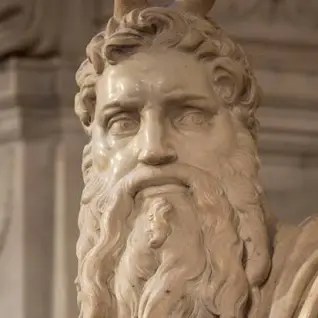
Studies in the Life/Character of Moses (Pt. 5/5)

Principle: We will answer.

Text: And the Lord said to him, “This is the land of which I swore to Abraham, to Isaac, and to Jacob, ‘I will give it to your offspring.’ I have let you see it with your eyes, but you shall not go over there” (Dt 34:4, ESV).

Context: It’s the last chapter of the Pentateuch, Moses’ five books. But what it’s most known for, chapter 34 anyway, is that it’s the death chapter. It records the death of the great man of God, Moses.

Here’s where I wanted to end this part five/five on Moses. I don’t know how one can have been with Moses’ story and be unmoved by the rebuke God levies upon His prophet/shepherd. He (God) won’t let him (Moses) enter.

Just think of that. Moses had shepherded a people for decades, nearly four decades of putting up with and trying to teach hard-hearted, recalcitrant, willfully ignorant, stubborn people who fancied themselves ‘God’s people’.

And yet he, God’s shepherd for this epoch, was banned from entering the land promised. Why?

The answer is clear: Moses was a sinner, and God didn’t forget. In short, we all will answer. We’ll give an account.

**After we got back from a supper of Mexican food and some time to pick up some shorts and sandals for an upcoming trip, Carrie Jane and I came home. She sat with on the couch with her pretty brown toes underneath the pink blanket on the couch, and I sat in her chair to read and write some, and the deer grazed behind the house, and the dogs and cat lay about like royalty, and all appeared well, but in the back of my mind was this reality: I will stand before the Judge of all the earth. To answer. And whether you believe it or not, well, is quite beside the point. It’s true, whether you believe it or not. We’ll have our Deuteronomy 34 moment, dear ones.

Takeaway: Moses was there, on the mountain, looking at a land promised to those who believed God. But he (Moses) was barred from entry. He entered heaven ultimately; we know this from the New Testament. However, even Moses was denied entry into this blessing. Why? Because of his own sin. He could not lay it at the feet of another; it was his own. And he answered for it. If you’re like I am, you have much for which to answer. Per Scripture, dear ones, we will answer.

The beauty of the gospel is that the entry of each and every sinner who comes to Christ does enter the ultimate land of promise, but it’s all due to the work of the One who was made sin for us so that we sinners might be declared righteous (2 Cor 5:21).

Studies in the Character of Moses (Part 4/5)

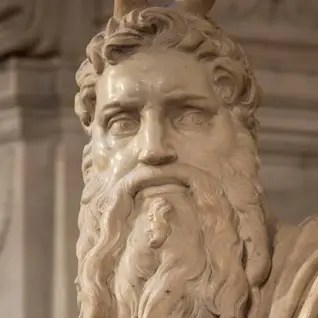
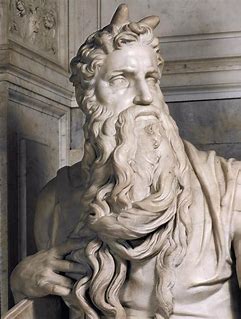
Introduction: The sculpture above is of course Michelangelo’s Moses. When you see it in person, you cannot help but marvel. I remember looking at the sculpture of Michelangelo’s David, and I almost broke down, because it was so beautiful. I hesitate to even write about what moves me in my studies of Moses, because the passage I’m thinking upon is of Moses at the Burning Bush. It is surely familiar to everyone. Okay, to some.

Here’s What Intrigues Me: God uses humble means for mighty purposes.

You’ll remember how Exodus 2 ends. Basically, God says that He is aware of His people’s plight, and He’s determined to address it:

23 During those many days the king of Egypt died, and the people of Israel groaned because of their slavery and cried out for help. Their cry for rescue from slavery came up to God. 24 And God heard their groaning, and God remembered his covenant with Abraham, with Isaac, and with Jacob. 25 God saw the people of Israel—and God knew (Ex 2:23-25, ESV).

In short, God remembered, God saw, and God knew.

A Meek Man: The dramatic stage is set: God is surely going to find some Chris Hemsworth, some Stallone or Schwarzenegger, to set things to rights.

Enter Moses. Remember his calling? Here are a few examples:

  • “And Moses hid his face, for he was afraid to look at God” (Ex 3:6b, ESV).
  • “Who am I that I should go to Pharaoh and bring the children of Israel out of Egypt?” (Ex 3:11, ESV).
  • “But behold, they will not believe me or listen to my voice, for they will say, ‘The LORD did not appear to you'” (Ex 4:1b, ESV).

On and on it goes, of course. Moses, so often thought of as mighty, was quite the contrary at times. He was quite often rather meek, doubtful, reluctant, and fearful.

Encouragement & Application: If you’re at all like I, I don’t like controversy. I would just as soon folks get along. But the reality is that truth divides. And God uses fallen, humble, meek men & women oftentimes to herald the most piercing of messages–whether to Pharaohs, or kings, or false shepherds, or hirelings, or presidents, or unbelieving spouses and children. It’s not we who do the saving. We’re just messengers. But we are to be faithful with the message of redemption.

(More) Tales from Airports

The hour before dawn breaks, when it breaks, and the few moments after, are my favorite glimpses of the day. Beauty is both intellectual and visceral. You can look up aesthetics in volumes of the philosophy of art and beauty, or you can walk outside and behold the firmament. Which one teaches? Both, of course. But when you’re outside, you smell creation; you feel the wind (or perhaps stillness); you see colors that dare you to define them. You see a star rise in the East that enables your food to grow, turns your skin darker, and declares the glory of Jesus. The picture above was of clouds in the morning sky as I exited the gym on post after my morning PT.

Later I boarded a plane in Atlanta, bound for Texas, then on to Arkansas. I don’t particularly like crowds. I tend to seek out a bookstore or a coffee shop, and open a book, or watch people. I like people; I just cannot hear myself think if I’m amidst the buzz of a crowd. A few close friends is my preference, where we can talk, connect, and just be. If that’s not an option, I never travel without several books.

But over recent years I have been blessed in my job to be able to travel a great deal and minister to fellow soldiers. When I arrived at the parking lot several hours before dawn, I pushed the little green-glowing button, retrieved my ticket to park, found a parking space, parked, retrieved my ruck and bag, and boarded the shuttle. Right away, I adored the driver. She was a heavy black lady, probably in her late fifties, but was simply kind. She greeted me before I could even say “Good morning.”

“Have you ridden with us before?”

“Yes, many times,” I responded.

“Great! Well, good morning! We’re going to wait a few minutes for some others who’ve just pulled up; then it’ll take us three or four extra minutes to get to the terminal because of all the new construction,” she said.

She was so open, so friendly, I liked her immediately. I looked around the shuttle, stowed my ruck and bag, and took my seat. The lady’s shuttle was clean. I could smell the clean. And there was no trash. No wads of gum, no cigarette butts, no miscellaneous airline tickets, etc. The lady took pride in her job, her shuttle, her presentation of her business to her customers.

I looked at the dashboards where many drivers have places for customers to give tips, a buck or two usually, to thank them for their service. I was surprised to not see one in this lady’s shuttle.

More drivers boarded. I watched them as they bent over their cell phones, put their car keys in their bags, pulled up their boarding passes on their phones. Some of the ladies applied makeup and looked at themselves in compacts.

Finally, we were on our way, and within a few minutes we were at the terminal. I let the others off first, and as I retrieved my ruck and bag, I put some cash on the lady’s dashboard. “Thank you, sir! You just look for me when you come back, okay. I’ll be in this spot.”

“Deal,” I said. “Have a good one. Appreciate you.”

A few hours later, I was looking out over Texas and Arkansas, but I still found myself smiling at the kindness of the lady from 0400 this morning.

The Face of God: Studies in the Life of Moses (Part 3/5)

Introduction: The relationship that Moses had with the Lord was remarkable. Moses, sinner though he clearly was, loved the Lord, trusted the Lord, and longed to be faithful to the Lord, so much so in fact that Moses repeatedly pleaded with the Lord for closeness. That is, Moses repeatedly implored the Lord to make himself visible, knowable, and immanent to him (Moses). This is important because it foreshadows the gospel of Christ who did just that. Follow me.

Moses’ Intercession

12 Moses said to the Lord, “See, you say to me, ‘Bring up this people,’ but you have not let me know whom you will send with me. Yet you have said, ‘I know you by name, and you have also found favor in my sight.’ 13 Now therefore, if I have found favor in your sight, please show me now your ways, that I may know you in order to find favor in your sight. Consider too that this nation is your people.” 14 And he said, “My presence will go with you, and I will give you rest.” 15 And he said to him, “If your presence will not go with me, do not bring us up from here. 16 For how shall it be known that I have found favor in your sight, I and your people? Is it not in your going with us, so that we are distinct, I and your people, from every other people on the face of the earth?” (Exodus 33:12-16, ESV)

See it there? Moses says, “[P]lease show me your ways.” It’s a plea for God to become even more ‘real’, so to speak, all the previous episodes of judgment and deliverance notwithstanding.

What’s even more remarkable is that God condescends to Moses’ plea. God does it. That’s what verses 17-23 of Exodus 33 are all about. God carves out a cleft in the rock and “passes by,” if you will. Moses is able to behold some of the glory of the Lord. But God still, even for the mighty Moses, did not reveal His face. Why?

Principle: All of Scripture coheres. It’s unified; it tells one interconnected story of what God is doing through judgment to redeem a people for Himself.

Many people have a passing familiarity with the following, but I wander if they grasp the profound theology taught in them. They are from 2 Corinthians 4:

And even if our gospel is veiled, it is veiled to those who are perishing. In their case the god of this world has blinded the minds of the unbelievers, to keep them from seeing the light of the gospel of the glory of Christ, who is the image of God. For what we proclaim is not ourselves, but Jesus Christ as Lord, with ourselves as your servants for Jesus’ sake. For God, who said, “Let light shine out of darkness,” has shone in our hearts to give the light of the knowledge of the glory of God in the face of Jesus Christ. (2 Cor 4:3-6, ESV)

God reveals Himself primarily in the incarnation, Christ the Son, and in Scripture. That’s the point.

Moses pleaded to see the Lord. And in the New Testament, that is exactly what happens. God the Son takes upon Himself flesh and came as a babe in a manger, was raised as a Jewish boy, astonished the religious elites via His wisdom, raised corpses, restored sight to the blind, legs to the lame, hearing to the deaf, and granted salvation to repentant sinners.

God did answer Moses’ plea–but in greater ways than Moses could have imagined.

God reveals Himself, you see, through what He has made, through conscience, through the incarnation, through the resurrection, through the fulfillment of hundreds of precise prophecies, and through His Word. He is, to quote Francis Schaeffer, not silent. He is anything but silent.

Moses, dear, precious, mighty man of God, Moses, God answered your prayer, and all we must do is flee to Him in the gospel, and we will find Him, His glory to behold.

Studies in the Character of Moses (Part 2/5)

Moses’ life was replete with ironies. Think, for example, of his origin and early years. He was hidden by his mother for three months when he was an infant (Ex 2:2). Think of that, the child that was initially hidden from view would be the visible human focus of an entire nation of people.

Also, think upon his upbringing. He was discovered by Pharaoh’s daughter and was raised in privilege (though a Hebrew) in Pharoah’s house. He was reared in palaces to later spend decades of his life wandering in desert sands.

What’s more, he was both fearful at times but vengeful at others. In Ex 2:14, e.g., the text reads,

Then Moses was afraid, and thought, “Surely the thing is known.”

He flees to Midian out of fear of his own people murdering him because they knew of his (Moses’) earlier murder (Ex 2:14). Irony after irony after irony.

When I think upon Moses’ stratified life, I see a man who was often his own hero and his own nemesis. He loved his people and protected them. But he also was often quick-tempered, impetuous, and violent.

He was a shepherd by training; yet he himself was often a fugitive.

He longed for God to show His glory to him, yet he was granted only a cleft in the rock from which to gaze upon the glory of the Lord. God covered His glory to spare Moses (Ex 33:22).

When I think upon Moses, a takeaway for me is that he is representative of us all. We have these opposing natures within us–to shepherd, for example, but also to avenge.

He was slow of speech, yet he penned the Pentateuch. Deuteronomy is replete with Moses’ sermons.

Irony upon irony in this great man of God.

Moses, dear, precious man of God, you still minister to us, proving exactly what a New Testament man of God penned years later in Romans 15:4, “For whatever was written in former days was written for our instruction, that through endurance and through the encouragement of the Scriptures we might have hope.”

Studies in the Character of Moses (Part 1/5)

Intro: My wife’s favorite book of the Bible is Deuteronomy. Part of the reason for that is that Deuteronomy is action-packed. It’s replete with Moses’ sermons and poems to the covenant people of God. And of course it contains the death of Moses (ch. 34) on Mount Nebo, where God took Moses’ life. Moses, the great human leader of the exodus, the intercessor on behalf of a stiff-necked and recalcitrant people, the man who received the tablets of stone from God on Sinai, the man whom God used like no other in OT history, Moses was barred from entry into the land of promise. I sometimes try to picture Moses’ facial expression when God said to him,

This is the land of which I swore to Abraham, to Isaac, and to Jacob, ‘I will give it to your offspring.’ I have let you see it with your eyes, but you shall not go over there” (Deut 34:4, ESV).

If you are tender to the things of God, that will break your heart. Why? Because Moses was truly a great man. Listen to what Scripture says of Moses:

And there has not arisen a prophet since in Israel like Moses, whom the LORD knew face to face, none like him for all the signs and the wonders that the LORD sent him to do in the land of Egypt, to Pharaoh and to all his servants and to all his land, and for all the mighty power and all the great deeds of terror that Moses did in the sight of all Israel (Deut 34:10-12, ESV).

Encouragement & Application: As many years as I’ve been in ministry, I’ve through the Bible many many times, but the sheer power of Moses’ ministry is spectacular by any measure. And yet God did not allow this greatest of OT prophets and leaders and intercessors enter the land to which he’d been used by God to lead a stubborn people. Why? Because Moses, like all of us, had to answer to God for his sin. He was a great man in so many ways, yes, but he also battled anger, violence, impatience, and more. And he had to answer for his sin.

There would have to be another who would endure the anger of sinners, would submit to the violence of sinners, would show divine patience towards sinners, and would even give his life as a ransom for sinners. That was Christ, of course, the One to whom Moses pointed. Learn from Moses; emulate his good traits, but flee to Christ, for He alone redeems. Moses, too, answered to Christ.

God’s Law or the Guns of Thugs: Alternatives

I was reading a book recently on the West’s continued decline into paganism and a wholesale rejection of biblical Christianity. In it the author quoted another thinker whose words bear repeating:

All societies of men must be governed in some way or other. The less they may have of stringent Sate Government, the more they must have of individual self-government. The less they rely on public law or physical force, the more they must rely on private moral restraint. Men, in a word, must necessarily be controlled, either by a power within them, or by a power without them; either by the Word of God, or by the strong arm of man; either by the Bibe, or by the bayonet. It may do for other countries and other governments to talk about the Sate supporting religion. Here, under our own free institutions, it is Religion which must support the State (Robert C. Winthrop’s Address to the MA Bible Society, Boston, 28 May 1849).

What Winthrop understood is that it’s Christ or chaos. If the Holy Spirit does not control a man, a demonic spirit will. Neutrality is a myth. As Dylan quippied, “You’re gonna have to serve somebody. It may the devil or it may be the Lord, but you’re gonna have to serve somebody.”

I was reading earlier and an atheistic scientist seemed to be celebrating the idea that he was just pure matter, only chemicals:

[The] sciences owe their spectacular progress to the assumption that all the processes of life can be interpreted finally as simply physical and chemical ones. Many of them have been imitated in the laboratory test-tube. The actions of enzymes, hormones, nucleic acids, complex proteins, and other substances concerned with the processes of life in general, so far as science can analyze them, follow the same laws that govern all the lifeless universe. To many the conclusion is now obvious that man, like every other living thing , is only a material mechanism, extraordinarily complex but no different in his basic nature from any other piece of machinery. This conception readily solves the dilemma of man’s dual nature by denying that the intangible mental and spiritual side of him really exists at all (Edmund W. Sinnott, The Biology of the Spirit (New York: The Viking Press, 1955), p. 7.

How encouraging, dear reader, you’re a “material mechanism” who is “no different . . . . from any other piece of machinery.” This sort of folly parading as wisdom is pride and drivel, not science. Why would a person write a book with a thesis that men are machines? If they’re machines, why write books? Blah, blah, blah.

Shakespeare’s great soliloquies in Macbeth and Hamlet and Romeo and Juliet are the results of matter in motion, eh? Beethoven’s 9th is just random collocations of sound waves, eh? Okay, Edmund; you can sit down now and go back to emitting carbon dioxide.

The stuff that passes for depth is truly astounding. Rather than admitting what is obvious, rather than humbling oneself under the mighty hand of God, the secularists profess to be wise and reveal their seemingly endless folly.

There is another way, dear reader. It’s the way of redemption and truth:

The Value of Wisdom

My son, if you receive my words
    and treasure up my commandments with you,
making your ear attentive to wisdom
    and inclining your heart to understanding;
yes, if you call out for insight
    and raise your voice for understanding,
if you seek it like silver
    and search for it as for hidden treasures,
then you will understand the fear of the Lord
    and find the knowledge of God.
For the Lord gives wisdom;
    from his mouth come knowledge and understanding;
he stores up sound wisdom for the upright;
    he is a shield to those who walk in integrity,
guarding the paths of justice
    and watching over the way of his saints.
Then you will understand righteousness and justice
    and equity, every good path;
10 for wisdom will come into your heart,
    and knowledge will be pleasant to your soul;
11 discretion will watch over you,
    understanding will guard you,
12 delivering you from the way of evil,
    from men of perverted speech,
13 who forsake the paths of uprightness
    to walk in the ways of darkness,
14 who rejoice in doing evil
    and delight in the perverseness of evil,
15 men whose paths are crooked,
    and who are devious in their ways (Proverbs 2:1-15, ESV).

Reflections upon Reformational Thinking

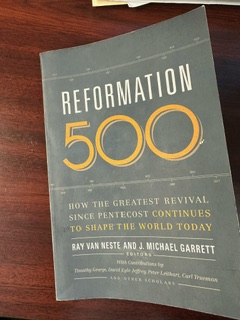
A fellow believer from our Sunday school class passed a book on to me recently. He thought I would appreciate it. He was correct. I more than appreciated it. I devoured it. Reformation 500: How the Greatest Revivial Since Pentecost Continues to Shape the World Today is a treasure trove. Why?

The book has multiple authors. And multiple themes and ideas are explored. Issues ranging from historical misunderstandings of Luther’s two kingdom theology, to the importance of singing the psalms in corporate worship, to the role of Rembrandt’s biblical themes in his painintings, to the Reformation’s biblical moorings as the seminary for the scientific revolution, the book’s a massive resource, amply footnoted and referenced for those who wish to pursue follow-on studies.

I returned my buddy’s copy to him, but then I bought my own copy. And it’s now underlined and rife with marginalia. Highly recommended for those with similiar interests in the history of thought and intellectual history and/or Reformation history and its impact.

“Obtuse … Is It Deliberate?”

One of my favorite lines from one of my favorite movies (The Shawshank Redemption) comes when Andy Dufresne, upon discovering that there are witnesses to his (Andy’s) innocence of the crime for which he’s been found guilty by a judge and incarcerated in Shawshank Prison, goes to the prison’s morally bankrupt warden, Warden Norton, to plead for him and the ‘judicial’ system to pursue to evidence that has come to light. If justice is done, Andy will be exonerated. After all, he did not murder his wife. Elmo Blatch did. But Warden Norton will hear nothing of it. Why? Because he, like almost all of the system he represents, is corrupt to his core.

Justice is just a word to him. Warden Norton is a masterful character in King’s (the writer of the novel) use of irony for him (Warden Norton). The warden talks a big game about believing the Bible, but he is embezzling money, bribing prison officials, running a prison where cruelty is not only allowed but encouraged. He is a modern-day Judas Iscariot. He’s the textbook hypocrite, liar, and sellout.

Then Andy asks some of the most heart-rending questions of Warden Norton. The acting by both men is superb:

Andy: “How can you be so obtuse?”

Warden Norton: “What? What did you call me?”

Andy: Obtuse. Is it deliberate?”

Ever looked around at our ‘justice’ system? Seems the Warden Nortons are everywhere. Watch The Shawshank Redemption or better yet, read the book and then watch the film. Andy’s words are loaded with pathos: “How can you be so obtuse? Is it deliberate?”

The answer is obvious: Yes, it’s deliberate, Andy. But it’s not just obtuseness, as you know. It’s wickedness, pure evil, an abandonment of justice. And that, good’ole Andy Dufresne, is why the only thing to do is to break out.

And you did. And your friend Red, who likewise knew the truth, eventually reunited with you. Why? Because, like you said, no good thing ever dies. Not forever, anyway. Just ask Fuzzy Britches.

Nuggets from Momo & Granddaddy

I don’t know how it’s possible to love two people more than I love Momo and Granddaddy. Technically, I should use the verb loved, since they died years ago. But they’re still alive in me and I believe to my core that they are with God awaiting their glorified bodies.

Today after I completed a book, I looked out through a window above my desk. The sky was a leaden color that reminded me very much of the sky when I was stationed in southern Germany. It was gray, fossil-colored, the color of smoke.

For whatever reason, memories of Momo and Granddaddy washed over me like a wave. I could picture Momo in her rocking chair, and the smells of ham frying in the black cast iron skillet atop the stove and the smells of creamed corn and butterbeans. I could picture Granddaddy in his straw hat coming through the kitchen door, sweaty from working his garden in the back.

I didn’t know it fully at the time, but I was receiving an education in wisdom from those who really knew the vast difference between mere information and wisdom. A couple of nuggets of wisdom I can still hear in my mind follow:

“Worry’s like a rocking chair, Rooster; it’ll give you something to do but it won’t get you anywhere.”

And perhaps my favorite: “What’s down in the well, Rooster, comes up in the bucket.” In other words, people will show you what they’re made of; just watch. What’s down in that well will come up.

**Momo & Granddaddy, I don’t know how or even if it is possible to miss people more than I miss you, or if it’s possible to reunite deeply enough in eternity to ever repay the love you showed, the love you gave.

What was down in your wells came up in your buckets for years and years of faithfulness, and I stand as a debtor who can only say, I love you, I miss you, and I cannot wait to learn from you yet again.