Does Anti-Intellectualism Triumph?

The heart cannot love what the mind does not know.

It is a cliche, of course, because it remains true.
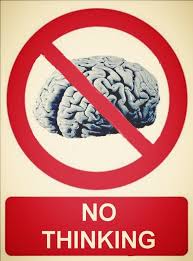
I cannot explain it adequately to myself, the shallowness of things. When one reads ‘the news’ it’s like watching pubescent children hurl pebbles and sling mud. To alter Arnold’s phrase, armies of intellectual urchins clash both day and night. Arguments are gone; now, it’s ad hominem attacks, ‘mostly peaceful protests’ by mobs, cancel culture, and the alphabet mafia.

In teaching my students, I continue to find they don’t read. They just scroll, scroll, scroll–video after video. An endless internet river of images devoid of substance.

The Scriptures say, “In the beginning was the Word . . .” (Jn 1:1a ESV). That’s John’s opening salvo about the logos, the Christ of God. It is to remind hearers of the centrality of the speaking/communicating/word-driven God who is, and who communicates primarily through a book. The sixty-six books of Scripture are there in countless languages, but we must open them, read them, study them, show ourselves approved as those who rightly understand and apply them to ourselves and to all who will hear and obey.

I read a story today on a news site where a man married an ashtray. Before that, he had married a mannequin. Yes, it’s true. It didn’t work out. Shocker. This is where we are.

https://theweek.com/news/world-news/954014/man-who-married-sex-doll-dumps-her-for-an-ashtray

It’s Romans 1:22-23 in Technicolor.

I’m going back to my novel now. The ship of fools left the port some time ago.

God’s Double-edged Covenant/Faithfulness: Reflections Upon Ministry

Today a flood of memories came back to me via pictures that social media had picked up of my career in military chaplaincy. I saw pictures of leading fellow soldiers in the Lord’s Supper at Abraham’s Well in Iraq and of preaching a year’s worth of services in Afghanistan. I saw pictures from invocations and benedictions at events honoring veterans of America’s wars and rumors of wars. I saw pictures of times at my state’s capitol building under the golden dome. I saw pictures of times visiting with soldiers in hospitals and physical rehabilitation facilities where soldiers were to convalesce via physical and occupational therapy regimens. On and on it went.

And I was reading Isaiah today, too, and was in some of the most beautiful poetic language in Scripture:

[N]o weapon that is fashioned against you shall succeed, and you shall refute every tongue that rises against you in judgment. This is the heritage of the servants of the LORD and their vindication from me, declares the LORD (Isaiah 54:17 ESV).

It’s remarkable how quickly time passes, how quickly the miles add up, how the trips around the globe accumulate. I am unbelievably thankful to be able to minister to those who probably will never darken the doors of a church. They’ll probably never read a Bible very much or with much hermeneutical acumen.

But God has been gracious to allow me years to pursue this calling, to try and reach those who are often physically tough but spiritually broken. God and His gospel are the only redeeming answers, but they are building a heritage of the servants of the LORD, and God knows them by name.

The Gospel in Numbers 14

Text: Numbers 14

Context: The setting is 15th B.C. in the ancient Near East. Israel is again demonstrating weak, anemic faith in God, and they largely turn upon their human leader Moses who–yet again–intercedes before God on their behalf.

Numbers 14 is the historical account of yet another dramatic unfolding of the gospel in the Old Testament. It’s the story of God’s unchanging word; of sinful humanity; of God’s prophetic mediator and leader; of sacrifice; and judgment. All of this is in Numbers 14. 

The chapter opens with the people of Israel whining about having it better in captivity in Egypt. Why all this struggle, Moses? Why not let us be like the rest of the nations—relatively comfortable slaves to pagan rulers: “Would that we had died in the land of Egypt! Or would that we had died in this wilderness! Why is the LORD bringing us into this land, to fall by the sword? Our wives and our little ones will become a prey. Would it not be better for us to go back to Egypt?” And they said to one another, “Let us choose a leader and go back to Egypt” (Num 14:1-4 ESV). 

And what does God do? Does He immediately judge the people for their hardheartedness? Does He vanquish them? No. He has a mediator, Moses, who intercedes on behalf of a sinful people. Why? Because the “LORD is slow to anger and abounding in steadfast love, forgiving iniquity and transgression” (Num 14:18a ESV). 

Connection to Our Day: God’s people are to live by God’s words, by His covenant promises, but we are just like unbelieving Israel. We demand the comforts of this world. We don’t want to walk by faith in God but by sight upon the lures of today.

And yet God has His one and only ultimate prophet, priest, and king, and His name is not Moses or David or Caleb or any military or political leader, but rather Jesus. He’s the only fully faithful One. Will we look to Him, or will we perish in the wildernesses of this world? 

Encouragement: “Let us therefore strive to enter that rest, so that no one may fall by the same sort disobedience” (Heb 4:11 ESV). That rest, that land of promise, that milk and honey imagery that Scripture uses throughout to teach, points to Christ. He’s the One to whom the wandering soul is to look, because He alone has conquered and is the installed King of kings and Lord of lords. 

Which Will It Be, eh?

Text: “Whoever walks with the wise becomes wise, but the companion of fools will suffer harm.”

God has been gracious to me over the years by placing wise people in my life, especially at opportune times. Our paths have crossed at times when I needed to learn something, needed to see something, perhaps as a confirmation of a suspicion or hunch I had. I’m a big believer in the providence of God and the sovereignty of God.

I cannot say that I actually believe there is such a thing as an accident. Because if one admits the category of  accident in one’s thinking, he is necessarily admitting that there is no superintending guidance or overarching purpose in events, but instead randomness. I don’t think that at all.

Even with tragedy, I think God’s hand superintends all things. In short, I don’t think there are any rogue molecules or atoms outside of God’s control. Either God is sovereign, or all is randomness. As one of my favorite books has it, it’s either chance or the dance. Christ says, not even a sparrow falls to the ground apart from God’s decree (Mt 10:29).

Encouragement: It can be discouraging if we look out upon the cultural landscape and throw up our hands and say, “Ah, it’s all lost. The fools have won.” They demand we save the turtles but abort the children. They demand men are now ‘birthing persons’ but they cannot tell you what a woman is. It’s madness at such a level that it’s not even parody anymore. It’s just pure silliness and utter folly.

Therefore, thoughtful Christian, cultivate relationships with the few, the wise, and pour into those who have the wisdom to know the difference between the sage and the fool. Folly is not a winning strategy. He who captures souls is wise (Pr 11:30). And wisdom is known by her children (Lk 7:35).

Deer Pics, Fun on Tap, & Sunday’s Scripture

Made it home a few moments ago and had some girls behind the house to greet me:

For the almost-50 folks coming to our Monthly Fellowship this afternoon at 5 p.m. we will see you soon. Taco bar, with all the fixings.

Plus, Carrie Jane and I have the communication course scheduled to lead us through tonight. You’re going to have a blast.

For Sunday’s time in Scripture we will be in Matthew 8:14-17.

See you soon.

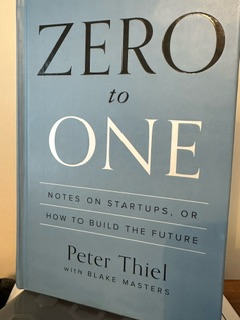
Thoughts on Thiel’s Book

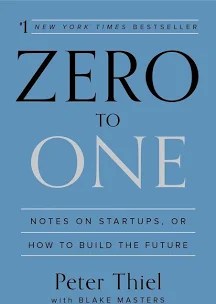
This week when I was in the Midwest I read a book that arrested me via its singularity (pun intended). The book was actually recommended to me in another book about polymaths, thinking for oneself, and trusting your instincts. I bought Thiel’s book because it sounded interesting. But it was more than interesting; it was wise.

I now have notes, annotations, underlinings, stars, check marks, et al throughout.

If you want to see what a genuine intellectual/writer/lawyer/billionaire/businessman/inventor/capitalist can teach the teachable, I cannot recommend this book heartily enough.

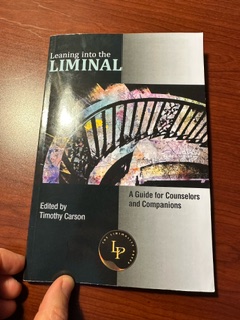
Thoughts on Liminality & the Wise Owl Picture

When I fly I love to read on the plane. Most folks in my experience prefer to pop in ear buds and watch movie after movie, or pay for internet and scroll, scroll, scroll. Image after image, video after video, till the plane lands. But so it goes.

This week during work and plane trips I read a short book entitled Leaning Into the Liminal. By liminal, the author means threshold, rite of passage, or phase. Limen in Latin means “threshold.”

The book is written for those of us in pastoral care who are charged oftentimes with shepherding people through spiritual thresholds in their lives due to, for example, death of a loved one, illness, separation, financial change, combat/war, or trauma in its myriad manifestations.

Here are a few nuggets I found helpful in the book:

“Liminality is about ambiguity, transition, and transformation. Death (in all forms) embodies these elements. It marks the end of life as we know it and the beginning of something different and unknown. Like other liminal experiences, death compels us to confront our mortality and question the nature of our existence” (p. 69).

“The archetypal symbol of a healing passage is the pilgrimage. The notion of spiritual pilgrimage takes on great iportance as one figuratively moves from one state of being to another. In pilgrimage, an extended and often difficult journey becomes a process of separating from the given, everyday world. Pilgrimage entails stepping away from daily routines and expectations and moving with special deliberateness toward a place where one might be changed . . . . Movement away from the given world and toward a distant goal can create a wide threshold of transition and transformation” (p. 60).

“One of the fundamentals of narrative theory is the idea that people have many interacting narratives that constitute their sense of self, and that the problem story they bring to therapy is not limited to this sense of self but is influenced and shaped by cultural and contextual discourses about identity and power” (pp. 9-10).

As one who believes fully that stories are soul food, I find the last quote quite moving. The stories by which we live and are informed shape and reshape our lives as long we tell them and carry them, or to use my favorite writer’s words, as long as we continue to carry the fire.

“Every Picture Tells a Story”

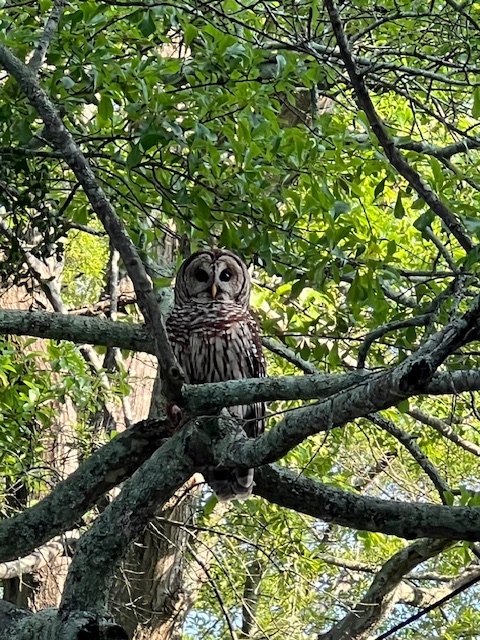
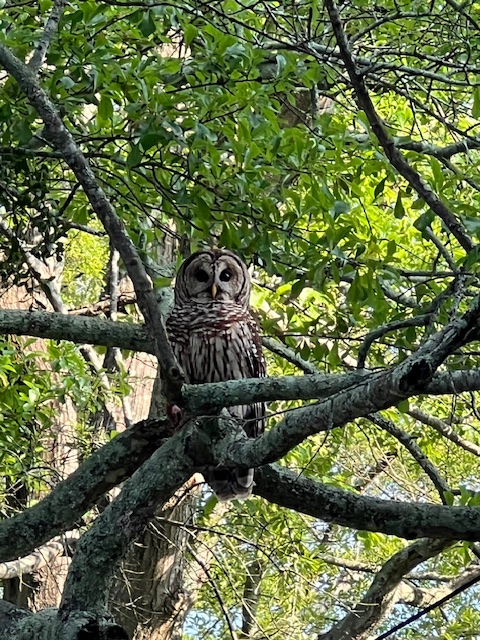
I am in Indiana this week. While here a buddy of mine from back home sent me a picture of an owl that appeared to be looking right at him. My buddy thinks this is a short-eared owl (I don’t know; my bird book is at home). All I know is that he’s arrestingly beautiful and somewhat menacing, too. He just looks indomitable. I had to include the picture.

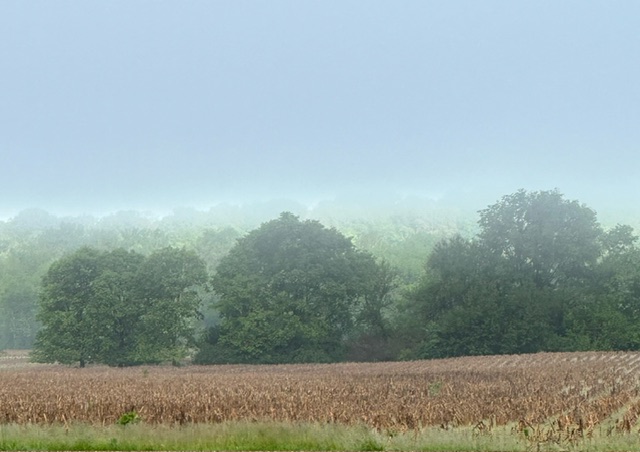
Second is a picture I took this morning as the fog blanketed the endless cornfields of Indiana. I never tire of pastoral scenes. They speak to me in ways that remain deeply mysterious and inescapable for me.

The story is that there actually is a story, and every story has an author. A tale is being told because there’s a coherent narrative.

‘Journey’ing on Roller Skates

What is it about a tune? I was rolling along and then … Bam! Journey’s “Still They Ride” came on. And I was back. Back to where so much began.

Small-town life, where I walked the railroad track and used a week’s worth of saved quarters from lifting couches and loveseats to purchase a bottle of Mountain Dew and a Snickers from the gas station. It’s a Circle K now, but when I was a tyke, it was not that, but a little country store where the lady in a black tank top and raspy smoker’s voice knew me and my cousin, Robert, as we came with our quarters to drop into the slot for Asteroids and PAC-MAN, then bite into our Snickers for which we’d saved all week.

Seems silly sentimental now, but it was all so real then … and as I rolled down the road and Steve Perry’s voice launched me once again into nights riding the blacktop country roads, blasting Journey and dreaming of girls, smelling girls’ perfume in the skating rink that was but a tin tent but that we thought a haven of damsels. It washed over me again. The power of music in youth. Still they ride … through the night.

Jesse rides through the night
Under the Main Street light
Ridin’ slow

This ol’ town, ain’t the same
Now nobody knows his name
Times have changed, still he rides.

Traffic lights, keepin’ time
Leading the wild and restless
Through the night

Still they ride, on wheels of fire
They rule the night
Still they ride, the strong will survive
Chasing thunder

Spinning ’round, in a spell
It’s hard to leave this carousel
‘Round and ’round
And ’round and ’round

Still they ride, on wheels of fire
They rule the night
Still they ride, the strong will survive
Chasing thunder

Zinger from P. Thiel

When I travel I tend to read books from genres I would not ordinarily read. I prefer classics, history, and theology. But this week it was Thiel’s Zero to One.

In it he (and/or his co-author) penned this zinger: “Brilliant thinking is rare, but courage is in even shorter supply than genius.”

Because of my spiritual concerns for those I care about, and because I have remaining loyalties to ground-up, local, individual religious liberty and sanctity of human life convictions, this zinger struck a deep chord.

Who do you know that is a man or woman of courage and conviction in action? The question answers itself.