I was reading Scripture this morning. In Psalm 125 the writer uses imagistic language to contrast two ways of living: restless evil vs. enduring peace.
In verse one the poet writes, “Those who trust in the LORD are like Mount Zion, which cannot be moved, but abides forever” (Ps 125:1 ESV). The literary stage is set via imagery. One type of people (the godly) are pictured as a city on a hill, abiding forever.
The implication of its opposite should be clear to readers. The wicked (the ungodly who hate God) are restless and unsatisfied unless they’re tearing down and disrupting. They have to steal, kill, and destroy. That is their nature.
Here’s a line of poetry that should shake us to our core: “For the scepter of wickedness shall not rest on the land allotted to the righteous, lest the righteous stretch out their hands to do wrong” (Ps 125:3 ESV).
Connection to Our Day: When I read that universities are now canceling graduation ceremonies because the mobs of imbecility are tearing the schools down, I have to go, “Well, yes, what should you expect? You’re surprised that godless, useful idiots loot, demolish, scream, and behave as hoodlums. That’s what you’ve raised them on–nihilism, godlessness, solipsism, atheism, and feelings. Not truth, not the understanding and knowledge of the holy, not Scripture, but just hate, emotion, entitlement, and nonsense. You’re reaping the whirlwind you have sown, and you want us to be surprised?”
Be encouraged, Christian pilgrim. Your lights will become more evident as the darkening tides of secular hate cover the lands.
When a civilization rejects God, rejects the Christ of God, chaos eventually ensues. It’s been the same pattern since Genesis 3.
And when the purple-haired urchins scream for lunch money but cannot articulate a coherent thought, just know that they’re reaping what they’ve sown, and all they know how to do is destroy everything. Their drug is wielding scepters of wickedness.
I have a buddy who is uncanny in his ability to send me a text with words of wisdom at opportune times.
Sometimes it is possible to grow discouraged, we would all surely admit, especially as we see the continued disintegration and imbecility of our times. And I am so encouraged when my buddy sends me texts like this one he sent me yesterday: “It is better to be a warrior in a garden, than a gardener in a war.”
I am not for certain who said it or penned it. For all I know, he did. He has some zingers. But this one put wind in my sails. Here’s why.
I think we’re at a crossroads in our day. For Christians, it is my view that we are not to retreat. We are to “go into all the world” because Christ has all authority (Mt 28). We’re to disciple the nations, not retreat from them. We are not to do this by force like Islamists do it, but by modeling and heralding the law of God and the grace of God in the gospel. We point people to God’s holiness, our sin, Christ’s person and work, and our need to flee to Christ in repentance and faith, and in Him we find welcome and rescue and restoration.
I’m not a political person at all, frankly; I despise politics. I’ve had to shake the hands of bureaucrats, and it is akin to handling reptiles. That is also the imagery Scripture uses to describe evil and soldiers of Satan (dens of snakes; broods of vipers, etc.).
We are to bear witness, however, to the gospel, not hide the light of the gospel under a basket. We are to be salt and light. How clear is this in Scripture! The fact that we need to even stress it is an indictment. The gospel is to compel Christians to bear witness to its power in our daily lives.
But the church, what about the church? The mission of the church, as I understand it from Scripture, is multifaceted. Here are some of the church’s directives from Scripture: worship; service; observance of the sacraments; prayer; fellowship; evangelism; discipleship, etc.
We’re at a crossroads in our day. The temptation is for some believers to cower rather than to call upon the Lord. When David went to battle with Goliath, the unbelieving world scoffed at David. How could a mere boy slay a giant of a man, a tested warrior? But David did not purport to be a political savior or a John Wick of the 900s B.C. No, he was God’s man who knew God and knew God’s power. The sling and smooth stones were just the means that the King of kings used through the obedience of David. That’s the key: obedience to show up for the battles but in the power of God. It’s dominion God’s way, but God’s way calls for courageous warriors.
Jesus is the Lion of Judah as well as the Suffering Servant. Gentle and lowly, yes, but also the King who walked out of a tomb, stilled the seas, raised cadavers, spoke light from darkness, granted sight to the blind, caused the lame to walk, and cast demons into hell. He’s the One before whom the demons tremble.
We need discerning and courageous soldiers for Christ, that is my view. Paul knew it and lived it; Stephen knew it and lived it; Peter knew it and lived it; David knew it and lived it; Esther knew it and lived it; Daniel knew it and lived it; the apostle John knew it and lived it; John the Baptist knew it and lived it.
Did they all fall short many times? Of course. Who doesn’t? Just one, of course–the Christ of God. That’s the point. He’s the Hero of the story of redemption, the metanarrative of all narratives, the Lamb and Lion, the Logos, the Anointed One, the Holy One of God. He’s the Warrior and the Gardener who calls His people to take dominion and herald His saving message to all who will hear and come to the table prepared for them.
I had to reschedule my flight. What was originally a 9:00 a.m. departure turned out to be a 7:30 p.m. departure. With many hours to spend in the airport, I hunkered down and completed the reading of a biography of Dickens.
I don’t remember precisely the author that hooked me initially, but it happened when I was raging with hormones in ninth grade or so, thought about little else but girls, Army culture, fantasies of nature-roving, and writers that captured me. One of those writers was Charles Dickens, especially his Great Expectations and David Copperfield.
I cannot explain adequately how much Great Expectations and David Copperfield meant to me–then and now. I read them first as a boy, and discovered in them an Englishman who delighted in the English tongue. He swam waves of language. He crested with repetitive clauses; his names manifested character–Pumblechook, Magwitch, Pip, Drood, Pickwick, Oliver Twist, Fagin, Uriah Heep, Scrooge, et al, and his heart and mind spilled over the lip of a pint of Newcastle.
I remember reading Philip Caputo and Tim O’Brien novels about Vietnam and then reading Thomas Hardy and Charles Dickens right after. I devoured them all. Caputo and O’Brien wrote from experiences of serving in Vietnam. I remember listening to Jim Morrison’s haunting lyrics in “The End” and “Riders On the Storm” and other classic tunes, and reading Caputo and O’Brien’s memoirs and novels, and trying to convince myself I’d been in the SE Asian trenches, and smelled the flesh from napalm-burning bodies and the sound of Huey blades cutting the humidity. But my own times in uniform serving in hostile lands were still ahead for me, but they came. And Caputo and O’Brien were often proved correct. But it was Dickens and Hardy, different worldviews notwithstanding, whose literary fingers clutched me. Well, they didn’t have to clutch; I took to them as ships to Kent and Dover, as walks through Hardy’s Dorset.
But I had settled down in a chair in the terminal, reading another Dickens bio. I’d read so much and was so tired, that I got up from my chair, removed my reading glasses, rubbed my eyes, and walked towards the coffee kiosk. A man in his 50s, with a barrel chest, Columbia shirt, and grizzled beard, came up to me. He was smiling.
“Thanks for your service, Chap.”
“Thank you, sir. You prior service?” (I don’t have to explain it to fellow Soldiers, Sailors, Airmen, or Marines. But we can spot one another from a click away.)
“Yes, sir,” he said. “I repaired turrets on a reconnaissance vehicle we don’t even use anymore. But I’d do it all over again. I was at Bragg my whole time, except when I was stationed in Germany.”
“That’s great, brother. How was Europe?”
“Loved it, Chap. Traveled everywhere. Brought my mom and sisters over from North Carolina. Took them to Rome, Venice, Switzerland, London, Paris, Austria, and even walked much of Spain and Morocco. It was amazing, Chap. We still talk about it,” he said.
“Understood, brother. It’s a beautiful continent to travel. Nothing teaches like travel.”
“Exactly!” he said.
“Where you headed?”
“To the Midwest to check on some Soldiers,” I answered.
“I appreciate you, Chap!”
“Thanks, brother; likewise.”
He shook my hand, stepped back a pace, then saluted and nodded at me. We’d become buddies. And he walked away.
In my imagination, I’d been in Dickens’ England in the 1800s in my mind for hours, and had been contemplating a large black coffee that I smelled brewing in the terminal’s coffee kiosk, but this brother had brought me back ’round to service, to my years abroad, to travel, to the importance of family, and the unparalleled education of travel, and I was a different person suddenly. I was lost in thought, trying to explain to myself how I could be with Dickens on foggy ships in Kent, and hear the clanking cryptic foreshadowings of Magwitch in the graveyard, and also be a chaplain, one thirsty for black coffee in Terminal C, and talking to a brother who knew more about turrets than I’d ever know.
Suddenly he reappeared. He stretched out his hand with a brown flat paper bag with a clear plastic front.
“Every chaplain needs a sugar cookie. Enjoy, Chap!” he said, and again he saluted. We shook hands and embraced.
All in all, it had lasted less than five minutes probably. But he changed my whole trip.
Wherever you are today, SGT Espinoza; I appreciate you. I don’t care for sugar cookies, and so I won’t tell you that I didn’t give it away to a young girl in a pink dress whose mother looked exhausted, but our time in the airport was nonetheless sweet for me, due in no small measure to your service, kindness, and conversation. Salute.
I was reading tonight and found myself rereading a few verses of biblical poetry over and over again, because once again my memories returned me to Iraq and to a series of messages I heard when I heard another Bible teacher preach words I’ve read many times. Follow me.
Question: Can suffering be a good thing?
The question, of course, demands more explanation. What is meant by suffering? And what is good? What’s the definition? Who defines the value dictionary, in other words? Is it in flux, just anyone’s whimsical definition? Or is the meaning fixed, because it’s rooted in the transcendent and holy? Can ostensibly ‘bad’ things/events/people be used for ‘good’ and/or usher in the good?
It’s a deliberately complex question. But here’s the story…
The Story: I was in Iraq. I had been teaching for months through the 21 chapters of John’s gospel. And the Lord had grown the footprint for gospel inroads through the expositional teaching of Scripture–just one verse after another through John’s gospel. I was seeing men and women from Iraq, Uganda, Kenya, the U.S., Denmark, and more come to be gripped by God and His gospel of redemption.
But I was physically exhausted. I either preached and/or oversaw eight services every week. I was in my element, and it played to my strengths for hard work in ministry, but I was physically and emotionally spent. My body was telling on me, as my dear grandmother was wont to say. “Your bones will talk to you, Rooster,” she’d say. And as with almost everything Momo ever taught me via her godly and country ways, she was spot on.
So, to return to the story, I was tired; my bones were talking to me. I asked another person to teach for a few iterations. And one of the verses my substitute Bible teacher focused on was, “It is good for me that I was afflicted, that I might learn your statutes” (Psalm 119:71, ESV).
Tonight as I read this verse and the context of Psalm 119, and especially the TETH section of the Hebrew psalm, replete with its puns and literary excellence, the thrust throughout the whole poem is the beauty of the King of kings and His torah, His law/statutes/Word.
And yet here’s that verse, saying it’s ‘good’ that the believer is afflicted. Why? That he might learn God’s statutes. In other words, wisdom and practice. To know God, to know God’s ways, but also to live those ways out, to not hide wisdom under the basket, but to teach it, herald it, live it out, and to transform lives via the words of the only wise God. It’s to know God in one’s bones.
Summation via Scripture: For a long, long time now, one of the books to which my Bibles fall open (not just Ecclesiastes, believe it or not) is 2 Timothy, especially chapter 4, and verses 9-18. I will paste them below and then draw this to a close for now:
9Do your best to come to me soon. 10 For Demas, in love with this present world, has deserted me and gone to Thessalonica. Crescens has gone to Galatia, Titus to Dalmatia. 11 Luke alone is with me. Get Mark and bring him with you, for he is very useful to me for ministry. 12 Tychicus I have sent to Ephesus. 13 When you come, bring the cloak that I left with Carpus at Troas, also the books, and above all the parchments. 14 Alexander the coppersmith did me great harm; the Lord will repay him according to his deeds. 15 Beware of him yourself, for he strongly opposed our message. 16 At my first defense no one came to stand by me, but all deserted me. May it not be charged against them! 17 But the Lord stood by me and strengthened me, so that through me the message might be fully proclaimed and all the Gentiles might hear it. So I was rescued from the lion’s mouth. 18 The Lord will rescue me from every evil deed and bring me safely into his heavenly kingdom. To him be the glory forever and ever. Amen.
Concluding Thoughts: These were among the last words Paul ever wrote. After this, he was beheaded under Nero’s reign in Rome, Italy. Last words are important.
Paul says, in essence, it was ‘good’ he was afflicted. Why? Because through that affliction, in that crucible, through that suffering, he came to know God more profoundly and was more fitted for ministry to others. He was “rescued from the lion’s mouth” (2 Tim 4:17b) again and again via the sovereign mercies of God.
Encouragement: The Christian worldview does not gloss over suffering. It admits it head-on and speaks to it on page after page of Scripture. Affliction can indeed be a good thing when it’s understood as a means of God refining His people through the fires of trials. Be steadfast, pilgrim. Trust the Lord. Do good. And know that God really is good–not just some of the time, but all of the time, even and especially in the crucible of suffering.
When cast down, and driven to outer dark regions of soul, where the sight of the true, beautiful, and good recedes like a faded sun, I find myself in need of writers who make me laugh at human folly and who seem to believe that reason and goodness will prevail–that human folly, man’s fallenness, and rivers of vapid assertions, will ultimately fall away and be revealed for what they are.
I return once more to Charles Dickens’ characters, where in his fictional universe of Pumblechook, David Copperfield, Pip, Scrooge, Charles Darnay, Estella, Sydney Carton, Miss Havisham, and many many more, the reader discovers folly to be sure, but also redemption, laughter, and hope.
The reader rediscovers hope, yes, and finds a world wherein sanity prevails, where children are to be protected rather than preyed upon, where the Oliver Twists are redeemed rather than reduced to endlessly pickpocketing as street urchins.
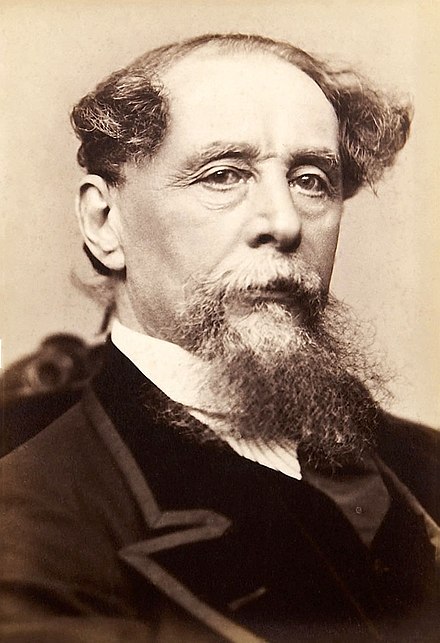
As I complete my reading of this wonderful biography of Dickens, I salute you, Charles Dickens. I have read your works for decades now. You’ve been dead for 154 years, but your words live on. Your characters live on. And you remain dear to those of us blessed by your word-rich, jolly, effervescent literary universe.
“When the righteous increase, the people rejoice, but when the wicked rule, the people groan” (Proverbs 29:2, ESV). The polarity is clear. Righteousness vs. unrighteousness; joy in goodness vs. delight in wickedness. It was like it was ripped from today’s headlines. Below is an example of what I mean.
When the homes of teachers are unsafe because the jihadist mobs invade even there, you need to know that no one is safe. The mobs don’t care. This is Exhibit 7,568,931 of the consequences of ideas. When evil is not prosecuted, don’t be surprised when the mobs and fools descend upon your doorstep. Behold, the consequences of nihilism and the rejection of God. It’s Christ or chaos–every single time. You will be made to care.
It reminds me of some of Dylan’s most powerful lyrics as found in “Desolation Row.” They read as follows:
They’re selling postcards of the hanging, they’re painting the passports brown The beauty parlor is filled with sailors, the circus is in town Here comes the blind commissioner, they’ve got him in a trance One hand is tied to the tight-rope walker, the other is in his pants And the riot squad they’re restless, they need somewhere to go As Lady and I look out tonight, from Desolation Row
Cinderella, she seems so easy, “It takes one to know one, ” she smiles And puts her hands in her back pockets Bette Davis style And in comes Romeo, he’s moaning. “You Belong to Me I Believe” And someone says, “You’re in the wrong place, my friend, you’d better leave” And the only sound that’s left after the ambulances go Is Cinderella sweeping up on Desolation Row
Now the moon is almost hidden, the stars are beginning to hide The fortune telling lady has even taken all her things inside All except for Cain and Abel and the hunchback of Notre Dame
Everybody is making love or else expecting rain And the Good Samaritan, he’s dressing, he’s getting ready for the show He’s going to the carnival tonight on Desolation Row
Ophelia, she’s ‘neath the window for her I feel so afraid On her twenty-second birthday she already is an old maid To her, death is quite romantic she wears an iron vest Her profession’s her religion, her sin is her lifelessness And though her eyes are fixed upon Noah’s great rainbow She spends her time peeking into Desolation Row
Einstein, disguised as Robin Hood with his memories in a trunk Passed this way an hour ago with his friend, a jealous monk Now he looked so immaculately frightful as he bummed a cigarette And he when off sniffing drainpipes and reciting the alphabet You would not think to look at him, but he was famous long ago For playing the electric violin on Desolation Row
Dr. Filth, he keeps his world inside of a leather cup But all his sexless patients, they’re trying to blow it up Now his nurse, some local loser, she’s in charge of the cyanide hole And she also keeps the cards that read, “Have Mercy on His Soul” They all play on the penny whistles, you can hear them blow If you lean your head out far enough from Desolation Row
Across the street they’ve nailed the curtains, they’re getting ready for the feast The Phantom of the Opera in a perfect image of a priest They are spoon feeding Casanova to get him to feel more assured Then they’ll kill him with self-confidence after poisoning him with words And the Phantom’s shouting to skinny girls, “Get outta here if you don’t know” Casanova is just being punished for going to Desolation Row“
At midnight all the agents and the superhuman crew Come out and round up everyone that knows more than they do Then they bring them to the factory where the heart-attack machine Is strapped across their shoulders and then the kerosene Is brought down from the castles by insurance men who go Check to see that nobody is escaping to Desolation Row
Praise be to Nero’s Neptune, the Titanic sails at dawn Everybody’s shouting, “Which side are you on?!” And Ezra Pound and T.S. Eliot fighting in the captain’s tower While calypso singers laugh at them and fishermen hold flowers Between the windows of the sea where lovely mermaids flow And nobody has to think too much about Desolation Row
Yes, I received your letter yesterday, about the time the doorknob broke When you asked me how I was doing, was that some kind of joke All these people that you mention, yes, I know them, they’re quite lame I had to rearrange their faces and give them all another name Right now, I can’t read too good, don’t send me no more letters no Not unless you mail them from Desolation Row
What you’re witnessing is a deliberate destruction of the biblical moral foundations of Western civilization and a reshaping of ziggurats and towers of Babel to erotic paganism. The restraints designed by God are now mocked and discarded and scoffed at as repressive joy-killers and the lies of ‘progressivism’, infanticide, and sexual perversions that stagger the mind and destroy the soul are the new religion and the cultus of death.
Tear down the U.S. flag but fly the rainbow jihad flag of perversion. Anti-semitism is permitted but don’t dare ‘misgender’ the she-male with purple and blue hair. Don’t pray outside of abortion mills known as Planned Parenhood because you’ll be arrested, but by all means celebrate June as LGBTQIA+ Pride Month. It goes on and on and on, and still the sheeple go along with it. Be of good cheer, dear reader, though, because, rest assured, it’s coming for you. You can pretend that you’re in a bubble, but these mobs don’t care. It’s Christ or chaos. By and large, the West has chosen chaos, and you’re seeing the consequences.
Got home at 0200 this morning from time away with fellow soldiers. But was able to spend the day in territory I relish and appreciate. No wonder the Cherokees worshipped the ways they did.
I was in Iowa with fellow soldiers. After training I went to the local barber shop to get tightened up a bit. When I entered the barber shop, I knew I had found my kind of place. There were three chairs for the barbers. Each woman’s first name was posted behind her chair on the mirror. And the lunch hour for each woman was posted, too. For example: Amber: Lunch (1200-1300). I liked the place immediately. It was clean. And there was lots of local memoribilia–local newspapers and flyers; photos of the town’s events; stories related to farms and pork, etc. And it was a cash-only business. My fondness continued to grow.
As I sat on the bench and waited for my turn in the owner’s chair, I perused the interior walls full of pictures and the shevles of interesting trinkets. One of the things I noticed is that the owner kept us all engaged in conversation. She spoke to the customer in her chair and even brought me in on their conversation. He was a retired Iowa State Patrolman who’d been having his hair cut here for 30 years. And I was here for my first time as a soldier, but they were both super-friendly and welcoming.
I noticed what was an important connection. No one was on gadgets. No one had phones out or was scrolling. We were talking and looking one another in the eyes. Then I saw the lesson and how it was being lived out. Next haircut time I’m in Iowa, I’m coming back. Well done, Johnston Barber Shop. Well done.


























 MIND & MATTERS