Introduction: I was never very good at using a Yo-Yo as a child. My cousin Doug was very good, however. He could make them do the cool tricks that boys are often fascinated by–rocking the cradle, walking the dog, etc. But the image of the Yo-Yo is powerful. Back and forth; up and down.
Connection: Asa was a king in Judah (the southern kingdom) in the 900s-800s B.C. I have always been struck by what Scripture reveals about Asa. Why? Asa had some seasons of great faithfulness to truth and to God. In other seasons Asa botched things due to his suppression of truth and shady dealings. He worked at times with divided loyalties. He was very often a double-minded man. He was his own worst enemy at times. Other times he appeared to be a rock-solid leader.
What B.H. Carroll Said: In writing about Asa’s Yo-Yo dedication Carroll wrote, “The time we need to be most watchful is in the moment of a great victory. When the times are hard, when we are pressed to the wall, we are apt to be humble and look to God. But when it looks like everything is going our way, the danger is that we will be puffed up.”
In short, take heed lest you fall (1 Corinthians 10:12).
2 Chronicles 15 records a powerful glimpse into Asa and his (and our) struggle:
15 The Spirit of God came upon Azariah the son of Oded, and he went out to meet Asa and said to him, “Hear me, Asa, and all Judah and Benjamin: The Lord is with you while you are with him. If you seek him, he will be found by you, but if you forsake him, he will forsake you. For a long time Israel was without the true God, and without a teaching priest and without law, but when in their distress they turned to the Lord, the God of Israel, and sought him, he was found by them (2 Chr 15:1-4).
Thoughts about Asa & Encouragement for Fellow Pilgrims:
God sends messengers to warn us. In short, faithful are the wounds of a friend (Pr 27:6).
Godliness means work; it’s never easy, so let us not deceive ourselves.
God rejoices to restore the contrite of spirit. In short, humility precedes honor (Pr 18:12)
Encouragement: I do not purport to speak for anyone else on this but as for me, I have at many times and in many ways fallen very short of the standard that God calls his people to. But God is a restorer by nature. It is God’s nature to redeem, to set things and people upright again if and when they repent and look to him for mercy and grace. And should the most obstinate of sinners still refuse to repent, the very stones will cry out, bearing witness to the goodness of God.
“The truth is that what remains in Christianity when the supernaturalism of the Bible is given up is not Christianity at all. Liberal Christianity and liberal Judaism, for example, turn out to be exactly alike. They have the same God, or rather the same fundamental skepticism about God, the same complacency about man, and the same mild admiration for the prophet of Nazareth. Tolerance has had its perfect work. The equilibrium has been restored. The consuming fire of Christianity has burned out, and we have merely the same feeble moralism that was in the world before Christianity took its rise.
It is a drab, dreary world–this modern world of which men are so proud. I for my part feel oppressed when I look out upon it. I admire., indeed, those who try to hold on with heart to what they have given up with the head; but as for me, any religion that is to claim my devotion must be founded squarely upon truth” (J. Gresham Machen, “The Gospel and the Modern World,” 1929).
Thank you, Machen. You understood, and stood firm.
Intro: The problem of evil is an issue that every worldview must, if it is to be coherent and compelling, answer. Why? Because any intellectually honest person admits that this world is replete with evil. Our newsfeeds, papers, headlines, laws, prisons, and our own hearts attest to the reality that evil is both without and within. It is both “out there” in the world and also “in here,” in our hearts and in our nature. No one legislates laws because people are morally upright and pristine. No one builds prisons to house the noble and upright. Laws are necessary because human nature is fallen. We are not what we ought to be. As Robinson captured this truth in one of his hymns, we are “prone to wander.”
Same Old Story: Like a lot of Soldiers, I love studying history. And if you’re like I am, you discover through the study of history that man’s nature is consistent through the ages. We tend to make the same blunders again and again. It’s the stuff of tragic heroes. Patterns emerge. It’s become almost bromidic, but the line from writer G. Michael Hopf rings true, does it not: “Hard times create strong men, strong men create good times, good times create weak men, and weak men create hard times.”
The Upshot: In Genesis, Jacob (renamed Israel by God) has twelve sons who are the fathers of the twelve tribes of Israel. When Jacob is an old man and is nearing death, he is granted understanding of things hitherto veiled from him. Jacob, now an old man, is reunited with his beloved son Joseph (whom Jacob/Israel believed had perished). But instead of Joseph’s absence, Jacob/Israel learns that Joseph has been used by God to not only not perish, but to rise to a position of authority. Joseph’s authority is so great indeed that he forgives his enemies, feeds his brothers who earlier betrayed him, and blesses the nations. In short, Jacob learns that God reversed the apparent victory of evil for the purposes of good and holy ends.
Encouragement: This is how Christianity is the coherent and compelling answer to the problem of evil. The promise made by God in Genesis 3:15, that the seed (Jesus Christ) of the woman Eve would crush the head of the serpent (Satan). This is what’s known as the first (proto) announcement of the gospel (evangelion), the protevangelium.
This is why when it comes time for Joseph (a type of Christ in the Old Testament) to die, he says, “As for you, you meant evil against me, but God meant it for good, to bring it about that many people should be kept alive . . .” (Genesis 50:20). And he told his brothers, fallen sinners who had done evil to him, “And God sent me before you to preserve for you a remnant on earth, and to keep alive for you many survivors. So it was not you who sent me here, but God” (Genesis 45:7-8a).
God conquers evil through the gospel, you see. Evil does not win for all those who are covered by the seed of the woman. And that seed is Christ.
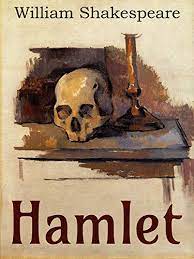
I have read Hamlet more than any other play. Each time I go through it, it goes through me. There’s a reason it is the most performed, most studied, most turned-into-film play in the world. Each culture is drawn into its depths. It speaks to the deepest problems of evil, human sin, and the question of redemption. It is pervaded by death, too. Act 5 is among the bloodiest passages in the annals of literature. If you want Disney sentimentality, don’t read Shakespeare’s Hamlet.
Educated people will be familiar at a minimum with the most famous soliloquy in world literature, uttered by Prince Hamlet, when he’s weighing the most existential of questions, namely, amidst all his suffering, amidst all the sin and lies and betrayal, is it worth it to keep going? Is life worth living? That is his question:
To be, or not to be, that is the question:
Whether ’tis nobler in the mind to suffer
The slings and arrows of outrageous fortune,
Or to take arms against a sea of troubles
And by opposing end them. To die—to sleep,
No more; and by a sleep to say we end
The heart-ache and the thousand natural shocks
That flesh is heir to: ’tis a consummation
Devoutly to be wish’d. To die, to sleep;
To sleep, perchance to dream—ay, there’s the rub:
For in that sleep of death what dreams may come,
When we have shuffled off this mortal coil,
Must give us pause—there’s the respect
That makes calamity of so long life.
For who would bear the whips and scorns of time,
Th’oppressor’s wrong, the proud man’s contumely,
The pangs of dispriz’d love, the law’s delay,
The insolence of office, and the spurns
That patient merit of th’unworthy takes,
When he himself might his quietus make
With a bare bodkin? Who would fardels bear,
To grunt and sweat under a weary life,
But that the dread of something after death,
The undiscovere’d country, from whose bourn
No traveller returns, puzzles the will,
And makes us rather bear those ills we have
Than fly to others that we know not of?
Thus conscience doth make cowards of us all,
And thus the native hue of resolution
Is sicklied o’er with the pale cast of thought,
And enterprises of great pitch and moment
With this regard their currents turn awry
And lose the name of action (III, i, 56-88).
Hamlet’s questions, complaints, and frustrations play out Job-like throughout the play. We see the lies of his uncle. We see the lies of his mother. We see the Ghost of his father, King Hamlet, who summons Prince Hamlet to avenge his (the father’s) murder. We see sycophants who seek the favor of leadership. We see it all in Hamlet. We see a man who is nearly overcome by the prevalence of evil and suffering. And yet …
In Act V, we hear Prince Hamlet say this (and this is key to his earlier questions and the questions of the play):
“There is special providence in the fall of a sparrow” (V, ii, 220-21).
Why is that so important? Because Prince Hamlet recognizes that evil is under the sovereign hand of God. I would argue that Shakespeare had in mind here Matthew 10:29-31 where Christ says to his people:
Are not two sparrows sold for a penny? And not one of them will fall to the ground apart from your Father. But even the hairs of your head are all numbered. Fear not, therefore; you are of more value than many sparrows.
See the image there? God knows the sparrow. God ordains their birth, life, provision, and death. God knows the number of hairs upon our heads. Why should God’s people, therefore, not fear? Because they know God and are known by God.
The Alternative: The worldviews that deny God have no such hope. Whether those worldviews go by the name of secularism, progressivism, naturalism, atheism, paganism, humanism, monism, scientism, Oneism, or any other ism (system) that rejects the triune God of Scripture, they all share a jettisoning of reason for hope. Why? Because bad things just happen but there’s no one there to fix them, to redeem them, to use them for good. Hitlers and Maos and Stalins and Pol Pots and Margaret Sangers just happen because there is no Judge of the earth who always does what is right. To put it plainly, if God does not exist, our complaints are dead on arrival because no one is listening.
Encouragement: When Prince Hamlet is killed via the poisoned tip of Laertes’ sword, Prince Hamlet again uses imagery straight out of the Bible to describe his dying wish to his faithful friend Horatio:
“As th’ art a man, Give me the cup. Let go. By heaven, I’ll ha’t! O God, Horatio, what a wounded name, Things standing thus unknown, shall live behind me! If thou didst ever hold me in thy heart, Absent thee from felicity awhile, And in this harsh world draw they breath in pain, To tell my story” (V, ii, 343-49).
See the imagery? The drinking of the cup. The cup would bring death. In Scripture, it’s the cup of God’s wrath meted out upon Christ the Son. In Hamlet, it’s the innocent Prince Hamlet slain for the sinful deeds of others. It’s the gospel, folks.
Why and how is this encouragement? Because in Christ alone, there is hope and the promise of redemption from evil and suffering because of the One who drank the cup of God’s wrath for the evil done by sinners.
Intro: In dealing with the question and problem of evil, it helps very much to have specific examples. That is one of the beauties of great literature. It makes the general specific. It makes the universal concrete. It makes the abstract and theoretical specific and concrete by way of personalizing it. What do I mean? Think of Job in the Old Testament. The book that bears Job’s name is filled with grand theology. It’s replete with discussions of ‘unjust’ suffering, of Satan and his power, of human sin, of God’s providence, of God’s sovereignty, and more. But still there’s this glaring reality right in front of us the whole time–Job himself. Here is a man that is Exhibit A, if you will, in the whole book of Job. He’s a husband, a father, a successful businessman and provider for his family, a man with a few close friends, who sometimes give him what he needs and who also sometimes give him horrible theological counsel.
My point is that if we read Job only as a textbook on suffering, pain, and/or evil, we miss the fact that it’s written about a real historical character who literally put skin in this issue (Job 2:7-8). The book of Job, in other words, makes the abstract problem of evil concrete and specific. It shows what was done to a man in order that he (and we by extension) might take heart, learn, and embrace the truths revealed in Job’s story.
Options for the Problem of Evil:
Monism is one option that fails to adequately answer the problem. Evil is viewed in monistic systems as a “necessary counterpart to goodness.” Michael S. Horton’s writings on Providence are helpful on this and have helped me think through these matters more. Star Wars is an example of how monism is peddled to the masses via an engaging narrative. Choosing the ‘good,’ or ‘using the Force’ are just ways of dramatizing how pantheistic monism pervades pop culture in so many people’s thinking. If “all is one, and one is all,” then there’s nothing to gain in trying to solve the problem of evil.
Dualism is a second option that fails to adequately answer the problem of evil. Dualism views evil as ”attributable to an equally sovereign deity . . . .” Horton calls our attention to Zoroastrianism and Gnosticism as examples of dualism in some people’s worldviews. Dualism does not actually solve or even adequately address the problem of evil.
Thirdly, there is Christianity. Christianity teaches that evil does indeed exist but that it is under the sovereign authority of the triune God of Scripture. In front of me I have my Westminster Shorter Catechism. Question 11 goes to the heart of this issue: “What are God’s works of providence?” Answer: “God’s works of providence are his most holy, wise, and powerful preserving and governing all his creatures, and all their actions.” In other words, evil is under the control of God. Proverbts 16:33 reminds us of the same truth: “The lot is cast into the lap, but its every decision is from the Lord.”
It’s theology 101, if you will. How so? It is fundamental in that it cuts through the bromides to the doctrine of God, to the doctrine of man, and to the doctrine of redemption. We all know that this world is fallen, that we all suffer, and that we instinctively long to know that our lives have meaning and purpose. And we long to know how evil, suffering, and meaning can be reconciled with belief in a transcendent holy God.
The short answer, I am convinced, is that outside of Christianity there is no answer of redemption and restoration. Why? Because pantheism fails to distinguish good from evil. No amount of yoga is going to transform the human heart’s fallenness, but it may make you more limber. Secondly, no system of dualism does justice to the complexity of the questions surrounding the problem of evil. There cannot logically be two equal gods who are sovereign (one of light vs. one of darkness). Because then sovereignty does not mean what it does mean, and you are lost in a postmodern soup of self-referential linguistic word salad. In Christianity alone, you get answers to the enduring questions we all face about who we are, what is ultimately real, what’s wrong with the world, and what can fix it.
We are creatures fashioned in the Imago Dei, the image of God.
What is ultimately real is the triune God of Scripture.
What’s wrong with the world is that it is fallen, because we are fallen sinners who failed and continually fail to keep God’s law.
What can fix it is the One who bore the wrath that we deserve and who satisfies the justice of God. This requires a perfect sacrifice to both remove our guilt and satisfy God’s righteousness. And this One is God the Son, Christ, the Anointed prophet, priest, and king, Lord of lords, and King of kings.
Job’s Last Words: Throughout the exquisite book that bears his name, Job received much theological counsel from his friends. Some of it was okay, but much of it was quite poor and short-sighted. Because his friends assumed that Job’s sin was unconfessed, or that he just needed to do more good than bad, or that he was trying to hide from God’s holy eyes. But that was not true. Job just wanted to know that God was there, that God was good, and that God saw and cared. And when you get to Job 42, well, it’s exactly what I have written about above, namely, God uses evil but for his sovereign purposes to ultimately redeem a people for himself. Listen to Job’s words after God speaks to him:
“I know that you can do all things, and that no purpose of yours can be thwarted” (Job 42:1). And just a few sentences later he says, “I had heard of you by the hearing of the ear, but now my eye sees you; therefore I despise myself, and repent in dust and ashes” (Job 42:5-6). Job had seen things too wonderful for him to fully grasp (Job 42:3b). It reminds me of Paul’s doxology of God’s sovereignty:
“Oh, the depth of the riches and wisdom and knowledge of God! How unsearchable are his judgments and how inscrutable his ways! “For who has known the mind of the Lord, or who has been his counselor?” “Or who has given a gift to him that he might be repaid?” For from him and through him and to him are all things. To him be glory forever. Amen” (Romans 11:33-36).
When I am involved in discussions with skeptics of the Christian worldview or with those who are hostile to the God of Scripture, I ask a lot of questions to understand where the other people are coming from. It’s crucial to have clearly defined terms. Here are some samples of conversations I have had countless times. Below the doubter is “D” and I’m the Chaplain (CH):
D: I don’t believe in God, Chaplain. I cannot. Just look around! Are you kidding me? A good God? You guys all just wish there was a God up there to clean up all this mess, but there’s no one there.
CH: Can you tell me the reasons you describe this world as a mess?
D: Can you not see, Chaplain? It’s evil to the core.
CH: Why should this world be any other way than it is? Who says? What reasons do you have for your view? I want to be sure I understand you.
D: I don’t know why I even bother with you types. Y’all are all the same. Just the old man in the sky routine. Good grief. Give me reason, not myth and wish fulfillment.
CH: I can tell you are frustrated. However, again I ask you: Can you tell me the reasons you describe the world as a mess? Should it be another way? If so, how do you know that? Who says? Just you? What if someone else has a different view? By what standard are you correct and one who disagrees with you incorrect? What reasons do you have for your position?
D: I believe in reason, Chaplain, not in invisible things. Science is my religion.
CH: Okay, so you believe in science. It is, as you say, your religion. But did I miss your reasons for denying the existence of God? Remind me of what they are so that I can follow your argument. I did hear you say you believe in reason but not in invisible things, so that helps clarify things a bit for me.
D: What are you talking about?
CH: How much does reason weigh?
D: What?
CH: How about logic? Can you tell me the color and dimensions of logic?
D: What are you talking about? I never said anything about logic or reason having weight or dimension.
CH: But you did. You said you believe in reason, that science was your religion. But you said you didn’t believe in invisible things, right?
D: Exactly. Give me evidence—something I can see or actually evaluate.
CH: Again, this is very helpful. Can you please show me the dimensions of logic? Can you show me, since you believe in the visible only, the height, depth, and width of math—in order that we all might believe in it?
D: Everybody knows that math just is, Chaplain. Don’t be ridiculous.
CH: So, what I hear you saying is that you believe in something that you cannot see, taste, measure, weigh, or show me? But you believe in it, right? You have confidence that 2+2=4 always, whether people wish to accept it or not, but that math is admittedly non-empirical?
D: Chaplain, I hate these discussions. I just can’t reason with people like you.
A Question for Reflection & Encouragement:
By what standard? That is a key question to ask skeptics. They will posit a standard, but in an atheistic framework, standards are reduced to preferences.
Recognize ad hominem attacks for what they are. When skeptics attack you as a person, lovingly call their attention back to the need for reasons: Can you provide me reasons for your belief system? Name-calling is not an adequate substitute for reasoned debate.
Truth with grace. I think this cannot be overestimated. May we seek to win the person, not just the argument.
In the opening chapter of Ecclesiastes Solomon writes, “What has been is what will be, and what has been done is what will be done, and there is nothing new under the sun” (1:9). The questions and complaints are not new to us, and they are certainly not new to God.
Evil is real. Math and logic are real. But so often skeptics and deniers create an idol and fail to realize the inherent reductionism of their position. In the above example, the Doubter believed, he said, in visible things, in things of science. But science itself rests upon articles of faith. Logic and math and coherence are all invisible realities, but they are invisible realities that we recognize because they are what’s known as “properly basic” or “foundational” realities. But when we are dealing with skeptics, we need to lovingly but firmly show them their lack on internal coherence and their faith commitment. Above all, let us aim for the person, not the trophy of just winning the argument.
This week I am on the road, but I would like to explore in (5) relatively short pieces an issue that never seems to expire, namely, the problem of evil.
Below are a few ways you may’ve heard the problem expressed:
There’s so much evil in the world. How could a good God permit this?
If God were omnipotent and good, he would prevent evil. But evil is seemingly everywhere. Therefore, God is either not all powerful or he is not all good. Either way, God loses. And so do we.
I can’t believe in the God of the Bible because, well, just look at all the horrible things God commanded–the destruction of the Amalekites, the destruction of Sodom and Gomorrah, the stoning of homosexuals, etc. That’s not loving. And we know God is love.
The God you Christians speak of is selfish. He wants us to believe he’s the only way. How narrow-minded. If God were good, he’d allow us to be free to worship and/or not worship him. He’s an insecure, needy God, and I cannot believe in that.
The list could go on and on.
First: Let me show my cards up front. I, too, have wrestled deeply with questions of theodicy. The problem of evil is never far beneath the surface in any serious conversation about our lives. If we are honest with one another, we all recognize that our world is a mess. We have broken families, we have broken marriages, we have broken vows, we have wars and rumors of wars, we have cancer and Alzheimer’s and Parkinson’s in our families or in families of those we know and love, etc. We know of abused children, battered spouses, drug-addled homeless, the poor and destitute, the persecuted believers across the earth, etc. This list could go on and on. It’s quite natural that the problem of evil will arise in any serious-minded conversation. So, right out of the gate, let’s acknowledge that the world is a mess. To use biblical language, the world is fallen.
Second: Before I follow this first installment with responses to the questions raised above, let me also say this: Christians should be the most welcoming audience of serious people with serious questions. Life is full of pain, so cant and snarky dismissals of legitimate queries are both unkind and unhelpful. When folks have sincere questions, Christians should welcome those questions and aim to give grace-filled biblical responses.
Third: My favorite book of all time remains Ecclesiastes, and so my responses are not my own. They come from Scripture. Primarily they come from the books of Job and Ecclesiastes. The last two books I pull from are Psalms and Genesis. I pull from other places (as seen below) but this is just a preview of coming attractions.
Lastly (for today at least), just one final thought to keep in mind as I try to address these concerns. It comes from the masterful book of Isaiah, written by the prophet of the same name in the 700s and 600s B.C.:
Woe to those who call evil good
and good evil,
who put darkness for light
and light for darkness,
who put bitter for sweet
and sweet for bitter! (Isaiah 5:20)
There is more wisdom in that one verse than most will ever acknowledge in this lifetime. But it will one day be acknowledged by us all. I just submit it to you as something to think on as I write this first of what I think will be just five short pieces. Be encouraged, dear reader. Evil does exist; it is very real; but so is the one and only God who uses it and triumphs over it. But I am getting ahead of myself. Stand by for part two tomorrow.
“Most people worship their work, work at their play, and play at their worship.” It’s a line I have written in one of my Bibles that I picked up somewhere. It has stuck with me.
I cannot speak for others, but I have certainly been guilty of the charge. I love what I do for a living, because I don’t view it so much as a job as a vocation-a calling to minister amidst a pluralistic environment, amidst competing worldviews, because I know that some will respond to the truth, and God’s mission will be accomplished. Christ has told us plainly. When Christ was in the temple in Jerusalem in the colonnade of Solomon, he did not mince words: “My sheep hear my voice, and I know them, and they follow me” (John 10:27). Earlier he told the hostile crowds, “All that the Father gives me will come to me, and whoever comes to me I will never cast out” (John 6:37).
We all battle frustrations on the battlefield of trying to bear witness to the truth. It can be, if you are actually putting skin in the game, so to speak, costly. Just this week, Christians in Nashville, TN were arrested for praying and singing hymns at an abortion mill. Let that sink in: Who was arrested? Christians. What are they facing? Up to 10 years in prison. What were they doing? Praying and singing hymns at an abortion mill. Where? Not in Moscow, Russia. Not in Tehran, Iran. It was in Nashville, TN. That’s where we are in our nation.
Believers could be tempted to abandon hope and think that secularism is the religion demanded by the people. We will see what will become of our nation. I don’t know how much more polarized and acerbic it may become, but I do know that God’s determined counsel will prevail. When God speaks in Isaiah, he says, “I am God, and there is none like me, declaring the end from the beginning and from ancient times things not yet done, saying, ‘My counsel shall stand, and I will accomplish all my purpose'” (Isaiah 46:10b). If and how America fits into that plan is not for me to say. The vocation of believers is to be faithful, and not to play at our worship. The time of antics or pretense is long gone.
Encouragement & Application: I am blessed to work with some of the finest Soldiers I’ve ever known. And the Civilians, too, are usually retired veterans who are still putting skin in the game. Many of them serve as paragons of inspiration to me day in and day out. What is called for is nothing new. It is faithfulness. To complete the mission. To see it through. To give it all. Because that is what God gave in Christ the Son.



















 MIND & MATTERS