Leadership Lessons from Joseph

Question: How can we wisely lead when we are tempted to think we are actually failing?

Text & Context: You are likely familiar with the person of Joseph in the book of Genesis. Joseph was one of the 12 sons of Jacob/Israel. Joseph was a favored/favorite son of Jacob/Israel. Joseph was chosen by God to become a leader. But that role of leader brought with it a lot of heartache and hard times. Joseph was sold by his 11 brothers (Gen 37:27). Joseph was lied about by his brothers and they even told their father that Joseph had been killed (Gen 37:31). Later, Joseph was framed by Potiphar’s wife as if he had slept with her, but he had not (Gen 39). Joseph was incarcerated due to the ruse Potiphar’s wife concocted about him (Gen 39:19ff).

But here’s the good news and how Joseph’s experiences can help us in leadership:

  • Gen 39:2 says, “The LORD was with Joseph, and he became a successful man, and he was in the house of his Egyptian master.”
  • Gen 39:9 records where Joseph remembered his life was always visible before the eyes of holy God; “How then can I do this great wickedness and sin against God?” he asked. In other words, he refused to sin in that way because he kept short accounts with God.
  • Gen 39:21 says, “But the LORD was with Joseph and showed him his steadfast love . . .”
  • Gen 39:23 says, “ . . . the LORD was with him. And whatever he did, the LORD made it succeed.”

Takeaways of Encouragement re Leadership:

  • Struggle is inextricable from leadership, but remember God is most exalted by triumphing over and through tragedy.
  • Keep short accounts with God.
  • Remember that God delights to exalt the humble and humble the proud.
  • Focus on what’s right, not what’s easy.

What Hath Beauty to Do with God?

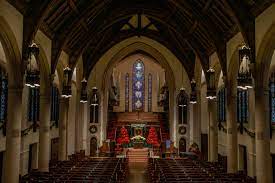
Question: Ever seen an ugly church or a church that looks more like a retail outlet store than a sacred space to honor the sovereign God? So have I. Too many of them. And here’s what I wish to explore: Does beauty matter to God? Does quality craftsmanship matter to God? If so, then shouldn’t Christians be characterized by their love for and stewardship of and fostering of beauty in the arts?

Text: Exodus 31:1-11 reads,

31 The Lord said to Moses, “See, I have called by name Bezalel the son of Uri, son of Hur, of the tribe of Judah, and I have filled him with the Spirit of God, with ability and intelligence, with knowledge and all craftsmanship, to devise artistic designs, to work in gold, silver, and bronze, in cutting stones for setting, and in carving wood, to work in every craft. And behold, I have appointed with him Oholiab, the son of Ahisamach, of the tribe of Dan. And I have given to all able men ability, that they may make all that I have commanded you: the tent of meeting, and the ark of the testimony, and the mercy seat that is on it, and all the furnishings of the tent, the table and its utensils, and the pure lampstand with all its utensils, and the altar of incense, and the altar of burnt offering with all its utensils, and the basin and its stand, 10 and the finely worked garments, the holy garments for Aaron the priest and the garments of his sons, for their service as priests, 11 and the anointing oil and the fragrant incense for the Holy Place. According to all that I have commanded you, they shall do.”

Exploration of Main Ideas: I see several significant events here in the text. Below are a few:

  • God equipped and called Bezalel for the crafting of beautiful things, namely, “artistic designs to work in gold, silver, and bronze, in cutting stones for setting, and in carving wood, to work in every craft” (vv. 4-5).
  • God is interested in the macro and the micro. Verses 7-11 of this text run the range from the tent of meeting to lampstands to utensils, the basin for washing, the altar, and even clothing. God is concerned with beauty in big, small, and every area in between.
  • God finds joy in beauty and in things done well.

Why does it matter?

In short, it all matters because God is the most beautiful reality. This is one more way God communicates to his creation. He displays his glory in the things he has made and in his equipping his people to craft beauty from the provisions God has already created. In other words, we write on paper that God has provided in the trees. We make pottery from the clay and rock and water and soil God has provided. We shape bronze, silver, and gold out of those elements God has made available to us.

Isaiah 33:17 is a beautiful line: “Your eyes will behold the king in his beauty . . .” God delights in beauty because, when rightly understood, God is beauty incarnate. This is yet one more reason God’s people ought to respond to beauty, long for beauty, delight in beauty, and aim to foster beauty. It’s a way of rendering to God what is right, good, and hopefully beautiful.

A buddy of mine from church sent me a picture of a white squirrel from a region with which he and I are both quite familiar. I lived for about nine years near where the picture was taken. My buddy, too, understands beauty, that God speaks to his people through what he has made.

Godly Leadership & Influence (Part 1)

Question: What are characteristics of godly leadership and influence?

Follow-on Question: Ever had the experience of growing impatient and/or being tempted to resent people you are leading?

Likely Answer: Sure, we all have. Or surely, many at least have. I have certainly experienced it in church ministry. My wife loves for me to share the story of when I was a full-time civilian pastor at a rural church. I had been there a year or two, and I was teaching on the Law of God. I had taught through Job, through Mark, through James, Galatians, etc. but I was now trying to focus on the Law of God as revealed in the Pentateuch. Pretty basic stuff, I thought: Christianity 101. Well, I was teaching one night in church in an informal study and I asked the question: When we understand the Law of God, what ought to be our response? In other words, what is the overriding purpose of the Law?

I paused for responses from the congregation. I didn’t have to wait long. A lady shot up her hand and spoke quickly, “Well, Brother Jon, I’ve kept the Ten Commandments.” I am sure I would not have been surprised at that moment to have seen a little green Martian come rip my liver from my body, tap dance in the chancel, and then high-five Lucifer as they both boarded the Enterprise 666 back to their regions; that’s how shocked I was at what this woman had said. She had actually professed that she had no need of forgiveness, that she was not a sinner, was not a debtor to grace, and that, doggone it, she was a pretty good person.

Listen, folks: I have had a lot of theological education; I have read shelves and shelves of theological books; I have heard and preached more sermons than I care to admit. But there are some moments in ministry where you think: Lord, help me not to laugh in this woman’s face, but to be gracious.

So, I did my best. I looked at her and said as kindly as I could, “I understand what you have said, but according to God himself, no one has kept the Law except Christ alone. That is why the Father says, ‘Behold, this is my beloved Son with whom I am well pleased’ (Mt 3:17), and again as Jesus nears the cross, the Father speaks of Christ only when he says, ‘I have glorified it [God’s name], and I will glorify it again’ (Jn 12:28). The evidence is consistent: Only Christ kept the Law. That’s why we look to Christ alone, by faith alone, by grace alone. That’s the whole point of Ephesians 2:8-9. Sinners will boast if they don’t understand themselves to be prideful sinners.”

1 John 1:8-10 ran through my head like a scroll: “If we say we have no sin, we deceive ourselves, and the truth is not is us” and then John writes, “If we say we have not sinned, we make him a liar, and his word is not in us” (v. 10).

But the woman crossed her arms and looked at me as if I was a real meanie. Yes, there are some lessons in ministry that seminary and books don’t equip you for, things like pride-filled women on a Wednesday night Bible study who say aloud that they really view themselves as quite righteous, thank you very much.

Encouragement: If you are a leader, you will encounter folks that resist you and resist the truth. But God ordains these moments to strengthen you, to shape you, to teach you how patient God has been with us. Resentment is not the right response of the good leader. Rather, he is to “endure suffering” (2 Tim 4:5), fight the good fight (2 Tim 4:7) and entrust himself to God who always does what is just (Gen 18:25; 1 Pt 4:19). 

How Is ‘Remembering’ Central to Godly Leadership? (Part 4)

Introduction: Moses was tasked by God with “speaking truth to power,” to use the cliche. God told Moses to tell Pharaoh to let God’s people go in order that they might worship him. We are told why in Exodus 2:24 where Moses records, “And God heard their groaning, and God rememembered his covenant with Abraham, with Isaac, and with Jacob. God saw the people of Israel–and God knew.” Then Moses is told up front that Pharaoh will not listen: “But I know that the king of Egypt will not let you go unless compelled by a mighty hand” (Ex 3:19).

Warning After Warning (10, in fact):

  • God turned the Nile to blood (Ex 7:14-15)
  • Frogs across Egypt (Ex 8:1-15)
  • From the dust, gnats (Ex 8:16-19)
  • Swarms of flies (Ex 8:20-32)
  • Death of livestock (Ex 9:1-7)
  • Boils on the skin (Ex 9:8-12)
  • Hail from heaven (Ex 9:13-35)
  • Locusts (Ex 10:1-20)
  • Darkness (Ex 10:21-29)
  • Death of the firsborn (Ex 11-12)

Again and again, Pharaoh hardens his heart and refuses to bow to the true and living God, despite all the evidence of his sovereignty. Via the LORD’S PASSOVER (Ex 12:11), Pharaoh again witnessed the covenant faithfulness of God to keep his promise.

But it’s not just Pharaoh and Egypt who are to learn lessons. It’s Moses, too, and all who would be godly leaders. Will you notice how God stresses the centrality of remembering God?

  • “This day shall be for you a memorial day . . .” (Ex 12:14)
  • ” . . . and you shall keep it as a feast to the LORD” (Ex 12:14)
  • ” . . . throughout your generations” (Ex 12:14)
  • ” . . . as a statute forever” (Ex 12:14)

Think God was clear enough? The emphasis is constant: Don’t forget. Remember. Memorialize this. Commemorate it. Remember God. Don’t get over this. Remember, remember, remember. Why? Because if you forget God or abandon God, judgment follows.

Encouragement: The godly leader does not forget where he came from or the God who raises up leaders and humbles leaders. The godly leader knows he is a servant of righteousness, not a puppet for transgression. Remembrance keeps the godly leader humble in order that God may exalt him at the proper time.

Who’s a Biblical Paragon of a Virtuous Leader? (Part 3)

Intro: Moses was in a tight spot. God commissioned him for a formidable task: Go tell Pharaoh that God is aware of his people’s suffering and is determined to deliver them from bondage.

But here’s the thing, Moses … Pharaoh is not going to listen. In other words, Moses, I (God) am sending you and Aaron your brother to deliver not only an unpopular declaration, but it’s a declaration which the political hearer will reject.

Text: “So I [God] know that the king of Egypt will not let you go unless compelled by a mighty hand. So I will stretch out my hand and strike Egypt with all the wonders that I will do in it; after that he will let you go” (Exodus 3:19-20, ESV).

Question: How would you like to be this leader, Moses? He’s a man that’s been addressed via theophany at the burning bush (Exodus 3:2). He’s a man slow of speech (Exodus 4:10). He’s a man terrified at times by the prospects of confronting Pharaoh, unbelief, paganism, overwhelming governmental and martial force (Exodus 4:13).

The Result (after Zipporah was used by God to Rebuke Moses’ Hesitation): Remember what Moses (eventually) did?

“Then Moses and Aaron went and gathered together all the elders of the people of Israel. Aaron spoke all the words that the LORD had spoken to Moses and did the signs in the sight of the people. And the people believed; and when they heard that the LORD had visited the people of Israel and that he had seen their affliction, they bowed their heads and worshiped” (Exodus 4:29-31).

Encouragement: God tests his leaders. He puts them in overwhelming situations in order to prove that God is the deliverer. What is called for is faithfulness by the biblical leader. Moses was never 100% faithful; he was, like the rest of us, weak at times, fearful, and captive to doubt. But God strengthened him and sustained him and showed him (and those he represented) that God is faithful to his covenantal promises. God’s leaders emulate that pattern.

That Unruly Rudder

The rudder of a vessel is relatively quite small–tiny, in fact. Yet it wields enormous influence. It is the image that the half-brother of Jesus (Matthew 13:55) uses to portray the power (often destructive power) of the divisive tongue:

“Look at the ships also: though they are so large and are driven by strong winds, they are guided by a very small rudder wherever the will of the pilot directs. So also the tongue is a small member, yet it boasts of great things. How great a forest is set ablaze by such a small fire” (James 3:4-5, ESV).

James was a realist. He knew what human nature was like: “But no human being can tame the tongue. It is a restless evil, full of deadly poison” (James 3:8, ESV).

And wise Solomon taught the same principles: “A dishonest man spreads strife, and a whisperer separates close friends” (Proverbs 16:28, ESV).

There is invariably a slice of folks who wish to sow division among the brethren. They may don a sanctified face, even. They may speak words that are smooth as butter, in fact. David wrote of such a person: “His speech was smooth as butter, yet war was in his heart; his words were softer than oil, yet they were drawn swords” (Psalm 55:21, ESV).

There’s nothing new under the sun. The whisperers, the shade-casting, divisive, slithering, smooth-talking accusers of the brethren still abide and camouflage themselves and their armies as angels of light.

What’s a Biblical Paradigm of a Virtuous Leader? (Part 2)

Principle: The virtuous leader trusts that truth ultimately prevails because God is, and God rules over all things, and all things means evil, too.

I will not likely ever outgrow the wonders of the history of Joseph as recorded in the Book of Genesis. Why? Because he was sinned against but overcame evil with good. Because he prayed for his enemies. Because he was a forgiven man and forgave his enemies. Be he was a type of the Christ who was to come, and has come in the person and work of Jesus. Because Joseph trusted that God would do what is right because God is goodness himself.

Text and Context:

When Potiphar’s wife tempted Joseph by offering herself to him sexually, Joseph refused, saying, “How then can I do this great wickedness and sin against God?” (Genesis 39:9). Nevertheless she persisted in her ways “day after day” (Genesis 39:10).

Question: What do we see Joseph do and what does it have to do with virtuous leadership?

  • Joseph entrusted himself to the Lord, knowing ” . . . the LORD was with Joseph” (Genesis 39:2, 21).
  • Joseph had a realistic understanding of human sin (Genesis 39:6b-10)

Encouragement: It is not hard to find poor ‘leaders’. They pervade our lives. It’s embarrassing–if we even have any shame left in today’s culture–how reprobate many so-called ‘leaders’ are. But it is also true, at least in my view, that we have some good leaders. They are not perfect, of course, but they do exist. The good leaders I’ve been privileged to work for have a reverence for God and treat people with dignity and truth and high expectations. They know that people are sinful, but they also extend trust to others with the expectation it will be reciprocated, and that their work will speak for itself. When that happens, a synergy is created that strengthens the organization/team/company, etc. Joseph was like that. He recognized sinful temptation for what it was. He trusted the Lord to sustain him. He kept short accounts with the Lord. And God ultimately revealed his sovereign goodness through it all.

What’s a Biblical Paradigm of a Virtuous Leader? (Part 1)

Question: Who is a biblical paradigm of a virtuous leader?

Like many believers, I read through the Bible a couple of times each year. The first books I go through each year are Job and Genesis. In Genesis, one of the most important leaders we see is Joseph. Joseph is an amazing case study in biblical leadership in several ways:

  • Joseph’s integrity was not for sale
  • Joseph keeps short accounts with God
  • Though betrayed by those ostensibly closest to him, Joseph remembers the ultimate prize
  • Joseph honors God in his daily life
  • Joseph does not settle for temporary glitter but aims for eternal gold
  • Joseph seeks the welfare of others at his own expense

Just one example from Joseph’s life:

Joseph, though earlier lied about and betrayed by his brothers, and then sold to Ishmaelites and brought to Egypt, was sustained by God, and put in positions of authority. Why? “The LORD was with Joseph” (Genesis 39:2). The rest of Genesis 39:2 says that Joseph “became a successful man, and he was in the house of his Egyptian master.” Verse 3 always strikes me in its wisdom: “His master saw that the LORD was with him and that the LORD caused all that he did to succeed in his hands.” Joseph’s pagan boss “left all that he had in Joseph’s care, and because of him [Joseph] he had no concern about anything but the food he ate” (Genesis 39:6).

Encouragement: I have had several men who have impacted my years in the Army. One of them has said something to me several times that remains with me and that reminds me of Joseph. He said, “We have two files in the Army—the official file (our experience/OERs/NCOERs/education, etc.) but then we have our ‘street file’ (our reputation).”

Joseph’s official file and his street file were aligned; they were congruent. Why? Because his integrity was not for sale. He maintained short accounts with the Lord because he knew his ultimate commander and evaluator.

One on Either Side of the Cross

Nothing teaches quite like an image.

Think with me for a moment about very familiar terrain. Specifically, let’s think about Psalm 1 and then the two criminals crucified on either side of Jesus in Jerusalem on that Friday at Calvary (Luke 23:39-43).

You remember the contrast that runs through Psalm 1, right? It is the contrast between two types. The first type is the person characterized by pursuing God, and the path of righteousness, which leads to blessing. The second type is the person characterized by pursuing the wicked, ungodly things and ways, ways that bewitch and lead to ultimate judgment and condemnation.

Blessed is the man
    who walks not in the counsel of the wicked,
nor stands in the way of sinners,
    nor sits in the seat of scoffers
;
2 but his delight is in the law of the Lord,
    and on his law he meditates day and nigh
t.

He is like a tree
    planted by streams of water
that yields its fruit in its season,
    and its leaf does not wither.
In all that he does, he prospers
.
The wicked are not so,
    but are like chaff that the wind drives away.

Therefore the wicked will not stand in the judgment,
    nor sinners in the congregation of the righteous
;
for the Lord knows the way of the righteous,
    but the way of the wicked will perish
.

The imagery is so clear, as are the contrasts:

  • One eschews wickedness vs. One pursues wickedness
  • One is rooted in God vs. One scoffs at God
  • One is pictured as a tree of blessing vs. One is pictured as chaff, the cast-off part of wheat
  • One is ultimately blessed vs. One is ultimately condemned

Segue to the Crucifixion of God:

In Luke 23, a conversation is recorded. It is the conversation of two criminals, crucified on either side of Jesus. Both were guilty men. But one of them repented. One remained a scoffer and unbeliever. One was the picture of ultimate blessing; one was the picture of ultimate condemnation.

The Conversation:

39 One of the criminals who were hanged railed at him, saying, “Are you not the Christ? Save yourself and us!” But the other rebuked him, saying, “Do you not fear God, since you are under the same sentence of condemnation? 41 And we indeed justly, for we are receiving the due reward of our deeds; but this man has done nothing wrong.” 42 And he said, “Jesus, remember me when you come into your kingdom.” 43 And he said to him, “Truly, I say to you, today you will be with me in paradise.”

The Good News:

It’s not an image of how one man was good and one was bad. No; both men were bad. It’s the man in the middle that matters most. He was the lone good man who was made bad in order that we bad might be reckoned as good.

One criminal repented and believed and was thereby redeemed. The other criminal remained in disbelief and was, like the chaff from the picture in Psalm 1, cast away.

But everything hinged on the man in the middle. He’s the one with whom we must come to grips. That is why he matters most. That is what we need to think upon when we picture those on either side of the cross. We need to think upon the man in the middle.