Morrison’s Song of Solomon is a beautiful, painful, well-crafted narrative of, well, dark times in America’s past. I am not quite through with it yet, but I cannot praise it quite enough.
I laid it down on the table beside my reading chair and took Ladybug out to do her thing before our bedtime.
When I did, she and I remained outside for a few moments. As she went off under the trees to do her thing, I gazed at the moon high above the oaks.
Introduction: Ever realized this reality, namely, that we humans have a ‘superpower’? It’s the power of being able to lie. We sinners, dear ones, can do something God cannot: lie.
Why This Matters: There’s a passage in Numbers 23 that is so encouraging to Christians. It’s this: God cannot lie.
Text: God is not man, that he should lie, or a son of man, that he should change his mind. Has he said, and will he not do it? Or has he spoken, and will he not fulfill it? (Numbers 23:19)
Teaching: Balaam finally started to get his life right. He finally started to serve God rather than Satan. The truth is freeing. That’s what Jesus was teaching:
So Jesus said to the Jews who had believed him, “If you abide in my word, you are truly my disciples, and you will know the truth, and the truth will set you free” (John 8:31-32).
Encouragement: The Christ-follower will be known via his transparency, his veracity, his truthfulness. Sinners’ ‘superpower’ (the ability to lie) is not one to cultivate; it is one to see for the evil it is. Balaam was finally figuring this out in Numbers 23, and we do well to learn as he did.
Introduction: It’s a story as old as time itself–one of moral corruption and its costs.
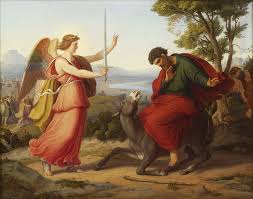
The story is found in Number 22-24. It’s the story of a morally compromised pagan seer/magician of sorts (Balaam), a wicked king (Balak), a talking donkey, and the holiness of God.
Question: What are the costs of corruption at the top of any organization?
Context, Context, Context: The wicked people of Moab feared Israel. Why? Because God had demonstrated time and again that he was determined to save a particular people and deliver them into a land promised to them. And God always keeps his covenant promises. God, unlike sinners, cannot lie.
Wicked Balak thought he’d buy God’s favor. How? With money. He’d simply pay Balaam to curse Israel and bless Moab. Simple enough, right? This is an old, old story: “If you do this nice thing for me, I’ll be sure to reward you via _______.” That’s a very old story indeed. It’s the nature of pagan people. There’s no fear of God, and thus corruption increases.
As first, Balaam seems to be above the fray. He does not give in to Balak’s offer. But then Balak increases the offer: “Once again Balak sent princes, more in number and more honorable than these” (Num 22:15). And you might guess what happened next. “So Balaam rose in the morning and saddled his donkey and went with the princes of Moab” (Num 22:21). In other words, he succumbed to the bribe by a wicked ruler to curse a people God had determined to bless. In sum, Balaam chose to defy God.
Teaching: The ironies of Numbers 22 are myriad. It’s the donkey that rebukes the so-called seer/magician Balaam. It’s the beast who schools the man. The donkey can see the angel of the LORD and bows down, but the man who’s supposedly the seer is blind as a bat. Balaam strikes his donkey repeatedly, but it’s Balaam who is stubborn, blind, and recalcitrant, not the donkey.
Encouragement: God taught Balaam a valuable lesson, namely, that God’s blessings are not for sale. Our duty as believers is to be faithful to the Lord and not forfeit our souls for fame, money, or power. God is not mocked.
Text: “Two things I ask of you; deny them not to me before I die: Remove far from me falsehood and lying; give me neither poverty nor riches; feed me with the food that is needful for me” (Proverbs 30:7-8).
Context, Context, Context: Proverbs is part of the wisdom literature of the Old Testament. It’s practical wisdom for everyday life. And the recurring pattern in Proverbs is that of “Not this but that.” Not folly but wisdom. Not lies but truth. Not deception but transparency. Not evil but good, etc.
Teaching: In Proverbs 30:7-8 Agur asks God for two things: 1) to be shaped into an honest man/be removed from false men and 2) to have his daily bread.
Connection to Christ: Remember Jesus’s sermon from Matthew 6:11? It’s part of his Sermon on the Mount: “Give us this day our daily bread . . .” It’s the same principle as you find in Proverbs 30:7-8, written centuries before. It’s all connected; it’s one coherent story.
Two Things:
Honesty (one’s own and to not associate with liars)
Provision
Encouragement: The wisdom literature is called that for a reason. Agur’s words are part of the canon of Scripture. He is teaching the same things Jesus taught, namely, that God’s people are to be known via their integrity and the company they keep and that God is our provider.
Question: Have you ever thought about the meaning of intercession? “To intervene on behalf on another” is the meaning of the verb form of intercede.
Understanding intercession is fundamental to a biblical worldview. Why? Because Christ is the Christian’s great intercessor. He is our representative. The whole doctrine of imputation hinges upon Christ as our mediator.
That’s what Paul means when he writes to Timothy, “For there is one God, and there is one mediator between God and men, the man Christ Jesus” (1 Timothy 2:5).
Christ is the Christian’s mediator, his intercessor.
A Glimpse Back at Recalcitrant People: Remember how often Moses interceded on behalf of sinful Israel? Remember how often the crowds complained to Moses that they had it better in bondage in Egypt? Here’s one example:
Then all the congregation raised a loud cry, and the people wept that night. And all the people of Israel grumbled against Moses and Aaron. The whole congregation said to them, “Would that we had died in the land of Egypt! Or would that we had died in this wilderness! Why is the Lord bringing us into this land, to fall by the sword? Our wives and our little ones will become a prey. Would it not be better for us to go back to Egypt?” And they said to one another, “Let us choose a leader and go back to Egypt.” (Numbers 14:1-4)
Moses as Intercessor:
Yet God was merciful. God was gracious. He had Moses, his intercessor. And Moses’ job, if you will? To petition the Lord on behalf of others.
Listen to Moses’ words:
And now, please let the power of the Lord be great as you have promised, saying, ‘The Lord is slow to anger and abounding in steadfast love, forgiving iniquity and transgression, but he will by no means clear the guilty, visiting the iniquity of the fathers on the children, to the third and the fourth generation.’ Please pardon the iniquity of this people, according to the greatness of your steadfast love, just as you have forgiven this people, from Egypt until now. (Numbers 14:17-19)
Encouragement: Do we understand the depths of God’s mercy and grace towards us sinners? God provided Moses as his intercessor on behalf of sinners. It’s a picture of the gospel, folks, where God was doing something through Christ, the ultimate intercessor and mediator, between God the holy and us, the sinners. Intercession is fundamental to a coherent understanding of the biblical narrative of redemption.
Text: “As for the one who is weak in faith, welcome him, but not to quarrel over opinions” (Romans 14:1).
Context, Context, Context: Paul was the sherherding leader. Paul knew the Lord more intimately than those he led. Why? Because how can you be qualified to lead and teach if you’re a neophyte? Pride precedes the fall, that is bromidic. Thus, it is essential for us to listen to wisdom, to inculcate it in our ministries.
You need some scars. You need some experience. You need God’s wisdom. And Paul, sinner though he was, was God’s man. And he, too, had to learn patience. And if there’s a hard lesson to learn when you’re trying to lead, that’s it: patience. Be patient with others, because they might not be as biblically mature.
Encouragement: Ever battle the temptation to just say, “Oh my goodness! How can you not understand this? This is so basic! I certainly have. But God is patient with us, dear ones, and we are to emulate that patience by being patient with others. It’s easy to win an argument but lose the person. Let us aim not to do that. Let us recognize that it’s people we are about, not just about appearing to win a temporal argument.
Text: “The wicked flee when no one pursues, but the righteous are bold as a lion” (Proverbs 28:1).
Context, Context, Context: Solomon is penning part of what’s known in Scripture as the wisdom literature. The book of Proverbs is, well, just that–a collection of aphorisms. And one of Solomon’s preferred literary techniques is the use of antithetical parallelism. All that means is that the first half of a verse demonstrates one quality, whereas the second half of the verse demonstrates its opposite via contrast.
Two Types of People:
The wicked person
The righteous person
The first half of the verse pictures the wicked person as evasive, on the run, fleeing. Why? Because he is up to no good. He is crafty and shady.
The second half of the verse pictures the contrast of a good and righteous man. He is “bold as a lion.” Why? Because he has nothing to hide. He values transparency and his life is an open book.
Encouragement: Christ commands his people to be salt and what else? Light. “You are the salt of the earth, but if salt has lost its taste, how shall its saltiness be restored? It is no longer good for anything except to be thrown out and trampled under people’s feet” (Matthew 5:13).
And light, too: “You are the light of the world. A city set on a hill cannot be hidden. Nor do people light a lamp and put it under a basket, but on a stand, and it gives light to all in the house” (Matthew 5:14-15).
Jesus’ teaching is the same as Solomon’s. Why? Because all of Scripture is one coherent story. And what Proverbs 28:1 teaches is straightforward, namely, that God’s people are to be righteous, a people of the light.
An Instructive Ditty: “Be careful, little lips, what you say. Be careful, little ears, what you hear.” Those are some of the lyrics to a children’s ditty I recall from my church-saturated childhood. If you were reared in church, you may remember them, too.
Text: “You shall not go around as a slanderer among your people, and you shall not stand up against the life of your neighbor: I am the LORD” (Leviticus 19:16).
Teaching: Per Scripture, the tongue is a dangerous creation:
So also the tongue is a small member, yet it boasts of great things.How great a forest is set ablaze by such a small fire! And the tongue is a fire, a world of unrighteousness. The tongue is set among our members, staining the whole body, setting on fire the entire course of life, and set on fire by hell (James 3:5-6).
Ever been slandered? Ever been gossiped about? Of course, we all have. If you haven’t, count yourself lucky.
But God’s people are to be better than that. We are to remember the Lord, that the Lord sees, and that we will answer. “So then each of us will give an account of himself to God” (Romans 14:12).
Encouragement: There’s a lot of biblical wisdom in that children’s ditty, isn’t there?
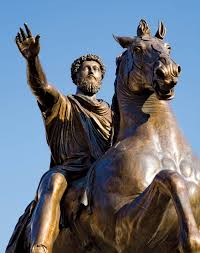
“And thou wilt give thyself relief, if thou doest every act of thy life as if it were the last, laying aside all carelessness and passionate aversion from the commands of reason, and all hypocrisy, and self-love, and discontent with all the portion which has been given to thee.”
Encouragement: In modern parlance, do first things, first. Have the right priorities and act on them, not worrying about getting the credit.
Now Nadab and Abihu, the sons of Aaron, each took his censer and put fire in it and laid incense on it and offered unauthorized fire before the Lord, which he had not commanded them. And fire came out from before the Lord and consumed them, and they died before the Lord. Then Moses said to Aaron, “This is what the Lord has said: ‘Among those who are near me I will be sanctified, and before all the people I will be glorified.’” And Aaron held his peace (Leviticus 10:1-3).
Context, Context, Context: God’s priests are called to holiness. We’re to be reverential towards God. Presumptuousness and cavalier dispositions are damning.
Teaching: God is holy. He is not to be toyed with or mocked or minimized. Sinners scoff at God to their utter ruin. Yet God welcomes sinners who are broken over their sin and look to God’s grace in the person and work of Christ.
Nadab and Abihu presumed upon God’s grace. And it was fatal.
Encouragement: Whosoever will may come, but we must come in recognition that we are dressed in filthy rags. That’s what our works are. Then and only then will God clothe us in his robes of righteousness.










 MIND & MATTERS