Time in the Barber’s Chair & Thoughts on Kinship

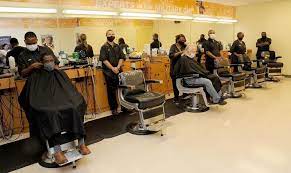
Introduction: I was blessed to get one of the best barbers at the barber shop. To judge by appearances, he and I could not have been more different. He was part Hispanic and part Black. I am thoroughly of northern European stock. He had a deep and rich skin color that reminded me of trips with my dad’s family to Sarasota, FL in the 1980s where the wind carried scents of coconut oil. His skin was that tone of rich brown one might associate with Brazil. I have the pigmentation of Anglo-Saxons who prefer English rains over Italian gloamings. He had tattoos all over his arms and hands and neck. I am the last guy that would ever get a tattoo. He spoke with the rhythm of hip-hop lyrics and dressed like one who trafficked in that lifestyle. I speak like an English literature teacher. But here’s where it all arrested me. When he saw me, he said, “Hey, Chap. How you doin’?” Even though I was not in uniform, he recognized me and was kind. He knew I was a chaplain and he had launched the conversation.

I told him how to shave my head and in no time at all, I was all done. He held up the square plastic-handled mirror for me to check my cut at the end, and I nodded and smiled and said, “You’re fast, brother. You’ve done this a lot. I appreciate it.”

We walked over to the register. I handed over my debit card and paid and tipped him generously. As he was running my card, he told me of his plans for the eveving. “I gotta go get my son and take him to the ballgame. Then I gotta get my daughter from her mom’s so she can stay with me tonight, Chap.”

“You have two kids, is that right?”

“Yeh, two. But dawg, they keep me so busy, Chap.”

“I hear you,” I said.

“Have a good one, Chap, and thanks,” he said.

“Take care, brother,” I said, taking my debit card. I walked out from the barber shop and felt the air conditioning cool on my freshly shaven scalp.

As I exited the barber shop and walked out to my car, I thought of him, of how he shared about his two children, of how he and the mother of the children are now ostensibly separated, of how busy he would be with dad duties after he leaves the barber shop.

He and I were so different by appearances–he with his inked skin and hip-hop lifestyle and the cadence of his speech that reflected the musical styles he relished, etc.

But we are both dads. We both love our children. We both work to provide for those we love. We both enjoy music.

I felt a sudden guilt and sadness over my former initial discomfort when I focused on all the tattoos and appearances, and I had been afraid I’d not know the handshake regimen he used with some of his other customers.

But he was so kind, and he simply operated out of his world. As did I. He was the better person. And now, I will seek him out for my next trip to the barber shop. He may not know it but I learned from him today.
It’s All There from the Beginning

One of the Most Haunting, Powerful, Portentous Openings:

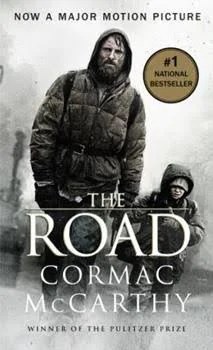
When he woke in the woods in the dark and the cold of the night he’d reach out to touch the child sleeping beside him. Nights dark beyond darkness and the days more gray each one than what had gone before. Like the onset of some cold glaucoma dimming away the world. His hand rose and fell softly with each precious breath. He pushed away the plastic tarpaulin and raised himself in the stinking robes and blankets and looked toward the east for any light but there was none. In the dream from which he’d wakened he had wandered in a cave where the child led him by the hand. Their light playing over the wet flowstone walls. Like pilgrims in a fable swallowed up and lost among the inward parts of some granitic beast (Cormac McCarthy, The Road, New York: Vintage International, 2006), 3.

I have read the novel as many times as I have my favorite pieces from the classics. I think I’ve only read Hamlet, Macbeth, King Lear, and Othello more often than I’ve read The Road. Why? Well, so much is put before the informed reader amidst McCarthy’s minimalism in language.

In the first lines alone we have so much with which to grapple. The imagery is haunting. It’s night when the story opens but it’s one of many nights that is “beyond darkness,” suggesting ominousness. There are laden portents of dark forces at play from the very first paragraph. Vision, the ability to see clearly, is obscured. McCarthy writes that it is like “the onset of some cold glaucoma” and that the world is “dimming away.”

The figurative language kicks with feet in the womb of meaning. The world darkens. Evil forces work, but the remedy (remote though it may seem at the moment) is in connection–in love, in the reaching out to touch the son. That’s the image in the very first lines of the novel. When all is dark, cold, gray, blasted apart, the hope is connection. And that connection is seen in the bonds of love. And that love is seen from the very genesis of the story in the relationship of the father and the son, and the sacrifice for and from love.

Connection to the Contemporary: When I listen to the cultural din that characterizes much of contemporary media, it can be depressing. Why? Because one could come to believe that man really is a useless passion, as Sartre wrote. It just appears that critical thinking has been abandoned. It appears that kindness has been abandoned. It appears we have grown so used to lies now that we don’t even expect to be told the truth. We just assume we’re being lied to. It’s a time where there is a death of trust. And when you have a culture that does not trust itself, you get dissolution and death. And that’s precisely what we are seeing. So, folks retreat into their bubbles of Netflix and YouTube and endless mindless distractions rather than going to battle against the lies and the father of lies.

That’s one more reason I think The Road is especially poignant. McCarthy saw, at least in my view, where we were. He saw that the center was not holding and that mere anarchy was being loosed upon the world, a la Yeats’ “The Second Coming.” And he wrote this profound novel to show that devastation was not just possible but rather likely. But he also wrote this profound novel to show the means by which hope is enkindled and life is redeemed. It hinges upon the father, the son, and the light that is carried. Folks who have any semblance of a biblical worldview should perk up when such terms are used in a novel.

I don’t know if McCarthy was a Christian. He certainly knew about the gospel, but that is not the same as being a Christian–actually being in Christ. But like the motif of light in The Road, I tend to look for “the good guys,” for the light, and see the love that exists between a father, a son, and the spirit that causes connection and light amidst all that darkness.

Even the Lame Eat at the King’s Table

Intro: Tonight after I drove back to my place of work and settled into my chair after a light supper for my evening reading time, I was in a wonderful novel entitled Revolutionary Road by Richard Yates, a book that was a finalist for the National Book Award in 1962. This is my first time reading it. It is a fine read in my view. Why? For one reason, when Postmodernism’s showiness was all the rage in the 1960s, Yates wrote in the tradition of realism. He was more like John Updikde that John Barth. I enjoy many of the finest writers from the literary schools of Victorianism, Realism, and Modernism, but Postmodernism gets so solipsistic and self-absorbed that the absurdities grow tiresome.

At the end of the day, I long for stories that hold together, that cohere, that tell the truth, and address the human predicament. My favorite novels all do that. Great Expectations, David Copperfield, Madame Bovary, The Great Gatsby, The Road, All the Pretty Horses, The Crossing, and John Updike’s best novels all more than satisfy. And the short stories of Flannery O’Connor, Hemingway, Alice Munro, and Larry Brown are unbeatable. They repay reading and rereading over a lifetime; they are that profound. How can one read Chekhov just once? That would be sinful. Read his stories. Finish the last page. Then start again. It’s the same way I feel about what I wanted to write about tonight: 2 Samuel 9.

Connection to Scripture: As I was in my chair reading, part of my reading tonight was in the Old Testament book of 2 Samuel. It’s a precious part of Scripture because it is replete with stories of David’s rise to prominence and leadership. But it’s precious for another reason, too. We see David’s generosity and David’s tenderness.

I think so often we tend to focus on David as a warrior-king, as a national leader, as a man of war, etc. that we downplay David’s tenderness. Even when he had every right to be spiteful and unforgiving to the family members of a man who sought his life (Saul), we see David (not always, of course, but at least in 2 Samuel 9) be tender to those who could in no way repay him. We see, in short, a man who gave and who expected nothing in return. Stick with me as I look at the story of David and Mephibosheth.

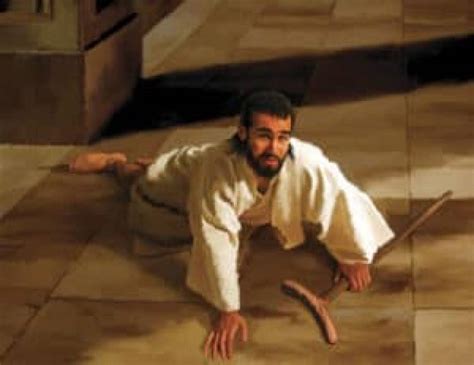
Context: Mephibosheth was lame in his feet. He was not going to be a soldier; he was not going to rise to a position of prominence because of his looks, acumen, or athleticism. Moreoever, he was the grandson of David’s former mortal enemy, Saul. Mephibosheth should have expected nothing from David except scorn and possibly vengeance or worse. But that was not David’s nature. David was not generally a spiteful man. He was a tender man, slow to anger, compassionate, forgiving of his enemies, and a man who kept short accounts with God.

Did David oftentimes have days and seasons of sin in his life for which he reaped tragic consequences? Yes, of course. The list is long. But David was a man who returned to God (Psalm 51), a man who loved the Lord and knew that the Lord always does what is right.

David’s Kindness: Verse 1 of the chapter begins:

And David said, Is there still anyone left of the house of Saul, that I may show him kindness for Jonathan’s sake?”

How many of us would have done what David did? Here was a man who actively sought ways to do good to those whom he (David) would naturally harbor the most unforgiveness towards–the lineage of Saul. But Saul did have Jonathan, a truly good son and dear friend to David. And David wanted to honor “the house of Saul” in spite of the past.

And you know what happened, right? Mephibosheth “[would] always eat at [the king’s] table” (2 Samuel 9:10).

Why? Because of the king. Read that again: because of the king.

Encouragement: One of the motifs I try to stress to the saints in class at our church is this: all of the Bible is telling one coherent story.

Mephibosheth had nothing to offer the king. Mephibosheth was a cripple. He was weak. And yet the king (David) condescended to him.

The king came down, you see, and offered that weak and lame man a seat at the king’s table. Folks, if you don’t connect the dots, I don’t know what else there is to say: it’s right there–the gospel.

The king invites us lame and broken and unworthy to a seat at the table. And the king does it out of pure unmerited favor. It’s grace towards us Mephibosheths.

Be encouraged. He is not a king far away. He has come down to us and invites us to sup with him. That is incomparably good news.

Struggling to Praise God: Thoughts on How Pilgrims Endure When the World Mocks

Introduction: If we are honest, we admit there are times it is difficult–and maybe it sometimes even feels impossible–to pray. We might struggle to find the right words. We might be so overcome with emotion that words don’t come but tears do. We might opt to recite prayers that we know from church history, creeds, confessions, memory, habit, or from Scripture.

Connection: One of the most beautiful and encouraging things about the Bible is that it shows us how we really are, not how we sometimes would like to think we are. No, the Bible keeps it real. It shows us time and again that believers throughout history have sometimes struggled to pray, struggled to praise, struggled to overcome the enemies of the true faith. They were mocked. People scoffed at them and their faith. And despite sometimes feigned bravado, people hurt people. And hurt people especially hurt people.

Psalms 42-43 are just such examples of what I mean. The Sons of Korah penned these two poems/hymns/psalms. And their theme is straightforward. It occurs as the refrain three times (Psalm 42:5, 11 & Psalm 43:5):

Why are you cast down, O my soul,

and why are you in turmoil within me?

Hope in God; for I shall again praise him,

my salvation and my God.

Encouragement: Tomorrow morning, I will gather with fellow Christian pilgrims and open Psalms 42 & 43 with them. Why? To show them (and myself) that “whatever was written in former days was written for our instruction, that through endurance and through the encouragement of the Scriptures we might have hope” (Romans 15:4).

We will see how believers should respond when the pagan world mocks and jeers and shouts, “Where is your God?”

We will find encouragement to see we are not unique in history. Believers have always had enemies. That’s a good thing; it shows you stood for something.

Stand fast, dear ones. The unbelieving, rejecting world laughs now, but their scoffing is temporary and destined for a terrifying end.

As Edgar sums up King Lear at the conclusion of the play that bears Lear’s name:

The weight of this sad time we must obey,

Speak what we feel, not what we ought to say.

The oldest hath borne most: we that are young

Shall never see so much, nor live so long (5.3.25-28).

Prophets vs. Politicians

Introduction: In one of the books I’m currently reading, I came across this quote:

In every age, including Elijah’s and our own, there are too many politicians and too few prophets. Politicians tell people what they want to hear, prophets tell people what they need to hear. Politicians are worried about keeping their power, prophets are worried about honoring their God. Politicians are covert, and dishonest, prophets are overt and honest. Politicians say what they want, prophets say what God wants. Today, as much as in the days of Elijah, we need far more prophets and far fewer politicians. This is especially true in the church where the politicians too often get onto the board, into the pulpit, or running the denomination.

Segue: Remember the Christian kitschy fad a few years back with the plastic bracelets that read, “What Would Jesus Do?” Sometimes they were just abbreviated: WWJD.

You know what’s interesting? We don’t have to guess. He actually spoke. He actually wrote 66 books. He actually has told us so that we are not left in the dark. Here are just a few examples:

  • O Jerusalem, Jerusalem, the city that kills the prophets and stones those who are sent to it! How often would I have gathered your children together as a hen gathers her brood under her wings, and you would not! (Matthew 23:37)

Here’s another example:

Jesus said to them, “Have you never read in the Scriptures:

“‘The stone that the builders rejected has become the cornerstone; this was the Lord’s doing, and it is marvelous in our eyes’?

Therefore I tell you, the kingdom of God will be taken away from you and given to a people producing its fruits. And the one who falls on this stone will be broken to pieces; and when it falls on anyone, it will crush him.”

When the chief priests and the Pharisees heard his parables, they perceived that he was speaking about them. And although they were seeking to arrest him, they feared the crowds, because they held him to be a prophet. (Matthew 21:42-46)

And here’s another example:

And Jesus said to them, A prophet is not without honor, except in his hometown and among his relatives and in his own household” (Mark 6:4).

And Paul’s Words to Timothy, as yet another example:

For the time is coming when people will not endure sound teaching, but having itching ears they will accumulate for themselves teachers to suit their own passions, and will turn away from listening to the truth and wonder off into myths. As for you, always be sober-minded, endure suffering, do the work of an evangelist, fulfill your ministry (2 Timothy 4:3-5).

Stephen was about to be murdered:

Remember the book of Acts? Remember how the whole point of the book of Acts is what the young Christian church was facing amidst great suffering and persecution? Remember how Stephen was stoned with rocks by those who hated his message of the truth? Remember how Jesus told his people that the world system hates the truth and kills the prophets of truth? Remember Acts 7, as just one example?

The whole point of Acts 7 is that Stephen is telling the truth to a hard-hearted people who largely rejected the truth and him. Why? Because he was a man of courage and conviction who told the truth. And they killed him because of it. He was not there to curry favor. He was not there to be what the New Tesament calls a man-pleaser: “For am I now seeking the approval of man, or of God? Or am I trying to please man? If I were still trying to please man, I would not be a servant of Christ” (Galatians 1:10).

No, Stephen loved people. He actually loved them. That is why he told them the truth.

The whole thrust of the argument Luke makes throughout Acts by recording the acts of the apostles is how God’s judgment is just and deserved. Why? Because fallen sinful people don’t like truth. They crave soft words, sweet words, words that comfort rather than confront them in their position before the holy God of Scripture. The crowds didn’t murder Jesus and Stephen and Paul for being nice and proffering sentimentality.

Stephen calls them “stiff-necked people, uncircumcised in heart and ears, you always resist the Holy Spirit. As your fathers did, so do you. Which of the prophets did your fathers not persecute? And they killed those who announced beforehand the coming of the Righteous One, whom you have now betrayed and murdered, you who received the law as delivered by angels and did not keep it” (Acts 7:51-53).

Stephen was murdered. Paul was executed. Peter was crucified. John was exiled. Thomas was run through with a spear. Jesus was spat upon, mocked, flogged, whipped, and crucified. These are not insignificant details, dear ones.

Encouragement: “For whatever was written in former days was written for our instruction, that through endurance and through the encouragement of the Scriptures we might have hope” (Romans 15:13).

May God be pleased to send us courageous men who are faithful to the Scriptures. Why? Because as Stephen was uttering his magnificent speech before those casting stones to murder him, Stephen said these words that day: “Behold, I see the heavens opened, and the Son of Man standing at the right hand of God” (Acts 7:56).

And then Stephen saw his Lord and prayed as he died at the hands of wicked men, “Lord Jesus, receive my spirit” (Acts 7:59). And the Lord Jesus did. But Stephen was faitfhul amidst the crowds. He was not in it for Stephen; he was in it for truth. Because he loved the truth, he was courageous to tell the truth, the whole truth, and nothing but the redeeming truth. And he went to his reward.

Soul Food: Saturday Hike

Few activities refresh my soul quite like a hike in the woods. Today I took some time to stroll familiar territory that never gets old.

Spiders, though important to the balance of nature, were plentiful. This fellow here was one scary looking dude.

The creeks were almost dry but I did find a few spots where the water bubbled up and flowed a bit over and down the rocks.

Found a shed from a small buck, too.

My love affair with trees continues, at every point in their life cycle.

Found the skeleton of this deer. He and I like the same locations.

Cognitive Dissonance Displayed: Evil without a Source?

Introduction: It is hard to overestimate the importance of C.S. Lewis. His book The Screwtape Letters is masterful. In short, it’s about how Satan mentors other devils (Wormwood in particular) to dupe foolish humanity into spiritual and intellectual torpor.

I read an article recently by James White. It was his commentary on a recent survey. The topic? What people believe about good and evil, God and Satan, and angels.

The bottom line up front is this: People are revealing their cognitive dissonance.

Here’s the article below:

In case you haven’t read about it, the devil doesn’t exist. Recent polling by the Associated Press-NORC Center for Public Affairs Research has found that while seven in 10 U.S. adults believe in angels, when it comes to fallen ones – like the devil – it drops to 56%. A recent Gallup report found similar results with only 58% believing, down from 71% just two decades ago.
 
To be sure, belief in almost every other “spiritual” category is down as well: belief in God has dropped from 90% in 2001 to 74% in 2023; heaven from 83% to 69%; angels from 79% to 57%; and hell from 71% to 59%.
But dropping to 58% belief, it’s the devil that’s faring the worst. 
 
And he’s quite happy about it.
 
In The Screwtape Letters, C.S. Lewis’ masterful fictional account of a senior devil, Screwtape, mentoring a younger devil, Wormwood, he notes the following in the preface: 
There are two equal and opposite errors into which our race can fall about the devils. One is to disbelieve in their existence. The other is to believe, and to feel an excessive and unhealthy interest in them. They themselves are equally pleased by both errors, and hail a materialist or a magician with the same delight.
Later in the work, Screwtape writes the following to Wormwood:
I wonder you should ask me whether it is essential to keep the patient in ignorance of your own existence. That question, at least for the present phase of the struggle, has been answered for by the High Command. Our policy, for the moment, it to conceal ourselves…. When the humans disbelieve in our existence we lose all the pleasing results of direct terrorism…. On the other hand, when they believe in us, we cannot make them materialists and sceptics.
Then Lewis, writing in his normally prescient way, adds these words from Screwtape’s pen:
If once we can produce our perfect work – the Materialist Magician, the man, not using, but veritably worshipping, what he vaguely calls “Forces” while denying the existence of “spirits” – then the end of the war is in sight.
And that is precisely what the diminishing belief in Satan, and the increasing belief in all things paranormal,
 
… is achieving.

Question: See the cognitive dissonance? People know intuitively that we are both material and spiritual, but they still ingest the lies of the enemy of their souls. They try to convince themselves of what they know is a lie.

A Plea for Men of Issachar: In 1 Chronicles 12:32 God reveals that there were some wise men who knew the Lord and the Lord’s principles in a land of confusion: “Of Issachar, men who had understanding of the times, to know what Israel ought to do, 200 chiefs, and all their kinsmen under their command.”

They were men who understood two things: 1) the times and 2) what the people should do.

Their wisdom was not a hope in secular humanism. Their wisdom was not in materialism. It was biblical; it was godly wisdom.

May the Lord be pleased to raise up wise courageous servants who understand the times and can and will lead people into Godly thinking and Godly ways. Because the costs of accepting mindless entertainment, sentimental seeker-friendly pep talks, and drivel rather than biblical doctrine have exacted profound tolls.

Magnolia at the End of the Drive: An Homage to My Maternal Grandparents

When we pulled into Momo & Granddaddy’s home the full magnolia tree was the first thing I always saw. The picture above is not the actual tree but it resembles it. Roots were often massive and often surfaced. The grass did not grow much underneath. The broad deep green leaves of the magnolia abosrbed the sunlight. If the weather was cool I found cones underneath. If warm, there were cream-colored flowers on the branches, white flowers pungent when I smelled them. (When I smelled magnolias I did not forget them. Like honeysuckle on hot summer days I don’t think I would ever want to forget that sweet smell.)

Today as I drove to my apartment where I am away from family due to being in the military, I passed a general’s manicured grounds. The estate was replete with oaks, dogwoods, and magnolias. And suddenly I was a boy again–climbing the magnolia at Momo and Granddaddy’s place, where the garden was twenty meters east of the tree, directly behind the house, and Grandaddy’s corn grew in rows, as did the butterbeans, okra, squash, and tomatoes. His gray gloves were draped over the backporch handrail, and his pronged hoe lay propped at an angle beside his work boots and straw hat.

Inside the door, Momo fried fatback in a black cast iron skillet and she and Granddaddy had us sit around the formica table and hold hands and pray before we ate the best food I’ve ever tasted. I did not know it then, but I was being fed–not just prayers of amazing grandparents, not just butterbeans and peas and Vidalia onions from the soil just outside the backdoor, not just love from women and men who’d survived the Great Depression and known life without electricity, but I was being fed my deepest riches.

The magnolia, the garden, the garden tools, the smell of my beloved Momo when she hugged us and we believed that all would be well because she was there, and my soulmate Granddaddy, with his arthritic hands and black Scofield Study Bible, and the way he’d laugh, and they way he’d eat cereal before he went to bed in his blue pajamas–it was all there. All of it. Richness but not in dollars. In impact and in love.

To you, dear ones, I will never be able to repay you sufficiently. You were precious. Like the corn and tomatoes and the countless hours in which you worked literal and spiritual soils, you reaped impacts. You still live in me, in us, in those you reached. I can never see a magnolia, or touch a hoe or rake, or eat fatback at a buffet, and not remember that all things were sweeter, richer, and better with you. Words won’t reach high enough to tell how much I miss you. Even the magnolia in spring, cluttered in white, fails. But you did not fail. No, you were precious. And you reached heaven.

In the Midst of Lions

Introduction: I was blessed to have a father who instilled in me a love of travel. One of the most powerful and lasting memories I have is of a trip where he took me and others to Africa. We traveled to Kenya and parts of Tanzania. We saw the lions hunt on the safari. We saw zebras chased and gazelles chased and all were taken down by the rulers–the lions.

Literary Connection: I know of few short story writers who excel Ernest Hemingway. In his short stories, he is simply magnificent. I was reading a lot of Hemingway in the years before and after Dad took us to Africa. And if you know anything of Hemingway’s short stories, more than a few are filled with scenes from Africa that involve men and women, courage and cowardice, lions and prey. All play parts in the masterful fiction of Hemingway. When I read of lions in Scripture and in literary fiction, the scenes from my times in Africa burn brightly in my imagination. When you see blood of safari animals smeared on the visage and mane of majestic lions, and you see the puissance of the mighty and see the sweat on their muscular shoulders, you feel your finitude. You feel a “Zero at the Bone,” as Dickinson referenced when we cross a serpent.

Biblical Connection to Psalm 57: This week I am camping out in Psalm 57 and studying each phrase and image in it in order to teach it to my fellow Christian pilgrims Sunday at church. And in verse 4 of this poem from David, he writes, “My soul is in the midst of lions; I lie down amid fiery beasts–the children of man, whose teeth are spears and arrows, whose tongues are sharp swords” (Psalm 57:4 ESV).

My mind naturally tracks with figurative language; literature comes naturally to me. I don’t struggle to view the world via a literary lens like some do. Most people I know struggle with literature; it’s too “gray” for them, they tell me. Geometry and mathematics are their lenses for viewing. Hey, so be it. I wish that God had also given me that way of seeing, but alas, that didn’t happen. Words are my way; Euclid remains a mystery to me, in most ways.

But the imagery here in v. 4 is of the heart of the man (David) being “in the midst of lions.” And those lions are people. Their teeth are “spears and arrows.” Leonine imagery to depict human violence and terror. People’s tongues David calls “sharp swords.”

Takeaway & the Big Picture: So often in Christian Scripture, leonine imagery is used. Daniel is cast into a den of lions (Daniel 6). Satan prowls around like a roaring lion (1 Peter 5:8). Paul is rescued from the lion’s mouth (2 Timothy 4:17). Jesus is the Lion of the tribe of Judah (Revelation 5:5).

David pictured it. Paul experienced it. Daniel experienced it. Peter wrote of it. But Jesus faced it (the ultimate adversary/lion) and overcame him/it. You see, the reason the gospel is good news is because the greatest Lion was not in Babylon threatening Daniel; it was not Demas and Alexander and false brethren of the apostle Paul; it was not enemies of David, wicked men like Saul. Satan is a great lion seeking to devour God’s people.

But Satan is not the greatest lion. The greatest Lion is the one who crushed the serpent’s head, the one whose word is a sword, the one who laid down his life in order that he might take it up again three days later, and he is good, and terrible, and righteous, and he is the conqueror, the Alpha and Omega, and he bids you welcome. He is the Lion to watch.