Author: japfth
3 Young Bucks


September Saturday
Rode the steel horse with Carrie Jane for a couple of hours, stopped in for some Mexican food in the hills, and, well, it was all just about perfect.
Came home and saw some of the critters browsing early in the day under full sun and with a slight breeze.
Crossed the lake and it was smooth and inviting.


Was able earlier in the day to serve as the chaplain for the WWII Observance, too, and spoke with four WWII veterans from the branches of service, several of whom fought at Normandy, Utah Beach, and the Battle of the Bulge. One even helped liberate Buchenwald. Each time I speak with men of this caliber I am humbled and grateful. My cup today was full. Thankful.
Soldiers, Solomon, & Wisdom

Introduction: It has been said that “Our lives begin to end the day we become silent about things that matter.” I appreciate that insight. Speaking truth is a dangerous undertaking. It is much easier to just go along to get along or to seek distraction endlessly. We have substituted entertainment and distraction for depth of meaning. The means of entertainment are endless. As Neil Postman wrote, we are amusing ourselves to death. Critical thinking is about as common as an Apatosaurus excelsus dinosaur in your town square.
Loss of Transcendence: This week I have been with fellow soldiers in the Midwest. One of the tasks I am able to do as a chaplain is equip soldiers with means of preventing, or at least reducing, suicide in the military. It is a tragedy how many Soldiers, Sailors, Airmen, Marines, and Coast Guardsmen take their own lives. The military sees the statistics, professes to want to prevent suicides, but seems powerless oftentimes to reduce and/or eliminate suicide. Why? At the risk of being too reductionistic, I think it’s the loss of the transcendent.
Many soldiers don’t know who they are or why they are or why there is anything that matters because they deny the Author of life. That is, if you raise a generation to believe that they are only so much cosmic dust, it should not surprise us when suicide is an epidemic. Again, “Our lives begin to end the day we become silent about things that matter.”

My Favorite Book: Like many other believers I read the Bible several times through a year. But my favorite book of the Bible has remained for many years the same: Ecclesiastes. Why? Well, it is literary in nature, that’s one reason. I relish literature and my mind naturally runs in literary grooves. But another reason is that Solomon’s Ecclesiastes is a masterful case study in meaning vs. meaninglessness. Solomon had it all, so to speak, at least in a worldly sense. He gained the whole world. He had looks, wealth, health, wine, women, and song. He was the envy of the world. He was wise, but he became oftentimes the fool.
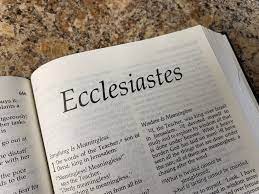
Why? Because he lost, at least at times, the transcendent. He suppressed God. He wrote, in just one of his refrains, “Then I considered all that my hands had done and the toil I had expended in doing it, and behold, all was vanity and a striving after wind, and there was nothing to be gained under the sun” (Ecclesiastes 2:11 ESV).
Perhaps his most well-known line is found in Ecclesiastes 1:9, “What has been done is what will be, and what has been done is what will be done, and there is nothing new under the sun.”
The refrain of “under the sun” runs through Ecclesiastes. It’s the secular life. It’s life without God. It’s a life given over to entertainment. It’s a life of distraction. It’s a life of “Eat, drink, and be merry; for tomorrow we die” thinking (Luke 12:19-20).
Segue: When we abandon the transcendent, we lose. We cut ourselves off from the very source of wisdom. We deny the Author of life (Acts 3:15). We reveal ourselves to be living lives of hebel. That’s the Hebrew word for vanity or vapor or mere breath. We are here, but like a mist, a vapor that vanishes. No impact.
See why suicide is rampant in the ranks? Because we’ve lost the transcendent. But (and here’s where the danger of truth-telling surfaces), I don’t know that is that we have lost truth so much as we have suppressed it.
Solomon’s Wisdom: I return to the magnificent book of Ecclesiastes. When you study Solomon, you see a man of extremes: wisdom and folly; not just one wife but scores of wives, and concubines, too (1 Kings 11:3); mirth and madness. Here was a man who gained the whole world and arguably often lost his soul. He penned that even for him, “All things are full of weariness; a man cannot utter it; the eye is not satisfied with seeing, nor the ear with hearing” (Ecclesiastes 1:8). He felt that all his accomplishments were just hebel, mere mists of nothingness, vapors. There was to be no remembrance of former things (Ecclesiastes 1:11). But he did not end this wonderful book with dourness. No, he summoned us back to the good news, the truth of redemption, the way back to transcendence:
Besides being wise, the Preacher also taught the people knowledge, weighing and studying and arranging many proverbs with great care. The Preacher sought to find words of delight, and uprightly he wrote words of truth.
The words of the wise are like goads, and like nails firmly fixed are the collected sayings; they are given by one Shepherd. My son, beware of anything beyond these. Of making many books there is no end, and much study is a weariness of the flesh. The end of the matter; all has been heard. Fear God and keep his commandments, for this is the whole duty of man. For God will bring every deed into judgment, with every secret thing, whether good or evil. (Ecclesiastes 12:9-14 ESV)

Encouragement: I love teaching my fellow soldiers, absolutely love it. However, what would happen, I wonder, if we simply read and implemented Solomon’s book Ecclesiastes? What might happen if we equipped soldiers and civilians with the truth of God? What if we reintroduced them to the truth that gets so often excluded from discussion and replaced by groupthink and moralistic bromides? What if we allowed them to study the actual history of Solomon, a king and ruler, who lived to tell the tales about the costs–the devastating costs–of secularism? What if, in sum, we abandoned the age of folly and sought to be a people of wisdom?
Indy Does It Right
Introduction: In a culture awash with bad news, horrors, and the profane, just a light piece to brag on an airport I love using: Indianapolis, Indiana’s. Why? Well, I left Atlanta’s airport early in the morning, and the best view of ATL’s airport is in the rear view mirror. ATL’s is a zoo that seems to bring out many folks who were raised on MTV, Skittles, and The Jerry Springer Show. One need only watch and marvel at the things you see in ATL’s airport.
Leaving ATL:

Welcome Aboard: This Southwest flight was on a pretty new 737. There were plenty of unoccupied seats and we passengers were able to spread out.
A gregarious friendly stewardess saw me in uniform and welcomed me aboard. Then she told me of her dad who was with 1st CAV in Vietnam from 1967-69, and of how he was killed while serving there during combat operations. I listened. She pulled out her cell phone and showed me pictures of her dad, an infantry officer and an O-4 (Major) when he was killed in combat. She talked of her dad, of her memories growing up on Ft. Benning and Ft. Hood. I listened. She was so genuine, grateful, and clearly still adored her dad.
Literary Tingles: I always smile when I look at the literature sign in the seat pocket in front of us when we are seated.

I pulled out my paperback of All the Pretty Horses that I’m reading for the umpteenth time. I love it that much and thought to myself, “Hey, literature time! I’m ready!” That tends to get some strange looks from the non-literary types nearby, so I smile.
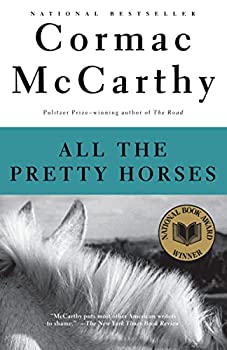
Midwest from the Sky: Indiana came into view after I’d read for an hour-and-a-half. In my reading, I had been on horseback with John Grady Cole and been in a prison fight with Mexican thugs in McCarthy’s literary world.


Indianapolis’s Airport Doing Right by the Military: I was slated to meet my buddy at the USO in Indy’s airport. I had a few moments before he arrived, so I walked around the USO and out front, admiring the work that made this USO so welcoming. Plus, the veteran-volunteers were all friendly, welcoming me to patronize the free books, help myself to bottled water and coffee and beef jerky, and toiletries if I needed a new can of shaving cream, etc. It was all done well here with attention to detail.

Link-up with My Buddy: My buddy showed up about 20 minutes later. We hugged and immediately began catching up since last time. He was as witty as ever, and we laughed aloud so often that we got some stares from some recruits that were about to ship out to San Diego for their initial training. They were still in civilian attire and the boys still had long hair and they played on their cell phones, and my buddy and I chuckled at their wide-eyed nervousness and the way they huddled together as if comfort rested in numbers.
Indy, you guys do it right here, at least via your airport. Salute!
Demons, Directions, Dystopia, & the Deliverer

Introduction: I had a medical exam today as part of being a soldier. Had all my bloodwork examined recently; went through optometry and audiology, too. A familiar regimen to us military types. But when the nurse was talking with me today after she took my blood pressure and I was waiting for the physician’s assistant to come in and listen to my heart, the nurse shared with me that she was a committed reader. She showed me the new Kindle from which she reads regularly. She was so proud of it as she retrieved it from the side of her scrubs. It had a cover on it like the composition books we used to use in writing courses when I was young. I asked her a few questions, as she was so friendly.
“So, what types of books do you read?”
“I like dystopian stuff, apocalyptic stuff, especially the paranormal. I’m in a series that has seventy-five volumes, and I’m in volume seventy-two,” she said.
“Seventy-five volumes? Wow!”
We went on like that for a while. I listened as she recorded my vitals and made notes in my medical records. And she told me of her fascination with those types of reading and how enthralled she was with it all. I could not offer much in terms of relating to it all. But it got me thinking about things I notice more and more nowadays. Specifically, we are awash in all-things-dystopian/apocalyptic/demonic.
More examples: I met with the physician’s assistant, and he listened to my heartbeat and made me inhale and exhale deeply, as the medical types invariably tell us to do, and he told me of my good and bad cholesterol levels, etc. And afterwards I called my wife to give her a kind of update on my health, and all that kind of thing. And I drove later to the gym to get in some PT on the treadmill and the weights. I listened to Dave Matthews and the Doobie Brothers and the Zac Brown Band on my playlist and watched the other soldiers in the gym while I jogged on the treadmill.
I was the only one I could see who was not tattooed. Most soldiers were covered in them. Many of the white soldiers were so tattooed that their skin was no longer white but blue, black, and green with ink. The patterns were often of serpents and swords or of blood or perhaps a phrase of Latin related to courage, sacrifice, strength, victory, and/or death. Several tattoos involved some variation of a cross. And I remembered the nurse from earlier and her fascination with dystopian/apocalyptic literature—replete with spiritual questions about invisible forces and the way warfare is manifested.
After I worked out, I went to the latrine to wash up some and towel off, so that I could go grab a bite to eat later on. On the way towards the door, I passed a soldier. I was raised not to stare at people, because that is impolite, as most would agree. But when I passed the soldier, he/she was “in transition” and covered with ink. I could not tell if it was a man trying to look like a woman, or if it was a woman trying to appear as a man. He/she had characteristics of both—broad shoulders like men, but a thin neck and cheekbones and a pretty face and skin like a woman.
And it hit me again: dystopia/apocalyptic/paranormal stuff; tattoos of spiritual warfare and symbolism; and physical surgeries that transfigure men and women into misshapen creatures contrary to the way they were born. There was a recurring theme. And, quite frankly, it affected me spiritually.
Direction: I tend to mull things over until I get a firm idea of what I think is true about them. For me, that comes by writing. I don’t really know what I think until I can write it clearly. Writing has a way of concretizing the abstract. And as I was studying later in the day and working on my lesson for class Sunday at church, I was in Matthew’s gospel, and I was studying the passages where Jesus casts out demons:
And as they were going away, behold, a demon-oppressed man who was mute was brought to him. And when the demon had been cast out, the mute man spoke. And the crowds marveled, saying, “Never was anything like this seen in Israel.” But the Pharisees said, “He cast out demons by the prince of demons.” (Matthew 9:32-34 ESV)
And then in Matthew 15, a Canaanite woman begged Jesus to heal her daughter of the demon oppressing her:
And behold a Canaanite woman from that region came out and was crying, “Have mercy on me, O Lord, Son of David; my daughter is severely oppressed by a demon. (Matthew 15:22 ESV)
Just thinking: I got back to my place later and was about to continue studying and writing and preparing. And a recommendation came up on a list of movies I might be interested in. It was titled Cabinet of Curiosities. And can you guess what it is about? Seances, Satan, demons, and spiritual warfare.
I continued to try and think through what all I had seen in just one day—at the doctor’s office for my physical health assessment (PHA), at the gym and its sea of tattoos of daggers and serpents and soldiers whose gender I could not discern, and of how so much Scripture is filled with illustrations of demon oppression, possession, and spiritual warfare, and of how even the realms of darkness are under the feet of Christ.
Then I could not even escape this theme when I was on my computer, because Netflix was suggesting to me that I watch a series about seances, Satan, and spiritual warfare. At the very least, I would say that there is a spirit of warfare that is overt in our day, but you must have eyes to see it. And it is painful, at least to me, when we do see it.
Because if we are tender to it, our hearts will break for those bending their knees to the darkness. I don’t want that for myself, for my loved ones, or for much of anyone. I know that may sound like the sentiments of a schoolboy, of as of someone naïve or saccharine. But it is true. The darkness spoken of so often in Scripture (Ephesians 6:10-13, etc.) is real; it is spiritual and visceral, and it is not to be taken lightly.
Something He Said: Spiritual Legalism Destroys
Introduction: When I was a student in seminary and serving as a chaplain candidate, there was a fellow chaplain candidate that said something one day just before he stood up to preach from the Sermon on the Mount (Matthew 5-7) in the New Testament. He said, “This is the greatest sermon ever ignored.” And then he began to teach. I remember almost nothing from that man’s sermon from decades ago now, but I do remember that phrase–the greatest sermon ever ignored.

This morning I was studying the Sermon on the Mount again. No matter how many times I read it, I am broken. Why? Because I cannot keep the standards. I will have a good run spiritually for a day, maybe a week, maybe longer, but then Blam! And I totally blow it. That is the point, of course–that no one is righteous, no not one. As David writes in Psalm 14:1b, “there is none who does good.”
And Paul, the one-time Pharisee and spiritual legalist, reemphasizes that truth in Romans:
as it is written: “None is righteous, no, not one; no one understands; no one seeks for God. All have turned aside; together they have become worthless; no one does good, not even one. (Romans 3:10-12, ESV)
Paul would go on to write that he counted all his spiritual pride prior to knowing Christ:
2 Look out for the dogs, look out for the evildoers, look out for those who mutilate the flesh. 3 For we are the circumcision, who worship by the Spirit of God and glory in Christ Jesus and put no confidence in the flesh— 4 though I myself have reason for confidence in the flesh also. If anyone else thinks he has reason for confidence in the flesh, I have more: 5 circumcised on the eighth day, of the people of Israel, of the tribe of Benjamin, a Hebrew of Hebrews; as to the law, a Pharisee; 6 as to zeal, a persecutor of the church; as to righteousness under the law, blameless. 7 But whatever gain I had, I counted as loss for the sake of Christ. 8 Indeed, I count everything as loss because of the surpassing worth of knowing Christ Jesus my Lord. For his sake I have suffered the loss of all things and count them as rubbish, in order that I may gain Christ 9 and be found in him, not having a righteousness of my own that comes from the law, but that which comes through faith in Christ, the righteousness from God that depends on faith—(Philippians 3:2-9, ESV)
Why is that passage so important? Because Paul is reemphasizing what God teaches throughout Scripture: our works will only damn us. What saves is being broken over our fallenness and sin, fleeing to Christ alone as savior and redeemer, and having his righteousness imputed to us. In short, we are to flee to God in Christ through repentance and trust/confidence in his saving work.
The constant theme: Paul taught that. Isaiah taught that. Moses taught that. David taught that. Jesus taught that. Abraham was counted righteous by what means? By his merits? No. By his trust in God. He believed God. His confidence was not in himself but in God.
Christ alone is sufficient. And in Christianity alone, all those clothed with Christ’s righteousness are reckoned/counted righteous. That is why Christians are to disciple the nations. It’s a rescue mission for fellow sinners.
And Christ offers himself to us sinners who blow it spiritually. He offers forgiveness, hope, peace, redemption, restoration, and more to us via his sovereign grace. Forgiveness, redemption, and restoration. Let that sink in. Why would we resist that? He says to us, “I am your righteousness. Come to me.”
In Matthew 5:20 Christ says, “For I tell you, unless your righteousness exceeds that of the scribes and Pharisees, you will never enter the kingdom of heaven.” I remember when I was young in my thinking, I took that to mean that I needed to really buckle down and do better. Try harder. Get better. Sin less. Show improvement, etc. But no! That way of thinking is exactly our problem. Why? Because no work of ours is sufficient to merit God’s favor. On the contrary, our works are filthy rags, sufficient only to merit God’s just condemnation.
Pharisaism runs deep and deadly: Jesus reserved his most scathing condemnations for religious legalists, those who thought their works set them apart unto God sufficient to merit his favor. And the Lord excoriated them and their theology. He called them hypocrites (Matthew 23:13) and blind guides (Matthew 23:16) and serpents and broods of vipers (Matthew 23:33). The list could go on and on. The point should be clear. Legalism, adding to the gospel, spiritual pride and posturing, kill. They damn people.
Encouragement: This Sunday, Lord willing, I will unite with fellow sinners and rejoice in the truth of the saving gospel–that Christ came to save us sinners. And those sins so often are related to our focus on ourselves rather than on the redeemer himself. It is God who saves. Any good works the redeemed do are results, not the grounds, of acceptance by the saving God.
Among My Favorite Paragraphs: Alphonsa Speaks

Towards the end of one my favorite novels, the wise woman Alphonsa speaks to the protagonist of the story about how and why she came to her worldview:
When I was in school I studied biology. I learned that in making their experiments scientists will take some group–bacteria, mice, people–and subject that group to certain conditions. They compare the results with a second group which has not been disturbed. This second group is called the control group. It is the control group which enables the scientist to gauge the effect of his experiment. To judge the significance of what has occurred. In history there are no control groups. There is no one to tell us what might have been. We weep over the might have been, but there is no might have been. There never was. It is supposed to be true that those who do not know history are condemned to repeat it. I don’t believe knowing can save us. What is constant in history is greed and foolishness and a love of blood and this is a thing that even God–who knows all that can be known–seems powerless to change (239).
Reflection: As I have written other places, it is unwise to ascribe the words of an author’s created character as representing the author’s own worldview. At the same time, however, it is unwise to neglect an author’s created character’s views as irrelevant or necessarily contrary to the author’s own.
The character of Huck Finn was not Mark Twain. The character of Hamlet was not Shakespeare. The character of Jay Gatsby was not Scott Fitzgerald. However, to not try and see the world as Huck did would be to miss massive themes about freedom versus slavery, about nature versus urbanization. To not understand betrayal and corruption and the lust for vengeance like Hamlet did would be to miss massive explorations of what it means to strive for honor, to confront decay, to weigh what makes life worth living. To not understand the tragedy of Jay Gatsby’s dissolution would be to not grapple with the perils of materialism and the lust for stuff and for seeming instead of being.
The beauty and challenge of great literature is that we are invited to explore the depths of the issues raised and engage in order to deepen our lives–to use our mind, heart, soul, and strength for those ideas that ought to most matter.
Courage of Samuel; Cowardice of a Nation

Introduction: Have you ever studied the life of Samuel? Each year as I study and think through the doctrines of Scripture I am stunned at the courage and faithfulness of Samuel. And I wonder if God has his Samuels today. I tend to think so. I tend to think that God raises up truth-tellers in each generation.
At the same time, some patterns seem to accompany the Samuels of each generation. Some of those patterns are gaslighting, defamation, and persecution. There are other patterns, of course, like ultimate vindication, but that is another topic for another time.
Samuel lived and ministered during a time of cultural tumult and a falling away from God. Yet Samuel was called to tell convicting, inconvenient, and uncomfortable truth to a nation and culture that did not want truth. The nation and culture wanted to be like the world, to be “like all the nations” (1 Samuel 8:5 ESV).
And I wonder if God has his Samuels today. I tend to think so.
Biblical context: Around 1000-800s B.C. were the centuries covered in the books titles 1 and 2 Samuel, of course. It was a time, as I referenced above, of cultural tumult and a falling away from God. Yet God called Samuel to such times. And Samuel’s roles were to be as a minister/prophet and judge. Israel was not yet officially a kingdom. God was supposed to be their king, but the people had rejected God as king. They desired to be just like the other nations.
Samuel’s birth: Hannah prayed for a son, even though God had closed her womb for a time (1 Samuel 1:6). Eventually Hannah conceived and gave birth to Samuel. He was given to the LORD “all the days of his life,” just as Hannah had promised the Lord (1 Samuel 1:11).
Corrupt clergy: As then, so now. When Samuel was still young, God had him come up in a time when there were “worthless men” who “did not know the LORD” in ministry (1 Samuel 2:12). One might sense what Samuel’s ministry was going to be like. He was not being equipped by the Lord for a life of ease or of tickling his heares’ ears. No, he was being raised up by God to tell the truth and to call the people back to God, but at the same time, he was told that the people would not listen. They loved comfort, not God.
Israel’s loss of the ark, & their loss of God: In 1 Samuel 4, the short version of the story is that Israel was defeated by the Philistines: “So the Philistines fought, and Israel was defeated, and they fled, every man to his home. And there was a very great slaughter, for thirty thousand foot soldiers of Israel fell. And the ark of God was captured, and the two sons of Eli, Hophni and Phinehas, died” (1 Samuel 4:10-11).
More judgment followed: in 1 Samuel 6, we see the gospel in microcosm. God reveals his holiness to sinful people; sacrifice is made; restoration is witnessed–all granted by God’s longsuffering and grace towards a corrupt nation, a depraved people.
Intermediary: And in 1 Samuel 7 we see Samuel again in a crucial spot. He is the one to pray for sinners. He calls his people to repent and return to the truth: “If you are returning to the LORD with all your heart, then put away the foreign gods and the Ashtaroth from among you and direct your heart to the LORD and serve him only, and he will deliver you out of the hand of the Philistines.”
Samuel’s prayer: And we see Samuel pray. He prays in repentance over his own sin and the sin of those he represents: “We have sinned against the LORD” (1 Samuel 7:6). How is that for a short but pithy prayer? Straight to the point; no fluff.
The chapter so many folks reference (with good reason): It’s chapter 8 of 1 Samuel that many folks have some familiarity with. Why? It is because this is where Israel, supposedly God’s nation, demands a king like all the other nations. And once again, there’s Samuel. In his position–ordained by God–to the perilous position of telling the truth to a wicked people. Samuel is warning the people that they are storing up wrath–just wrath–by rejecting God, by rejecting truth. As then, so now. Most people don’t want the truth; they want comfort.
God’s terrible answer was to give the people over to what they wanted: Samuel prayed against the people’s wishes (1 Samuel 8:6), but God told Samuel to give the people their desires as a form of judgment. That should terrify us, but I do not think it does–yet:
7 And the Lord said to Samuel, “Obey the voice of the people in all that they say to you, for they have not rejected you, but they have rejected me from being king over them. 8 According to all the deeds that they have done, from the day I brought them up out of Egypt even to this day, forsaking me and serving other gods, so they are also doing to you. 9 Now then, obey their voice; only you shall solemnly warn them and show them the ways of the king who shall reign over them” (1 Samuel 8:7-9).
God told Samuel that the people were rejecting him (God) and God’s messenger (Samuel). They go together. That’s the pattern, you see. Most reject God and God’s messenger. As it was then, so it is now.
Encouragement in spite of all: The good news, however, is that God still raises up Samuels. He has sent not just Samuels to each generation but has sent the ultimate judge/prophet/minister/king, and “the darkness has not overcome it” (John 1:5).
Consider the Alternative: Shepherd vs. __________
Introduction: How many people are familiar with Psalm 23? I am old enough that I grew up amidst a culture that was at least culturally Christian. Many in my extended family knew the Bible quite well. Both my maternal and paternal grandfathers were pastors and labored in Christian ministry as their vocations. So the Scriptures were not far from our reach, so to speak. And at funerals especially, it was not uncommon to hear Psalm 23 read or referenced. With good reason. It is arguably the most powerful poem in the Psalms about God’s providence. It is about how God is the shepherd of his people, about how he is with his people. He is near.
We so seldom want to admit that our spiritual lives ebb and flow, that sometimes we don’t feel the closeness and fellowship with God the good shepherd as we ought to. We might act super pious, as if we are above such matters. But that is clearly Pharisaical. It is revealing of spiritual pride. If we are honest, we do walk through valleys. We do battle doubts. We do feel plagued by questions at times. We do shake our heads at the world, and at ourselves, and cry out in anguish, “How long, O Lord?” That refrain runs throughout the Scriptures.

Connections: This coming Sunday, I will be with my fellow Christian pilgrims. And I will open the Scriptures before them and with them. And we will look at Psalm 23 and explore one crucial question: Consider the alternative to having no shepherd; how awful must be that alternative.
Psalm 23 reads this way:
A Psalm of David.
23 The Lord is my shepherd; I shall not want.
2 He makes me lie down in green pastures.
He leads me beside still waters.
3 He restores my soul.
He leads me in paths of righteousness
for his name’s sake.
4 Even though I walk through the valley of the shadow of death,
I will fear no evil,
for you are with me;
your rod and your staff,
they comfort me.
5 You prepare a table before me
in the presence of my enemies;
you anoint my head with oil;
my cup overflows.
6 Surely goodness and mercy shall follow me
all the days of my life,
and I shall dwell in the house of the Lord
forever. (Psalm 23, ESV)
And if there’s one thing the Scriptures so clearly do, it is this: they cohere. They hold together. They tell a unified story. They have a controlling idea, in sum.
NT Connection: When Jesus discourses in the New Testament, John records how overt Jesus was in his clarifying of his identity. The setting was one in which Jesus was again calling out the spiritual hypocrisy and spiritual pride of the Pharisees–and to all those who put on a face of being above others, of being more spiritual, of being holier than thou, of being sanctimonious.
Jesus’ words are blunt:
11 I am the good shepherd. The good shepherd lays down his life for the sheep. 12 He who is a hired hand and not a shepherd, who does not own the sheep, sees the wolf coming and leaves the sheep and flees, and the wolf snatches them and scatters them. 13 He flees because he is a hired hand and cares nothing for the sheep. 14 I am the good shepherd. I know my own and my own know me, 15 just as the Father knows me and I know the Father; and I lay down my life for the sheep. 16 And I have other sheep that are not of this fold. I must bring them also, and they will listen to my voice. So there will be one flock, one shepherd. 17 For this reason the Father loves me, because I lay down my life that I may take it up again. 18 No one takes it from me, but I lay it down of my own accord. I have authority to lay it down, and I have authority to take it up again. This charge I have received from my Father. (John 10:11-18, ESV)
Teaching: It is so clear. Jesus taught that he was and is the good shepherd to his people. To all who are “in Christ,” to use biblical language. Jesus Christ–the one who was and is the good shepherd–the one who was slain for sinners, is also the risen lamb to whom the whole cosmos will pay tribute, either in adoration or condemnation.
He is the shepherding God, you see. And he is good. Completely good. Holy. And he walks with the hurting through the valleys of this life. He restores them. He prapares tables for them. He anoints. This is the nature of the good shepherd. And Jesus said that he was and is that good shepherd, the one David wrote about in Psalm 23.
Encouragement: Consider the alternative. What if there were no shepherd? What if your sufferings are only yours alone? What if they had no purpose? What if there was no one to care? What if you are just so much cosmic dust, dust in the wind, as Kansas sang about? There would be no reason for you to whine or complain. Why? Because you don’t matter in that worldview. Nothing matters in that worldview. You’re just a speck of dust in an unguided biological machine that cannot account for itself, for mind, or for why anything should matter.
But in the biblical worldview, it all makes sense. You do matter. Your suffering does matter. And there is a good shepherd who offers himself to you in the gospel that runs throughout the Bible. There is an alternative to materialism and despair, dear one, and it comes by fleeing to the good shepherd. He is the wise and saving alternative. He has sustained others, and he can and will sustain you, too.
 MIND & MATTERS