What Is Your Worldview?

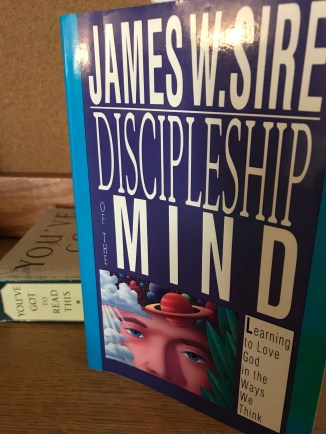
Seven questions reveal a lot … if they are the right questions. In his book Discipleship of the Mind: Learning to Love God in the Ways We Think, James Sire asks the right ones. 


In a world ripped apart and often characterized by (pardon the poor grammar) Us vs. Them, Sire excels in this book by demonstrating that all of us have a mental map of the world, a set of assumptions about the big questions and answers of life. We may not be conscious of our own worldviews at all times, but learning to be aware of ours and the worldviews of others—be they politicians, writers, entertainers, teachers, lawyers, philosophers and theologians, etc.—helps clarify what we think, why we think the way we do, and why we behave the ways we do. 


The questions he asks us to ask are fundamental questions that go a long way in revealing each person’s worldview. In a world ripped asunder via politics, race-baiting, shouting matches, and ad hominem attacks, Sire’s book may encourage you, too. 


Sire’s seven questions that elucidate each person’s worldview follow. Each time you listen to a politician, read a newspaper article, listen to the lyrics of a song, watch a film, ask these questions about the person’s or persons’ views behind what is being promulgated. What worldview are they operating from? How would they answer these questions?


1. What is prime reality—the really real?
2. What is the nature of external reality, that is, the world around us?
3. What is a human being?
4. What happens to a person at death?
5. Why is it possible to know anything at all?
6. How do we know what is right and wrong?
7. What is the meaning of human history?  


And perhaps most important of all, Sire’s definition of worldview: a set of presuppositions which we hold about the basic makeup of our world. 


One of the passions of my life is literature. Sire dedicates an entire chapter to worldview analysis of literature. In one chapter he contrasts the worldviews of the Christian poet Gerard Manley Hopkins in his poem “Pied Beauty” with the atheistic writer Thomas Hardy in his poem “The Darkling Thrush.” 


The worldview of each writer is manifested. Hopkins, a Christian writer, sees the world as the creation of the infinite-personal God, and beautiful colors and creatures in life as indicators and evidences of God’s nature being inseparable from the true, good, and beautiful. God exists, his creation exists, our minds exist, and we reflect God’s glory because we are created as his image-bearers.


Hardy, writing from an atheistic worldview, sees a bird dying along a fencerow at dusk as symbolic of man’s darkening hopes with regard to life and the future. The universe is a closed system, there’s no God beyond it, and all that exists is material, etc.—yet here we are, trying to make sense of why we feel empty and lonely in a dark world. Well, when we explore Hardy’s worldview, it’s no wonder. Why write poetry if we are just material in a material world? 


If you are curious about why we people think, create, and behave the ways we do, you are curious about worldviews, and an excellent place to begin is with Sire’s book.

The Gritty Fiction of Larry Brown

Occasionally I discover a writer whose works have endured thus far because they are true, not because they are necessarily pretty. If you appreciate the writings of Harry Crews and Flannery O’Connor, you may appreciate the gritty fiction of Larry Brown.


 Today I completed reading Brown’s novel The Rabbit Factory. Like everything else I have read from Larry Brown, this narrative explores the trials of (mostly) poor, white, hard-drinking, hard-living southerners who long for better lives. But each character is trapped—almost powerless to extricate himself/herself fully from a taunting, overwhelming web of evil. Better lives remain out of reach due to unwise choices, bad luck, fate, and/or formidable evil. 


This is not reading for the faint of heart. There is much violence herein.  And there is sex. And there is physical abuse. And there are scenes upon scenes with bourbon, beer, gin, and marijuana use. But these scenes are not there for shock value. These things, I would suggest, are tropes for lesser writers (Hunter S. Thompson and Norman Mailer, e.g.) but not for Brown.


Brown excels in his depiction of down-and-outsnot to sentimentalize them, but to reveal our possible connectionto them. He shows the sense of how actual people battle demons that we don’t often speak about to one another—demons of childhood traumas, wounds from abusive fathers, and loneliness that aches. His characters long to accomplish that for which they are convinced they were born but they flounder amidst cruel realities that reveal they have fallen far short. 


And on the stories go–of fighters, licentious wives, hit men, lonely female country cops, men and women who press on against formidable external odds and plaguing internal demons. 


If you’ve ever driven through the U.S countryside and seen neon Bud Light signs in front of roadside bars, and seen pickups parked out front, and you’ve thought of those men and women inside as if they were obviously beneath you … you might have thought, “How sad. Why can’t they be like I am?” Well, this book is not for you. Your life is zipped up nicely; theirs are apart at the seams. 


But if you’ve driven by those places and thought, “Yep, I am a lot like those folks on the inside—ugly, trying to drown my pain in my own way, in a mess … but determined to push through,” then this book might grip you. You might find we sinners are a lot more similar than we care to admit. 


Exposing facades of composure is what Brown does so well. But he does not do it via the high and mighty in our world but by exploring the downtrodden and morally bankrupt. 


Reading Larry Brown makes the honest person ask himself a hard question: Am I responding to other people like a Pharisee or like a fellow sinner?

Reflections on Gaines’ novel, A Lesson Before Dying

image1Recently I read Ernest J. Gaines’ novel, A Lesson Before Dying. The story is set in 1940s Louisiana. Black vs. white racial tension divided many of the characters in the narrative; the gospel of Christianity united others.

The main character (Mr. Grant Wiggins) is an unmarried, atheistic (at least initially), black teacher of black children in a Louisiana parish. He is persuaded/cajoled/manipulated into the awkward position of helping an innocent black man (Jefferson) recently accused of murder, to discover and embrace the fact that he is a full man, a creation of God, a person of worth.

Why is Jefferson these things? Because he bears the image of God (Imago Dei). The irony of ironies is that Grant himself, at least for most of the story, is a professing atheist.

Jefferson’s discovery of his worth comes through Grant Wiggins, the Jonah-like reluctant prophet, sent with a message of worth. Both men are changed throughout. The lesson before dying? Worth exists because of the Creator. Absent a Creator, worth and values are merely subjective preferences.

What follows is a form providing a brief book review:

  1. Overview
  1. Quotation
  1. Main Idea
  1. Question(s) raised/reflection(s)

Overview:

256 pages of southern literature. If you enjoy Walker Percy, Shelby Foote, Faulkner, O’Connor, Porter, Cormac McCarthy and other southern literary fiction, rest easy. You won’t be required to work that hard. This novel is easy to read.

Motifs of Christian self-sacrifice and atonement for a world in need pervade the narrative. But what happens in a world that does not want God? There’s the rub. The world is in need of those redeeming events but lacks the humility to admit it.

The novel is a solid story of an innocent man condemned by the mob of some racists in Louisiana. The protagonist is a university-educated black man, Grant Wiggins, who is (perhaps?) a professing Christian but who has lost whatever professed faith he had (during his college years), proving, I would argue, he never possessed saving faith/trust to begin with.

Grant returns to his roots in Louisiana, reunites with influential matriarchal figures like Ms. Emma and others, and is persuaded to serve as the advocate for the innocent-but-condemned black man (Jefferson) who is guilty only of being in the wrong place with the wrong people at the wrong time.

Quotation:

 Here is an example of Gaines’ style. In the following paragraph, these are Grant’s thoughts towards the end of the novel re his crisis of faith:

     Don’t tell me to believe. Don’t tell me to believe in the same God or laws that men believe in who commit these murders. Don’t tell me to believe that God can bless this country and that men are judged by their peers. Who among his peers judged him? Was I there? Was the minister there? Was Harry Williams there? Was Farrell Jarreau? Was my aunt? Was Vivian? No, his peers did not judge him—and I will not believe. (251)

Main Idea:

I remember my high school English teaching telling me, “Look for how and when the protagonist changes; that’s crucial.” Great advice that has stood me and other readers of serious literature in good stead. In short, Grant Wiggins changes when he, reluctant prophet though he is, gives life to another by convincing him (Jefferson) that he’s a man, a creature of dignity and worth, a creation of God. The irony is that Grant himself has not believed that until … You see the idea.

Question(s) raised/reflection(s):

 One would be hard-pressed to find one who appreciates serious literary southern fiction more than I. But why the accolades for this novel? It is, I admit, an emotionally appealing novel. A skeptic discovers the gospel and what it means to be human and a creature of worth … rather than cosmic material ephemera. But is that new? No. That idea has been written for millennia via Scripture and via books like Thomas Howard’s Chance or the Dance?

 Writers like J. Gresham Machen, Francis Schaeffer, R.C. Sproul, Chuck Colson, Nancy Pearcey, Larry Woiwode, C.S. Lewis, Flannery O’Connor, Ron Hansen, and others have addressed this issue of where worth comes from.

There is a reason Gaines’ novel received such attention by another generation of readers. Something in most of us recoils at the pervasiveness of injustice, racism, and cruelty. But unless one is willing to admit that God is the only grounds for objective moral values, any talk of worth and intrinsic value founders unless we will admit the founder and perfecter of all that is true, good, and beautiful.

Reflections on Hawthorne’s The House of the Seven Gables and Hawthorne: A Life (Part One of Two)

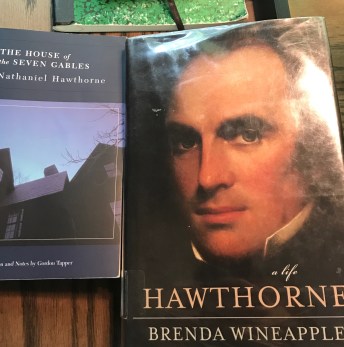
IMG_3178.JPGOver the last few weeks I reread a book by an American writer I have admired for many years, Nathaniel Hawthorne, and his novel The House of the Seven Gables. But I also read a lengthy biography of Hawthorne by Brenda Wineapple. I have provided a threefold approach to the novel and the biography using the following format: Summary, Analysis, Assessment. If you are a reader of serious literature and/or of its masters, I hope you benefit from what follows. I hope you will read (and or reread) Hawthorne’s works yourself. I recommend reading his short stories first, then moving on to The Scarlet Letter and other novels. There is much more to Hawthorne’s works than Hester Prynne’s scarlet A.

The House of the Seven Gables:

 At the risk of oversimplification, the novel explores the power of the past, and some people’s attempts to preserve it, pervert it, yield to it, and/or manipulate it. The “house” of the novel’s title is a house with seven gables, yes, but also a symbol for creation itself—once beautiful but now decaying due to the fall of the universe and all mankind. Does beauty exist anymore? If so, by what standard is beauty to be understood? Is love possible? What worldview best explains the way the world is—chaos or Christianity?

A few quotes from the novel may help to reveal what the novel centers upon:

Nothing gives a sadder sense of decay, than this loss of suspension of the power to deal with unaccustomed things and to keep up with the swiftness of the passing moment. It can merely be a suspended animation; for, were the power actually to perish, there would be little use of immortality. We are less than ghosts, for the time being, whenever this calamity befalls us. (141)

Intellectual honesty requires readers know up front that this novel is not light fare. Hawthorne was a serious thinker and writer; his canon of literature attests to that. In the above passage, the issue is how to capture the fleeting nature of human experience. How can the artist arrest motion and present his art to a world swept up in the quick, fast, and silly? Artists labor to speak to the deep things of life, but the trivial things invariably occupy most people’s time. More accurately stated, most people fill their free time with silliness and distraction.

A second quote from the novel may further illustrate Hawthorne’s concerns:

It seemed to Holgrave—as doubtless it has seemed to the hopeful of every century, since the epoch of Adam’s grandchildren—that in this age, more that ever before, the moss-grown and rotten Past is to be torn down, and lifeless institutions to be thrust out of the way, and their dead corpses buried, and everything to begin anew.

As to the main point—may we never live to doubt it!—as to the better centuries that are coming, the artist was surely right. His error lay, in supposing that this age, more than any past or future one, is destined to see the tattered garments of Antiquity exchanged for a new suit, instead of gradually renewing themselves by patchwork; in applying his own little life-span as the measure of an interminable achievement; and, more than all, in fancying that it mattered anything to the great end in view, whether he himself should contend for it or against it. (157-58)

Summary: As you can tell from the above quotes, the novel is concerned with the past. (Notice how Hawthorne capitalized it.) How we view the past is crucial. What are the standards we should bring to bear when thinking about the past? What should we preserve and what should we erase and/or deemphasize? (I’m thinking in terms of architecture here.) And what about literature? Should we preserve the Classics by Milton, Chaucer, Shakespeare, Sophocles, Homer, Dante, and Tolstoy, for example? Or should we consign these thinkers to “the past” written by those “oppressive white males,” and instead only read today’s writers, many of whom focus on race, class, sexual proclivities, and gender and neglect what Faulkner called “the human heart in conflict with itself”? Hawthorne’s novel explores these underlying issues.

Analysis: How does Hawthorne demonstrate the questions posed above? In short, he explores them via Hepzibah, Holgrave, Clifford, and Phoebe, four of the major characters in the novel. In my view, these four characters embody an angle from which Hawthorne explores how to view the past. Does it cripple us via family and generational curses? That is, are we helpless to overcome the power of the past? Should we seek to carve out a present by neglecting the past and the so-called lessons of history? Should we tiptoe along the surfaces of life, pretending all is well? Contemporize it for a moment: In selfies, isn’t the message most often, “I’m so happy!”? Hawthorne’s characters from the 1800s would not have known the meaning of “selfies,” but some of his characters embodied their takers’ worldviews. If man is the measure of all things, in other words, what you get is, well, man. Don’t curse the heavens if you worship at the altar of man.

Assessment: It will come as no surprise that I am still reading Hawthorne’s fiction—thirty years after I discovered his fiction. Where does Hawthorne fit? He has been called a Dark Romantic, like Edgar Allan Poe. He disavowed Thoreau’s pantheism and Emerson’s paganism. Feminists celebrate Hester Prynne as a brave woman, a martyr for women’s sexuality in a man’s world. Some angry self-professing atheists see Hawthorne as an author who called out some Puritans for their hypocrisy. Where do I fall in my view of Hawthorne’s oeuvre? In sum, I would agree that he is a Dark Romantic. His view of man—his anthropology—is realistic. He sees that man is a sinner by nature, by inclination, by deed, and by choice. I do not see evidence, so far in my studies of Hawthorne, at least, that he was a Christian. He seemed to disavow biblical Christianity several times, in fact (I will explore this more in Part Two). An issue that fascinates me is this: If Hawthorne acknowledged sin, man’s fallenness, the fallenness of the universe of all of mankind, what prevented him from embracing the gospel? Hawthorne was a master, at least in my view, of exploring our sinfulness, but he was less ready to explore the Redeemer. As a result, his writing profoundly explores man’s problem but without proposing a solution, one he would have found in the gospel.


(Part Two coming soon)


Reflections on Kidd’s Biography of a Founding Father

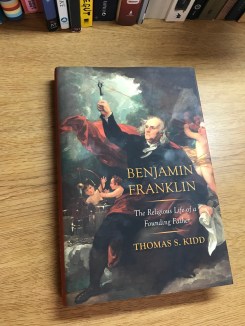
IMG_9452

This week I read a history of one of the most influential men in American history, a Founding Father, printer, author, autodidact, aphorist, statesman, scientist, friend of Calvinist George Whitefield, and inveterate ambassador of discovery, education, and self-improvement. Biographies are among my favorite areas in which to read deeply, and Thomas Kidd’s bio of Ben Franklin did not disappoint.

Following is a form to provide a brief book review:

1. Overview

2 Quotation

3. Main idea

4. Questions raised/reflections

Overview:

 Kidd divides the book into nine chapters: 1) Child of the Puritans; 2) Exodus to Philadelphia, Sojourn to London; 3) Philadelphia Printer; 4) Poor Richard; 5) Ben Franklin’s Closest Evangelical Friend; 6) Electrical Man; 7) Tribune of the People; 8) Diplomat; and 9) The Pillar of Fire.

Kidd provides a clear overview of Franklin’s Calvinist upbringing and deep knowledge of the Bible; his prodigious work ethic and self-discipline; his staggering output of pamphlets, articles, ads and booklets as a printer; his deftness with proverbs; his lifelong friendship and theological foil with Christian evangelist George Whitefield; his discoveries in electricity; his educational and political honors and appointments; his government service; and his final days wrestling with the question of the exclusivity of the Christian gospel.

Quotation:

 Consider the following commentary by Kidd re Franklin’s self-help moralism:

If Whitefield preached transformation by God, Franklin advocated gradual reformation by daily effort, with biblical precepts as a guide. No internal change or divine regeneration was needed. Whatever the lingering influence of his Puritan heritage, this was a point on which Franklin clearly departed from the Puritans, and from their evangelical successors like Whitefield and Jonathan Edwards. In this focus on harnessing daily habits, Franklin was setting foundational precedents for that distinctively American, quasi-religious genre, the self-help movement. Franklin’s “The way to Wealth” and his Autobiography were ur-texts of that movement. (161)

Kidd excels in demonstrating the rich theological culture that existed in America in the middle of the 1700s due mostly to the robust evangelism of Calvinists like Jonathan Edwards and George Whitefield amidst the literacy rate of the nation seeking to separate from George and English dominion.

Main Idea:

 Kidd maintains his focus throughout the book on Franklin’s internal struggles. He (Franklin) was saturated with biblical knowledge but he never would concede the divinity of Christ, his virgin birth, or that salvation was by grace alone. Franklin sifted the Bible for moral precepts, acknowledging Jesus’ incomparable greatness, but would not, as far as historians can tell, ever trust in Christ and the gospel completely. Whitefield and Franklin corresponded for decades, and all the while, Whitefield pleaded for Franklin to trust in Christ alone, but Franklin persisted to trust in his own deeds as meriting favor with God, a clear indicator he had not embraced the gospel.

Questions raised/reflections:

 It is interesting to study a man as brilliant and gifted as Benjamin Franklin, one who was largely self-taught, one who explored the Greek and Roman classics, the Bible, philosophers like Locke, Hume, and Kant, theologians and pastors like Jonathan Edwards and George Whitefield, and never seemed to lose his zeal for discovery and learning. Despite his experiences of man’s butchery in the American Revolution, the slaughter of Indians by misguided zealots, and some of America’s birth pangs, he continued a rebel soul up until his end in this life. I wish he has listened more to his friend Whitefield and believed the Scriptures, rather than just quoting them when they suited his rhetorical purposes.

Lastly, if you wish to learn of this Founding Father, this contradictory man, this gifted writer and satirist, read Kidd’s bio of Franklin. Kidd writes so well that you may wish the book had been even longer.


Thoughts on Orwell’s 1984

IMG_1995This week I read George Orwell’s 1984. Published in 1949, the close of WWII was less than four years prior. Unimaginable horrors were replete: Hitler and the Third Reich; Nazis; the slaughter of 6,000,000 Jews; President Truman’s authorizing the dropping of atomic bombs upon Japan four years after Pearl Harbor, Hawaii was attacked by Japanese kamikazes; Mussolini’s fellow fascists in Italy; Franco’s fellow fascists in Spain; Lenin and later Stalin in the USSR; Mao in China … the list of totalitarian/socialist/communist tyrants in the 20th century alone staggers the mind. And Orwell’s 1984 still retains cogent warnings.

Published in the middle of the 20th century, 1984 imaginatively concretizes the horrors of tyranny, big government, and totalitarianism/socialism/communism by focusing on an ordinary man (Winston Smith).

How will Winston (a type of Everyman) endure when oligarchy replaces republicanism? Can the human soul endure when God is jettisoned and secular power replaces him? And what of beauty? Is literature possible in a world when bureaucrats determine the curricula? Will Shakespeare and Dickens survive in 1984’s world of Telescreens and Newspeak? Short answer: no.

Governments don’t stir the soul; reading Shakespeare’s Romeo and Juliet, however, does. When the media are merely arms of the government, and the masses (what Orwell terms the “proles” for proletariat) know only what government wants them to know, wisdom goes underground. And so do truth, goodness, and beauty.

The terms Orwell coined in 1984 endure. Big Brother, Thought Police, and Newspeak are just some of the examples. If you control the language, you control the message. And today, look at college and university campuses where Leftists demand “safe spaces,” and being called by pronouns that are in contradiction to their gender. Professing themselves to be wise, they’re fools. And it is shameful.

These examples from our day illustrate what happens when a culture abandons God, abandons reason, and abandons self-discipline. Orwell’s 1984 is still important.

First, are you paying attention to phrases en vogue today? Ever heard the phrase “safe spaces”? A couple of years ago, I was at military training with my unit and a female officer asked me if I would step out of the auditorium because she wished to speak to only female soldiers. That seemed understandable to me. But what caught my attention was when she said, “We are creating a safe space.” Huh? A space is now safe when any and all potentially dissenting views are prohibited. Verboten. Forbidden. Not tolerated. What is demanded is conformity.

Second, there is a loud and mean push in contemporary politics and discourse that demands—instead of reasons. Leftists demand a Christian baker, for example, go against his deeply held religious beliefs. If he won’t, they smear him as a bigoted moral monster. If he won’t contradict biblical morality, they set out to destroy him. So much for their so-called tolerance. In 1984, the individual is crushed by Big Brother and oligarchy. Power is stolen from the individual and reserved only for the all-powerful State. If the individual dissents, he/she is crushed via torture and/or indoctrination.

Third, Orwell dramatizes in 1984 what happens when people don’t know history. What they know is what the media have force-fed them. Instead of wisdom with regard to historical understanding, they have platitudes and bromides: WAR IS PEACE, FREEDOM IS SLAVERY, and IGNORANCE IS STRENGTH, for example. Clichés are not arguments; assertions are not arguments; platitudes are not arguments. But if the masses only parrot the media they ingest, shibboleths and slogans are what we get.

In 1984, a novel now 70 years old, I encountered a warning we should heed. We are drowning in information rather than standing upon wisdom.

We would do well to read deeply, to think through Orwell’s warnings from decades ago. We would do well to actually know and understand history. We might discover how we got to such a sorry place with regard to our conversations with one another. We might rediscover that masterpieces like Romeo and Juliet, David Copperfield, and 1984 were not produced by bureaucrats or governmental committees.

Thoughts on Hamid’s “Exit West”

Ever discovered a book that dramatized a world you thought only you noticed? Last week I was unpacking boxes sent to us American military members deployed in the Middle East. Nothing unusual about that for me. But then I noticed a novel that was literary fiction, not the pulp fiction that most groups send. Exit West was the novel. It was written by Pakistani novelist and essayist Mohsi Hamid. Something about it intrigued me. I read the back cover whereon one reviewer commented: “Hamid has created a fictional universe that captures the global perils percolating beneath today’s headlines.”

Oftentimes I have wondered if reviewers have a shallow well from which they draw platitudes to serve as book reviews, but this reviewer nailed it when he wrote that Hamid captured “the global perils percolating beneath today’s headlines.”

I’m not one who has a high view of modern news media. It has degenerated into name-calling, sound bites, and showmanship. It’s entertainment designed to appeal to the lowest common denominators and/or logical flaws—stereotyping, red herrings, and ad hominem attacks. The West has almost completely replaced reasoned and respectful debate with inanity and invective. I prefer to read. There at least one may weigh arguments writers have put forth, and evaluate ideas. Instead of yelling at each other, often mischaracterizing each other’s views, etc. Reading thoughtfully engenders—hopefully—discernment.

So after I read the reviews on the back cover of Hamid’s novel, I put the Vietnam memoir I had been reading this week aside, and started on Exit West. That was three days ago. Now I’m done with the novel. Not done in a cynical sense, but done reading it through for the first time. It was that readable. To be a novel with relatively little dialogue, it moved quickly. Why? Below are some of my thoughts as to why it succeeded as a story and why I concur with the reviewer I cited, and why you might want to read it.

Our world in 2018 is characterized by the constant deluge of information; cultural  flotsam pervades most people’s lives more than wisdom does. Novel reading is out (except, perhaps, by some introverts, intellectuals, and retirees). If you want to be a 21st century man, just post, tweet, and emote via social media; that’s where the bang is.

Think of these things for a moment: we can purchase drones online; smart phones put the world in our palms (if you imagine it, you can browse for it); cross-cultural pollination is a reality of 21st century life (homogeneity is largely receding in many parts of the world); terrorism is not localized to the Islamic Middle East but it is likely in your zip code; we are networked through smart phones but are falling apart at the spiritual seams.

The 25-year-old in 2018 lives in a very different world than a 25-year-old lived in during 1948 or even 1988. He texts more than he converses face-to-face. She may have 2,000 Facebook friends but no one with whom she spends a Friday evening with at a coffee shop or café. The world, in short, has changed.

Technology has shrunk the globe and brought us both closer together and farther apart. We’ve constant information but little wisdom.

Hamid has captured this conglomeration in his novel. Listen to the following episode. The main characters, Pakistani lovers Saeed and Nadia, are urged by Saeed’s father to flee Pakistan, which is being destroyed by Islamic terrorists:

SAEED’S FATHER then summoned Nadia into his room and spoke to her without Saeed and said that he was entrusting her with his son’s life, and she, whom he called daughter, must, like a daughter, not fail him, whom, she called father, and she must see Saeed through to safety, and he hoped she would one day marry his son and be called mother by his grandchildren, but this was up to them to decide, and all he asked was that she remain by Saeed’s side until Saeed was out of danger, and he asked her to promise this to him, and she said she would promise only if Saeed’s father came with them, and he said again that he could not, but that they must go, he said it softly, like a prayer, and she sat there with him in silence and the minutes passed, and in the end she promised, and it was an easy promise to make because she had at that time no thoughts of leaving Saeed, but it was also a difficult one because in making it she felt she was abandoning the old man, and even if he did have his siblings and his cousins, and might now go live with them or have them come live with him, they could not protect him as Saeed and Nadia could, and so by making the promise he demanded she make she was in a sense killing him, but that is the way of things, for when we migrate, we murder from our lives those we leave behind.” (p. 98)

What do you see here? In short, here is a family in crisis. Terrorism is destroying a nation (sound familiar?). The father figure, sacrificial and loving, seeks to send off those whom he loves so that they may find a better life. (It’s somewhat akin to Naomi telling Ruth and Orpah to go back to their people in Moab, if you know the reference.) Terror. Cross-cultural pollination. And yet the three people in this scene from Hamid’s novel are almost completely alone. The father is a recent widower, and his only life, really, is trying to protect his son and the son’s girlfriend, Nadia. The young lovers, Saeed and Nadia, have smart phones, which bring the terror of the world to their palms, but the irony is that the human connection is being severed because of terror and sin.

This is a different world. We have become numb, I think Hamid suggests, to the human … because the human looks more like the bestial.

The two protagonists flee terror looking for connection—human connection, love, trust, etc. in a world bedraggled by information deluges, rapacity, and murder. They are both types of the “everyman,” if you will.

I won’t spoil the novel for you. Read it yourself. Think about the issues Hamid raised. Ask yourself if he has not captured accurately our world. Brace yourself: there are some unpleasant scenes in the book. But they are necessary to portray modern life as it is. Ask yourself if the ending gives you reason to hope. I appreciate very much writers who spur us to explore difficult questions, and Hamid has succeeded in doing that in Exit West.

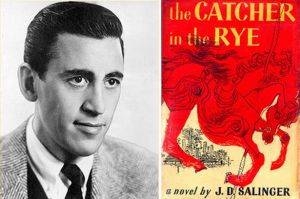
Sleepless with Salinger’s “The Catcher in the Rye”

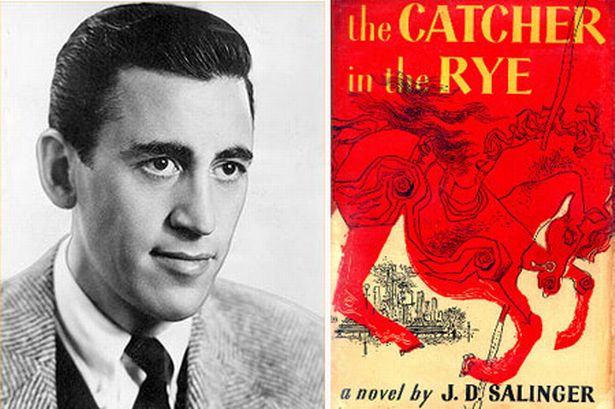
There are advantages to battling sleeplessness, I suppose; one of those advantages is rereading great novels. I came across an old paperback of Salinger’s lacerating, hilarious, façade-shattering masterpiece The Catcher in the Rye in, of all places, Iraq. I’d read The Catcher in the Rye twice before, but this rereading was the most meaningful so far. C.S. Lewis, another enduring favorite for me, touched on the value of rereading great books: “No book is really worth reading at the age of ten which is not equally—and often far more—worth reading at the age of fifty and beyond.” Yes and amen. But how is Catcher great? In at least two ways, Catcher is a remarkable piece of fiction: 1) Salinger’s mastery of tone and 2) the way in which he explores how the sensitive person (artist/writer/musician, etc.) sees the nuances, details, and beauties in life that the mass of humanity tramples upon. This sensitivity to nuances alienates Holden from the less perceptive people around him.

First, Holden Caulfield is one of the most realized and believable characters with regard to tone in all of serious literature. He is as real to me as Tom Sawyer and Huck Finn, as real as Emma Bovary, as real as Santiago on his boat, as real as David Copperfield coming into his own, as real as Lear as he goes mad before his own family and kingdom, as real as Scout and Jem, as they gossip about Boo Radley.

Holden Caulfield is a 16-year-old boy, repeatedly expelled from prep school. Why? He doesn’t apply himself, as the adults in his life tell him. He does not play by the rules. He neglects most of his class assignments and focuses instead on writers and books he particularly appreciates (Thomas Hardy’s novels, Dickens, Shakespeare, etc.).

Holden passes his English classes, but even in those, his mind wanders too much; he neglects the discipline required to succeed in the prep school system. He learns more through self-study than he ever does in the classroom. He obsesses (not too strong a word?) about particulars and details 99% of the other students and faculty never notice and/or suppress. (More on this idea below.) But Holden’s speech and mind are believable.

In the passage below, Holden is visiting with his history teacher, Mr. Spencer, who has awarded Holden an “F” for his (Holden’s) admittedly shoddy work in class. Listen to the way Holden’s mind works:

Well, you could see he [Mr. Spencer] really felt pretty lousy about flunking me. So I shot the bull for a while. I told him I was a real moron, and all that stuff. I told him how I would’ve done the same thing if I’d been in his place, and how most people didn’t appreciate how tough it is being a teacher. That kind of stuff. The old bull.

   The funny thing is, though, I was sort of thinking of something else while I shot the bull. I live in New York, and I was thinking about the lagoon in Central Park, down near Central Park South. I was wondering if it would be frozen over when I got home, and if it was, where did the ducks go. I was wondering where the ducks went when the lagoon got all icy and frozen over. I wondered if some guy came in a truck and took them away to a zoo or something. Or if they just flew away. (pp. 12-13)

Holden knows his own immaturity with regard to his poor academic performance, but he respects the humanness of Mr. Spencer. He has connected with him in spite of not doing well in his class. Moreover, Holden’s thoughts are preoccupied with the ducks. Who cares for them? Of course any number of connections about providence may be asked here. Is there a caring God over all or are the ducks (and all of the cosmos by extension) alone?

And then, after we as readers sense Holden’s fatal flaw (he retreats from “the system” instead of accepting it, and making the best of it), we see how attuned and compassionate Holden is vis-a-vis his concern for the ducks in Central Park. Where do they go in winter, when the lagoon is frozen over?

How many 16-year-old boys’ minds work like that? You see a boy who uses words like “lousy” and “moron.” But then he frets over delicate creatures. Questions of providence, or the lack thereof, might be asked here.

Another scene where’s Holden’s tone is artfully displayed comes when he’s in New York City. He’s lonely for girls. (Remember, he’s sixteen.) He flirts with some fatuous girls in a hotel and dances with them. But inside, he knows he’s frittering his time because they’ve nothing to offer him. They are part of the “phonies,” too. The irony, of course, is that Holden is often likewise phony towards others. Listen to Salinger’s mastery of tone:

The one ugly one, Laverne, wasn’t too bad a dancer, but the other one, old Marty, was murder. Old Marty was like dragging the Statue of Liberty around the floor. The only way I could even half enjoy myself dragging her around was if I amused myself a little. So I told her I just saw Gary Cooper, the movie star, on the other side of the floor.

     “Where?” she asked me—excited as hell. “Where?”

     “Aw, you just missed him. He just went out. Why didn’t you look when I told you?”

She practically stopped dancing, and started looking over everybody’s heads to see if she could see him. 

“Oh, shoot!” she said. I’d just about broken her heart—I really had. I was sorry as hell I’d kidded her. Some people you shouldn’t kid, even if they deserve it. (p. 75)

Secondly, Salinger explores the deeper issues of Holden’s character. Salinger is suggesting something about the role of the artist in the world. He (the artist) differs from the masses of humanity in that he notices what most never consider and/or suppress. Holden is sensitive to the power of genuine friendship (his relationship with Mr. Spencer, e.g.) innocence (his sister Phoebe, e.g.) and to the vast difference between artifice (what Holden calls “phony”) and the genuine.

Allie, Holden’s deceased younger brother, exemplified the genuine—but he is gone. Allie had a baseball glove that he’d written poems on, and he’d read them when he was in the outfield. Now ask yourself: what would you think of a kid with poetry written on his baseball glove? Exactly. Seems odd. Sissy, perhaps. And if you thought that, you’re playing right into Salinger’s hands.

He is suggesting something about the life of the artist. He (the artist/Holden-like, Allie-like) is an exile in a kingdom that thrives on artifice. He is a rebel doubly cursed because he feels the thorns of life.

When phonies rule the world, where does the artist go? Holden’s repeated flight is a sad commentary on Salinger’s views with regard to that question. The fact that Salinger walled himself off from public life for most his writing life after his military service is not irrelevant here. Perhaps only Thomas Pynchon and Cormac McCarthy have been more guarded.

This idea of the artist’s predicament is powerfully captured in the poem “What’s Wrong with Me” by Chase Twichell. Twichell writes of a sick coyote “ . . . crossing the field, /poisoned, injured, rabid, old, the rest of the pack anxious,/yipping and howling back and forth/across the valley as dusk comes on. What’s wrong with me is that/I find their music beautiful. I dwell on it long after it stops/and in the silence afterward I write down its words.” That is haunting and beautiful. Both the images and sounds recorded, and the fact that a person takes notice and subsequently labors to preserve that pathos, are noteworthy. He puts words to paper to capture the power of the cries of a hurt coyote, of the pack yelping, and of the sun sinking another day.

Holden Caulfield is like the speaker in this poem. He notices what most would bypass, as they go on to the next distraction. Yet he’s caught in a dilemma: how does one fight for the genuine and enduring in a world obsessed with artifice and the temporal?

Holden Caulfield is believable because Salinger was a master of tone (he attended to what the mouth reveals about the heart), and through The Catcher in the Rye, we are blessed with not only a master of narrative tone/voice, but also by one with a narrative exploration of how life cheapens or deepens, depending upon our view of aesthetics.
 

For Whom the Bell Tolls – Thoughts on Hemingway’s Novel

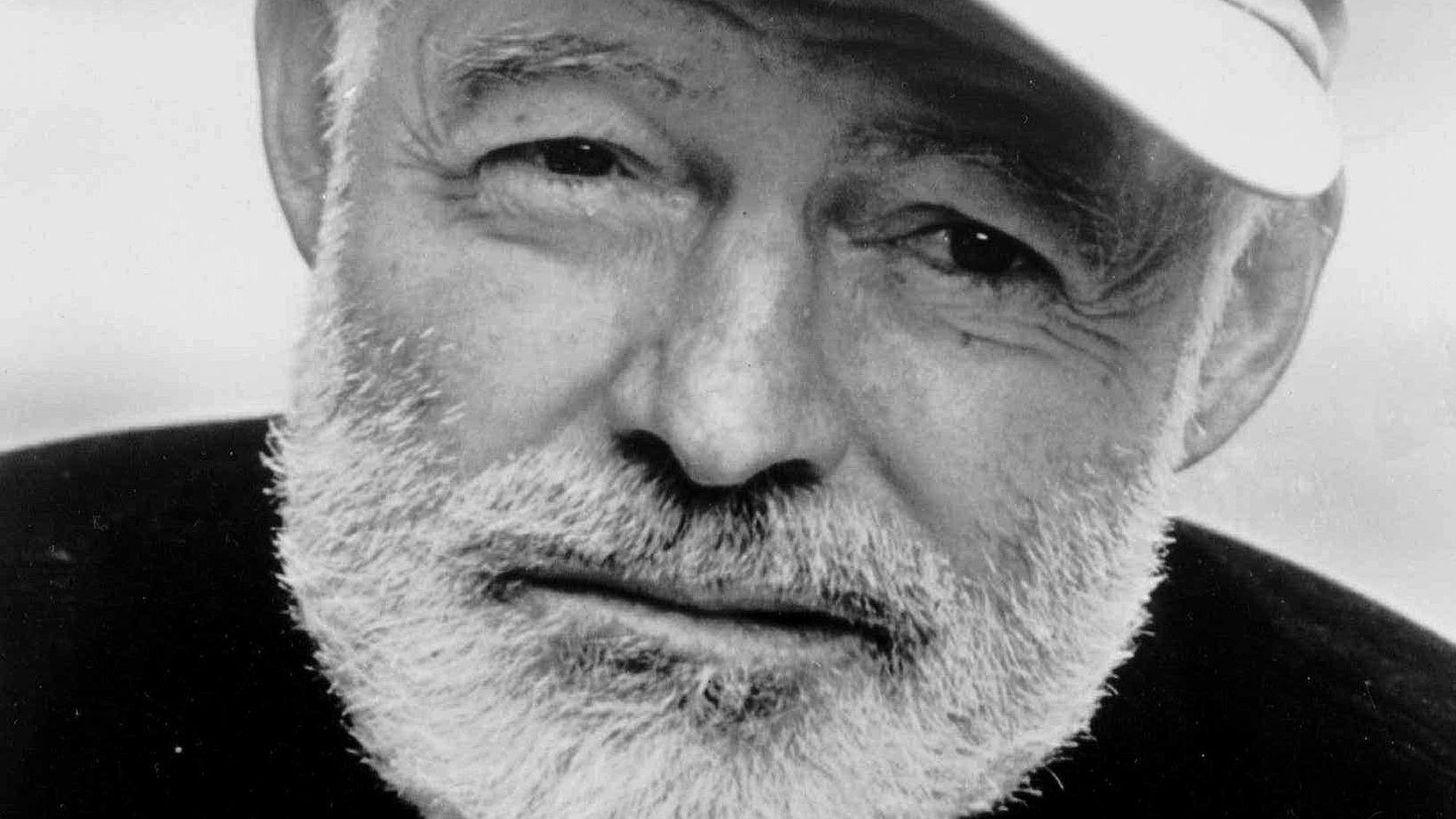
Hemingway. Just reading his name connotes a persona. Solitary yet brave characters pervade his fiction. Santiago, for example, is the heroic wizened old fisherman in The Old Man and the Sea. Robert Jordan, another example, is the self-sacrificing bridge-blower in For Whom the Bell Tolls. And literary connoisseurs know of Hemingway’s trademark short declarative sentences. Imagine the opposite of Faulkner or Cormac McCarthy, and you get an idea of Hemingway’s terse unadorned style. Most scholars trace Hemingway’s stripped-down style to his years spent in journalism where linguistic precision and minimalism were prized. In less than a week, I fly out to another military deployment, and so I tend to read a lot of war novels and history in the months leading up to going across the pond again. Over the last few weeks I read Hemingway’s For Whom the Bell Tolls, a novel set during the Spanish Civil War (1936-1939). What follows is a three-part examination of the novel–overall summary, analysis, and assessment. Lastly, I pose a question or two for reflection. If you’re a fan of war novels, of Hemingway’s linguistic skill, or of Hemingway’s importance in the Western canon, I welcome your reading.

Summary: For Whom the Bell Tolls is the story of an American Spanish teacher (Robert Jordan) who’s in Spain during the Civil War there in the late 1930s. The war is between the Republicans and the communists/fascists. But Jordan’s not there to teach Spanish to expatriated Americans; he’s a dynamiter of bridges. He is fighting against the communists/fascists, a guerilla warfighter attached to a motley crew of Spaniards who hate communism/fascism as much as he. He falls in love with a Spanish girl (Maria) over the course of the novel. He battles internally over how he might completely love her and simultaneously remain committed to his life’s work of blowing bridges the fascists use, and killing as many communists as possible. About two-thirds of the way through the novel, Robert and Maria are discussing their plans after the war is over. What follows is an example of their dynamic, as Maria speaks:

“We will be in the big clean bed in thy famous room in our famous hotel and we will sit in the famous bed together and look into the mirror of the armoire and there will be thee and there will be me in the glass and then I will turn to thee thus, and put my arms around thee thus, and then I will kiss thee thus.”

 Then they lay quiet and close together in the night, hot-aching, rigid, close together and holding her, Robert Jordan held closely too all those things that he knew could never happen, and he went on with it deliberately and said, “Rabbit, we will not always live in that hotel” (Hemingway, 1940, p. 346).

 At least a couple of things are seen in the above excerpt. First, we sense Maria’s naiveté. Her mind over-inflates the beauties of Madrid as a counterpoint to the carnage she and Jordan are currently in. And secondly, we sense Jordan’s internal recognition of “things that he knew could never happen.” There is, in short, recognition by Hemingway’s main character that the relationship will not end happily. In typical Hemingway fashion, the protagonist suffers this recognition silently. He keeps it to himself. He is a man in love, yes, but a man nonetheless alone.

Analysis: Hemingway wrote For Whom the Bell Tolls just two to three years after being in Spain during their Civil War, and just prior to WWII. In sum, it is a war novel. But what was Hemingway suggesting about war? Was the book only a diatribe against communism? Clearly, communism is shown in the book to be a system of butchery wherein what matters is never the individual but only the state and its power. But I think Hemingway was less focused upon exploring political ideologies than he was in exploring the individual’s role in war (any war) and his significance/lack thereof. Here is one example of what I mean. Robert Jordan is thinking to himself:

If this was how it was then this was how it was. But there was no law that made him say he liked it. I did not know that I could ever feel what I have felt, he thought. Nor that this could happen to me. I would like to have it for my whole life. You will, the other part of him said. You will. You have it now and that is all your whole life is; now. There is nothing else than now. There is neither yesterday, certainly, nor is there any tomorrow. How old must you be before you know that? There is only now, and if now is only two days, then two days is your life and everything in it will be in proportion. This is how you live a life in two days. And if you stop complaining and asking for what you never will get, you will have a good life. A good life is not measured by any biblical span (Hemingway, 1940, p. 169).

 Hemingway shows his hand here by having his protagonist demonstrate his worldview. Jordan is secular. There is no God in his thinking. What matters is this world, the here and now, and he should not look for cosmic justice. Eat, drink, and be merry now, for that is all there is. There is no “biblical span” in this man’s thinking.

Assessment: How do I therefore judge the novel? What are my visceral and intellectual evaluations of the novel and its worldview? Is Hemingway’s worldview, at least as evidenced through this novel, accurate? Is the worldview given the way reality really is?

As a story of a man in war, a man against overwhelming odds, the novel succeeds as far as it goes. As a military man, I appreciated the specifics and accuracy with which Hemingway denotes calibers of weapons, the precision of maps and cartography, the models of aircraft, etc. All of these rang true. How did the novel affect me emotionally? How did it stir me? In short, it stirred me because I felt what it was like to view life as a secularist. Though I am a Christian, I revisited what the Bible calls the natural man’s way of seeing the world. Here is an example of Hemingway’s demonstration of his (and Jordan’s) atheism.

I wish Grandfather were here instead of me. Well, maybe we will all be together by tomorrow night. If there should be any such damn fool business as a hereafter, and I’m sure there isn’t, he thought, I would certainly like to talk to him (Hemingway, 1940, p. 338).

Here I see Jordan’s view of life as a secularist. He longs for ultimate redemption and the benefits of an afterlife to commune with his beloved grandfather but he rejects it, too. It seems foolishness to him. Biblically speaking, redemption is foolishness to the perishing.

A question or two: What if Hemingway was wrong? What if God does exist? Would Robert Jordan then embrace him? I don’t see any evidence of that in the text. What I do see is a man who, because he exiles God from his worldview, becomes an exile himself. He longs for love but believes he is unworthy of it from Maria, and that he will fail her. His god becomes his own pride, valor, courage in battle, and his sense of honor. But what do these terms mean in a universe devoid of the God who offers transcendent value? If all is material, whence come these values? How does the atheist account for objective values? I would argue that he cannot. They are preferences, but not objective values. Jordan is an exile from Eden (in which he doesn’t believe, but against which he nonetheless rebels), and his exile is self-imposed.

Beauty as Messenger

Beauty as messenger. I’ve taught literature for many years now. I remain convinced that great literature reflects man’s best, noblest, most exalted efforts to express truth beautifully. For some, that may sound sentimental and saccharine. For others, however, Browning’s line, “Ah, but a man’s reach should exceed his grasp, Or what’s a heaven for?” expresses what great literature aims for, namely, truth beautifully written. Might truth beautifully expressed be a messenger? And why do most avoid contemplating it?

The things in life that mean most to us are oftentimes the things about which most people avoid talking. It is more convenient to tweet or post. Headlines, not history. News is just that—new. We’re a “… and now this” culture, as Neil Postman wrote about. It’s what’s “happening now.” There is no room for the great enduring truths of literature when we can get updates sent to our phones and have news scrolled across the gadgets of our choice. We’re connected electronically but exiled in our souls. Where’s room for truth and beauty? Any room for a messenger?

The world is too much with us; late and soon,/Getting and spending, we lay waste our powers;–/Little we see in Nature that is ours;/We have given our hearts away, a sordid boon!” Wordsworth’s poem, “The World Is Too Much With Us,” still speaks, does it not? Might these words, penned hundreds of years ago, serve as a messenger of that which endures?

This morning driving to work I had the radio on in my truck. The radio DJ was telling of how Tom Petty died this week, and of how his albums are now selling at many times the rate they were when he was still living. I was not a big fan of Petty’s music but I do respect how he labored in his craft. For Petty, it was music. His songs are played constantly because he spoke to the human experience and he tailored his talents to fit the genre of rock and roll. And music lovers continue to respond by buying up his albums and turning up the volume. There’s a message through all this and it’s not just the tunes. It speaks to a longing in the human heart for beauty and for truth. I do not wish to stretch the analogy too far. I would not choose to argue that Petty’s lyrics are great literature. However, Petty’s music has endured because it speaks to people in ways music mysteriously has the power to do. It touches people’s souls. It stirs them. It reminds them of what they value, of what brings joy. And those things endure.

I’ve read the following lines hundreds of times: “The heart of man plans his way, but the LORD establishes his steps” (Proverbs 16:9). It’s a reminder that we don’t know our end. I doubt that Tom Petty knew last week that he had less than a week to live.

James wrote in similar fashion: “Come now, you who say, ‘Today or tomorrow we will go into such and such a town and spend a year there and trade and make a profit’—yet you do not know what tomorrow will bring. What is your life? For you are a mist that appears for a little time and then vanishes” (James 4:13-14).

Why do I still love teaching Shakespeare and Faulkner? Why do I try to open the Psalms to students who malnourish themselves on intellectual Twinkies? It’s because I remain more convinced than ever that the human soul atrophies if starved of truth and beauty.

I plan to drive home late today. When I do, I will drive north and the sun will be descending over the trees over my left shoulder. When I enter the community where my family and I live, I will wind over hills and cross a lake. On that lake, the sun will place its golden fingers across the water’s surface. Loons and geese will likely be flying overhead. Drakes and ducks are likely to be paddling around and dipping their heads beneath the surface, then reemerging with drops of water on their glossy crowns. And again I will be speechless before beauty. I will be suddenly filled with a message. It’s a message worth telling.