Chaplain Daily Touchpoint #269: Some Thoughts on the Violence & Proper Responses

Introductory Question: How should the Christian view the intentional shattering of law and order?

Connection to Daily Events: Don’t worry; I’m not going to go on a political screed. I only want to ask the above question and take you to Scripture. First, I think it is incumbent upon all to tell the truth. The Christian and non-Christian alike should admit what is obvious—namely, that there is a civil war underway by certain elements on American soil.

Exhibit A: When I read the news this morning on my laptop, America’s flag was being covered in lighter fluid and set on fire in downtown Los Angeles. Meanwhile, the Mexican flag was being held high on staffs and run through the streets. One of America’s largest cities where the American flag is desecrated? Regardless of our political affiliation, does anyone deny that this is serious? Some illegals demand the abolition of ICE and at the same time herald Mexico’s flag. If the flags of other nations represent your values, why not live there? Why destroy L.A. and harm law enforcement officers and destroy property in the city to which you have fled? If it’s so horrendous here, why come? Why stay?

My fellow soldiers are deployed to try and restore some semblance of law and order. This is a civil war. When you have (un)civilization that refuses to manage itself; when America’s flag is burned on the streets; when law enforcement officers are under attack; when public and private property are destroyed by thugs; when America’s military has to be activated to quell violent criminals from destroying the very nation to which they’ve come illegally, how should the Christian view this? Below are some initial thoughts from Scripture:

  • All of us are fallen; all men are sinners (Rom 3:23 says, “for all have sinned and fall short of the glory of God”)
  • All cultures have a “God of the system”; if and when cultures abandon the true God, God’s judgment falls (I’ve linked Deuteronomy 12:29-32 below for you.)
  • When evil is not punished, ruthless power is the idol, the “God of the system.” (Hosea 4:2-3 reads, “there is swearing, lying, murder, stealing, and committing adultery; they break all bounds, and bloodshed follows bloodshed. 3 Therefore the land mourns, and all who dwell in it languish, and also the beasts of the field and the birds of the heavens, and even the fish of the sea are taken away.”
  • God calls all men to repent and believe (Acts 17:30 says, “The times of ignorance God overlooked, but now he commands all people everywhere to repent …”)

Text:
29 “When the Lord your God cuts off before you the nations whom you go in to dispossess, and you dispossess them and dwell in their land, 30 take care that you be not ensnared to follow them, after they have been destroyed before you, and that you do not inquire about their gods, saying, ‘How did these nations serve their gods?—that I also may do the same.’ 31 You shall not worship the Lord your God in that way, for every abominable thing that the Lord hates they have done for their gods, for they even burn their sons and their daughters in the fire to their gods.

32 “Everything that I command you, you shall be careful to do. You shall not add to it or take from it. (Dt 12:29-32, ESV)

Encouragement: Again, this is not a political cheer for any party; there’s more than enough culpability by every political identity. This is meant to go deeper—to the heart of the issue. How should the Christian respond? Prayerfully, winsomely, courageously, and with biblical conviction. Everyone surely knows the bromide about what happens when good men do nothing. Evil triumphs. May we not be a people like that. I hate it when I see my country ripped asunder by violence, by people who ostensibly have no sense of self-discipline or commitment to much of anything but the god of their appetites.

I don’t know what it will take for Christians and non-Christians to admit the reality of man’s depravity, man’s fallen condition. Most folks simply don’t grasp it until it comes to their doorstep. But that may be much closer than you think. There’s wisdom—always—in doing things God’s way. When we fail to address human fallenness properly, a democratic republic can be replaced by a thugocracy. I, for one, do not want that; we are a better people than that, sinfulness notwithstanding.

No Place for Envy. Why? Because All Is of Grace

Introduction: In preparing to teach Sunday, I’ve gone through Matthew’s gospel again and again. Each time I read through it, I discover what I believe to my core: God’s wisdom is unending. He cuts to the heart of the matter, which is the matter of the heart.

The text for Sunday is Matthew 20. Specifically, Christ is nearing Passion Week, his week of suffering in Jerusalem, Israel, where He would give His life as a ransom for many (Matthew 20:28). But in Matthew 20, Jesus continues to teach on how human pride is rooted in something even worse–envy. God hates it because it destroys everything it touches.

Context, context, context. Look at the last verse of Matthew 19: “But many who are first will be last, and the last first” (Mt 19:30, ESV). The same principle Jesus repeats in Matthew 20: “So the last will be first, and the first last” (Mt 20:16, ESV). Important? Yes.

In Christian theology, one of the most deleterious sins, one that corrupts everything and everyone it infects, is envy. It’s one of seven deadly sins, in certain traditions. It is, of course, addressed in the Decalogue: “You shall not covet . . .” (Ex 20:17, ESV). Envy reveals a spiritual insecurity that God detests.

Rather than finding one’s identity in Christ, envy reveals that one is looking to fellow sinners for approbation. It reveals that one is being a, to use biblical language, man-pleaser (Gal 1:10). Envy reveals a longing for praise from men rather than commendation from the Lord.

That’s why Christ hammers this point to His people. He is saying via gentle rebuke: “Who is your audience? Who are you aiming to please?”

When Jesus teaches via the parable of the Laborers in the Vineyard (Mt 20:1-16), he’s teaching that Christians are not to envy others’ giftings, influence, or blessings. Rather, be content with God’s grace towards you. Rejoice for those whom God is using to grow His kingdom; don’t envy them. The Lord does not need any of us, so just be faithful in the area of influence God has for you, be that vast or small. That’s the whole point: Many who think they’re first are actually last, and vice versa.

In one of the books I read recently, the author wrote the following: “The antidote to envy is security, the kind of security that allows us to rejoice in the strengths of others while realizing our own uniqueness in Christ.” That’s bull’s-eye, spot on.

Encouragement: It is understandable why the unbeliever would envy. He has no transcendent standard to which he thinks he is answerable; therefore, he measures all things via fluctuating preferences. That’s secularism in a nutshell.

But for the believer, for the man who is a true disciple of Christ the Lord, he knows that his giftings are by the sheer grace of God. “What do you have that you did not receive?” (1 Cor 4:7, ESV). Humility, therefore, not envy, is the posture of the Christian. God invariably brings the proud low and exalts the humble. Just ask Herod, Nebuchadnezzar, Pharaoh, Ahab, Jezebel, Saul/Paul, etc. The list could go on and on.

If and when we come to understand our sufficiency in Christ, envy will recede and be replaced by humility, selfless service, and our identity being in the One who came down to us to rescue us from ourselves.

Chaplain Daily Touchpoint #268: Keeping the Main Thing the Main Thing

Bottom line up front: Keeping the main thing the main thing

Historical context: Paul’s last words in Scripture (2 Timothy 4). There are entire libraries filled with books about the Apostle Paul, about the New Testament (almost 2/3 of which Paul penned), about profound theological works like Romans and Colossians, etc. But for me, the heart of Paul comes across perhaps most powerfully at the end of his second letter to Timothy. How can one be unmoved by such a mind and heart as Paul had in these closing words? Indeed, these were Paul’s final words before he was martyred in Rome, Italy:

I charge you in the presence of God and of Christ Jesus, who is to judge the living and the dead, and by his appearing and his kingdom: 2 preach the word; be ready in season and out of season; reprove, rebuke, and exhort, with complete patience and teaching. 3 For the time is coming when people will not endure sound[a] teaching, but having itching ears they will accumulate for themselves teachers to suit their own passions, 4 and will turn away from listening to the truth and wander off into myths. 5 As for you, always be sober-minded, endure suffering, do the work of an evangelist, fulfill your ministry.

6 For I am already being poured out as a drink offering, and the time of my departure has come. 7 I have fought the good fight, I have finished the race, I have kept the faith. 8 Henceforth there is laid up for me the crown of righteousness, which the Lord, the righteous judge, will award to me on that day, and not only to me but also to all who have loved his appearing.

9 Do your best to come to me soon. 10 For Demas, in love with this present world, has deserted me and gone to Thessalonica. Crescens has gone to Galatia,[b] Titus to Dalmatia. 11 Luke alone is with me. Get Mark and bring him with you, for he is very useful to me for ministry. 12 Tychicus I have sent to Ephesus. 13 When you come, bring the cloak that I left with Carpus at Troas, also the books, and above all the parchments. 14 Alexander the coppersmith did me great harm; the Lord will repay him according to his deeds. 15 Beware of him yourself, for he strongly opposed our message. 16 At my first defense no one came to stand by me, but all deserted me. May it not be charged against them! 17 But the Lord stood by me and strengthened me, so that through me the message might be fully proclaimed and all the Gentiles might hear it. So I was rescued from the lion’s mouth. 18 The Lord will rescue me from every evil deed and bring me safely into his heavenly kingdom. To him be the glory forever and ever. Amen.

19 Greet Prisca and Aquila, and the household of Onesiphorus. 20 Erastus remained at Corinth, and I left Trophimus, who was ill, at Miletus. 21 Do your best to come before winter. Eubulus sends greetings to you, as do Pudens and Linus and Claudia and all the brothers.

22 The Lord be with your spirit. Grace be with you. (2 Timothy 4, ESV)

Pauline Wisdom:

  • Daily loyalty (2 Tim 4:1-2)
  • Expect opposition (2 Tim 4:3-4)
  • Embrace suffering (2 Tim 4:5-7)
  • Entrust yourself to God (2 Tim 4:8)
  • Work hard developing yourself & others in Christlikeness (2 Tim 4:-9-22)

Encouragement: I have preached/taught/written/spoken from 2 Timothy 4 many, many times. Why? Well, because they’re Paul’s last words, yes, but also because he knew his death was close. He was about to pass the theological baton to the next generation of elders (men like Timothy), and he was urging Timothy to keep the main thing the main thing, to not lose focus. Focus beats talent. Keeping faith with the truth is what matters. We can so easily become distracted from the mission. In military circles, we term it “mission creep.” In theological parlance, it would be akin to having a façade of truth but being cancerous underneath the veneer. We’re not to be like that. We’re to be the genuine, the real deal, knowing that the Lord sees and will do what is right. Our duty is fidelity to His revealed will.

Zinger from Dorothy Sayers

In some of my studies this week I came across a real keeper from Dorothy Sayers. What struck me so powerfully was the recognition that throughout history, we see the same trends and pendulum swings recur. We go from strong voices in the pulpit (one thinks of Edwards, Whitefield, and Spurgeon) to those who know neither the message they’re to proclaim nor how to proclaim it.

Just listen to this from Sayers:

“[We are] constantly assured that the churches are empty because preachers insist too much upon doctrine–dull dogma as people call it.

The fact is the precise opposite. It is the neglect of dogma that makes for dullness. The Christian faith is the most exciting drama that ever staggered the imagination of man–and the dogma is the drama.”

And there you have it, folks.

Chaplain Daily Touchpoint #267: “But as for you . . .”

Bottom line up front: “But as for you . . .”

Historical Context: The Apostle Paul was writing to his child in the faith, Timothy (1 Timothy 1:2, ESV). Paul was writing from his prison cell in Rome, Italy. This is one of the pastoral epistles—a letter from an elder-shepherd to a fellow elder-shepherd. And it is filled with warnings, nuggets of wisdom, for the elder-shepherd Timothy, and for all who are to be elder-shepherds.

Here is just some of the wisdom Paul provides Timothy:

  • You are in nothing less than a battle of good vs. evil, light vs. darkness (1 Tim 6:12)
  • Many will demand soft sub-biblical leaders instead of the unvarnished truth of Scripture; expect this (2 Tim 4:3-5)
  • Conceit, pride, and envy of others characterize false elder-shepherds (1 Tim 6:4-8)
  • Machinations for wealth and status characterize false elder-shepherds (1 Tim 6:4-10)
  • Keep first things first (1 Tim 6:11-16).

Teaching: “But as for you, O man of God, flee these things” (1 Tim 6:11, ESV).

Encouragement: The Apostle Paul, arguably the greatest follower of Christ to have ever lived, a man responsible for about 2/3 of the New Testament, a man who endured persecutions that stagger the mind, loved his child in the Christian faith, Timothy; therefore, he warned him. And he warned him with this beautiful coordinating conjunction: “But as for you . . .” In other words, he was saying, “Timothy, my dear son in the faith, you are headed into warfare. Know your enemy is Satan and his legions. Know that up front. Resist the allures of the world and keep Christ foremost in your thoughts.”

“But as for you . . .”

Chaplain Daily Touchpoint #266: Wisdom from Moses

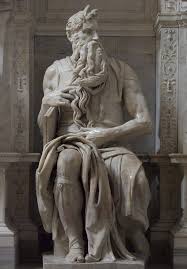
(Michelangelo’s Moses)

Bottom line up front: Is there not a cost? Yes, more than one, in fact.

Historical context: Deuteronomy was penned by Moses as the last book of the Torah. It’s the last of the five books (the Pentateuch). Its name means essential the second (deutero)heralding of the law (nomos). In short, it’s Moses restating the law to Israel. But it’s replete with foreshadowings of the New Testament and for Christians of all ages.

The Matter of Disobedience: Moses reminds his hearers of God’s faithfulness but also of their duty to obey via action, not just words. In the first chapter, Moses is so clear with the people about the issue:

“Then we set out from Horeb and went through all that great and terrifying wilderness that you saw, on the way to the hill country of the Amorites, as the Lord our God commanded us. And we came to Kadesh-barnea. 20 And I said to you, ‘You have come to the hill country of the Amorites, which the Lord our God is giving us. 21 See, the Lord your God has set the land before you. Go up, take possession, as the Lord, the God of your fathers, has told you. Do not fear or be dismayed.’ 22 Then all of you came near me and said, ‘Let us send men before us, that they may explore the land for us and bring us word again of the way by which we must go up and the cities into which we shall come.’ 23 The thing seemed good to me, and I took twelve men from you, one man from each tribe. 24 And they turned and went up into the hill country, and came to the Valley of Eshcol and spied it out. 25 And they took in their hands some of the fruit of the land and brought it down to us, and brought us word again and said, ‘It is a good land that the Lord our God is giving us.’ (Dt 1:19-25, ESV)

In sum, Moses reminded them of their history. The goal? To remind them of God’s trustworthiness and faithfulness as reasons to trust Him going forward. They were to go in and possess the land promised to the forefathers. But you know what happened, right? They failed to believe God and failed to obey via action.

Here’s the way Moses phrased it to them:

“Yet you would not go up, but rebelled against the command of the Lord your God. 27 And you murmured in your tents and said, ‘Because the Lord hated us he has brought us out of the land of Egypt, to give us into the hand of the Amorites, to destroy us. 28 Where are we going up? Our brothers have made our hearts melt, saying, “The people are greater and taller than we. The cities are great and fortified up to heaven. And besides, we have seen the sons of the Anakim there.”’ 29 Then I said to you, ‘Do not be in dread or afraid of them. 30 The Lord your God who goes before you will himself fight for you, just as he did for you in Egypt before your eyes, 31 and in the wilderness, where you have seen how the Lord your God carried you, as a man carries his son, all the way that you went until you came to this place.’ 32 Yet in spite of this word you did not believe the Lord your God, 33 who went before you in the way to seek you out a place to pitch your tents, in fire by night and in the cloud by day, to show you by what way you should go. (Dt 26-33, ESV).

Moses rebukes them for their fear. They were intimidated; they didn’t trust the Lord; they feared man; and thus, they were judged by God for their disobedience. Verse 35 is tragic: “Not one of these men of this evil generation shall see the good land that I swore to give to your fathers, except Caleb the son of Jephunneh.”

God was looking for faithfulness from His people, and the people had failed. How would the covenant promises ever be fulfilled? Who would be the faithful one? Is there not a cost to fearing man and not trusting God?

God judged them by saying via Moses, “But as for you, turn, and journey into the wilderness in the direction of the Red Sea” (v. 40, ESV). In other words, you’re going to wander in the recesses of the desert because of your fear of man and failures to trust God.

Encouragement: I do not know where my readers are spiritually; that’s not wisdom I have. But I do know this: It is so easy to fear people and not fear the Lord as we ought. We tend to think too highly of people and too little of Yahweh. When we fear men, we reveal a failure to trust the Lord. One of my heroes penned this in one of his many volumes: “When you go through a trial, the sovereignty of God is the pillow upon which you lay your head” (Spurgeon). Be of good courage, Christian; the Lord sees.

Chaplain Daily Touchpoint #265

Bottom line up front: Obedience to God is never wrong.

Historical Context: Like a lot of Soldiers, I’m a history nerd. I love to read history, and military history fascinates me. I especially love war memoirs. You can see into the lives of Soldiers, Sailors, Airmen, and Marines from each generation, and you see life through their eyes as they fought in their times, too. And I love biblical history, too, especially the history surrounding Jonah and what God labored to teach Jonah.

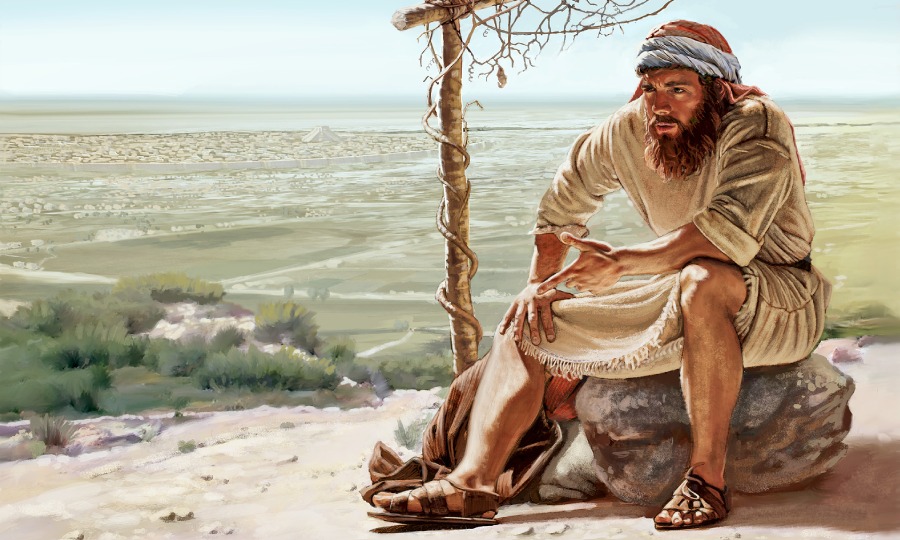
If it’s been a bit since you read Jonah, it’s set in the 700s B.C. in what in present-day Iraq and Kuwait. God was determined to save a rebellious people, then as now. And then as now, God sent his man to proclaim a simple message: Repent of your sins and look to the promise of the gospel. There was one huge obstacle, however. Jonah was self-absorbed man and a bad prophet. He wanted grace for himself but judgment for others.

He fled God, but God had to remind Jonah that He was smarter than ole Jonah. Eventually, Jonah fulfilled his mission in Nineveh, but only after a lot of bellyaching (sorry, couldn’t resist the pun). Jonah was preserved for three days and nights in the belly of the great whale. And just like Christ would experience, after three days, Jonah was delivered upon the land again. Even after Nineveh repented and God saved thousands of former rebels, Jonah was still self-absorbed and angry. It is not inaccurate to say that Jonah acted like a petulant child; Jonah worshiped Jonah much of the time.

Encouragement: Obedience to God is never wrong. Does God send His people difficult missions? Of course. Going into the hedgerows and highways with the message of repentance and faith is not an easy thing, not if you do it faithfully. But God is a Savior by nature. He saves us from His wrath via of executing His wrath upon God the Son, the Christ. That’s the whole point of the doctrine of the substitutionary atonement. We’re to obey the Lord and trust Him for the results.

The Import of Abraham’s Questions to God & Paul’s Words to Timothy

Introduction: You remember the discussion, right? It is one of those passages that lingers in the soul. It’s Genesis 18. It’s where Abraham pleads with God. He intercedes on behalf of sinners and a sinful civilization. And God teaches a mighty powerful lesson.

Bottom line up front: There is none righteous. That is why we must look to God, not to man, for rescue.

Here’s the second half of the chapter:

22 So the men turned from there and went toward Sodom, but Abraham still stood before the Lord. 23 Then Abraham drew near and said, “Will you indeed sweep away the righteous with the wicked? 24 Suppose there are fifty righteous within the city. Will you then sweep away the place and not spare it for the fifty righteous who are in it? 25 Far be it from you to do such a thing, to put the righteous to death with the wicked, so that the righteous fare as the wicked! Far be that from you! Shall not the Judge of all the earth do what is just?” 26 And the Lord said, “If I find at Sodom fifty righteous in the city, I will spare the whole place for their sake.”

27 Abraham answered and said, “Behold, I have undertaken to speak to the Lord, I who am but dust and ashes. 28 Suppose five of the fifty righteous are lacking. Will you destroy the whole city for lack of five?” And he said, “I will not destroy it if I find forty-five there.” 29 Again he spoke to him and said, “Suppose forty are found there.” He answered, “For the sake of forty I will not do it.” 30 Then he said, “Oh let not the Lord be angry, and I will speak. Suppose thirty are found there.” He answered, “I will not do it, if I find thirty there.” 31 He said, “Behold, I have undertaken to speak to the Lord. Suppose twenty are found there.” He answered, “For the sake of twenty I will not destroy it.” 32 Then he said, “Oh let not the Lord be angry, and I will speak again but this once. Suppose ten are found there.” He answered, “For the sake of ten I will not destroy it.” 33 And the Lord went his way, when he had finished speaking to Abraham, and Abraham returned to his place. (Genesis 18:22-33, ESV)

The type: Typologies are overt here. Abraham typifies the one who interceded on behalf of sinners to God. He was the intercessor/mediator/go-between. He loved his people, but he knew that they were just like he was, sinful.

There’s the revelation of latent works-righteousness that’s typified here, too, and their utter sinfulness to God. In his pleading on behalf of Sodom, Abraham starts at 50 supposedly righteous men. Then it’s 45. Then it’s lower still. Then again. On and on Abraham lowers the standard. Why? Because he knows no one is sufficient. The lesson is clear: none is righteous. We need to look away from ourselves, away from man-centeredness, to be saved. We must flee to God in the gospel.

Connections: If you are a Christian, you are likely involved in a church. But if we are honest, how often do we see man-centeredness in the church? Rather than a God-gifted and qualified plurality of elders to shepherd the flock of God, what can often happen is that undiscerning sheep are misled by deceptive hirelings whose god is themselves. What we are required to do biblically is to look away from ourselves, away from man-centeredness, to be saved. We must flee to God in the gospel.

New Testament Connection: I was in 2 Timothy this morning and Paul is so clear about what’s on the line. In verse 10 and following of 2 Timothy 3, Paul writes this:

 10 You, however, have followed my teaching, my conduct, my aim in life, my faith, my patience, my love, my steadfastness, 11 my persecutions and sufferings that happened to me at Antioch, at Iconium, and at Lystra—which persecutions I endured; yet from them all the Lord rescued me. 12 Indeed, all who desire to live a godly life in Christ Jesus will be persecuted, 13 while evil people and impostors will go on from bad to worse, deceiving and being deceived. 14 But as for you, continue in what you have learned and have firmly believed, knowing from whom you learned it 15 and how from childhood you have been acquainted with the sacred writings, which are able to make you wise for salvation through faith in Christ Jesus. 16 All Scripture is breathed out by God and profitable for teaching, for reproof, for correction, and for training in righteousness, 17 that the man of God may be complete, equipped for every good work. (2 Timothy 3:10-17, ESV)

Paul tells Timothy lessons Abraham, too, learned in Genesis 18–that none is righteous, that we need to look away from ourselves, away from man-centeredness, to be saved. We must flee to God in the gospel.

Paul tells Timothy the following fundamentals:

  • Persecution of faithful Christians is unavoidable (vv. 11-12)
  • Impostors are pervasive, and will only grow more brazen (v. 13)
  • Impostors not only deceive others, but they deceive themselves. They are blind guides. (v. 13)
  • Look away from man-centered worship, and turn to God in Christ (v. 15).

Teaching: Abraham learned that God would not destroy the righteous. You know why? There weren’t any righteous. God did spare Lot and two of his children out of sheer grace. In fact, Peter would call Lot righteous in his (Peter’s) writings (2 Peter 2:7). Lot, though gravely sinful, did intercede on behalf of the angels, trying to prevent their rape by the homosexual rapists in Sodom. The principle, I would argue, is not that Lot was righteous (sinless) but that he fought the good fight in his day, though imperfectly. Like Abraham, he, too, knew he was not righteous. He, too, had to look away from himself, away from man-centeredness, to be saved. He fled to God in the gospel.

Encouragement: Abraham pleaded on behalf of those he loved. He was used by God in God’s mission of redeeming a people for himself. Paul, too, pleaded on behalf of those he loved. The letters to Timothy are among the most beautiful letters in all of Scripture and world literature. Paul loves his child in the faith. So he does what? He tells him the truth–to be discerning, to be wise, to not be sheeple who follow impostors. Why? Because, Paul writes, those are “evil people and impostors [who] go on from bad to worse, deceiving and being deceived” (v. 13). Abraham interceded; Lot interceded; Paul interceded; and Timothy went on to intercede, too. But they’re all types of the only Interceder, the Lord Jesus, who bore the wrath so that all of us who flee to Him might be spared. And to do that, we must look away from man-centered thinking, man-centered worship, man-centered impostors, and look to the founder and perfecter of our faith (Hebrews 12:1-3).

Chaplain Daily Touchpoint #264

Bottom Line Up Front: Fidelity as a Fundamental

Context: Last evening when I returned to post after a week of leave, I read 1st and 2nd Timothy again. And again, I was struck by Paul’s emphasis to his student Timothy about what is a non-negotiable for God-honoring ministry: faithfulness.

Questions: To use a cliché from the resilience world, how does one “hunt the good stuff” when corruption is pervasive? How does one not grow discouraged when it appears evil is winning, that light is being eclipsed by forces of darkness? The short answer is this: God is undefeated. Therefore, all who are in Christ are more than conquerors (Romans 8:37). Even in the dark times. Especially during those dark times, that’s when we must steep ourselves in that truth.

Here’s just one example of how Paul teaches Timothy about the link between God’s faithfulness and Timothy’s endurance. There’s a profound connection between the two things. Timothy’s endurance is to rest upon God’s faithfulness. Timothy’s identity is founded upon the fidelity of God himself:

Remember Jesus Christ, risen from the dead, the offspring of David, as preached in my gospel, for which I am suffering, bound with chains as a criminal. But the word of God is not bound! Therefore I endure everything for the sake of the elect, that they also may obtain the salvation that is in Christ Jesus with eternal glory. The saying is trustworthy, for:

If we have died with him, we will also live with him;
if we endure, we will also reign with him;
if we deny him, he also will deny us;
if we are faithless, he remains faithful—

for he cannot deny himself. (2 Timothy 8-13, ESV)

Encouragement: Paul did not sugarcoat his suffering; he did not gloss over it. He spoke plainly of it. Why? For the sake of the elect (v. 10). In other words, for all who are in God’s family. For men like Timothy, who would discover lots of heartache, just as Paul endured. Why? Because the crucible of suffering teaches us about the glories of Christ himself, who endured what we never could or would. Christ was the one who was betrayed, lied about, set up, spat upon, mocked, crowned with thorns, flayed, stripped publicly, nailed to the tree, speared in the side, whipped, and murdered. And yet the Bible says that it was all part of God’s plan. To quote Peter in Acts, “this Jesus, delivered up according to the definite plan and foreknowledge of God” (Acts 2:23, ESV). That’s very clear. The definite plan and foreknowledge of God.

In other words, no coincidences, no hope-so salvation, no open theism junk, no halfway-ness with God. In other words, God is 100% faithful, not just faithful on our good days. That’s what Paul labored so hard to teach Timothy. Why? Because it is God’s faithfulness that brings good out of evil, light out of darkness, and life over death.

Back from the Beach

Back from the beach in May of 2025. First time to that part of the Atlantic in a few years. Our first day there the skies were cloudy and it was windy. Typical of beach weather, however, the rains were hard but brief. The clouds slid across the firmament soon after emptying some of their liquid sunshine, and soon the sun reappeared. We got loads of sun. (CJ turned her usual dark brown. And I turned my usual pink and red. Mind you, we have traditions to uphold.)

In the mornings, we walked several miles down the beach and back. We spoke with fellow morning strollers. The shoreline was littered with shells in various shapes of sea-wornness. We spotted a few beached jellyfish along the way, too. A few parents were flying kites with their tykes.

When we returned, I made breakfast. Well, one morning, we went to the Waffle House just down the strand. No beach time is quite complete without a Waffle House excursion or two.

In the midday hours, we put our chairs out and unfolded the umbrella, and enjoyed the sun, sand, water, and waves. And there was no end to people-watching. I read a couple of short Bret Lott books, too, a writer I enjoy. And CJ read the Coleman Luck book I recommended to her–Day of the Wolf, an important book about the call to discernment.

Our last night we went out for our indulgences–crab legs for CJ and raw oysters and shrimp for me. We went to an all-you-can-eat seafood place on the main drag. (It is quite possible you may see a spike in seafood prices soon. CJ may’ve depopulated the crab population to dangerously low levels. And I consumed about 60 oysters before I stopped counting. So, you’ve been warned.)

There was a massive live oak just outside our place. Strings of white lights were strung along most of the limbs. Underneath the giant people had put out Adirondack chairs and benches, too, and built wooden benches and a handrail, too.

Our son is returning from one of his summer trips today, too; so, it’ll be good to be home together soon.

We fed the pigeons and gulls some, too, between breaks in the water.

Sunday we’ll celebrate CJ’s birthday with friends, after Breakast Sunday with the saints from Sunday school class.

I piddled in the woods around the house some after we returned, and woke to find deer enjoying my bird seed I had put out.

Now it’s time to nurse my pink and red skin, finish a book, play with the family pets, and be thankful for the times of refreshment. Grateful.