Chaplain Daily Touchpoint #345: Wisdom from Ecclesiastes, the Gospel, and a Beatles Song

Introduction: I was camped out in Ecclesiastes 9. Solomon writes the following:

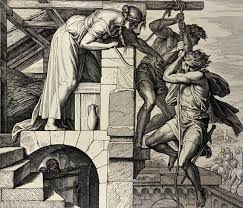
I have also seen this example of wisdom under the sun, and it seemed great to me. There was a little city with few men in it, and a great king came against it and besieged it, building great siegeworks against it. But there was found in it a poor, wise man, and he by his wisdom delivered the city. Yet no one remembered that poor man. But I say that wisdom is better than might, though the poor man’s wisdom is despised and his words are not heard.

The words of the wise heard in quiet are better than the shouting of a ruler among fools. Wisdom is better than weapons of war, but one sinner destroys much good (Eccl 9:13-17).

Observations: We observe several fundamental images in Solomon’s words:

  • a vulnerable city
  • a powerful and devouring king
  • a wise man whose wisdom is used for deliverance
  • the abandonment of wisdom
  • the persistence of fools depsite the offer of wisdom

It reminded me of “The Fool On the Hill,” one of my favorites ditties from the Beatles.

Day after day, alone on a hill
The man with the foolish grin is keeping perfectly still
But nobody wants to know him, they can see that he’s just a fool

And he never gives an answer


But the fool on the hill sees the sun going down
And the eyes in his head see the world spinning around


Well on the way, head in a cloud
The man of a thousand voices talking perfectly loud
But nobody ever hears him or the sound he appears to make
And he never seems to notice


But the fool on the hill sees the sun going down

And the eyes in his head see the world spinning ’round
And nobody seems to like him, they can tell what he wants to do
And he never shows his feelings


But the fool on the hill sees the sun going down
And the eyes in his head see the world spinning ’round (oh oh oh)
‘Round and ’round and ’round and ’round and ’round


And he never listens to them, he knows that they’re the fools
They don’t like him
The fool on the hill sees the sun going down
And the eyes in his head see the world spinning ’round

I went back and watched the video of the Fab Four and Paul singing this beautiful piano-laden melody with Paul grinning his impish little grin into the camera’s eye. So clever, wise even–how much wisdom is sown in a ditty for all who will hear.

Scripture’s Connective Tissue: I went back and again read Solomon’s words in the verses above from Ecclesiastes 9. The lessons were as clear as those from McCartney in “The Fool On the Hill,” namely, that wisdom is good but it is often suppressed, even when God has sent his truth-tellers into our midst.

The text says in verse 16 that “the poor man’s wisdom is despised and his words are not heard.” He’s treated like the subject in “The Fool on the Hill.”

In Matthew 12:42, Jesus said, “The queen of the South will rise up at the judgment with this generation and condemn it, for she came from the ends of the earth to hear the wisdom of Solomon, and behold, something greater than Solomon is here.”

The wisdom, he said, was God’s wisdom. Jesus was delivering God’s wisdom. It was superior to Solomon’s wisdom or any man’s wisdom. Why? Because it was God’s wisdom, God’s revelation.

And if that’s not clear enough, it’s emphasized again in the letters. Paul writes, “And because of him[Christ] you are in Christ Jesus, who became to us wisdom from God, righteousness and sanctification and redemption,” (1 Cor 1:30).

Takeaway: The fool on the hill in the Beatles tune saw the lay of the land, but few people listened. Solomon taught the same thing in Ecclesiastes, namely, that the wise man is occasionally consulted but, more often than not, discarded, so that the real agenda can continue, an agenda shot through with folly. And Christ and Paul taught the same thing, too, that Christ is the wisdom of God, and that if we are wise, we are wise only insofar as we follow him.

Chaplain Daily Touchpoint #344: Destroying Arguments & Strongholds

Bottom line up front: “The end depends upon the beginning.” Not necessarily.

Introduction: One of my all-time favorite movies is The Emperor’s Club. Why? Well, it strikes a lot of my bells. Mr. Hundert is a classics teacher. He’s steeped in Plato, Aristotle, Cicero, Sophocles, Homer, Shakespeare, Dickens, and more. He loves teaching. He loves the best ideas of history. He loves precise language. He’s the stereotype of an old-school English/classics teacher.

And Mr. Hundert teaches his heart out–to young men, young men filled with ambition. A question pervading the film is, How will the students use and employ that ambition? Will they do it with honor? Will they turn out to be good men? Or will they turn out to be evil men? Will they grow to live lives of integrity? Will Mr. Hundert’s labors bear any fruit via the lives of his students as they go on to make a mark with their lives?

Kevin Kline is the actor who portrays Mr. Hundert. And one of the lines I remember as if etched upon my skeleton is this: “The end depends upon the beginning.”

Scripture’s Connecting Tissue: In Paul’s second letter to the saints of Corinth, he writes, “For the weapons of our warfare are not of the flesh but have divine power to destroy strongholds. We destroy arguments and every lofty opinion raised against the knowledge of God, and take every thought captive to obey Christ” (2 Cor 10:4-5).

That’s strong language, is it not? Warfare, divine power, destroying strongholds, destroying arguments, and taking thoughts captive. That’s about as militaristic as you can get linguistically.

Teaching: But here’s the great irony. In The Emperor’s Club, the issue is integrity and honor, and how our beginning shapes and/or determines our ends. Does the beginning determine our end? Thanks to God, no; not necessarily. Paul’s beginning and early life were consumed by Judaism, law observance, spiritual pride, legalism, and putting Christians to death. But God. Christ gripped him and redeemed him. And Paul was utterly changed, redeemed, ransomed, and equipped to be the Christian church’s greatest evangelist, discipler, missionary, church planter, pastor, and theologian. Saul of Tarsus became the apostle Paul. His beginning did not determine his end. His end did not depend upon his beginning. Why? Because of God’s grace towards him.

Encouragement: I think I am going to see if I can stream The Emperor’s Club tonight in order to watch it again, to be reminded that sometimes folks turn out worse than we’d hoped, sometimes better than we’d believed, and sometimes, thanks to God, they turn out as vessels of redemption. Because of the gospel, we don’t have to be determined by our beginnings. We can overcome them via the gospel. And the ends are so much greater. We see that God uses even our crooked timber to build straight lines. And we can go back and thank the Mr. Hunderts of the world for sowing seeds of wisdom even when we were unwilling or stubborn recipients.

Chaplain Daily Touchpoint #343

Introduction: Sunday, I had a long drive to speak at a church in my state. The location was near where I grew up. It’s in the farm belt section of our state, where there are more rows of peanut fields than there are apartment complexes and subdivisions. After I exited from I-75 south to take secondary state highways to the town, that 1.5 hours on those country roads fired my heart’s language. In the early morning, the sunlight fell like a benediction upon the fields—some fallow, some with cotton, some with tobacco, some with sorghum, some with corn that had been harvested. Deer were abundant, as were the turkeys. Tall pine plantations lined the highways at several stretches. At other places, hardwood bottoms held that mystery and beauty that pulls my soul’s strings like few other visions. I don’t miss the gnats, but I do miss the rural sights and sounds and scents and simplicity. Down there, the hustle of Atlanta’s aggressive drivers seems a world away, and the only gunshots one hears are one’s own because you’re an outdoorsman, or because your neighbors harvested venison that afternoon.

I preached the homily at the church, enjoyed fellowship with the saints, spoke to elders and deacons and saints of shared memories of fun times in the region. It was so good to be back–to feel again that pace of country life and country ways with country people. My spiritual cup overflowed.

As I packed up my POV to make the 4-hour drive back to north GA, I had lots of windshield time to think and reminisce. The section from 2 Corinthians 9 came to my mind: “The point is this: whoever sows sparingly will also reap sparingly, and whoever sows bountifully will also reap bountifully” (2 Cor 9:6). Now that I’m the older guy, I look back on the soil in which I was reared. Little country churches like that played a huge part in shaping my identity, my love of rural things, rural ways. And in this season of Thanksgiving, scores of faces washed across my imagination, of men and women who sowed seeds into my life. And Paul’s words were so viscerally true. Many, many seemingly small people were hugely impactful people. How? By sowing bountifully into a shy, introverted little boy in south GA decades ago, a boy who loved the land, the country ways, and the way the sun’s rays throw golden lances over alfalfa fields.

Encouragement: We never know the impact we might have upon people—sometimes years and years from now. That is, the ripples may not be visible for sometimes great spans of time, but they’ll eventually show. May they be ripples of blessing and gratitude for the seeds precious people sowed in loving ways, but ways that came forth as benediction.

Chaplain Daily Touchpoint #342: “That’s How the Light Gets In”

Bottom line up front: “That’s How the Light Gets In”

Introduction: One of my favorite songwriters is Leonard Cohen. He died in 2016, but his songs remain. “Hallelujah,” e.g., has been covered by countless performers. In Cohen’s song “Anthem” he has these wonderful lines:

Ring the bells that still can ring
Forget your perfect offering
There is a crack, a crack in everything
That’s how the light gets in

You can add up the parts
But you won’t have the sum
You can strike up the march
There is no drum
Every heart, every heart
To love will come
But like a refugee

Ring the bells that still can ring
Forget your perfect offering
There is a crack, a crack in everything
That’s how the light gets in

“That’s how the light gets in” is the refrain. Cohen was steeped in Scripture. I have a volume on my shelves at home of Cohen’s poetry. He had the mind of a theologian, the spirit of a poet, and an imagination set aflame by the muses.

How does the light get through? Well, it’s rooted in the fact that our world is spiritually broken. There are chinks in the armor. There’s a crack in everything, you see. Because this is a fallen world, we groan. “For we know that the whole creation has been groaning together in the pains of childbirth until now. And not only the creation, but we ourselves, who have the firstfruits of the Spirit, groan inwardly as we wait eagerly for adoption as sons, the redemption of our bodies” (Rom 8:22-23).

That’s how the light gets in, you see. Because we’re all spiritually broken, we need to be made whole. And how does that happen? Is it by bootstrap theology where we, Stuart Smalley-like, self-talk spiritual bromides in the mirror, muttering, “I’m good enough. I’m smart enough. And doggone it, people like me”? Um, no. Al Franken was hilarious as that character from SNL but that’s abysmal theology. Life’s too serious a matter for sweater vest sentimentality.

What Scripture Says: So, back to the question: How does the light get in? You remember the ending of Matthew, don’t you, when Jesus was crucified between two robbers?

And over his [Jesus’] head they put the charge against him, which read, “This is Jesus, the King of the Jews.” Then two robbers were crucified with him, one on the right and one on the left. And those who passed by derided him, wagging their heads and saying, “You who would destroy the temple and rebuild it in three days, save yourself! If you are the Son of God, come down from the cross” (Mt 27:37-40).

Just when all seemed darkest, when the good appeared vanquished by Satan and the powers of hell, when darkness descended, guess what was happening? The light was breaking through, you see. How do we know? Well, the bodily resurrection occurred three days later, of course. But even before then, we have this marvelous verse 54 in Matthew 27:

When the centurion and those who were with him, keeping watch over Jesus, saw the earthquake and what took place, they were filled with awe and sad, “Truly this was the Son of God!” (Mt 27:54). See what was happening? A hardened soldier, a Roman military man accustomed to witnessing crucifixions, was converted. Why? The light was breaking through, you see. That’s how the light gets in—one soul at a time.

Encouragement: Cohen’s song ends this way:

Ring the bells that still can ring
Forget your perfect offering
There is a crack, a crack in everything
That’s how the light gets in

Are you battling the darkness? That may be a good sign. Know why? Because that’s when the light gets in.

Chaplain Daily Touchpoint #341: On Gratitude

Bottom line up front: Gratitude Reveals Our Theology


This week, the U.S. Senate voted on Monday 10 November 2025 to end the shutdown. The U.S. House voted on Wednesday 12 November to do the same, and the POTUS signed the bill to end the government shutdown and fund the government through 30 January 2026. In the interim, the hope is that a deal will be forthcoming that sustains the funding of the U.S. government and its employees. 

I don’t know when we federal employees will see our first check in over a month-and-a half, but I am grateful that at least some steps have been taken to get things going again. When one has skin in the game, it’s less easy to be glib or sanctimonious. Things get “real” quickly when the money tap gets turned off. 


Segue: This whole shutdown thing and now the glimmer of hope that the government may reopen soon, and that we federal employees will be paid again, etc. got me thinking a great deal about gratitude vs. ingratitude. Being thankful vs. being ungrateful. Thanksgiving vs. lack of thanksgiving, if you will. 


There’s a passage in Luke’s gospel where the Lord Jesus heals ten lepers after they cried out to him in petition: “Jesus, Master, have mercy on us” (Lk 17:13).

Jesus healed all ten. All ten. Let that sink in. Do we in 21st century America know what it must’ve been like to be healed of leprosy in 1st century Israel? I don’t think most of us do. Why? Well, that was so then, as the kids might say. But Jesus healed all ten. 


And this is where I want to focus. Guess how many of the ten healed showed gratitude? One. “Then one of them, when he saw that he was healed, turned back, praising God with a loud voice; and he fell on his face at Jesus’ feet, giving him thanks” (Lk 17:15-16). One out of ten. That should break our hearts. 


Encouragement: Our gratitude (or lack of it) reveals our theology, doesn’t it? One of those former leprous men went back to thank the Lord. To do what? To render thanks (Lk 17:16). In my little slice of life, there’s a glimmer of hope I’ll be paid again, along with thousands of my peers who likewise serve our nation. And I’m rendering thanks even now. Why? Because I know the God who is sovereign over this government and all governments, the One who knows the end from the beginning. And I am grateful. 

Chaplain Daily Touchpoint #340: “Turn! Turn! Turn!”

Bottom line up front: A Time for Everything

This Cultural Moment: Like you, perhaps, I am watching the events in Minneapolis, New York City, and other flashpoint cities. Will the slide into tribalism continue? Scores of thinkers are labeling this era as a ‘cold civil war.’ Regardless of one’s worldview, if that diagnosis is accurate, it spells danger. Battlelines are being formed. Some folks are cheering the murder of Charlie Kirk. Some folks don’t want free speech; they actually demand silence and submission. They want to gag the whole foundational freedom of America’s cornerstone: liberty and freedom of expression.

These are, if one is honest, perilous times. Will we be a nation of free people or will we succumb to the mobs and tribalism and a cold civil war where the respectful exchange of ideas is smashed and replaced by ruthless power? I cringe when I hear the levels to which debate has sunk. It seems that the free exchange of profound ideas has been replaced by ad hominem attacks and sound bites. Where’s wisdom?

What Scripture Says: My longstanding favorite book of sacred Scripture is Ecclesiastes. Why? Well, it’s part of the Wisdom Literature in the canon. Surely most people have some familiarity with the lines below:

For everything there is a season, and a time for every matter under heaven:

a time to be born, and a time to die;

a time to plant, and a time to pluck up what is planted;

a time to kill, a time to heal;

a time to break down, and a time to build up;

a time to weep, and a time to laugh;

a time to mourn, and a time to dance;

a time to cast away stones, and a time to gather stones together;

a time to embrace, and a time to refrain from embracing;

a time to seek, a time to lose;

a time to keep, and a time to go to cast away;

a time to tear, and a time to sew;

a time to keep silence, and a time to speak;

a time to love, and a time to hate;

a time for war, and a time for peace (Eccl 3:1-8).

Encouragement/takeaway: Even as I type the familiar words, I hear the song “Turn! Turn! Turn!” by The Byrds running in my mind’s ear. When we survey our day, it’s vital to know the times and what we ought to do (1 Chr 12:32), is it not? The whole idea of Ecclesiastes is that we are to fear the true and living God and live by his Word. That’s how Solomon ends the 12 chapters: “The end of the matter; all has been heard. Fear God and keep his commandments, for this is the whole duty of man. For God will bring every deed into judgment, with every secret thing, whether good or evil” (Eccl 12:13-14).

A “time for every matter under heaven,” the refrain goes in this Solomonic wisdom. When we study the life of Solomon, he did not end well. He very often succumbed to licentiousness and license. He went, as I’ve often preached, from hero to zero. But he left us warnings about what happens when an individual or a nation abandons godliness; it suppresses truth and descends into paganism and moral melee is the result. Scripture attests that “there is nothing new under the sun” (Eccl 1:9b).

My prayer is that our nation would, against all odds, learn from history, and not go from hero to zero. But that hinges–whether folks wish to admit it or not–upon how we respond to God’s revelation. If you want to know what it looks like when a people reject God, look no farther than what’s happening in each day’s headlines.

Chaplain Daily Touchpoint #339: Thoughts Upon Perseverance

Bottom line up front: Persevere

Context: Like thousands of other federal workers, I have gone without pay for over a month. It’s been less than a joyful experience. One’s limitations become more acute. The whole situation stings. I have been through days where I battled bitterness towards politicians. After all, they’re still being paid … to do what exactly? To talk, to point fingers, to blame shift. It’s an ugly business, politics. I don’t want any part of it except to vote for those who (ostensibly) reflect my values. Sometimes that’s a pot of pretty slim pickings. What to do when you are largely powerless to turn the tide? How ought we to think and behave?

Connection: In Scripture, God is not silent. Near the end of the list of imperatives the apostle Paul pens at the end of his letter to the Ephesians, he writes that God’s people are to be “Praying at all times in the Spirit, with all prayer and supplication. To that end, keep alert with all perseverance, making supplication for all the saints” (Eph 6:18). Persevere. In other words, press on. Don’t quit. Persist. Fight on in faith.

The half-brother of the Lord Jesus said the same thing in his way: “Blessed is the man who remains steadfast under trial, for when he has stood the test he will receive the crown of life, which God has promised to those who love him” (Jas 1:12).

Context is crucial, always. In both cases, the issue being addressed is about perseverance, about continuing the mission, about pressing on amidst trials.

Encouragement: I will not speak for others, but as for me, I am learning at least three things through this time of government shutdown:

  • My finitude
  • God’s goodness and that goodness shown through other people
  • The need for perseverance

Takeaway: This morning when I checked the news online, there was a glimmer of hope the shutdown may end, at least for a few weeks. I hope so, not just for my sake but also for the thousands of others who likewise have been working for nothing. Why? Well, maybe it’s not for nothing, after all. It could be that God is doing exactly what Scripture says, namely, that “suffering produces endurance, and endurance produces character, and character produces hope, and hope does not put us to shame, because God’s love has been poured into our hearts through the Holy Spirit who has been given to us” (Rom 5:3-5). In sum, persevere.

Chaplain Daily Touchpoint #338: Attention to Detail

Bottom line up front: “The difference between something good and something great is attention to detail.”

Teaching: In the Sermon on the Mount (Mt 5-7), Jesus taught many principles about what authenticity looks like. He didn’t just brief the slides; He lived the slides, if you will. Jesus said to his hearers: “Do not think that I have come to abolish the Law or the Prophets; I have not come to abolish them but to fulfill them. For truly, I say to you, until heaven and earth pass away, not an iota, not a dot, will pass from the Law until all is accomplished” (Mt 5:17-18).

In v. 18 above, we see that attention to detail is a principle of excellence. As we soldiers engage in MDMP, as we scrub slides from our respective lanes, etc. this principle of attention to detail is crucial. Attention to detail. Why’s it crucial? Because war is inevitable in this fallen world. Conflict is just part of the way things are. And as soldiers, we’re the ones who’ve sworn to engage our enemies and emerge victorious. But that victory won’t come if we’re not meticulous in our attention to detail. In biblical language, that’s one of the principles Christ addressed in the Sermon on the Mount about who He was/is. Not an iota, not a dot was neglected. Iota is the ninth letter in the Greek alphabet and has the long “ee” sound. And that’s why Jesus used that metaphor. It’s come down into our language and parlance to mean “a very small amount/point of detail.” In other words, details matter. Profoundly.

Encouragement: The founder of Apple, Steve Jobs, remarked that “Details matter. It’s worth waiting to get it right.” But in our lane, we don’t get the opportunity to wait. We have to execute and with excellence. That’s why attention to detail in our daily regimen is vital. Very often the difference between success and failure hinges on the legwork we do in countless, consistent, repetitive, unsexy ways. But it’s that meticulous grind for excellence via attention to detail that positions us to lead the formation with excellence.