As we arose this morning, and I let the dog out to do her thing, and CJ and Goob showered, I came downstairs to my library to study still more before opening the Scriptures before the saints later this morning, and the power of 1 Peter 1:13-21 struck me again.
Peter, this man who experienced so many highs and lows in Christian ministry, loved the saints. He wrote to them about pressing on, about preparing their minds for action, about looking forward to the revelation of Jesus Christ.
And long before I stand before others, God sees. He sees it all. He knows us through and through. And He has given us His Scriptures so that we do not lose heart.
We look backward and learn from those whose shoulders we stand upon and we look forward to the coming King of kings whose righteousness we proclaim.
This morning I awoke after a good night’s sleep. I rested well. If you, too, are one who struggles to experience quality rest, a good night’s sleep is a blessing.
I was excited when I woke up, too. Excited in a good way. My wife and I met our kids in town for an adjustment by our famiy chiropractor. After three of us had our adjustments, we patronized Cracker Barrel for a wonderful meal. We had a wonderful waitress, too. (Taylor, you were wonderful.)
Our son saw one of his buddies at Cracker Barrel, and they did their cool guy handshakes that I fail to understand.
I rocked my granddaughter in her carrier, while she slept after having been fed by her mom. Lennon has that baby smell I wish would never depart. I cannot help but kiss her. My cup was full.
We came home afterwards for a bit. Three bucks were on the hill opposite the driveway. They watched us as I parked the car and we came in for a bit. I picked up my Dickens novel and CJ responded to texts from friends about church tomorrow.
Ladybug is now settled in beside me while I dive back into A Tale of Two Cities. Goob is down for a nap. And in an hour we leave to go through a maze game with friends down in the city.
As I look out from my home library window, the trees are tall and still. It is about 50 degrees outside–perfect weather, in my view. The deer are browsing on the hills and a male cardinal is at my birdfeeder.
Looking forward to an evening with a group of friends as we figure our way out of the mazes. My wife loves puzzles, so I’m sure we’ll succeed.
We have touched base with the saints for tomorrow. We will gather, pray, fellowship, eat, sing, and we’ll open the Word to 1 Peter to see what God has provided there for us.
In a word, grateful. I’m grateful to the Lord for what His providential, kind, sovereign hand is building. I am, again, grateful.
Introduction: This Sunday as my family and I gather with the saints, I am teaching from 1 Peter 1. “Looking Back, Looking Forward” is the title.
We are to look back in order to learn from the past. But we are also to look forward–in the sure and certain knowledge that all of history is known to God, and if we are God’s people and are in Christ, we are to be a people of hope.
Text:
10 Concerning this salvation, the prophets who prophesied about the grace that was to be yours searched and inquired carefully, 11 inquiring what person or time the Spirit of Christ in them was indicating when he predicted the sufferings of Christ and the subsequent glories. 12 It was revealed to them that they were serving not themselves but you, in the things that have now been announced to you through those who preached the good news to you by the Holy Spirit sent from heaven, things into which angels long to look. (1 Peter 1:10-12)
Teaching: Peter writes that the prophets of before were “serving not themselves but you” (1 Pt 1:12). That is crucial for us to understand. Peter is saying that those who labored in the faith were not in that labor for their fame, fortune, or aggrandizement. They served the Lord by serving the people.
In other words, we owe a lot to those who labor well. We stand upon their shoulders. They sacrificed on our behalf, even though they may not have known us personally. But because they loved the Lord and the truth, they served faithfully.
Encouragement: Folks, we need to honor those to whom honor is due. Let us look around and see who’s got theological blisters due to hard work. Let us look to those who serve others rather than self. Let us encourage one another in the Lord and in the truth. Because God sees. And we will give an account.
Bottom line up front: Job was a master of biblical theology because he had a God-centered worldview.
Why do I say that? Just listen to these words from the man whom God first crushed, only to exalt him later:
10 But he knows the way that I take; when he has tried me, I shall come out as gold. 11My foot has held fast to his steps; I have kept his way and have not turned aside. 12 I have not departed from the commandment of his lips; I have treasured the words of his mouth more than my portion of food. 13But he is unchangeable,and who can turn him back? What he desires, that he does. 14 For he will complete what he appoints for me, and many such things are in his mind. 15Therefore I am terrified at his presence; when I consider, I am in dread of him. 16God has made my heart faint; the Almighty has terrified me; 17yet I am not silenced because of the darkness, nor because thick darkness covers my face. (Job 23:10-17)
Teaching: Job endured staggering amounts of suffering–the loss of his own health, his friends, his children, his wealth, his reputation, and more. But what Job did not lose was God. God was there–through it all. And God was going to–and indeed did–reward Job and also rebuke those who turned against Job.
In the verses from Job 23 quoted above, will you notice the following:
Job repeatedly confessed the omniscience of God.
Job, though a sinner, labored to be a faithful man of God.
Job repeatedly confessed the sovereignty of God.
Job embodied a biblical, reverent posture towards God.
Encouragement: God sees, dear ones. He truly does. He sees EVERYTHING. Nothing escapes God’s sight. For those in Christ, that should encourage us. For those still under God’s wrath, that should lead them to repentance over their sin and a change of heart/mind such that they flee to the gospel of Christ. Let us learn from Job. Don’t be put off by his story. It is written, like all Scripture, for our instruction.
Types: One can divide the world into at least two categories of people: 1) those characterized by wisdom and 2) those characterized by folly.
When I was a boy, I was very close to my grandparents. I have always gravitated to people of depth. And they were certainly that–people of depth. They may not have had lots of letters after their names but, believe me, they were wise. The aphorisms that issued from their lips were among the most shaping influences upon my life. Now that I’m a grandpa, I aim to pass that wisdom on to my own grandchildren. Our kids are grown now, so they are making their own ways in life, but my bride and I hope and trust that the Lord will grip them in His sovereignty and that they, too, will lead lives of inculcated wisdom.
Connection: In the wisdom literature of Scripture, Solomon penned these four masterpiece lines:
A faithful witness does not lie, but a false witness breathes out lies. A scoffer seeks wisdom in vain, but knowledge is easy for a man of understanding. Leave the presence of a fool, for there you do not meet words of knowledge. The wisdom of the prudent is to discern his way, but the folly of fools is deceiving. (Pr 14:5-8)
Teaching: I know that some folks struggle with poetry. So here is the prosaic expression of Solomon’s wisdom:
Faithfulness is wed inextricably to honesty
Mockers do not want wisdom; they ‘scoff’ at it
The wise person will flee that folly
Discernment is a characteristic of the wise man/woman
Encouragement: If I could have any people who have died returned to my life for their wisdom and love, it would be my grandparents and my father-in-law. Why? Because they were wise, discerning people. They did not suffer fools. May we be blessed by surrounding ourselves with wise, discerning, godly influences.
Context: Job, called a blameless and upright man in Scripture, had three friends. Sometimes they were wise friends. Sometimes they were lousy, foolish friends. But even when they were lousy friends, or at least lousy theologians, they at times spoke wisdom.
Here’s one example of wisdom from one of Job’s friends:
Let him not trust in emptiness, deceiving himself, for emptiness will be his payment. (Job 15:31)
That’s a zinger!
What Eliphaz, Job’s friend, is telling Job is that the wise person is not to trust in his own wisdom and righteousness/self-righteousness. The wise person is to look to God for wisdom and righteousness.
Questions: Were Job’s friends often rotten counselors? Yes and amen. Were they sometimes loquacious when they should have remained silent? Yes and amen. Were they oftentimes too big for their britches, as my beloved departed grandmother was wont to say? Yes and amen.
But on occasion, they were spot on, bull’s-eye. That’s what that line from Eliphaz is. It is bull’s-eye, 100% wisdom:
Let him not trust in emptiness, deceiving himself, for emptiness will be his payment. (Job 15:31)
Encouragement: We’re to seek the face of the Lord in the Scriptures for wisdom and righteousness. It’s God’s righteousness and wisdom we need. And those are two of the treasures found only in the gospel.
Over recent days, we have received several winds in our sails.
One was a sweet time with our daughter and granddaughter. Mommyhood is new to our daughter, and she’s navigating it like a champ. And our granddaughter–in my completely unbiased and objective opinion, of course, is perfect, a little slice of heaven. I was able to cuddle her some more yesterday afternoon and have her fall asleep in my arms. I’ve heard for a long time now that grandparenthood is a unique blessing, and I could not agree more. Hopefully, many more sweet times are on tap.
Another series of events is unfolding, too, concerning our church family. Things are falling into place, and the Lord is moving, and people are tender, teachable, and ready to come alongside one another in service to Christ and His church. Stay tuned for details …
Lastly, this morning on the track, I was again at it during my favorite time of each day. That’s those moments just before the sun displays its majesty, during the dawn, and the moments afterwards. I never tire of that time of the day, regardless of my location.
Below are a few pictures from some of these sweet days.
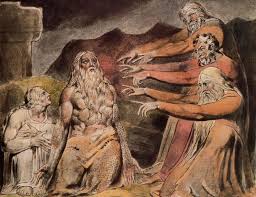
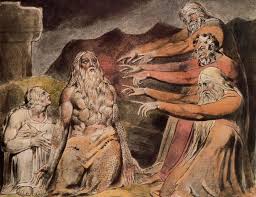
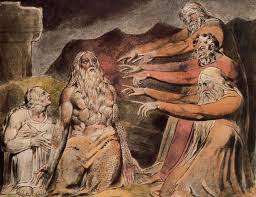
Now when Job’s three friends heard of all this evil that had come upon him, they came each from his own place, Eliphaz the Temanite, Bildad the Shuhite, and Zophar the Naamathite. They made an appointment together to come to show him sympathy and comfort him. And when they saw him from a distance, they did not recognize him. And they raised their voices and wept, and they tore their robes and sprinkled dust on their heads toward heaven. And they sat with him on the ground seven days and seven nights, and no one spoke a word to him, for they saw that his suffering was very great. (Job 2:11-13)
Context, Context, Context: Always keep the big picture in mind. The big picture in Job is the question of the sovereignty of God, the so-called problem of evil, and what true faith looks like.
Job’s wife, bitter and shortsighted, told Job, “Curse God and die” (Job 2:9b). How’s that for wifely counsel? Um, no thanks, ma’am. Impetuousness is unwise. Cursing God is foolish. Better to learn from God.
Sinners can deny God, curse God, and rebel against God, and more, but you cannot outrun God. Just ask Jonah. Job’s wife was a fool.
Friendship: But for a little while, Job’s three buddies were wise. Here’s what they did: they came alongside their friend. They didn’t sermonize (not yet, anyway). They didn’t lecture. They didn’t pretend to have it all figured out. They just were present with Job.
Encouragement: Have you ever been through a period in your life when what you needed most was just to know you weren’t alone, that you had a network of friends that came alongside you, and said (or just demonstrated without words) that they were there with you? I certainly have. And the value of those people is beyond words. Why? Because they just came alongside you.
As a little illustration just from my lane as a soldier, I do quite a bit of hiking and walking and jogging. I don’t like to run, but I have to do it. There are times when my lungs and knees scream at me: “Stop!” But you know what? It’s a lot easier to keep going when a buddy beside you says, “Come on; we’ve got this. Just one more mile.” And you know what? That mile is doable. You make it to the end and think, “Yep, we did it. Together.”
Introduction: It is among the oldest of narratives. It is the narrative of Job in Scripture. It deals with some of the toughest and most existential questions we ask as people: 1) Why such evil?; 2) How do I trust in the goodness of God amidst such formidable suffering?; and 3) What does wise faith in the true and living God look like?
Because I love the wisdom in the Book of Job, I am having to battle for brevity here. This is, after all, just a blog. But here’s the bottom line up front regarding how the Book of Job begins. Job was truly a good man. He was “blameless and upright, one who feared God and turned away from evil” (1:1). Right there in the very first verse, so much theology and wisdom is packed.
Why do I say that? Because God is showing you the themes of the book from the very beginning. The problem of being ‘good’ in a world that is plagued by sin and suffering, but also–and this is crucial–that Job “feared God.” Why’s that so important? Because the fear of the Lord is the beginning of wisdom (Pr 9:10). Most people fear other people, but Job was wise. His fear was of the Lord. That is a point not to be minimized.
Fear of man leads to people-pleasing and manipulation and other sins. But Job’s fear was of God. He had an accurate theology. Therefore, his anthropology was solid.
And in the very first chapter of Job, God summons Satan and asks him, “Have you considered my servant Job, that there is none like him on the earth, a blameless and upright man, who fears God and turns away from evil?” (1:8).
Many folks have a misreading of Job. They think Satan was the one who initiated Job’s trials. Not true; God did. God set it all in motion. He not only allowed it, but He ordained it. God is the sovereign, not Satan. (Don’t miss that.)
And in verses 13-19 of Job 1, Job’s life was obliterated. His sons, daughters, sheep, servants, and more were killed. And his property was destroyed.
We think we have bad days? Just read the narrative of Job!
Job’s Response:
Then Job arose and tore his robe and shaved his head and fell on the ground and worshiped. And he said, “Naked I came from my mother’s womb, and naked shall I return. The Lord gave, and the Lord has taken away; blessed be the name of the Lord.”
In all this Job did not sin or charge God with wrong. (Job 1:20-22)
Encouragement/takeaway: The next 41 chapters of Job are going to explore the themes nested in chapter one. It’s all there–goodness, suffering, theodicy, the righteousness of God, the craftiness of Satan, heartbreak, tragedy, loss, redemption, restoration, agony, ecstasy, and more. For now, just think on this: “Job did not sin or charge God with wrong” (1:22). Job trusted the Lord to be the Lord; Job was going to learn that God was not and is not afraid of honest questions. And God is good. Job ends on a high note–with benediction and praise. For now, though, just follow Job’s unfolding tests, and connect them to yours, and lean into–not away from–the God who rules all of history. Every square inch of it. God knows. God sees. And God is good.
Introduction: Surely many know the poem from the Old Testament:
The Lord is my shepherd; I shall not want. He makes me lie down in green pastures. He leads me beside still waters. He restores my soul. He leads me in paths of righteousness for his name’s sake.
Even though I walk through the valley of the shadow of death, I will fear no evil, for you are with me; your rod and your staff, they comfort me.
You prepare a table before me in the presence of my enemies; you anoint my head with oil; my cup overflows.
Surely goodness and mercy shall follow me all the days of my life, and I shall dwell in the house of the Lord forever. (Psalm 23)
Today’s Focus: It is one of the most cherished of poems from sacred Scripture. And for good reason. But today’s focus is upon the phrase my cup overflows.
That imagery . . . wow! A cup filled beyond what it can hold. Why’s that so moving? Because it’s not about the cup. It’s about the One who fills it.
I say again: it’s not about the cup. It’s about the One who fills it.
Teaching: I do not presume to speak for others when I write. I speak my thoughts, and I try to align my thoughts under the Author of all that’s true and beautiful and good.
Have you ever doubted? Have you ever doubted God’s providence? Have you ever thought (even if you didn’t say it to others), that God didn’t see your suffering?
Rest assured, dear saints: God sees. God knows. And truth will prevail.
Encouragement: Trust the Lord. His faithfulness is unbeaten. He is undefeated. You can think you murder the truth; you can dupe sheeple into thinking you’ve got them fooled, but God’s truth will out; it will prevail.
May we be a ransomed people of transparency, light, and truth. Why? Because God will fill our meager cups to overflowing.









 MIND & MATTERS