A Day in the Life

The weather was ideal, so I rode my motorcycle in to work. I had left the house quite early, so I decided to stop off at a Waffle House for breakfast. When I pulled in and turned off the bike and removed my helmet, I saw two women in front of the Waffle House on the concrete sidewalk. Both women wore ragged, filthy garments. Their hair was oily. They appeared to be far apart enough in age they could have been a mother and daughter. Their clothes were stained black and greasy. The older woman sat with her back against the plexiglass of the Waffle House. The younger woman paced back and forth in front of the Waffle House, pulling strong drags on a burning cigarette in her right hand. Her eyes darted this way and that, back and forth, as if she were a caged animal. Her fingernails were bitten down to the quick and her cuticles were soiled and black. She continued to pace back and forth in front of the Waffle House. You could feel the nervousness. I walked past them and into the Waffle House. A young bleach blonde inside said, “Sorry, sir. Can you give us fifteen minutes? He is cleaning the grill,” pointing to the cook behind her who was shrouded in a cloud of steam rising from the griddle. “Sure,” I said. I got back on my bike and went and fueled up at the gas station across the road. 

     When I returned, the two women were still there, but they appeared to be angry with each other. They were both mumbling curses to themselves but the curses were loud enough that even I could hear them when I turned off my motorcycle. I went in again. This time, the cook said, “Sir, I appreciate your patience. Thanks for coming back.” “Glad to,” I said. He was a nice man. And then an older lady appeared and asked the words I’ve heard countless times at Waffle Houses, “Know what you’re having, hon?” I love that. “Yes, ma’am. I do,” I said and gave my order. 

     Over the next few moments, the food came and I began eating. Then, Thwack!!! The younger woman outside the Waffle House kicked the window. The cook looked up from his griddle. The bleach blonde said to the older woman who’d been my waitress, “Call the Po Po!” I looked out through the greasy window over my shoulder. The woman’s eyes were ablaze and crazy, Charles Manson eyes. 

     I finished. I cleaned up my table, laid the utensils on the plate in my habitual way, the fork on top of the spoon, and the knife between the second and third tines of the fork, and walked to the register to pay, trying not to appear nervous or agitated. The older waitress said, “The police won’t come for this stuff anymore. We’re stuck with’em.” 

     I finished paying, tipped the older waitress generously. She looked at me and thanked me. She was visibly nervous, visibly unhappy, visibly stuck. This was her world, day in and day out. I did not know what to say. I uttered some hackneyed phrase, I think, like, “I hope you have a good day,” and left. 

     I put on my helmet, started the bike, rode on to work. But I felt I had failed somehow—failed to alleviate suffering, failed to speak appropriately, failed to understand, failed to see how we have come to a place where law enforcement cannot/will not respond when desperate women camp in front of a Waffle House. One woman had kicked the glass nearly in, and yet there were employees–working, doing their best, trying to support their families, doing their best to wear smiles, greet customers, wipe down tables, and scrub the griddle.

I had failed to do something, anything, redemptive. I felt I had failed as part of a larger failure wherein a culture’s foundation has been destroyed, and where the good guys who once showed up are now handcuffed, and each man is on his own. Lord, be merciful. We have lost our way.

The Work of His Fingers

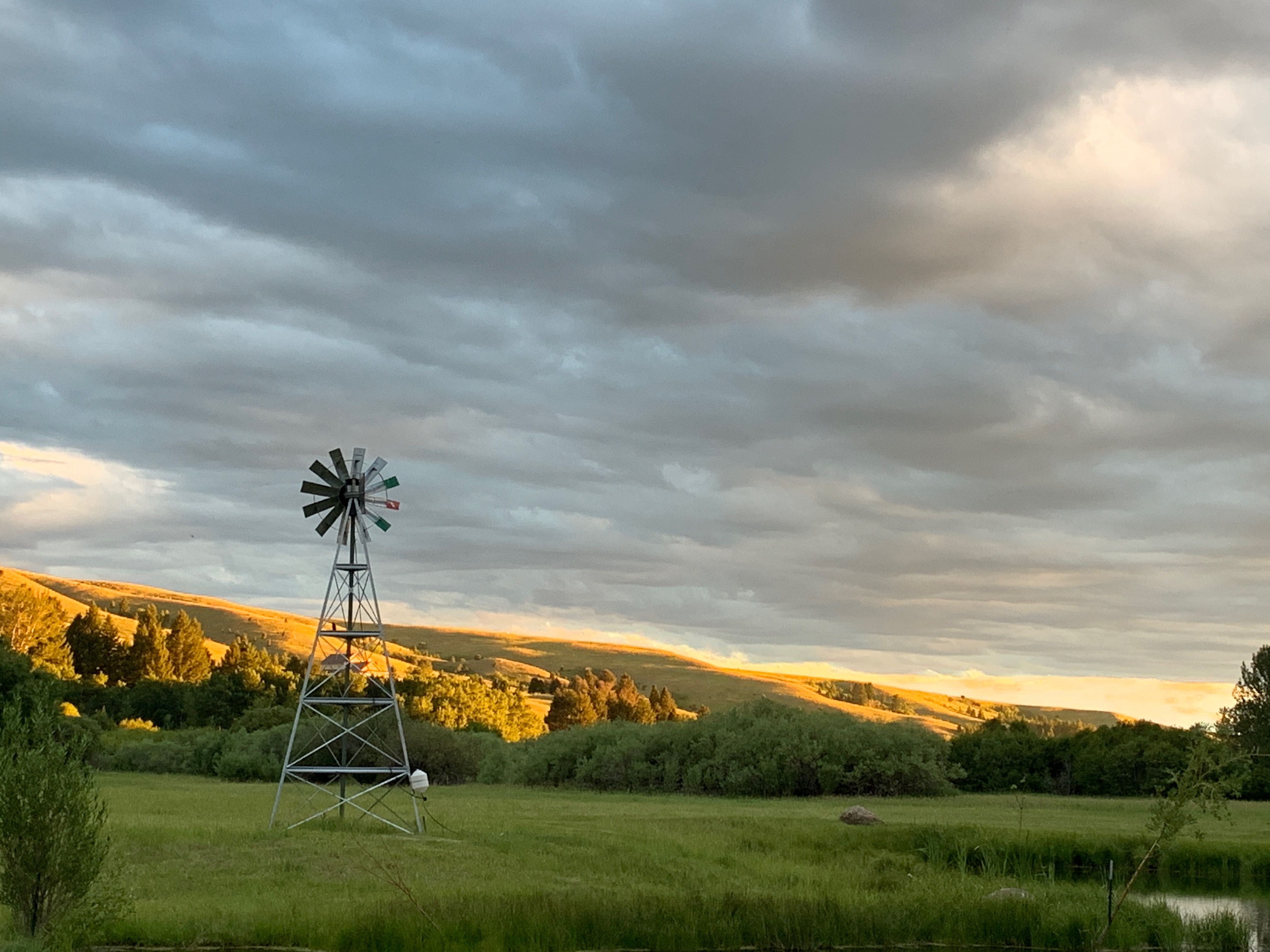
Illustration: My buddies were fishing. I was, too, but I tend to observe a lot. When I looked up, out, around, and above, the spectacle surpassed any painting. Sunlight washed the hills in light the color of honey. The green grasses bent in the breeze in the meadows. Wildflower clusters of white, black, and gold carpeted the fields. Willow tress arched over the pond’s edge. Geese huddled at the far end of the pond in descending order according to size. The white bark of the aspen trees complemented the green of their boughs. The windmill turned in the breeze and oxygenated the water. We kept fishing and catching rainbow trout, their shiny skin displaying the slippery sheen of colors, justifying their name. If you had eyes to see and ears to hear, I don’t know how you could miss the message. God was heralding his majesty. 

Scripture: David wrote the following in Psalm 8:3-4:

When I look at your heavens, the work of your fingers, the moon and the stars, which you have set in place, what is man that you are mindful of him, and the son of man that you care for him?

We must be careful, however. Of what? Of worshiping the creation rather than the Creator. The creation exists to point us to its Author, God himself. If we don’t rightly understand that God transcends his creation and is sovereign over all things, we become guilty of exchanging the truth about God for a lie and we worship and serve “the creature rather than the Creator, who is blessed forever! Amen.” (Romans 1:25).As beautiful and alluring as creation and creatures can be, they are not self-generating. They exist because of their Author. God “upholds the universe by the word of his power” (Hebrews 1:3).

Encouragement: I kept fishing. My buddies did, too. We caught some more rainbows. We enjoyed the creation in light of what the Author of life penned for us—a story of the transcendent God, who created all things, who upholds them, who calls his people to steward creation, and acknowledge the wisdom of the only transcendent, sovereign, good, and holy God. As Paul wrote in Romans 1:36, “For from him and through him and to him are all things. To him be glory forever. Amen.” The mountains are not accidental. The sun is not accidental. The white of the aspens is not accidental. The intricate shiny pastiche of colors on the trout is not accidental. They all exist to call our attention to the One who is the Author of beauty–because he is the One who is Beauty himself. Delight yourself in creation to see that creation and we creatures attest to our Creator.

With You

Illustration: To honor another deceased veteran this week, I was driving to Shelter 2 for the committal. On the way, I drove slowly around the loop at GA National Cemetery as is my custom, honoring those who preceded us. Then I saw a woman at her loved one’s gravestone. She had her head in her hands. I wanted to go to her to see if, perhaps, I could bring comfort. But I decided against it. The next funeral honors ceremony was to begin within a few minutes and I could not take a chance of being late, so I tried to summon the right words to pray as I saw her. She was obviously grieving.

Uniqueness of the Christian message: As I drove to Shelter 2, I looked at the gravestones yet again. Hundreds if not thousands of them have crosses on them. The implication, of course, is that the deceased Service Member was a Christian. I hope so. Why? Because the Christian message is unique in its view of physical death, of what comes immediately after we die physically, and of how grief is addressed.

Pagan views of man like Wicca teach that the human body replenishes the earth, the goddess’ wish. Some views in Wicca teach reincarnation; others teach a wonderful place they call “Summerland.” Scientology teaches that heaven is a “false dream” and that hell is a myth. Other New Age systems teach mystical reincarnation. One polytheistic worldview’s literature teaches that there are three separate “heavenly kingdoms” wherein some really good people achieve godhood, but apostates and murderers go to “outer darkness.” Islam teaches of a paradise with maidens designed by Allah for those who deserve them due to their good works.

Christianity remains distinct from all these views. Only those who are 100% righteous go to heaven. And no one is righteous except Christ and those he clothes. How are we sinners “clothed” with the righteousness of Christ? Is it by giving alms? No. Is it by our diets? No. Is it by ritual? No. Is it by special pilgrimages or jihads? No. Is it by having our good deeds outweigh our bad deeds? No. It is by believing the gospel. It means repenting of our sin and looking to Christ’s righteousness—and his alone—that we sinners are reckoned/counted as righteous.

Remember Abraham’s story? “And he [Abraham] believed the LORD, and he [the Lord] counted it to him as righteousness” (Gen 15:6). Christianity teaches that those who are clothed with the righteousness of Christ through repentance and faith go to be with the Lord. Their physical bodies die but their souls go immediately into God’s presence to await the final judgment (Eccl 12:7; Lk 23:43; Ac 7:59; 2 Cor 5:8). At Christ’s second coming, believers’ bodies will be raised imperishable and reunited with their souls (1 Cor 15:23, 51-52; 1 Thess 4:16-17). The souls of all those who have rejected the gospel are separated from God eternally and punished in accordance with their choice and rejection of the gospel (Lk 16: 24-26; Heb 9:27; 1 Pt 3:18; 4:6). They did not want God in this life, so why would they want God in eternity?

Just like Abraham in the Old Testament, the same pattern remains in the New Testament. When John was explaining the gospel in his day, near the beginning of the gospel bearing his name, he explains the gospel overtly:

He [Jesus Christ] came to his own, and his own people did not receive him. But to all who did receive him, who believed in his name, he gave the right to become children of God, who were born, not of blood nor of the will of the flesh nor of the will of man, but of God. (Jn 1:11-13)

It’s God’s work in sinners’ lives. It’s God’s grace entering into history, and redeeming sinners like Abraham, like the apostle John, like fellows sinners–like those who respond in repentance and faith.

Encouragement: What does this have to do with the opening illustration of a woman weeping at her loved one’s gravestone? Everything. Because Christians do not fear death. Why? Because Christ has conquered death for all those he clothes. Because of 1 Corinthians 15:4-8,

that he [Jesus] was buried, that he was raised on the third day in accordance with the Scriptures, and that he appeared to Cephas, then to the twelve. Then he appeared to more than five hundred brothers at one time, most of whom are still alive, though some have fallen asleep. Then he appeared to James, then to all the apostles. Last of all, as to one untimely born, he appeared also to me [Paul].

Christians die, yes, but not without hope, because they die “in the Lord.” I hope all those gravestones do represent Christians. But you see, if we are Christian, we have a duty to call others to this hope, to summon them to respond in repentance and faith before it’s too late, because our days are numbered. Hope has a timeline. We have an allotted period of time in which to say in grace and truth: “And let the one who is thirsty come; let the one who desires take the water of life without price” (Rev 22:17).

We often weep, yes, but joy comes in the morning—for all those clothed with the righteous robes of Christ (Ps 30:5b). Christianity alone demonstrates the empirical, historical reality of God with you, God alongside you, God walking through the valley of the shadow of death. Why can the Christian endure and prevail? It is not because of our works, but because of God’s work in the gospel. It is the good news of redemption, of life, of conquering through the grave. It is the realized reality of hope.

One Man’s Difference

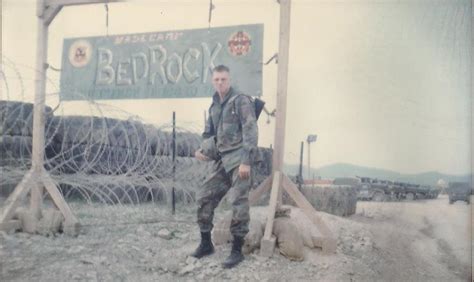
Illustration: At the risk of dating myself, I want to share a story from the 1990s. I was a scout (19D) on active duty. I was in an infantry battalion, and in the one scout platoon. We fell under 1ID and were stationed in Vilseck, Germany. When the other cherries and I arrived, fresh from basic training and AIT at Ft. Knox, KY, we were briefed to the effect that we were arriving just in time to deploy. We in the scout platoon, and some of the mechanized infantry guys, headed to Bosnia for the next 14 months.

I saw more holes from blasts in the walls of Balkan homes and businesses than you can imagine. Fields had markers around them, alerting where to walk and where not to walk, because unexploded ordnance (UXO) littered the landscape. Denizens in the region who’d survived the atrocities didn’t have to tell you their stories; their missing limbs demonstrated them. Most structures were destroyed or at least damaged from mortars, rockets, small arms fire, grenades, or artillery.

Why do I revive those memories? Because they still matter to me. They shaped me. I remember my buddies from the scout platoon. I remember one of the best NCOs I’ve ever known, a guy I idolized when I was an E-4 and E-5, and starting out. His name was SSG Reynolds. He’d been Force RECON in the Marine Corps before he’d come over to the Army as a scout. He knew more about reconnaissance than anyone I have ever known. And he was the only guy I ever knew who liked working out in BDUs and boots. He could do pull-ups for what seemed like days. His upper body was literally V-shaped. He had about a 29” waist and his neck and shoulders and back were shaped like Herschel Walker’s. He was just an impressive man and NCO, the type of NCO whose influence you never shake and should not want to.

But it was not only his knowledge of reconnaissance or his physical fitness that most impressed me. He was a gifted teacher. He knew how to reach folks. He wasn’t just a mouthpiece, if that makes sense. He was one of those guys that we went to often. Why? To ask serious questions. And he listened. And then he would give thoughtful and wise counsel. He shared stories, too, of his wife and daughters. He had pictures of them above his cot in the GP Medium. (For the tour, we slept on green cots in a GP Medium, and we didn’t complain too much … except about the snoring of one guy whose cot was in the middle of tent. Well, that was my complaint, anyway. He sounded, literally, like a chainsaw with a bad mixture of fuel. It runs but it runs badly.)

He had a soft-spoken but strong way about him that you just trusted. He was the opposite of blustering. He was the embodiment of a quiet professional whose life was its own testimony. And he taught us a lot by his example. I think I’ve always measured NCOs, whether consciously or not, by the standard SSG Reynolds lived.

Biblical connection: Many people have perhaps some knowledge of Jesus’ Sermon on the Mount from the Gospel of Matthew. Listen to these oft-quoted words of Jesus: “You are the light of the world. A city set on a hill cannot be hidden. Nor do people light a lamp and put it under a basket, but on a stand, and it gives light to all in the house. In the same way, let your light shine before others, so that they may see your good works and give glory to your Father who is in heaven” (Mt 5:14-16).

Like I said, I think many people have perhaps some knowledge of these words of Christ. But to whom was Jesus speaking in that immediate historical context? To those who believed the gospel message and lived lives characterized by obedience to it. He told them in just a few sentences earlier that they were blessed when others reviled and persecuted them, and when the scoffing world uttered all kinds of evil against them falsely (5:11). The apostles, we need to remember, suffered martyrs’ deaths. The apostle Paul, not one of the original twelve disciples, but a later apostle (Acts 9), was imprisoned and later beheaded under the Roman emperor Nero. Peter was crucified. John was exiled. Thomas was run through with a spear in Madras, India. James was sawn in two. This is not what you’re going to hear from Joel Osteen or the countless other peddlers of the “prosperity gospel.” If you have itching ears, don’t study history; just listen to smiling Joel who will sell you books telling us how wonderful we all are.

Encouragement: When I think back on SSG Reynolds and the way he poured into us young scouts, I still think of him with respect. He knew his stuff, you see. He lived it. His light shone. He didn’t boast; he didn’t seek the limelight. His mission field was us young soldiers. He made an impact by planting seeds in us. Very often, the soils in which he planted seed were not fertile then. Why? Because God tills the heart in his sovereign time. When that happens, though, the seed bears fruit. Sometimes it takes a long time to see. It’s seldom an overnight process. For most of us, I believe, it takes a lifetime.

SSG Reynolds taught with words but also by deeds. His expression aligned with his profession. In theological terminology, his orthodoxy (true belief) was seen via his orthopraxy (true practice). I love the way the apostle Peter puts it: “For this is the will of God, that by doing good you should put to silence the ignorance of foolish people” (1 Pt 2:15).

I have no idea where SSG Reynolds is now or if he is a believer. But I do know the impact one person can have. If you struggle sometimes and think, “Am I having any effect for good at all?” be encouraged. God often uses the individual who is faithful in the seemingly small and mundane things. Be faithful; trust the Lord; invest in those around you; and know that the Judge of all the earth will do what is just (Gen 18:25).

Driving Into the Daylight

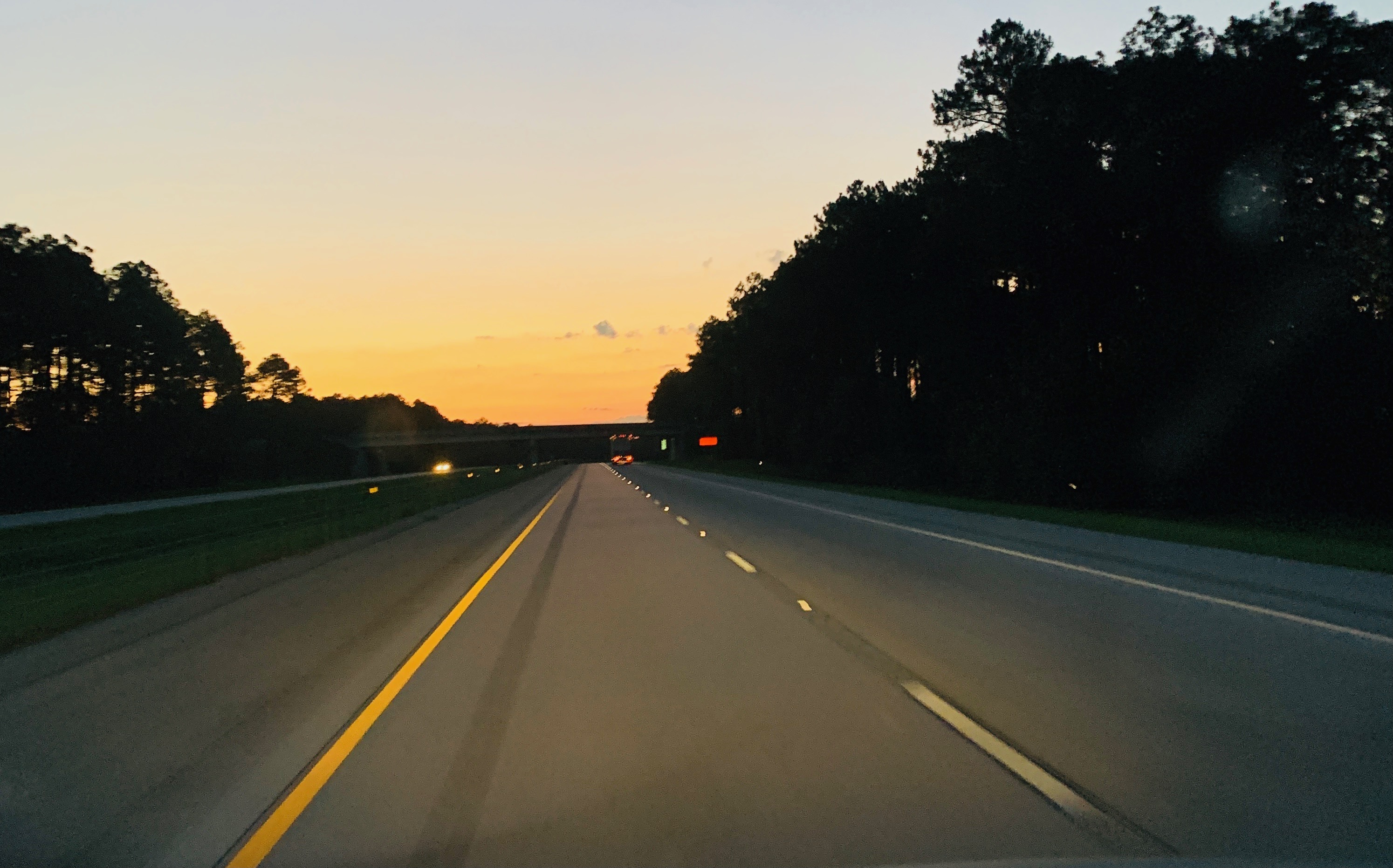
Illustration: Driving into the daylight. My favorite time of the day. The hour or so before dawn. Then the mere seconds when heaven’s lamp paints earth with honeycomb. Then about thirty minutes of suggestive silence as the first rim of the golden disc displays its glory. Then the minutes of near stillness and the gradual intimations of beginning again.

Driving with the radio off, I hear the ca-clump, ca-clump, ca-clump of the interstate macadam under my wheels. The long gray ribbon of road continues southeast until it ends in GA’s marsh, for which one of our nation’s prettiest cities is named.  Morning crows and turkey buzzards fly parallel to the road scanning for carrion. Fog floats motionless above the ditches full from the week’s afternoon thunderstorms. The live oaks, the palmetto bottoms, the tall pines.

Scripture: There is a danger is being so familiar with parts of Scripture. We might think we’re beyond it. We are not. Listen to Psalm 1 again:

Blessed is the man

who walks not in the counsel of the wicked,

nor stands in the way of sinners,

nor sits in the seat of scoffers;

but his delight is in the law of the LORD,

and on his law he meditates day and night.

He is like a tree

planted by streams of water

that yields its fruit in its season

and its leaf does not wither.

In all that he does, he prospers.

The wicked are not so,

but are like chaff that the wind

drives away.

Therefore the wicked will not stand

in the judgment,

nor sinners in the congregation of

the righteous;

for the LORD knows the way of the

righteous,

but the way of the wicked will

perish.

Teaching: This is the classic paradigm of two ways, two paths, two options, and two vastly different outcomes. It’s the contrast between walking with the wicked or walking in wisdom and righteousness. Wickedness wins its temporary skirmishes, yes. But it “will not stand in the judgment” (v.5). That is, reckoning is coming. Judgment is real because God is real. God is holy and God knows. 

Most of the world rejects this, of course. The rulers of the world “take counsel together, against the LORD and against his Anointed” (Psalm 2:2). Nothing new there. That is the way of rebellious sinners. And so you witness kingdoms in conflict. Darkness vs. Light; Evil vs. Good; Wickedness vs. Holiness; Cursing vs. Blessing; the Serpent vs. the Savior.

The choice: But the great offer of the gospel is this: a new heart, a new beginning, a new dawn. But it involves death—the death of the Lamb of God who takes away the sin of the world, and the death of our hubris, our pride. And most people refuse both.

Yet David concludes Psalm 1 with this reminder: “for the LORD knows the way of the righteous, but the way of the wicked will perish” (v.6).

Remember Jesus’ words in the Gospel of John? “And this is the judgment: the light has come into the world, and people loved the darkness rather than the light because their works were evil” (John 3:19).

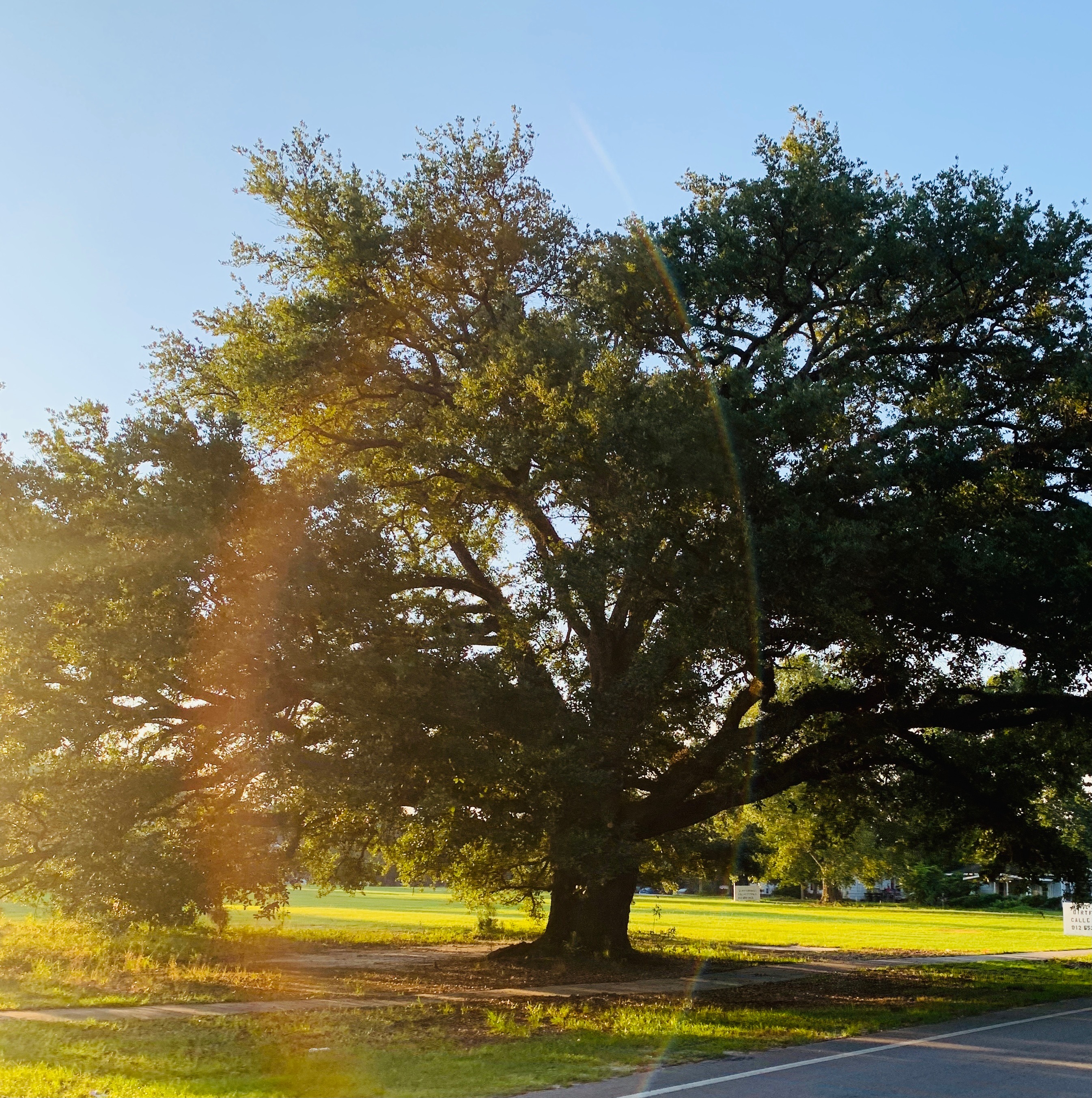
Encouragement: As I drove through Pembroke for the umpteenth time, I passed the live oaks that grow naturally in this part of our state. And the imagery from Psalm 1 burned into my soul: the blessing of God is ultimately seen in and experienced by those who are rooted in the truth, who yield fruit, who are planted by streams of water, and whose leaves do not wither.

Another Example of Poetic Moving Melancholia from a Sagacious, Southern Spirit

The Problems: Jane has a problem. The technical term is Urogenital sinus anomaly with persistent cloaca. In short, it’s where a woman’s plumbing does not work normally. She has only one exit for both urine and stool. What’s more, she cannot bear children because her uterus, fallopian tubes, and ovaries have developed abnormally. This is the medical problem that the protagonist of Brad Watson’s fine novel has.

But of course, this medical condition leads to other problems. She is a pariah. Folks don’t know what to make of her. The doctor, one of the few educated enough to understand Jane’s condition, does understand, however, and acts largely as an educator, friend, and instrument of grace in Jane’s life. He becomes a friend to her and a kind of benefactor. And there is a remnant of others who see her for the wonder that she is. But Jane has it rough, and it’s a time in history where, if you are a woman with “a condition,” you were thereby condemned to remaining single, unmarried, and largely alone.

The Setting: The setting is similar to that of fellow Mississippi writer William Faulkner’s masterpieces–impoverished people, hard-living, hard-drinking, often hard-hearted men and women, often abusive to themselves and to those around them, and all during lean years in bleak impoverished Mississippi.

The Beauty: There is beauty, too, though. The sounds at twilight are of tree frogs and cicadas, and of the train rolling down the rails between the pines. Cows munch behind farmers’ barbed wire fences and dogs roam the countryside. Turkeys and deer fill the woods. Below’s an example of Watson’s attention to setting:

And then there was the long quiet afternoon of autumn, then middle and late winter. Crows angling curious over the fields. Hawks hovering for mice exposed in sparse cover. A light cold breeze. Hard frosted soil. Evergreen pines seen through bare limbs of oaks, sycamores, sweetgums, hickories, maple, poplar, beech. The crooked, crazed, leafless pecans in the neglected grove, the weathered barn, rusted roof tin, rusted barbed wire, implements. Huddled cattle. Weathered grazing horse and mules. Gray scudded sky. (257)

Jane–overlooked, maligned, misunderstood (by almost all), develops nonetheless to outlive her critics. She learns the names of trees, the sounds doves make and what those sounds signify, the ways in which worms feed off the leaves and grow plump for the birds who eye them from above, the peacocks’ coloration and displays, and the feel of the creek bed sliding between her toes.

If you appreciate fiction about survivors, about the misunderstood vessels of beauty in a world spinning in the crass, Watson’s Miss Jane will reward your time. Thank you, Brad Watson. You, like your protagonist, left us too soon.

Out of the Many, One

Illustration: Recently I was teaching from Psalm 14 to fellow Soldiers. I tend to ask a lot of questions when I teach. This time was no different. I posed several questions before I turned them to the Scriptures: “Would you characterize our nation as united or divided?” “Does our culture favor self-discipline or self-fulfillment?” “Does our culture understand the difference between liberty and libertinism?” The Soldiers all said the same things. They saw reality, too. The handwriting is more than just on the wall. It’s on the radio, on your TV, on your social media feeds, in your advertising, in your “news,” in people’s minds, and on people’s tongues. It’s inescapable.

What’s at stake? Civility, self-governance, the West, and beyond. Will America be in the future as she has been in the past–the freest and most generous nation in history? Certainly sinful, certainly flawed, certainly guilty of horrors committed against one another, especially against boys and girls in the womb, but still, “the last best hope of the earth,” as Lincoln wrote.

Segue: Like a few others I know, I have been very fortunate to travel to scores of nations. As a boy, my dad had a career that enabled us to live abroad and/or travel quite a bit. Then in my college and graduate school days, I was able to experience much of the globe. And of course, the Army has kindly seen fit to send me and thousands of my fellow patriots to some interesting locations, too, that we need not go into here. But not once have I seen hordes of people trying to enter any of them, except America. Here, armies of people labor to get in. The walk, swim, tunnel, lie, bribe, and many do it the right way—legally. Praise God for legal immigration. The country is better because of legal immigration.

But to return to the opening questions, do we see unity as the emerging theme? Do you sense E Pluribus Unum? “Out of the Many, One” is the meaning … that we are a nation comprised of disparate people groups and individual worldviews, yes, but one in which we find a larger unifying identity in the identity as Americans. Is that the message heralded today? Or is it something altogether antithetical to E Pluribus Unum?  When I read the news online, what I see is school curricula indoctrinating students that people are only to be judged by skin color. What? No longer are we to learn from Rev. King’s plea that we would judge people by the content of their character instead of the color of their skin? Nope, that’s now folly to the woke mobs. Really? Is this what we’ve come to?

I refuse to accept that most folks are like this. I just don’t see it in my daily life. I’ve been in the Army for just under 20 years, and I’ve seen the mixture of races get along just fine. Why? We have a common identity that is larger than our individual differences. We’re a team. We train together, eat together, PT together, sleep in the field together, fly on the same aircraft together, drill together, deploy together, and some even pray and worship God together.

And yet there is an insidious worldview that is undermining the nation, its military, and its own ethos. When people’s value is determined based on secular/humanistic criteria, people’s value is reduced. Why? Because there is no fixed standard in secular humanism. Will it be your standard or Mao’s? Will it be Rev. MLK’s standard or Margaret Sanger’s? You see, secular humanism is just that—secular, earthly, godless, and linked only to mere preferences. It is always shifting, always in flux, rudderless.

This is why David’s salvo begins thus: “The fool says in his heart, “There is no God” (Psalm 14:1). You see, the Bible, unlike secular human opinion, is the plumb line, the canon, the fixed standard. It teaches that when one rejects God and his revealed will, he becomes a fool. It’s spitting in the wind to reject God and then expect blessing. One cuts himself off from the fountain of wisdom and then wonders why folly abounds.

Why the call to return to wisdom and to God’s revealed will? Because God is the Author of life (Acts 3:15). Because God is the creator and sustainer. Because God knows what is best—for us, for the planet, for marriage, for family, for stewardship, and for human flourishing. Because God is—wait for it—good. As the apostle John, who lived alongside Jesus for years, wrote, “This is the message we have heard from him and proclaim to you, that God is light, and in him is no darkness at all,” (1 John 1:5).

Takeaway: How might we recapture the wisdom of “Out of the Many, One”? How might we recapture the wonder of what it means to see the blessing of God instead of his judgment? How might we realize that race is a thing but not the primary thing about us? How might we rise to become, not a nation and culture divided by melanin, by sexual ‘identity’, and by our levels of being offended (intersectionality)?

I was reading an article the other day by a thinker I appreciate deeply. He is a scholar in history and he wrote something that I copied down in my journal: “One of the most important reasons for studying history is that virtually every stupid idea that is in vogue today has been tried before and proved disastrous before, time and again” (Thomas Sowell). That is about as clear as one could ask for.

Encouragement: Out of the Many, One? There is a way. It is found in God, beloved. Listen to words from the apostle John’s pen:

After this I looked, and behold, a great multitude that no one could number, from every nation, from all tribes and peoples and languages, standing before the throne and before the Lamb, clothed in white robes, with palm branches in their hands, and crying out with a loud voice, “Salvation belongs to our God who sits on the throne, and to the Lamb!” And all the angels were standing around the throne and around the elders and the four living creatures, and they fell on their faces before the throne and worshiped God, saying, “Amen! Blessing and glory and wisdom and thanksgiving and honor and power and might be to our God forever and ever! Amen.” (Revelation 7:9-14)

There is a way that seems right to a man, but Scripture teaches that fallen man’s way leads him to death (Proverbs 14:12). There is another way, however. It’s God’s way. May God be pleased to grant many people ears to hear … because one day we will see folly for what it is, and God will be shown the be the Judge of all the earth who does only what is right, and the ransomed from every nation, tribe, people, and language will sing in unified praise.

Have You Considered My Servant?

Background: The book of Job, set in the time of Abraham, Isaac, and Jacob, is one of the world’s most enduring and profound books because it deals with enduring questions about man’s suffering. Where is God? Why do “good” people suffer? Why do “bad” people so often prosper? Where is God when it hurts? If one is good, shouldn’t he expect good things to happen? And if one is bad, shouldn’t he expect his wickedness will be justly repaid? In sum, if God is good, why are things in such a mess? Doesn’t God care? Or are the heavens silent? Are we alone in the universe? Are we, like the Kansas song, “dust in the wind,” at the mercy of elements beyond our control, just random material blown about with no reason for hope, no reason to assume we have dignity or worth?

These are profound questions, and they occur to us all, if we are thoughtful people. Well, Scripture does not evade these questions. To the contrary, Scripture is the place where these questions are posed, lived out by real historical figures, and where God demonstrates the answers.

The man Job was called “blameless and upright, one who feared God and turned away from evil” (Job 1:1). So the stage is set. We see a “good man” and we sense that he is about to endure hell. And he does. But we often overlook the important fact that when Job opens, it is God (not Satan) who starts the testing of Job:

The LORD said to Satan, “From where have you come?” Satan answered the LORD and said, “From going to and from on the earth, and from walking up and down on it.” And the LORD said to Satan, “Have you considered my servant Job, that there is none like him on the earth, a blameless and upright man, who fears God and turns away from evil?” (Job 1:7-8)

God was the one who asked, “Have you considered my servant?”. God was behind it all. God was the prime mover. God was the author of the script that was unfolding. In other words, there was a reason for what was about to happen—and the reason was not blind material. It was the infinite-personal sovereign God.

And just within the first two chapters of Job, God permitted Satan to take Job’s property, Job’s children, and Job’s health. I think most of us would admit that if God allowed Satan to murder our children, destroy the property and possessions we had worked hard to obtain, and then ordained that sores break out on our bodies, we’d cry out to heaven, too, just like Job did. So Scripture does not evade asking the toughest of questions: Why, Lord, why? Is there no reason for the suffering? Do you not care?

Illustrations from Shakespeare: You remember Hamlet’s famous “To be, or not to be” soliloquy, right? Like Job, Hamlet was enduring an existential crisis. He was debating whether there was any overarching meaning and significance to life, to his individual suffering, to his longing for justice from heaven:

To be, or not to be: that is the question:

Whether ‘tis nobler in the mid to suffer

The slings and arrows of outrageous fortune,

Or to take arms against a sea of troubles,

And by opposing end them. To die, to sleep—

No more—and by a sleep to say we end

The heartache, and the thousand natural shocks

That flesh is heir to! (Hamlet, 3.1.56-63)

The slings and arrows of outrageous fortune … Pretty bleak worldview. If the universe is a closed system, if there is no sovereign God reigning over the universe, and over our individual lives, then it is just as Hamlet laments—mere outrageous fortune. Just blind, random, accidental insignificance. Or as Macbeth puts it,

Life’s but a walking shadow, a poor player

That struts and frets his hour upon the stage

And then is heard no more. It is a tale

Told by an idiot, full of sound and fury

Signifying nothing. (Macbeth, 5.5.24-28)

It is so important to follow ideas through to their ends. Job was not in a silent universe where tragedy happened for no reason. And Satan was not allowed to have the last word. And Job’s children were not lost forever. And Job’s wealth and possessions and dignity and friends were not taken, never to return. No! It’s important to read Job’s history all the way through.

God did answer Job by revealing his (God’s) presence, his (God’s) compassion, and his (God’s) wisdom and justice:

And the LORD restored the fortunes of Job, when he had prayed for his friends. And the LORD gave Job twice as much as he had before. Then came to him all his brothers and sisters and all who had known him before, and ate bread with him in his house. And they showed him sympathy and comforted him for all the evil that the LORD had brought upon him. And each of them gave him a piece of money and a ring of gold. And the LORD blessed the latter days of Job more this his beginning. (Job 42:10-12a)

Job was not left without answers. He was restored. He was more than restored. He was blessed in the end. Why? Because the heavens are not silent. Because God is there and he is not silent. Because God is good, and because God uses evil in his sovereignty to bring about greater good.

Encouragement: I spend a lot of time reading the Psalms. There I see David, a man not unfamiliar with the highs and lows life can bring, writing this, and I think it’s a perfect dovetailing with Job’s themes:

The LORD is righteous in all his ways

     and kind in all his works.

The LORD is near to all who call on him,

     to all who call on him in truth.

He fulfills the desire of those who fear

      him;

   he also hears their cry and saves them.

The LORD preserves all who love him,

   but all the wicked he will destroy. (Psalm 145:17-20)

Takeaway: Evil has a shelf life, beloved. God uses suffering, tragedy, and evil in his sovereignty. If you are an atheist, scream at the heavens all you want, but why? You don’t think anyone hears you. But for the Christian, he knows—like Job knew, like David knew—that God hears, God acts, and God is good. That is what the birth, life, crucifixion, burial, and resurrection of Christ are all about. As Peter said, “This Jesus, delivered up according to the definite plan and foreknowledge of God, you crucified and killed by the hands of lawless men. God raised him up, loosing the pangs of death, because it was not possible for him to be held by it.” (Acts 2:23-24)

When we ask the question, “Have you considered my servant?” the ultimate servant was not Job; it was the Lord Jesus. Amen and amen.

–CH Pirtle

Cattle on a Thousand Hills

The last few days have been gorgeous. Long days of sunshine, clear skies at night, and a full moon today. You don’t need a flashlight outside at night.

Anglers are out, their lures in Allatoona and Clarks Hill and Lanier and Sinclair. Kayakers slide across the waters in near silence. Bicyclists in tight and brightly colored spandex bike shorts peddle along the edges of our roads. Motorcyclists, dressed in leather, roll across the state, taking in the scenery and feeling the wind.

It is hard to beat, at least in my opinion. If you are not dead to beauty, it is abundant. It calls out to be appreciated, to be enjoyed, and to be stewarded.

Connection to Scripture: A lot of folks may know something of these verses:

For every beast of the forest is mine,

   the cattle on a thousand hills.

I know all the birds of the hills,

   and all that moves in the field is mine. (Ps 50:10-11)

Context: The poet Asaph penned these lines in Psalms to remind God’s people that just going through the motions of religiosity, just checking the spiritual block, was a sinful pattern that God detests. God wants authentic genuine worship, not lip service. He spoke through the poet Asaph these words:

Hear, O my people, and I will speak;

   O Israel, I will testify against you.

   I am God, your God.

Not for your sacrifices do I rebuke you;

   your burnt offerings are continually

      before me.

I will not accept a bull from your house

   or goats from your folds.

For every beast of the forest is mine,

   the cattle on a thousand hills.

I know all the birds of the hills,

    and all that moves in the field is mine. (Ps 50:7-11)

The Teaching: You see, it is not burnt offerings that please the Lord. It isn’t bulls or goats or any human work that will mollify or satisfy the holy requirements of God. Only God himself is holy. That is why God provided the ram in the thicket for Abraham. Isaac, Abraham’s son he loved, would not have to be sacrificed. And Abraham’s response? “So Abraham called the name of that place, “The LORD will provide”; as it is said to this day, “On the mount of the LORD it shall be provided.” (Gen 22:14)

Asaph wrote about it in Psalm 50. Moses wrote about it in Genesis 22 regarding Abraham and Isaac and God’s provision of the ram in the thicket. Paul wrote about it in letter after letter. John wrote about in gospel and in letter form.

Christ is the one and only sufficient Passover lamb (1 Cor 5:7), sacrificed for his people (Heb 7:25), slain in accordance to the eternal decree of the triune God (Eph 1:11), “written before the foundation of the world” (Rev 13:8).

Encouragement: It is because God owns the cattle on a thousand hills that redeemed people know how and why to steward beauty. It is because holy God is satisfied with the person and work of Christ, the only sufficient lamb, the ram–not caught in a thicket but nailed to the tree—that redeemed people know how and why the birds sing and soar, the beasts of the field and forests roam, the firmament shows forth its majesty, and the cosmos heralds God’s glory. It is because it is all a theater of God’s glory.

The Art of Attention

It was just after 4:20 a.m. Windless. Clear skies. The moon was a waxing gibbous, just a few hours short of its fullness. The firmament was so clear, the moon so bright, I could see the lone wisp of white cloud where it floated like something out of an Edgar Allan Poe story, between me and the face of the moon.

I climbed on my motorcycle for the ride to work. Samuel Johnson wrote, “The true art of memory is the art of attention.” This week we are approaching Memorial Day for 2021. Memorial Day is officially the last Monday of May on which Americans honor the men and women who died while serving in the U.S. military.

That word–memorial–has a Latin etymology meaning “remembering” or “being mindful of.” That’s part of why I appreciate Johnson’s quote, “The true art of memory is the art of attention.” When I got on my bike this morning, I was captivated by the spectacle of the moon, the white wispy cloud hanging mysteriously in front of it, and when I crossed the bridge over the Etowah and heard the whine of my tires on the bridge’s macadam, I smelled the river and turned my head to see the moonlight reflected off the river below.

The art of attention, Johnson called it. Being mindful of the beauty that is there. Remembering why Memorial Day this coming Monday is significant. Being mindful of the men and women who rendered all.

When I got to work, my routine quite early each day is to read Scripture, then look over my list of things to accomplish for the day, and to just center myself for what lies ahead. For whatever reason, I just think better in the mornings. It’s quiet. There are no interruptions. I can, as Johnson said, attend. I can be mindful of things, can easily focus, can listen, and see, and notice.

When I read the news online later in the day, I saw–once again–a nation ripping herself asunder. A sitting U.S. senator from Kentucky is receiving death threats and is being stalked. Anthony Fauci has been caught in still more prevarications. ‘Wokeism’ has now replaced actual history. Reading, writing, and arithmetic are passe, replaced by grievance studies. America is the bane of the world, the wokesters shout.

And my mind returns to the ride under the moonlight this morning. To what am I paying attention? I see my nation doing two things simultaneously: 1) saying it still believes in Memorial Day (and actually knowing what it denotes) and 2) tearing herself apart via grievances and contradictory emoting.

Our land is imperfect. She has always been so. Why? Because it is filled with imperfect fallen sinners. But she has goodness, too. There have been some, are some, and, Lord willing, will be more to come, who are builders and not destroyers. There are some who are givers and not takers.

There are some who want–not to tear down statues and eradicate history–but who wish to preserve history and learn from it.

The moon will be full in just a few more hours. I already look forward to looking up early in the morning to see it. I look forward to paying attention to the way its light plays off the river’s face. I look forward to seeing any white wisps of clouds that may slide across the firmament in the morning, but it will mean I will need to pay attention to the good things. It will mean remembering the good. Not a bad way to start the day.