Some Meanings of the Incarnation of God

For now at least, Christmas is still a national holiday. Holiday is a term originally rooted in Old English from halig (“holy”) + daeg (“day”). Not much is sacred to most Westerners anymore, but if they are employed, they still tend to take off from work for Christmas, a benefit bestowed because of the work and grace of another.

Christians, too, may take off from work, but they will understand the halig + daeg (“holiday”) differently. Instead of just taking a paid day off from work, they will take heart because they know what the incarnation of God means.

Christians, take heart.

Remember the Lord and what He has done. They are indeed great things. Here are just some meanings of the incarnation:

• God exists

• God has communicated His nature

 God took on human flesh in Israel in the 1st century (hence, A.D., Anno Domini, “in the year of the Lord”)

• The eternal God entered time and space

• God has revealed Himself, His nature, and His power, in the person and work of Jesus, the Christ

 Jesus’ birth, life, death, and resurrection are the most researched and authenticated facts of history

• Jesus fulfilled hundreds of Old Testament prophecies in precise detail

• No one has produced the body of Jesus

• The church endures and the gates of hell have not and will not prevail against it (Mt 16:18)

• Christ has come; Christ has died; Christ will come again

For non-Christians, I know you are probably busy. But would you take the time to think through the significance of these things–that the one and only holy God exists, that He has revealed Himself in creation, in Scripture, and in the incarnation of the Christ, that He (Jesus) lived a perfect life of obedience to God the Father, that Jesus went to the cross and became sin and bore the curse of sin’s penalty for all who will come in repentance and faith to Christ alone, and that the Holy Spirit, the third person of the triune God of the Bible, says, “Today, if you hear his voice, do not harden your hearts . . .” (Ps 95:7-8a)?

Merry Christmas!

Of Courage & Cowardice; Warriors & Wimps

I am reading a book that is accumulating a lot of underlining. One such passage is this one:

Turbulent times call for people of courage and conviction who understand the issues at stake and are willing to engage the fight. Underlying the culture war is a great spiritual struggle. On one side are those who believe in universal moral principles, confirmed in Scripture, which should inform and govern our thinking, our speech and our behavior. On the other side are those who prefer to believe that everything is relative, subjective, and merely a matter of personal choice. Although the culture war is often fought in public, the primary battleground is the human heart, and what we see manifested in our society and culture today is merely the visible expression of a titanic struggle between good and evil being waged in the spiritual realm.[1]

I tend to mark up my books. I read with a pencil in hand. I make notes in the margins. I ask questions of the text. I jot down references that occur to me from prior reading and reflection. When I read the above passage I made this diagram:

Universal vs. Relative

Objective vs. Subjective

Rooted vs. Displaced

Fixed vs. Overthrown

Scripture vs. Human opinion

Biblical Theism vs. Atheism/Secularism

Few things are as important as clarity. Illustrating Breshears’ ideas via a “this vs. that” model clarifies the alternatives.

I don’t know many people who don’t sense that the West is undergoing a sea change, a “fundamental transformation,” if you will.

One side wants to conserve; the other wants to transform.

One side wants to recognize that marriage was created and designed to be between one man and one woman; the other side repudiates that and says it (the secular left) has ‘progressed’ and knows better.

One side recognizes God exists, and that men and women are created in His image; the other side sees men and women as autonomous beings in a godless universe wherein gender is now fluid and constructed.

Per Facebook wisdom, for example, its users can select from 71 gender options. Um, folks, this is a new world. One might go so far as to call it quite plainly what it is: stupid.

Some thinkers have written that we are undergoing a second Civil War. But this civil war is about which values we will hold to and base our identity upon.

Will we recognize God; special revelation (Scripture); objective moral values; marriage as the sacred union between one man and one woman; that boys are boys and that girls are girls; that perhaps “fundamentally transforming” the West is veiled language that means destroying Western Civilization and reshaping it into forms with no objective standards but the preferences of the powerful?

There is a ghastly price to be paid for mocking heaven. I know that we are living in a time when the Bible is mocked. It’s somehow “below” many people today. That’s okay. The Bible has been mocked before. Mocking is the default position of the fool. You know how we know that? Brace yourself: It is in the Bible:

Why do the nations rage

and the peoples plot in vain?

The kings of the earth set themselves,

and the rulers take counsel together,

against the Lord and against his Anointed, saying,

Let us burst their bonds apart

And cast away their cords from us.”

He who sits in the heavens laughs;

the Lord holds them in derision.[2]

You see, it is not courageous to spit in the wind; it is folly. It is not brave to shake your fist at God and curse heaven; it is folly. God laughs at folly. It does not wound God to mock Him. He is the uncreated Creator, the Maker of heaven and earth, who needs nothing. He is not lacking anything. He is perfect and He is wholly good and holy, holy, holy. So there is no wisdom in being rebels in a foolish cause.

But you see, God is also loving, and He knows what is best for us. Shall He not do what is right, what is “just” (Genesis 18:25)? Yes, He does and He will. He is the Author of Life (Acts 3:15). He is the potter and we are the clay (Isaiah 64:8).

Again, it is a question of clarity. Breshears has it. His book details it with excellence. It is a clarity that demands we be honest, that we count the costs, that we realize the consequences of our ideas. Read his book. Better still, read the Book. Though neglected and mocked by the fools, it abides still and remains what it has always proven to be: the Word of God.


[1] Breshears, Jefrey D. American Crisis: Cultural Marxism and the Culture War: A Christian Response. [Centre Pointe Publishing, 2020], VIII.

[2] Psalm 2:1-3, ESV.

In the World of the Grocery Store with John Updike

When I was in high school there was an A & P grocery store a few miles from the house. It occupied the last space in a small strip mall that held a dry cleaners, a Walgreens, a shoe repair store, and other businesses I have mostly forgotten. Across the main road from A & P there was a Chevron that had the most overpriced gasoline in Atlanta. And a few yards south on Northside Drive from the Chevron was a Steak ‘n Shake, where I developed an early and enduring appreciation for chocolate shakes. The Chevron is still there, somehow still selling petrol for a quarter more per gallon than other dealers. And the Steak ‘n Shake is still there, selling delicious shakes. But the A & P is long gone, replaced by a Publix. Paper bags are gone, too, replaced by plastic or canvas bags with Kermit-green lettering.

“A & P” is a short story by John Updike. I read a lot of John Updike. He remains for me one of America’s great literary fiction writers. Many readers know of his Harry “Rabbit” Angstrom books like Rabbit, Run, Rabbit Redux, Rabbit Is Rich, and Rabbit at Rest, or perhaps The Witches of Eastwick. They are wonderful reads. But Updike’s short stories are gems, too. “A & P” is probably his most well-known short story.

“A & P” is about young lust, about changing cultural mores, and about misconceptions we have of one another. What the boy Sammy (the main character) thinks about is girls, but what the girls think about is, well, not necessarily boys, at least not Sammy. The result is a story about upended expectations. What Sammy wanted was the girls, at least attention from the girls, and to be seen as brave, as a hero. Instead, he ends up merely unemployed, alone, and confused at the end. So much for your bravery, Sammy.

Sammy is a teenaged stock boy at an A & P in the 1950s, and the main character. He is bored with his job. He barely camouflages his disdain for his coworkers. He is restless. He longs for adventure. And in walk three girls “in nothing but bathing suits.”[1] What follows is how Sammy and the other males working at the A & P in the 1950s respond to seeing the girls and their bared skin. Sammy is nineteen. Not surprisingly, girls dominate his thoughts and fantasies. Here are his thoughts of the prettiest one of the three girls as he watches her:

She had on a kind of dirty-pink—beige maybe, I don’t know—bathing suit with a little nubble all over it and, what got me, the straps were down. They were off her shoulders looped loose around the cool tops of her arms, and I guess as a result the suit had slipped a little on her, so all around the top of the cloth there was this shining rim. If it hadn’t been there you wouldn’t have known there could have been anything whiter than those shoulders. With the straps pushed off, there was nothing between the top of the suit and the top of her head except just her, this clean bare plane of the top of her chest down from the shoulder bones like a dented sheet of metal tilted in the light. I mean, it was more than pretty.[2]

Lengel, Sammy’s boss and the A & P’s manager, representing the old moral norms, redresses the girls for their skimpy attire. “We want you decently dressed when you come in here.” The prettiest girl’s response? “We are decent.”[3] There you have it. Sammy exemplifies the younger generation’s view of women. Is it okay, now, to “objectify” women? If girls dress scantily, are boys and men to blame for looking? Do the girls in the story bear no responsibilities? Those seem to be some of this issues “A & P” raises. Lengel, the older man, the manager of the A & P, wants to remain with the standards and mores he has heretofore known. Girls and women are to dress and comport themselves as ladies; otherwise, the culture is degraded. But Sammy, illustrative of youth’s pushing the boundaries, seems to appreciate the girls’ boldness. Plus, let’s be honest, Sammy simply likes seeing the girls in their bathing suits.

The girls don’t take kindly to Lengel’s efforts at reproof and admonition. And Sammy, angry at Lengel and simultaneously desiring to appear brave and sympathetic to the girls’ worldview, makes an impetuous decision: he quits his job as the girls exit the store. He feels he has been brave. He’ll show that he’s sympathetic to the new ways, the new norms, where girls can dress scantily in the local grocery store and should not be criticized by the stodgy Lengels of the world. So Sammy has been heroic, right? Listen to the end:

I look around for my girls, but they’re gone, of course. There wasn’t anybody but some young married screaming with her children about some candy they didn’t get by the door of a powder-blue Falcon station wagon. Looking back in the big windows, over the bags of peat moss and aluminum lawn furniture stacked on the pavement, I could see Lengel in my place in the second slot, checking the sheep through. His face was dark gray and his back stiff, as if he’d just had an injection of iron, and my stomach kind of fell as I felt how hard the world was going to be to me from here on in.[4]

Sammy had great expectations—that he’d be seen as a hero, that he’d be lauded for taking a stand, and that the prettiest girl would be waiting for him in the A & P parking lot. But none of that was to be. He is simply unemployed, humiliated, and standing in the grocery parking lot realizing he knows nothing about girls. “A & P” in my old neighborhood is long gone, replaced by neon lights of another chain store. The trees that lined parts of West Paces Ferry there are gone, too, ground down for more concrete jungle. The shoe repair store is now a Starbucks where boys sport ‘man buns’ and wear skinny jeans. And the girls have their hair dyed purple and aquamarine and wear boys’ plaid shirts. Things have changed. Sammy, like you, I would have looked at the pretty girls but I don’t think I would have quit my job. Sometimes the Lengels of the world may’ve learned a thing or two. Maybe Lengel was not so dumb after all.


[1] Updike, John. The Early Stories: 1953-1975. [New York: Ballantine Books, 2003], 596.

[2] Ibid., 597.

[3] Ibid., 600.

[4] Ibid., 601

Consumed by Conflict: Enduring Gratitude for Faulkner’s “Barn Burning”

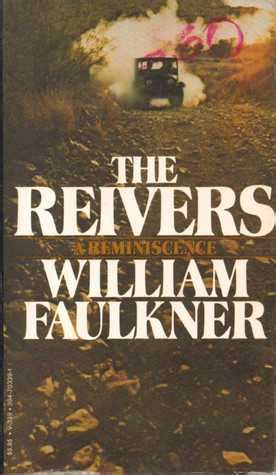
The literary bug bit me when I was young. The deepest bite was from William Faulkner. His short stories and some of his novels marked me in a way only a handful of other literary writers’ works have. I am reading through many of Faulkner’s works again but focusing on his short stories. Recently I reread “Barn Burning.” One of Faulkner’s most anthologized stories, it is often assigned reading for college and high school kids. I, too, read it at that age, but I have read it many times since. My appreciation for “Barn Burning,” like for much of Faulkner’s fiction, has only increased as I have aged. Many of his themes are too weighty for most kids to fully appreciate, in my view.

“Barn Burning” illustrates Faulkner’s philosophy of literature and what enables great literature to endure: writing that lasts is writing that explores “the human heart in conflict with itself.”

    Here are Faulkner’s words from his 1950 speech upon receiving the Nobel Prize for Literature: 

Our tragedy today is a general and universal physical fear so long sustained by now that we can even bear it. There are no longer problems of the spirit. There is only the question: When will I be blown up? Because of this, the young man or woman writing today has forgotten the problems of the human heart in conflict with itself which alone can make good writing because only that is worth writing about, worth the agony and the sweat. 

He must learn them again. He must teach himself that the basest of all things is to be afraid; and, teaching himself that, forget it forever, leaving no room in his workshop for anything but the old verities and truths of the heart, the old universal truths lacking which any story is ephemeral and doomed—love and honor and pity and pride and compassion and sacrifice. Until he does so, he labors under a curse. He writes not of love but of lust, of defeats in which nobody loses anything of value, of victories without hope and, worst of all, without pity or compassion. His griefs grieve on no universal bones, leaving no scars. He writes not of the heart but of the glands.1

“The human heart in conflict with itself.” Yes, that is the stuff of enduring literature. Will Romeo and Juliet’s love endure despite the feuding of the Capulets and Montagues? Will Hamlet avenge his father’s murder and restore order to Elsinore? Will King Lear learn before it’s too late that he has tragically misjudged his daughters? And in “Barn Burning,” will Sarty, the boy-protagonist, son to Abner, a poor, ignorant, violent, vengeful, injured, ravenous, brutal father in the defeated South of post-Civil War America about which Faulkner wrote for a lifetime, will Sarty be able to escape the conflict pulling him two different directions simultaneously? 

    Sarty loves his rapacious father, even though he (Sarty, the son) knows his father is a doomed man. Abner (the father) is caught. He is a poor ignorant white man who is a sharecropper in the South. He is dependent upon wealthy landowners like Major De Spain for work. But Abner hates his plight. He is proud. He, too, has a family. He, too, is a father, a patriarch, but a very fallen man seeking to provide for his dependents. But he is hateful to his employers and even to his own family. He seems, as is common in Faulkner’s characters, a doomed man. 

    But Sarty, perhaps, may escape from the cycle. Sarty’s father, Abner, when he is slighted, when he feels humiliated, he avenges his wounded pride through violence. He slaps his children until their lips burst and bleed. He whips the emaciated mules that pull their wagons. He smears excrement on the white rug of his employer, Major De Spain. All these lashings-out bespeak his sense of frustration, of woundedness, of Abner’s heart, too, in conflict with itself. And his family sees it, especially his sensitive son, Sarty, through whose eyes we view the story, “Barn Burning.” 

    We see Abner’s anger even in the way he speaks to Sarty, early in the story. Listen to the father’s tone and think how this would affect a sensitive boy who both loves his father but is also terrified by him:

“You’re getting to be a man. You got to learn. You got to learn to stick to your own blood or you ain’t going to have any blood to stick to you. Do you think either of them, any man there this morning, would? Don’t you know all they wanted was a chance to get at me because they knew I had them beat? Eh?” Later, twenty years later, he was to tell himself, “If I had said they wanted only truth, justice, he would have hit me again.” But now he said nothing. He was not crying.” He just stood there. “Answer me,” his father said. 

    “Yes,” he whispered. His father turned. 2

Sarty is torn. Should he obey every directive from his father out of love? Or should he disobey and wait for his father’s fist to descend like a malicious claw? This is the human heart in conflict with itself. 

    One of the most revealing illustrations of Sarty’s conflict comes in these lines:

His father had struck him before last night but never before had he paused afterward to explain why; it was is if the blow and the following calm, outrageous voice still rang, repercussed, divulging nothing to him save the terrible handicap of being young, the light weight of his few years, just heavy enough to prevent his soaring free of the world as it seemed to be ordered but not heavy enough to keep him footed solid in it, to resist it and try to change the course of its events.3

Sarty, a boy smarting from the pain of having been hit by his abusive father, feels almost old enough to flee but too young to leave from what he knows. He, too, seems doomed, trapped in a no-win predicament, aware of his terrible plight but unable so far to extricate himself. Again this is the human heart in conflict with itself. Is he to remain with his abusive father or leave and essentially orphan himself and have nothing to show for it? 

    Finally, Sarty resolves he cannot endure his father’s ways, the violence, the repeated pattern of vengeance. Sarty warns of his father’s burning De Spain’s barn and De Spain (it is implied in the story) shoots Abner, and Sarty runs away, a fugitive from the only life and way he has ever known:

At midnight he was sitting on the crest of a hill. He did not know it was midnight and he did not know how far he had come. But there was no glare behind him now and he sat now, his back toward what he had called home for four days anyhow, his face toward the dark woods which he would enter when breath was strong again, small, shaking steadily in the chill darkness, hugging himself into the remainder of his thin, rotten shirt, the grief and despair now no longer terror and fear but just grief and despair. Father. My father, he thought.4

I know literature appeals only to a small number of people. I’m in that little remnant. I know that because when I reread passages like these from Faulkner’s “Barn Burning,” and I see a boy who both loved his father but was terrified of him, and I see a boy who somehow knows his father was destroying the very group of people he should have loved the most, and I see the costs Sarty would endure if he stayed weighed against the costs he would endure by fleeing the dysfunction and lies, I am moved in a way that great literature moves some of us. We see the tragedy and the beauty of it all—of families torn apart by forces both external and internal. You move me still, Faulkner. Thank you for enduring and prevailing through what you left us.

1Faulkner, William. Collected Stories. [New York: Penguin Group, 1967], 649-650.

2Faulkner, William. “Barn Burning” in The Portable Faulkner, ed. Malcolm Cowley. [New York: Penguin Group, 1967], 8.

3Ibid., 9.

4 Ibid., 24.

The Power of Story – Shirley Jackson’s “The Lottery”

My son read “The Lottery” recently for school. And he, like most other readers of this brief and terrifying American short story by Shirley Jackson, was shaken. So I took it off my shelf recently and reread it, too. Like my son, I, too, was shaken.

Overview: The story is simple with regard to plot. A few families from an unnamed small American town are gathered at 10 a.m. on a summer morning. It is June 27th. Children, fathers, and mothers assemble but only after they have gathered stones, “the smoothest and roundest stones” they could find … to be used for … murder.

Mr. Summers (what a happy surname!) arrives in the town square. He carries a black wooden box. He sets the box down on a three-legged stool. Inside the black box are papers with families’ names on them: Warner, Summers, Graves (a sinister surname?), Adams, Anderson, Delacroix, Dunbar, Hutchinson (suggestions of the New England Salem Witch Trials?), etc.

The patriarch of each family is to draw a piece of paper from the black box. If the slip of paper has a black spot marked in it, you win the lottery. But the lottery winner does not inherit money. He/she inherits death by stoning. The fellow townspeople take up the stones they gathered earlier and then stone the lottery winner to death.

Symbols: Two symbols/images figure prominently in the story—the black box and stones. The black box is treated almost like an ark of the covenant in that it figures prominently for a particular group of believers in a particular culture. And stones (for building or for warfare?) likewise figure prominently.

Ecclesiastes 3:5 ran through my mind constantly while reading this story … “a time to cast away stones, and a time to gather stones together; a time to embrace, and a time to refrain from embracing.”

Ideas: Three main ideas remain with me after reading the story again:

  • Ritualism/traditionalism
  • Hypocrisy
  • Cowardice of the crowd

Throughout the story, the characters act out the ritual and tradition of the lottery, but they don’t appear to ever question why. It just seems a matter of course. They have ostensibly “always done things this way.”

The hypocrisy theme is evidenced when the seemingly innocent Tessie is the ‘winner’ of the lottery. Earlier in the story, she orders her husband, “Get up there, Bill,” when she wanted him to draw names out of the black box. She was on board with the tradition then. A few seconds later, however, she would be the victim of the tradition.

Third, we see the nature of crowds and how easily cowards find a home therein. A sort of madness sets in; individual consciences fall away. In almost an instant, ostensibly sensible ‘good people’ are revealed to be murderers.

 Final thoughts: Jackson’s “The Lottery” is ten pages of suspense with a horrific ending. What was Jackson suggesting about the ideas I raised here? I do think she was addressing, among other things, some dangers of blind ritualism, the wickedness of hypocrisy, and that she was calling us to think about the madness of crowds.

X Marks the Spot

X marks the spot. And, my oh my, are there lots of spots about! There are Xes on the floors at Walmart. There are Xes at Target. There are Xes at Ingles, Kroger, Costco, QT, Dollar General, etc. When you approach a cashier to pay for goods and services, if you look down near your feet, you are probably going to see tape, paint, or another marker indicating the following: X marks the spot. I don’t know about you, but it gives me what my grandfather used to call the heebie-jeebies. In short, the creeps. The times are a-changin’, Dylan wrote. But this time it is a different kind of cultural revolution. It is not the Vietnam War now; it is not LSD and the hippies now; it is not feminism now. It is a cultural revolution in which the foundation is being dismantled and destroyed. Statue by statue, church by church, zip code by zip code, mayor by mayor, governor by governor, carnage fills the headlines. And one of the great questions to be settled is, What will the new foundation be?

To state what many believe, the West is undergoing a transformation. We are now in a place where an organization like Black Lives Matter has the world’s attention. And the buzzwords and catchphrases en vogue in today’s post-Christian, post-everything culture pervade their website. Here is a section direct from BLM’s website:

We make space for transgender brothers and sisters to participate and lead.

We are self-reflexive and do the work required to dismantle cisgender privilege and uplift Black trans folk, especially Black trans women who continue to be      disproportionately impacted by trans-antagonistic violence.

We build a space that affirms Black women and is free from sexism, misogyny, and environments in which men are centered.

We practice empathy. We engage comrades with the intent to learn about and connect with their contexts.

We make our spaces family-friendly and enable parents to fully participate with their children. We dismantle the patriarchal practice that requires mothers to work “double shifts” so that they can mother in private even as they participate in public justice work.

We disrupt the Western-prescribed nuclear family structure requirement by supporting each other as extended families and “villages” that collectively care for one another, especially our children, to the degree that mothers, parents, and children are comfortable.

We foster a queer‐affirming network. When we gather, we do so with the intention of freeing ourselves from the tight grip of heteronormative thinking, or rather, the belief that all in the world are heterosexual (unless s/he or they disclose otherwise).[1]

Race, gender, “sexual orientation,” and “gender identity” and Communism comprise the majority of BLM’s worldview. As I have read through their website’s resources, it is filled with language of “oppression.”

Individuality is absent; what fills their writing is emphasis upon the group, upon the collective. You are valuable insofar as you are black. Race is key. And if you add certain sexual proclivities, then you receive bonus points, i.e., more value. To simplify it for those who will not do the reading on their own, the worst thing a person can be is white, male, heterosexual, Christian, married, monogamous, and politically conservative. Those are indicators of your status as “oppressor.”

To say that BLM illustrates “identity politics” is supreme understatement. In the absence of the transcendent worldview that teaches that all lives matter (from conception until natural death) because they are created in the image of the infinite-personal creator God, now we live in a world where pigmentation determines people’s worth.

Remember Rev. MLK’s words about the dream that all people would be valued by the “content of their character” rather than the color of their skin? Well, that is rejected by BLM. For BLM, color is what matters.

I wonder why the statistics of the millions of black babies murdered each year don’t find space on their website. Did those black lives not matter? What about the lives snuffed out by black on black crime in Los Angeles, in Chicago, in Oakland, in Detroit, in New York, in Philadelphia, in D.C., and other cities controlled by Leftists? Did those black lives not matter?

My wife and I lost a couple of children several years back. For those of you who have been through the same thing, you know the pain. It is almost indescribable. My wife’s pain through those seasons was horrible to watch. And all I could do was watch, cry, and pray. They remain terrible experiences that scarred us both. Our children’s lives mattered.

But why doesn’t the logic cut both ways for BLM? Where is the outrage at Planned Parenthood facilities being overwhelmingly in neighborhoods where most American blacks live, and aborting generations of black lives? Don’t those lives matter?

Again, look at the numbers: “Since Roe v. Wade legalized abortion in 1973, abortion has killed an estimated 20 million black babies — more than the entire black population of 1960.”[2]

What will replace the foundation that is being torn down statue by statue? What will replace the foundation that tells people they are valuable because they are created in the image of God who redeems their fallenness through the gospel? What will replace the heretofore self-discipline and Judeo-Christian worldview that informed the Founding Fathers’ worldviews, the Constitution, and the Declaration of Independence? What will replace the traditional family where moms and dads raised children to honor their parents, to respect all people, to wrestle against their own sin, to think critically, and to honor those to whom honor is due?

Will the moniker be, X marks the spot? Will it be that the West destroys itself from casting off all moral restraint? Will the West degenerate to such a level that the arguments that carry the culture into judgment revolve around “gender identity,” “oppression,” and “identity politics”?

I do not claim to speak for others but I, for one, am long past being weary of wearing facemasks and using hand sanitizer while watching thugs vandalize private and federal property and wreak havoc—and yet, I am somehow the bad guy if I don’t don a mask and stand six feet from my neighbor?

In the biblical worldview, we are to love our neighbors and respect their property, not shame them for something they’re not guilty of. In the biblical worldview, we are to love the Lord with heart, soul, mind, and strength and our neighbors as ourselves. But in the godless Communist world of BLM and Leftism, you see paint being splattered across the nation, riots disrupting civilized life, intimidation, violence, defunding of police, “cancel culture,” and unleashed madness.

The foundations are being dismantled block after block across our land by mobs in black shirts, fattened on vitriol and talking points, but malnourished with regard to self-discipline, love for God, or love of neighbor.

X marks the spot used to mean, at least when I was young, the place signifying you’d landed upon the spot for treasure. This was where the goods were to be found. Now the Xes keep us “distanced,” and suspicious of one another, looking askance at each other, sizing one another up. Really? Has it really come to this—skin colors, critical race theories, gender identities, identity politics, and language of oppressors vs. oppressed? I hope not, folks.

There is a better way. It is not utopian. It is not “progressive.” It tells us that we are all (all!) created in the image of God, but that we have fallen through sin. Yet grace has come in the gospel of Jesus Christ. And glory comes on his terms because of him, to all who respond in repentance and faith. Creation, fall, grace, and glory. How is that for X making the spot? You can stand there and if you do, you will find the foundation whose builder is God, and you will finally be home.

[1] https://blacklivesmatter.com/what-we-believe/

[2] https://www.washingtonexaminer.com/opinion/op-eds/since-roe-abortion-has-killed-more-black-babies-than-the-entire-black-population-of-the-u-s-in-1960


Hospitals for the Fallen: Chris Adrian’s Sardonic and Sad Fiction

Sardonic and sad. Those words describe Chris Adrian’s tone in the short story collection A Better Angel. I finished reading the collection this week. Adrian is a doctor in real life, so it should not surprise readers that his writing is replete with scenes set in pediatric units, emergency rooms, hospitals, operating rooms, and on and on. And there is a motley crew of maladies, too–physical, psychological, existential, and spiritual. Especially spiritual.

Adrian writes with a keen eye for what’s wrong with the world (read: people, our systems, our relationships, our governments, etc. are all broken, flawed, fallen, and in need of redemption).

From the short story “A Child’s Book of Sickness and Death” in the A Better Angel collection, here is a sample:

It’s not safe to confide in people here. Even when they aren’t prying—and they do pry—it’s better to be silent or to lie than to confide. They’ll ask you when you had your first period, or your first sex, if you are happy at home, what drugs you’ve done, if you wish you were thinner and prettier, or that your hair was shiny. And you may tell them about your terrible cramps, or your distressing habit of having compulsive sex with homeless men and women in Golden Gate Park, or how you can’t help but sniff a little bleach every morning when you wake up, or complain that you are fat and your hair always looks as if it had just been rinsed with drool. And they’ll say, I’ll help you with that bleach habit that has debilitated you separately but equally from your physical illness, that dreadful habit that’s keeping you from becoming more perfectly who you are. (187)

The speaker here is a girl hospitalized and separated from the “healthy” people. In her imagination, which is where she and the other kids in this story live their “real lives” due to the sicknesses keeping them from “normal” people, she and the other patients think, according to Adrian’s characterizations, in these terms.

They have to think and express themselves in crass and tragic ways, Adrian’s tone suggests, because their lives are so sad. They are freaks; they are isolated from most of the world; they are like Kafka’s Gregor Samsa, alienated and invisible. The world is a horror show.

Adrian excels in forcing readers to see uncomfortable truths. He seems to want us readers to grapple with the ugliness and sin in life. His medium for doing this? Parade sickness and depravity throughout each story. Make the ugly sympathetic. See how we react.

I was initially shocked at some of the scenes I read, at least at first. Then I got used to them. And I think that is part of what Adrian is driving at. His view may be that we become coarsened to depravity, to the sinful, to the vile, but we learn to ignore it, to live with it, and become comfortably numb. The problem with that? Nothing changes for the better. We resign ourselves and say, That’s just the way things are.

Adrian is a fine writer, very fine. I am reading through his other works now, because I want to see if this worldview is in his other fiction. My hope is that he is open to the possibility of redemption. It does not make sense to complain of the ugly and depraved in life and at the same time exclude the alternatives. Does not the ugly imply the beautiful? Does not the depraved imply the sublime, the exalted, the divine? And what if this universe is not a closed system? And what if people, though fallen and sinful, are fearfully and wonderfully made, but rebelling against their author and means of redemption? These are questions I hope Adrian’s other fiction addresses.


Questions of Empire and Barbarians with J.M. Coetzee, All While Hiking with My German Shepherd

I stumbled on to the fiction of South African-born novelist J.M. Coetzee recently. He won the Nobel Prize in Literature in 2003. He has won the Booker Prize, the Jerusalem Prize, and several other high-profile awards for his fiction. Over the last week or so I have purchased several of his pieces and am working my way through reading his body of work. I completed one volume recently entitled Waiting for the Barbarians, a novel he published in 1980 when he was forty years old.

Coetzee is, again, new to me, so what follows may be too elementary for seasoned Coetzee readers. The following reflections I offer in a form I use when reading literary fiction:

  1. Overview
  2. Quotation(s)
  3. Main Idea(s)
  4. Questions Raised/Connections


Overview:

J.M. Coetzee’s Waiting for the Barbarians, published in 1980, explores the meaning of empire and barbarians, and what that model may suggest about man’s basic nature. I think Coetzee’s presupposition is that the “other” (political adversary, nation, tribe, culture, etc.) is the person, country, group, or demographic we label “barbarian” in our thinking so that we may justify acts of violence, conquest, and power.

The protagonist in this novel is a magistrate, a judge of some ilk. The importance of that, if I am correct, is that the book explores ideas of justice. What is justice? How do we define it? Where does the concept come from? How does one anchor the concept of justice? Is justice universal? All of these questions, of course, assume a worldview. What worldview offers coherent definitions with regard to justice? Does atheism? Does Christianity? What worldview has allowed for justice to blossom? Has it been atheistic regimes or has it been the Christian worldview?

One of the acts we see the magistrate engage in is washing the feet of a “barbarian” girl. He uses oil. He massages her feet and calves and legs. The biblical allusions to oil and of washing the dirty feet of sinners by the Teacher are overt. But Coetzee may be upending the meaning by asking us readers, “Who is the good one here? Is it the one washing the feet (the magistrate) or the one being washed (the barbarian girl)?” In other words, who is barbaric? Preliminary kindnesses may be mere camouflaged avenues towards conquest.

Because it is not long before the washer of feet in the novel alters his cares. Soon he patronizes women for his own sexual gratification. In sum, the caretaker becomes the predator. Ostensibly civilized and belonging to the cultured empire (he’s a magistrate, after all), he is shown also to be a fallen man with basic desires. The girl, then, becomes seen somewhat like a “noble savage” trope common in some schools of literary fiction.

Man’s natural state, in this novel at least, is bellicose. It’s Hobbesian. Scene after scene is nasty, mean, brutish, but not necessarily short. We witness rape and torture several times throughout the narrative. Cruelty pervades the story. Scores of novels explore man’s fallen nature so thoroughly that it comes across as a truism: A Clockwork Orange, Lord of the Flies, Heart of Darkness, etc.

This novel was different from hundreds of others I’ve read in this sense: it is unclear where or when it is set. If clarity of setting is a fundamental element of narrative, this book ignores that tradition. We readers don’t know where it is set–not the country, not the era, not even the hemisphere. The boundaries simply seem to be only set by an Us vs. Them paradigm. Because I could not locate when and where the story is set, it read to me like allegory.

Quotation:

 The children never doubt that the great old trees in whose shade they play will stand forever, that one day they will grow to be strong like their fathers, fertile like their mothers, that they will live and prosper and raise their own children and grow old in the place where they were born. What has made it impossible for us to live in time like fish in water, like birds in air, like children? It is the fault of Empire! Empire has created the time of history. Empire has located its existence not in the smooth recurrent spinning time of the cycle of the seasons but in the jagged time of rise and fall, of beginning and end, of catastrophe. Empire dooms itself to live in history and plot against history. One thought alone preoccupies the submerged mind of Empire: how not to end, how not to die, how to prolong its era. By day it pursues its enemies. It is cunning and ruthless, it sends its bloodhounds everywhere. By night it feeds on images of disaster: the sack of cities, the rape of populations, pyramids of bones, acres of desolation. (133)

Main Idea(s):

 Who defines the terms of what is “barbaric”? Whose empires will last? What is “cultured”? And how do people define justice? Is it simply the prerogative of the victor, the last man standing? These are serious questions Coetzee explores.

He did not leave this reader with optimism if his worldview is the true one. (Coetzee is an atheist, if what he has said in his many interviews is true.) But I do not ascribe to his worldview in this novel. Yes, empires rise and fall. Rapes occur—of land, of people, of dignity, etc. Countries rise and fall; leaders come and go. Nebuchadnezzar and Herod the Great, just two examples, thought themselves omnipotent. They weren’t.

Questions Raised/Connections:

 As I read through the book, and as I hiked several miles recently and tried to think through issues Coetzee raised in the novel, I came up with several questions I hope he addresses in his other books:


  1. On what basis is anything good or bad in an atheistic worldview? Seems to me things would only be preferences if the objective standard (God) is removed.
  2. Define justice in an atheistic worldview.
  3. How do ideas of justice, of barbarianism, of empire, of conquest, and of dignity objectively exist in a materialistic universe?
  4. If Thomas Hobbes was right, why write novels?

Postscript:

 I hiked miles upon miles of hills this week, my hiking stick in my right hand, carved and given to me by a friend from south Georgia, my German shepherd, Brewster, by my side every step—through the woods, in the creeks, over the rocks, and finally back home. I thought much about the novel over the several hours we walked, of what it means to walk upon this earth, of how empires come and empires go, of how leaders are propped up for a bit and then fade, of how fickle we people are, of what worldview really does explain deep questions of justice, of why one would wash another’s feet, and I kept coming back to the One who said: “He has told you, O man what is good; and what does the LORD require of you but to do justice, and to love kindness, and to walk humbly with your God?” (Micah 6:8, ESV).


On Reading The Wonderful Wizard of Oz for the First Time

I do not remember how old I was the first time I watched The Wonderful Wizard of Oz. Probably it was before I was twelve, maybe even ten. Maybe earlier still. I remember being scared by the Wicked Witch, and even by the old Wizard himself. Both overwhelmed me. They seemed too big, too powerful. I identified with Dorothy. I longed to return to my own Kansas where, cyclones aside, life was ostensibly safer and certainly simpler.

But to be cast out of one’s known environs, well, that terrified me. And Toto, though Dorothy’s loyal dog, offered no large degree of protection from the dangers awaiting the child-protagonist Dorothy, and her soon-to-be new circle of friends: the Scarecrow (in need of brains/wisdom); the Tin Woodman (in need of a heart/compassion); and the Cowardly Lion (in need of courage).

If you were like I was, the Wicked Witch’s aquiline nose, bony structure, and eerie voice frightened you, too. She was comprised of sharp angles and harsh manners. She dressed in black and hunched over as if from mysterious and malevolent causes.

And cast into a new world of powers and forces to which she had hitherto been unaware was little Dorothy, from the American heartland, Kansas. Uncle Henry, the farmer, and Aunt Em, the farmer’s wife, made their humble way in their little farmhouse on the massive Kansas prairie.

And of course there was Toto, Dorothy’s little faithful black dog, always at her side. (In the novel, he is small and black. In the movie, I think he was a brown Yorkie. But I have not seen the film in many years now.) Having read the novel now, I may watch the film again, just to see if my views may have changed.

I read several reviews of the story by literary types who purported to be experts in fairy tales and/or nursery rhymes. Some reviewers alleged Baum’s story was primarily political allegory. The Tin Woodman, for example, was a symbol for Emperor Wilhelm of Germany and the Cowardly Lion was a symbol for England (Boston Review). I don’t know about all that. Possible … maybe.

When I was reading it, it kept occurring to me that Dorothy and her friends were each missing something. Their shared concern was, in sum, longing. Each longed for something. The Scarecrow longed for brains; the Tin Woodman longed for a heart; the Cowardly Lion longed for courage; and of course Dorothy longed to return home to Kansas to reunite with her family.

But they also shared some things. They were honest with one another. They were trustworthy. They grew to increasingly depend upon one another in their journey down the road paved with yellow bricks to the City of Emeralds, and to hopefully meet the Wizard, who could grant each one’s wish.

I suppose that the novel could have allegorical categories. But as one who read what the author himself said of his novel, that it was a story “in which the wonderment and joy are retained and the heartaches and nightmares are left out,” I take him at his word. I read a delightful story of a girl thrust upon a journey by forces bigger than she understood. She grappled with her familiar surroundings being stripped away. She learned to adapt. Toto, her beloved dog, was her only visible reminder of home. She made new friends. She learned who was trustworthy and who was not. She learned the values of honesty and courage and persistence. She learned the importance of home and hearth. She learned that good and evil are unavoidable categories. She learned how to press on amidst overwhelming odds. And she learned that joy is greater when we have loved ones with whom to share it.

Most of all, I’d say, Dorothy learned that what she wanted now was what she had before but didn’t appreciate. The Tin Woodman had a heart of compassion all along; the Lion had courage in the face of fear; the Scarecrow had a mind throughout. There were no magical spells to instill these qualities; they constituted virtues they had only to use.

Say what you will, but that is no small set of accomplishments for a story most of us encountered first as children. In my view, those accomplishments and ideas are important not just for childhood but all of life.

Joker, Delillo’s novel Falling Man, & the Gospel

$1.1 billion and counting. That is how much money the movie Joker has earned worldwide so far, at least according to one website. I watched the movie recently with my family. Visually spectacular, psychologically terrifying, and propelled by the superb acting of Joaquin Phoenix, Joker was both hard to watch and hard not to watch.

The amount of violence was almost unbearable at times. Yet the sadness and alienation of the main character made him, at least insofar as the evil done to him, a sympathetic character. He suffered much at the hands of an uncaring and burned-out government counselor, a lady who was in Joker’s life to, ostensibly, help him. But that was not to be. She was a poor listener; she relied on platitudes instead of connection.

And Joker’s employer was not much better. The company suspected Joker rather than giving him the benefit of the doubt, when a backstabbing peer lied about Joker. The result? Joker was dismissed. He was then essentially penniless, too. He was a failure even in his counselor’s eyes; he was now fired from his job as a dancing clown; he could not afford his prescribed medications; he could not support his mentally unstable, old, and frail shut-in mother, who lived with him.

The irony is that his “job” was to make people smile, forget their troubles for a while, and laugh. But Joker’s life was unspeakably sad. At least until he succumbed to a particular worldview wherein he would become his own god, and he would set himself up as ground zero of a violent reign. He would don the mask of Joker—literally and psychologically—and avenge the system that had crushed him. And another irony? Crowds quickly followed, drawn to the charismatic avenger who seemingly smiled via his mask while murdering others in cold blood. Murder, death, carnage, and violence became celebrations for the mobs. Crowds lost any sense of self-discipline and became mobs. Destruction had become fun.

I completed reading Don Delillo’s novel Falling Man recently. He explored a cast of characters in New York–just prior to and following–the 9/11/2001 Islamic terrorist attacks wherein thousands of people were murdered. The characters Delillo follows throughout the book try to piece their lives together in a world where they think—at any moment—another attack may come. One woman leads a group in journaling their lives, as a way of trying to cope. One man has an affair. Another character loses herself in art. An Islamic Jihadist reassures himself he doesn’t have to think anymore in life because he will, he has decided, die a martyr for Allah. And yet another woman tries to explain her life in scattered, disjointed, theological and artistic terms. Below is a passage where Delillo describes the woman’s thought life:

     But isn’t it the world itself that brings you to God? Beauty, grief, terror, the empty desert, the Bach cantatas. Others bring you closer, church brings you closer, the stained glass windows of a church, the pigments inherent in the glass, the metallic oxides fused onto the glass, God in clay and stone, or was she babbling to herself to pass the time? (234)

In Joker we viewers witness the celebration of violence. The moral foundations have been destroyed in Joker’s world. Moral nihilism is the assumed worldview. Destruction is the result.

Yet in Delillo’s novel, the author probes the question of how people can actually live in a world where moral nihilism is the dominant philosophical worldview. Either Islamic terrorists were noble martyrs in the cause of jihad or they were evil, and their murders were wrong. Or, if you are consistently nihilistic, there is no grounds on which to make moral pronouncements; morals are reduced to preferences and wills. But if moral nihilism is to be consistently applied, any objective standard of evaluating morals, values, ethics, and human behavior is unjustifiable. As Dostoyevsky penned it in The Brothers Karamazov, if God is dead, everything is permissible.

When man becomes God, the winner is the most ruthless.

But to posit anything as right or wrong, well, those are judgments that demand an objective standard. Morals, if not rooted in the objective God who is himself eternal, immaterial, transcendent, holy, and unchanging, are up for grabs.

Joker, the movie, celebrates moral nihilism; Falling Man explores the morning after the moral melee and holds forth the hope that man might see the inherent destruction of moral nihilism, and return to the true Author of life wherein God—not man—is the center. If man chooses not to return, he continues to “fall” and forfeits the means of redemption. Joker is about, at least in part, the madness of crowds, how easily they are led by the ruthless. Falling Man, at least in part, is about how crowds camouflage the emptiness their people live with. Crowds–and the mania they enable and often encourage–are often facades that serve poorly as cosmetic for sin sickness. In the gospel of Christianity, there is a Redeemer who is the Author of life, the One who is eternal, the One who is goodness incarnate.

Choices are clear when you see them manifested: Joker and the glorification of mob violence; people muttering to themselves and “falling” on multiple levels in Delillo’s contemporary world of paranoia, crowds, and terror on every side; or the gospel of Christianity, with the righteous Redeemer who became sin so that we unrighteous sinners are remade righteous. How? Through Him we are called, adopted, and blessed in the Beloved.