Chaplain Daily Touchpoint #324: Tested Genuineness (Lessons from Peter, Part 3)

Bottom line up front: Tested Genuineness

Historical Context: Part of the reason I love Peter’s two New Testament letters is because Peter was so very human and yet God used him mightily. Peter was the apostle who denied the Lord Jesus three times on the night of His betrayal by Judas and arrest by the Sanhedrin and Roman soldiers. I am teaching through that passage currently to a group of believers each Sunday. It’s heartbreaking to see how fickle the crowds were in Jesus’s day. People have not changed, of course. Human nature’s a constant. Jesus told Peter to his face that he would deny the Lord Jesus three times before the rooster crowed and that is exactly what happened. Peter denied the Lord three times, the rooster crowed, and Peter wept. Bitterly (see Mt 26, e.g.).

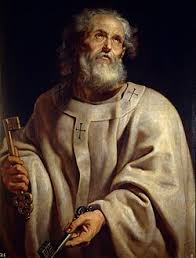
Segue: But Peter was the real deal, nonetheless. Did he fail that night and at other times? Yes, absolutely. But he repented and was restored. He kept short accounts with God. And Peter made his theology visible by enduring, by sticking with it, by persevering in the faith. That’s why Peter wrote in the style he did in his two New Testament letters. When the various Ceasars and emperors persecuted Christians for their witness, Peter says it was “so that the tested genuineness of your faith—more precious than gold that perishes though it is tested by fire—may be found to result in praise and glory and honor at the revelation of Jesus Christ” (1 Pt 1:7).

Connection to Our Day: I had a mentor and professor way back in my seminary days who taught me often about the disappointments and ups and downs in ministry. When I would go to him about people whom I thought were Christians who ended up being fakes, he’d tell me again and again in his gentle way, “Jon, there will be surprises. Not all who said they were believers are. And many we may’ve thought were genuine were in fact unbelievers. Again, there will be surprises. Just be faithful. Leave the results to God.” Yes and amen, Dr. C., you were so right.

Encouragement: I’ve been in ministry a long time now. My hair’s now gray. I’ve seen some people that I’ve mentored, purchased books for, discipled, and even baptized seemingly fall away. Perhaps they were not believers after all. I’ve seen still others blossom and stick and persevere in the truth. Some have even gone on to enter the ministry themselves. It is a special joy when that has happened. I thank God for it. And I think that’s what Peter is driving at when he writes of “tested genuineness.” It will be tested; that’s the thing. Pressures come and we learn who the real are and who the pretenders were, eventually. So, be encouraged, Christian pilgrim. Learn to embrace the challenges as they are part of revealing our tested genuineness that is “more precious than gold.”


Tribute to CJ (yes, another one)

Context: Here we are in yet another week with no paycheck. I’m a soldier, an officer in the U.S. Army, sworn to defend the Constitution against all enemies . . . those foreign and domestic. We have both. In abundance.

Slice of Life: I drove home after work. I like few things quite as much as coming home, having CJ come out of the downstairs door, barefoot, greeting me. I wrap my arms around her waist, she turns her head, I smell her skin and kiss her, ask her how her day was, and I reach down to pet our dog, Lady(bug), a Cavalier King Charles, the other ‘lady’ in my life. (CJ somehow puts up with my love affair with dogs; I cannot imagine life without at least one [dog] at all times.)

Upon Entering: We walk upstairs. CJ has baked fresh homemade bread. The kitchen’s aromas fill the middle floor. I watch her. She’s labored all day–in the kitchen, with Lady (she groomed her), with laundry, with my schedule, with our son, with bill-paying, with all things . . . for us. She’s incessant.

Once again, she gave up her time outside in the sun. She loves to sit in the sun for a few moments each day. And I love her doing it. (She inherited the SGA pigmentation of the Creeks; she turns bronze or brown in just a few hours.) We chuckle. (I’m about as tanned as Macbeth after Duncan’s slaying.)

But Here’s the Deal: After she’d labored all day, she fed me fresh-baked bread, told me, “Go walk Lady; that’ll be good for you,” and then said, “Go read; that’s what you need.” And I did all of the above. I read my favorite writer; I walked Lady, I ‘piddled’ in the yard, etc.

Where would I be without her? She’s a better person. She labors, often thanklessly and invisibly. I wear a uniform, go to work with fellow soldiers, play a role, etc. But yet here she is–pressing on in with fidelity but without publicity. I just want to say to you, if you’re like my CJ, I thank God for you. You’re the better people. You matter. You make it all work. And I’m grateful for you.

Chaplain Daily Touchpoint #323: A Living Hope (Lessons from Peter, Part 2)

Bottom line up front: A Living Hope

Introduction: When Peter opens his first letter, by the third verse of the very first chapter he has stressed that the Christian faith, because it is rooted in the personal, transcendent, living God, is a living hope. It’s not some pie-in-the-sky, hope-so theology. No, it is anchored in the God who is. This is no fairy tale bromide stuff.

Peter writes, “According to his great mercy, he has caused us to be born again to a living hope through the resurrection of Jesus Christ from the dead” (1 Peter 1:3). That’s as plain as day. Why is anyone who is born again in fact redeemed? Because God did it. It’s not something any of us decided for ourselves or worked ourselves into or up to. Peter makes that clear: He [God] has caused us to be born again. To what, exactly? To a living hope. Why? Because Christ has been raised. He is the “firstfruits of those who have fallen asleep” (1 Corinthians 15:20).

A living hope. That’s vital for us to remember. Why? Well, because if you look at the 50-meter target only, you’ll be tempted to give in to despair. When you see mobs overrun Boston, it’s sad. When you see Antifa continually destroy Portland, it’s sad. When you see murder after murder after murder in Chicago, it’s sad. Yet people don’t learn the lesson. The mobs continue to do what mobs do. They cannot do anything but steal, kill, and destroy—just like their commander: “The thief comes only to steal and kill and destroy” (John 10:10a).

Encouragement: Peter, in writing to believers enduring persecution, then and now, stresses this: yours is a living hope. He who began a good work in you will bring it to completion (Philippians 1:6). Our job is fidelity and courage in the interim.

Chaplain Daily Touchpoint #322: Lessons from Peter (Part 1)

Introduction: I love church history. That is, I love studying the history of Christian believers through the centuries. Why? Well, it’s easy to become myopic. That is, it’s easy just to be so self-absorbed that one only sees the immediate. To use a shooting analogy, it’s easy to just focus on the 50-meter target and discount all the other targets. It’s easy to miss the forest for the trees. For many folks in our day, God has been banished, and politics is their religion. It consumes them. They wake up craving the latest breaking news. They’re glued to what’s ‘happening now.’ They want to be tracking the latest posts or tweets or whatever they’re called now. They crave the latest gossip. They live lives perched on the limbs of the immediate. But they miss the historic, the enduring, and the true. Here’s what I mean. Follow me . . .

Scriptural Connection: In coming weeks, I will begin teaching through Peter’s two New Testament letters. Why? One reason is straightforward: I’ve taught line-by-line through Matthew for over a year now, and we’re nearing chapter 28 next week, Matthew’s ending chapter. The ‘Great Commission’ passage is there, and it’s often quoted but less often understood and lived out. Christians are to go out proclaiming Jesus as Lord because death could not and did not hold him. He walked out of the tomb, was seen by hundreds, was touched, spoke, ate, and taught. In other words, empirical evidence undergirds all of Christ’s earthly ministry. We Christians welcome honest investigation. Bring it.

And Peter, a pillar of the 1st century Christian church, opens his first letter by writing to persecuted, dispersed Christians scattered across the Roman Empire. Due to persecution by Rome, he encouraged them with this opening salvo:

“Peter, an apostle of Jesus Christ, To those who are elect exiles of the Dispersion in Pontus, Galatia, Cappadocia, Asia, and Bithynia, according to the foreknowledge of God the Father, in the sanctification of the Spirit, for obedience to Jesus Christ and for sprinkling with his blood: May grace and peace be multiplied to you” (1 Pt 1:1-2).

Questions: Do you see what all Peter’s introducing? First, he’s an apostle, an eyewitness of the Lord Jesus. Second, he’s writing to Christians (“elect exiles”) scattered across the region. Third, it’s all known to the omniscient God of Scripture. Fourth, he tells us why—“for obedience to Jesus Christ.” It’s all right there. Peter was an eyewitness and friend of the Lord Jesus; Christians are persecuted by their plights but are known to the all-good and all-wise God; and we’re to labor to be obedient witnesses.

Encouragement: Is the world a mess? Yes. It has been before. Just ask Peter. Just ask the 1st century Christians/elect exiles dispersed across the Roman Empire, being persecuted for being Christians. Nothing’s new, folks. Be of good courage. There’s a long line of saints who came before you and me. We’re not special. Our job, like theirs, is to be faithful in our time.

Honor: It Is Rare but It Sets Godly Men Apart

Introduction: I love the story of Mephibosheth. It’s really not so much about Mephibosheth as about the king who provided a seat at the royal table. Follow me . . .

Historical context: Wicked King Saul had several sons, Ish-bosheth and Jonathan, among others, but he also had a grandson, Mephibosheth. He was, per 2 Samuel 4, “crippled in his feet.” He “became lame,” Scripture says (2 Samuel 4:4). Cannot be a soldier like that, can you? Soldiers have to take care of their feet, especially in the days of the ancient Near East. Just like we soldiers today have to pack extra dry socks, and apply foot powder, etc. it’s an ancient, tried and true practice: take care of feet. If you don’t, you’ll lose.

What does this have to do with theology? What does this have to do with honor? Why the focus on the feet of Jonathan’s son, Mephibosheth? Because what can a lame grandson of your archenemy expect from the king? Nothing, right? That’s what you’d think.

But here’s the thing; when it comes to a man of honor, it’s different. David was that man of honor. His star was on the rise not because he was inherently a good man, but because he was God’s man.

David was soon to commit horrible sins with Bathsheba, against Uriah, and more, but David would also pen Psalm 51, a pouring out of his soul in contrition and repentance before the Lord God.

David was a great sinner, but he was restored by the greater Savior, you see. And God used David to foreshadow the ultimate warrior-king, the Lord Jesus Christ.

Listen to how David, the king of Judah, promises to honor the grandson of David’s great enemy, Saul:

And David said, “Is there still anyone left of the house of Saul, that I may show him kindness for Jonathan’s sake?” Now there was a servant of the house of Saul whose name was Ziba, and they called him to David. And the king said to him, “Are you Ziba?” And he said, “I am your servant.” And the king said, “Is there not still someone of the house of Saul, that I may show the kindness of God to him?” Ziba said to the king, “There is still a son of Jonathan; he is crippled in his feet.” The king said to him, “Where is he?” And Ziba said to the king, “He is in the house of Machir the son of Ammiel, at Lo-debar.” Then King David sent and brought him from the house of Machir the son of Ammiel, at Lo-debar. And Mephibosheth the son of Jonathan, son of Saul, came to David and fell on his face and paid homage. And David said, “Mephibosheth!” And he answered, “Behold, I am your servant.” And David said to him, “Do not fear, for I will show you kindness for the sake of your father Jonathan, and I will restore to you all the land of Saul your father, and you shall eat at my table always.” (2 Samuel 9:1-7, ESV)

Encouragement/takeaway: “Love one another with brotherly affection. Outdo one another in showing honor” (Romans 12:10, ESV).

When I meditate on Mephibosheth, with the treatment he received by David, when David could have been spiteful towards him and made him a scapegoat, the lame man who had nothing to offer was granted a seat at the king’s table, you see, a picture of the gospel for all who see their neediness, their lameness, their absolute need of sovereign grace from the king. It was there then for Mephibosheth in his day. It is here now in our day. May the Lord grant ears to hear. May we see a rebirth of men of honor who understand the grace we’ve been shown in order that we might show it to others.

Here’s the YouTube video link, too: https://youtu.be/TyvuDSoEz0I

Chaplain Daily Touchpoint #321: Uncertainty?

The Issue: Uncertainty

Context: Ever had one of those moments when a topic was lingering in the air unspoken but you felt it in your bones? It was perhaps as real as anything you could weigh and measure. That’s what’s going on with this government shutdown. It hit me, too, like a punch in the gut when my paycheck showed up for this pay cycle, but it was filled with all zeros. That’ll get your attention, I assure you, when it happens to you. You work, you serve, you still do your duty, and the political leadership repays you with zeros. It can alter your perspective. It can make you question things. It can shake your confidence. It can rattle you. Moments like this can make you step back and think. I mean, what does it reveal about a nation that is not paying its military? That’s pretty scary, right? If one has skin in the game, it is indeed scary.

Question: Where does one turn in times of uncertainty? I try to put myself in other people’s shoes in order to see things from opposing viewpoints when thinking through an issue. If I were secular, there’s no one to pray to, no one listening, and we are just cosmic accidents, random atoms without intention or design, origin, transcendent meaning, or teleology. If I were like that, I would indeed despair. There are only the human machinations to remedy what human folly has wrought.

But for the Christian, he/she knows that all events in heaven, on earth, and under the earth are under the sovereignty of God. As one of our historic confessions reads,

God the great Creator of all things doth uphold, direct, dispose, and govern all creatures, actions, and things, from the greatest even to the least, by his most wise and holy providence, according to his infallible foreknowledge, and the free and immutable counsel of his own will, to the praise of the glory of his wisdom, power, justice, goodness, and mercy. (WCF 5.1)

Encouragement/takeaway: This Sunday I will again stand before the saints and open the Scriptures and labor to teach faithfully the Word of God. I, too, submit to their authority. I do not trust in chariots or horses but in the God who rules them and all things. We can learn from this moment to stay close to the Lord, to look to Him in all things, not just in the bad times or lean times. For the secularist, he/she has nothing and no one but the very people who got us into this mess. For the Christian pilgrim, however, he confesses this great verity: “For from him and through him and to him are all things. To him be glory forever. Amen” (Romans 11:36).

Chaplain Daily Touchpoint #320: Hearing Wisdom?

Bottom Line Up Front: Hearing Wisdom

Introduction: Remember how King David longed to build a house for God (2 Samuel 7)? God allowed David to do many mighty feats but building the temple would be a feat reserved for David’s son through Bathsheba, Solomon. God granted Solomon more than he could have imagined: “And God gave Solomon wisdom and understanding beyond measure, and breadth of mind like the sand on the seashore, so that Solomon’s wisdom surpassed the wisdom of all the people of the east and all the wisdom of Egypt” (1 Kings 4:29-30). And in 1 Kings 5-6, Solomon would indeed contract the best builders of his time to erect a temple for God. It wasn’t that God could be ‘contained’ inside anything constructed; rather it was to symbolize God’s presence among His people. Just as the tabernacle was central in Moses’ day, the Solomon’s temple was in his generations, as a way to symbolize God dwelling amidst His people.

But what so fascinates me in 1 Kings 4, however, is not the groundwork for the building of Solomon’s temple, but how the writer emphasizes the posture of the people to wisdom. In just the last six verses of 1 Kings 4, the writer emphasizes Solomon’s wisdom, understanding being “beyond measure” (v. 29), that his mind was like the “sand on the seashore” (v. 29), that his wisdom “surpassed the wisdom of all the people of the east and all the wisdom of Egypt” (v. 30), that he “spoke 3,000 proverbs” (v. 32), that he even had wisdom regarding agriculture, horticulture, ornithology, sea creatures, and dendrology (vv. 32-34).

Again and again, the writer emphasizes Solomon’s staggering wisdom. But here’s the kicker: the people recognized that and sought him out. They weren’t misled by the pablum of mere babblers. They had enough discernment to distinguish talking heads from the fountain of wisdom.

Don’t Miss the Teaching: “And people of all nations came to hear the wisdom of Solomon, and from all the kings of the earth, who had heard of his wisdom” (1 Kings 4:34).

Encouragement/takeaway: There’s no lack of entertainers out there—in Solomon’s day or in our day. But there’s a world of difference between distraction and wisdom. May God’s people be those of discernment and wisdom. Blateration is one thing; wisdom is something altogether different.

Scratch that Itch . . .

Had a pretty young fella munch up the seed I put out for the birds …

The boys are fattening up for the rut to come before too long.

It’s a joy to watch them preen and strut, as if they’re something special.

Well, they are handsome, I’ll concede that.

Keep growing, little fella; you’re on your way.

He likes the seed I leave for the birds …

Chaplain Daily Touchpoint #319: Solomon’s Prayer for Godly Discernment

Bottom line up front: Solomon’s Prayer for Godly Discernment

Context: It was the 900s B.C. King David had died. His son Solomon was now king in the land. But he was young still and unprepared to lead in the way God would have him lead. There was already strife in the kingdom. Adonijah, e.g., tried to marry Abishag in order to usurp the throne. But Solomon had the wherewithal to at least prevent that (cf. 1 Kings 2). But the issue facing young Solomon at this point was his need of Godly wisdom. Could he just gin it up like one might whip up a quick meal? Was there a theological microwave he could employ in order to be ready to rule in 90 seconds. No, of course not. He needed Godly wisdom; he needed discernment. Where does that come from?

Solomon’s Disposition and Solomon’s Prayer:

And now, O Lord my God, you have made your servant king in place of David my father, although I am but a little child. I do not know how to go out or come in. And your servant is in the midst of your people whom you have chosen, a great people, too many to be numbered or counted for multitude. Give your servant therefore an understanding mind to govern your people, that I may discern between good and evil, for who is able to govern this your great people? (1 Kings 3:7-9, ESV)

God’s Response: “It pleased the Lord that Solomon had asked this” (1 Kings 3:10, ESV).

Encouragement/takeaway: For a long time now, I have been fascinated by the life of Solomon. Many times, he went from hero to zero, and back again. But on this occasion, he hit bull’s-eye, center mass, perfectly. He knew he needed Godly wisdom. And he had the self-awareness and humility to seek it out from its source: God’s word. And God granted Solomon discernment and wisdom in order that he might “discern between good and evil.” May we, at least in this regard, emulate Solomon’s prayer for wisdom, for discernment.