Refusals to See

Bottom line up front (BLUF): The Refusal to See

Introduction: The passage in Luke 13 where Jesus heals a woman of a disabling spirit on the Sabbath is a physical healing of the woman, of course, but it’s much more than that. It is God’s rebuke of people of who are more caught up in their personal power plays and traditions than in seeing God deliver, redeem, and restore people. Some folks simply refuse to see and embrace the truth.

The Text: Now he was teaching in one of the synagogues on the Sabbath. And behold, there was a woman who had had a disabling spirit for eighteen years. She was bent over and could not fully straighten herself. When Jesus saw her, he called her over and said to her, “Woman, you are freed from your disability.” And he laid his hands on her, and immediately she was made straight, and she glorified God. But the ruler of the synagogue, indignant because Jesus had healed on the Sabbath, said to the people, “There are six days in which work ought to be done. Come on those days and be healed, and not on the Sabbath day.” Then the Lord answered him, “You hypocrites! Does not each of you on the Sabbath untie his ox or his donkey from the manger and lead it away to water it? And ought not this woman, a daughter of Abraham whom Satan bound for eighteen years, be loosed from this bond on the Sabbath day?” As he said these things, all his adversaries were put to shame, and all the people rejoiced at all the glorious things that were done by him. (Luke 13:10-17, ESV).

Teaching: Rather than rejoicing in God’s work, the ruler of the synagogue was indignant (v. 14). That’s a strong term. Why is the religious hypocrite so exercised? Because God did work on the Sabbath. Catch that? In modern parlance, we might say it like this: “That’s not the way we do things around here. Don’t go upsetting our traditions.” Jesus freed this woman from her disability. You’d think that Jewish religious leaders in the 1st century A.D. might connect the dots to their history of enslavement and what it means to have come out via the exodus wrought by the sovereign hand of God. But, nope; I guess that is asking too much. You’d think that the Sabbath healing, on a day commemorating creation week, would be met by the religious leaders’ cries of thanksgiving, as a picture of liberation. But, nope; I guess that is asking too much. There’s a refusal to see what God was doing in their midst.

Encouragement/takeaway: The tragic reality is that some hearts are just stony. They do not want the truth of God. They are hostile to God’s work. They are instead caught up in their own jockeying for their traditions and their ways and their fiefdoms. Their god is not God, but themselves and their idols. Some folks, as evidenced in this passage, too, simply refuse to see. But this woman was healed; she saw. She was delivered. The gospel of God continued to go forward, despite the refusals to see by the hardhearted religious establishment demonstrated by the indignant witnesses to Christ’s work. This is where we should take encouragement: God’s work will succeed despite the naysayers and detractors. Why? Because it’s his work, and God is undefeated.

Coffee Mugs, Dogs, Books, & Love from Christian Friends

I was chatting with saints from class Sunday when in walked two friends who I thought were still out of town. But (surprise!) they were not in fact in Florida. They were in town and were even back in class. P. walked up to me, we exchanged pleasantries and caught up a some on her and her hubs’ most adventures, and she handed me a paper bag stuff with tissue, a book, and, you guessed it, a coffee mug.

I waited until after class to open the bag, sort of as a way to prolong my anticipation.

P. and her husband D. know me. They know I’m a dog-loved, a voracious reader, and coffee aficionado. So, they bat 1,000% in my estimation.

I was already reading the Isker book as of Sunday, and am now well into the Hodges volume. Isker’s book was deeply encouraging and sobering about the seriousness of Trashworld/Negative World, and the atomization of the contemporary post-Christian West. I wish many would read and heed Isker’s book. Isker’s interview by Tucker Carlson was helpful, too It is linked below for you:

I will write a precis of Hodges’ book upon completion. But for now, just know this, P. and D., friends in the Lord and saints who encourage me, I appreciate you and your generous and faithful witness. I thank you, again.

Wise Fear (Part 2)

Bottom line up front (BLUF): Wise Fear (Part 2)

Introduction: I was reading the first two chapters of 1 Samuel. They narrate the story of corruption among religious leadership. The text says, “Now the sons of Eli were worthless men. They did not know the LORD” (1 Samuel 2:12, ESV). Worthless men. That is strong language. Those people are contrasted with Hannah. Listen to part of Hannah’s prayer. In it, you will see her character: “There is none holy like the LORD: for there is none besides you; there is no rock like our God. Talk no more so very proudly, let not arrogance come from your mouth; for the LORD is a God of knowledge, and by him actions are weighed” (1 Samuel 2:2-3, ESV). That is strong language, too. In it, we are to discover the contrasts between Eli’s worthless sons, corrupted priests in the time of the judges, and Hannah and her son. They did not love the people they were to serve; they loved themselves.

But Hannah was different, you see. She did actually love the Lord. She prayed in faith to the Lord. She had accurate theology, too. That is, she knew and lived in such a way that made her theology visible. God finally rewarded Hannah’s prayer for a son. She did indeed bear Samuel, and Samuel would become a true servant of the Lord: “And Samuel grew, and the LORD was with him and none of his words fell to the ground” (1 Samuel 3:19, ESV).

Encouragement/takeaway: I always wanted another son, and I longed to name him Samuel. Why? Because in so many ways, Samuel was the result of simple obedience by his mom, Hannah, and by Samuel himself as he grew. But that obedience, and this is what is so encouraging, was rewarded by the Lord who sees all, going back to 1 Samuel 2:2-3). God was watching, as it were. God saw; God heard; and God acted—all in his sovereign time. Wise fear is fear that trusts the Lord, even and especially when it seems times are spiritually dark.

Chaplain Daily Touchpoint #229

Bottom line up front (BLUF): Wise Fear

Text: “I tell you, my friends, do not fear those who kill the body, and after that have nothing more that they can do. But I will warn you whom to fear: fear him who, after he has killed, has authority to cast into hell.  Yes, I tell you, fear him! Are not five sparrows sold for two pennies? And not one of them is forgotten before God. Why, even the hairs of your head are all numbered. Fear not; you are of more value than many sparrows” (Luke 12:4-7, ESV).

Context: The synoptic gospels (Matthew, Mark, and Luke), are written in such a way as to lead up to the cross of Christ. The fancy theological phrases that we use to unpack the infinite wisdom of the cross of Christ all flow from the work of God via the person and work of Christ. Terms like justificationvicarious subtitutionary atonementreconciliationimputationransom, et al all flow from what unfolded by divine design in Jerusalem, Israel 2,000 years ago. There’s no escaping it.

It is Jesus who is the hinge of history. Everything rises and falls upon God’s work, because God is the Author of life (Acts 3:15). But what is so interesting to me is how often God speaks directly to a reality so many of us face: fear. We fear evil; we fear nefariousness; we fear the seemingly endless craftiness of those who love not the Lord but power. It’s an old, old story, of course. Nothing has changed. But Jesus speaks to our weak faith and fear so clearly.

In verses 4-7 of Luke 12, Jesus tells those who are truly his disciples/followers/friends, to not fear the wicked. He doesn’t tell them not to fear anyone, but to fear God. That’s so important. Fear is not necessarily a bad thing, in other words. We are to fear God. Why? Because that’s the beginning of wisdom. It is folly to not fear God. But we’re not to capitulate to the wickedness of evil men or demonic forces.

Encouragement/takeaway:  Maybe this is for me as much as for anyone else, but I do know what fear tastes like. I do know what it’s like to feel that evil is winning, to see that light is being eclipsed, that spiritual blinders are worn by so many. I totally understand that. After all, when the light came into the world, men crucified it, because their hearts were evil; sinners love the darkness (John 3:19, ESV). But Jesus tells his people in Luke 12 that we are of more value than many sparrows, that we are to fear not the schemes of the wicked, but to fear God, knowing that no one escapes his eye.

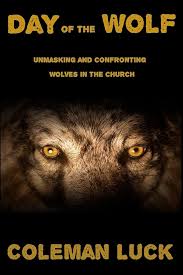
Lambs in the Midst of Wolves

Bottom line up front (BLUF): Lambs in the Midst of Wolves

Text: After this the Lord appointed seventy-two[a] others and sent them on ahead of him, two by two, into every town and place where he himself was about to go. And he said to them, “The harvest is plentiful, but the laborers are few. Therefore pray earnestly to the Lord of the harvest to send out laborers into his harvest. Go your way; behold, I am sending you out as lambs in the midst of wolves. Carry no moneybag, no knapsack, no sandals, and greet no one on the road. Whatever house you enter, first say, ‘Peace be to this house!’ And if a son of peace is there, your peace will rest upon him. But if not, it will return to you. And remain in the same house, eating and drinking what they provide, for the laborer deserves his wages. Do not go from house to house. Whenever you enter a town and they receive you, eat what is set before you. Heal the sick in it and say to them, ‘The kingdom of God has come near to you.’ 10 But whenever you enter a town and they do not receive you, go into its streets and say, 11 ‘Even the dust of your town that clings to our feet we wipe off against you. Nevertheless know this, that the kingdom of God has come near.’ 12 I tell you, it will be more bearable on that day for Sodom than for that town. (Luke 10:1-12, ESV)

Context: This is where the Lord Jesus Christ sends out the 72. They were to bear witness to Christ, the truth. But Jesus told them something very, very important. It was an image they’d track with, something they saw regularly—sheep and wolves. Jesus tells them, “I am sending you out as lambs in the midst of wolves” (Lk 10:3, ESV). Why did Christ use that metaphor? Well, because the forces that hate the truth are like wolves; they’re out to devour. To quote Jesus’s words to Nicodemus, “the people loved the darkness rather than the light because their works were evil” (John 3:19, ESV). See Christ’s consistent teaching? Be wise, be discerning, be alert to the wolves. Again, and again, and again, his teaching emphasizes this.

Encouragement: If you’re perhaps like I am, you have sung great hymns of the faith like “Amazing Grace” and “How Great Thou Art” and “It Is Well” hundreds of times in your life. I certainly have. But do we believe what those hymns teach—things like that we sinners are “wretches” who are saved via God’s amazing grace; that “God, His Son not sparing, sent Him to die”; and that “Though Satan should buffet, though trials should come, Let this blest assurance control, that Christ hath regarded my helpless estate, and hath shed His own blood for my soul”?

That’s the reason for the seriousness of understanding Christ’s teaching about wolves, and how God’s people are sent out as lambs in the midst of them. We’re to recognize the battle lines; we’re to understand the war into which we are commissioned by the Lord; we’re to see why the imagery of wolves and sheep pervades the Bible and should therefore fill our minds. Why? To teach us that the battle is not ever won by us. We’re simply sheep. The battle was won by the Lamb of God, Christ the Lord. Our duty is fidelity to him. As Esther said, “and if I perish, I perish” (Esther 4:16, ESV). Ultimately, it’s faithfulness to the truth that conquers. All lies will be exposed in God’s time. Our job is just to trust the Lord and be faithful.

Lessons via Pictures

Strong writing employs vivid imagery. Why? Well, it is kind of like the cliché says: Every picture tells a story. It is the same when it comes to the wisdom literature in Scripture. In Proverbs, for example, look at how image-rich Solomon’s words are: “Keep your heart with all vigilance, for from it flow the springs of life. Put away from you crooked speech, and put devious talk far from you. Let your eyes look directly forward, and your gaze be straight before you. Ponder the path of your feet; then all your ways will be sure. Do not swerve to the right or to the left; turn your foot away from evil” (Proverbs 4:23-27, ESV).  

The Images:

* The heart is compared to a spring of water.

* Deceptive speech is visualized as ‘crooked’ ways

* Being wise about the way one walks is compared to the eyes to the front, walking the straight and correct path.

Connection: For several years, my family and I lived in Savannah. We absolutely loved it. The beauty of parts of Savannah is stunning. The food is excellent if you know where to go. The Revolutionary War history is pervasive. There are several parks there that we often walked and lounged in. The list is long of things I love about Savannah.

But the image of eyes looking directly forward that Solomon uses in Proverbs 4 reminds me of the surreys that were common in the touristy sections of Savannah. The horses would pull carriages with tourists. The drivers of the buggies would narrate the history of Savannah–famous writers and architects and leaders who were part of Savannah’s impact. But those horses had leather shingles on their heads that kept their eyes looking ahead. They were not to be distracted. They were to walk the straight path, the way the man driving the buggy led them down the brick and stone streets downtown.

Encouragement:  It is that image—of focus upon the straight path that remains with me. Isn’t there wisdom here? I grew up in church, and I can still hear the country preachers under which I sat for many years, quoting the psalms. One of the verses I don’t remember not knowing was this one: “Your word is a lamp to my feet and a light to my path” (Psalm 119:105, ESV). Again, the image is so clear.

3 April 2025: Another Pat Conroy Piece Read

Read another Conroy piece, this one a memoir about his year teaching students isolated from ‘cultured’ America–black and segregated students in the mid-twentieth century, just a boatride from Savannah, GA, who endured in a universe of illiteracy, superstition, racism from all sides, snakes, hogs, swamp, shrimp, oysters, and heart sufficient to touch all who will attend.

Again, Conroy pressed his finger into my heart, prodding me to labor to try and make a difference for good.

The Hard Questions (Part 2)

As promised, here’s Part 2 in a short exploration of the problem of evil and suffering (theodicy). I do not know of anyone who is honest who has not wrestled with the problem of evil and suffering. I mean, who among us does not know suffering either first-hand or know of someone who has suffered incredibly?

I think, for example, of those people who longed to have children, but could not, for any number of reasons. I think of parents whose children have died. I know few sorrows greater than outliving one’s children. It runs against the grain of our most natural understanding. I think of those who’ve suffered physical torture and abuse at the hands of evil men. I think of the sorrow of watching loved ones succumb to dementia and the rotting of their minds and natural functions. I think of the casualties of war–those who suffer from contaminated earth and resources. I think of the Vietnam-era Soldiers, Sailors, Airmen, and Marines who often suffered immensely from the effects of poisons that were used during that war. I think of fellow Soldiers I’ve known who’ve lost parts of their bodies and souls in service to what they may’ve initially believed to be just and/or noble causes. I think of children who, though in the bloom of youth, are instead abused, trafficked, and sold due to the vileness of man’s corrupted nature. This is not even to mention so-called natural disasters like tornadoes, hurricanes, typhoons, floods, fires, volcanoes, et al. The list could continue perhaps indefinitely.

The biblical worldview speaks to this, of course. Below are some initial thoughts on the problem of evil and suffering:

  • Scripture acknowledges the existence of evil and suffering; it does not (like some cults and other worldviews) deny evil or suffering, or downplay their vast impact.
  • Scripture teaches that God both uses evil and suffering and is sovereign over them. In fact, all things ultimately redound to God’s glory.
  • Scripture teaches that God is a Savior by nature. If moral rebels refuse God’s offer of salvation, redemption, and restoration, that says more about man’s nature than it does about the problem of theodicy.

These are just some of the initial thoughts for such a tender issue and foundational topic. More to come… Thanks for reading along so far.

The Crucial Significance of ‘If’

Bottom line up front: The Crucial Significance of If

Text: Three is an important and pervasive number in Scripture. God is called holy, holy, holy (Isaiah 6:3; Revelation 4:8). After his crucifixion, Jesus was buried; three days later, he arose, just as he had said (Matthew 28:6). Jonah was in the belly of the great fish for three days and three nights (Jonah 1:17). God is triune (Father, Son, and Holy Spirit—one God in three persons). Peter denied the Lord Jesus Christ three times (Luke 22:34). Again, again, and again, we see that God uses three often in Scripture.

Context: It’s the same pattern in Proverbs 2, in just the first few verses. The word if is used three times to show the condition of God’s wisdom for all who might receive it. “My son, if you receive my words …” (Proverbs 2:1, ESV). And in verse three, “yes, if you call out for insight” (Proverbs 2:3, ESV) and the following verse read, “if you seek it like silver …” (Proverbs 2:4, ESV).

How clear is that? If denotes that a condition must be met. If this, then that. But only if.

Encouragement/takeaway: Over and over and over, God calls out with offers to all who will hear and obey. If, if, if … Who will respond in repentance and faith? That is God’s knowledge alone. Our job is to be obedient to herald the truth. Those who respond in repentance and faith will be saved. Those who refuse will receive justice. No one receives non-justice. Some receive grace and others harden themselves. Again, again, and again, you see that pattern in Scripture.

I’ve been in ministry—military and civilian—for decades now. I’ve seen God grip men and women and make them tender to the truth. I met with a young man even this very week who is planning to leave his position of command in the Army to enter the Christian ministry as a chaplain and pastor.

I’ve also seen men and women over my decades in ministry who hardened themselves and went a very different direction; they hated God and embraced an anti-God lifestyle. That is the way it goes. But there that little grammatical conjunction is again, and again, and again in Scripture: If.

A Primer on Teleology

Issue: The issue of purpose/goal is unavoidable.

Context:  The academic term for this is teleology. It simply means the issue of purpose/goal/end for which something’s designed. Telos in Greek simply means “end, goal, or aim.” And logos means “word, reason, system.” So, teleology is the system or reason regarding purposes/goals/aims.

The Issue Made Plain: As Soldiers, we’re guaranteed in our official Army doctrine (FM 7-22 and FM 3-83, e.g.) the following as part of what the Army calls Religious Support: “RS includes providing those aspects of religious education, clergy counsel, pastoral care, authentic worship, individual spiritual readiness practices, and faith group expression that would otherwise be denied as a practical matter to Soldiers under the varied circumstances of military contingencies” (FM 3-83, 1-12).

Encouragement: There is always a God of the system. We Soldiers, and the Civilians we serve, invariably worship at an altar. It’s simply a matter of whether that altar is true or false. Worship is inescapable. Something or someone will always demand allegiance. This is what I mean when I say that teleology is unavoidable. “Man is incurably religious,” is bromidic because it’s so demonstrably true. When we see Soldiers—young, old, or somewhere in between—rest assured that each one has a view about his/her purpose/goal for serving.

Our spiritual core demands answers regarding the unavoidable issue of purpose. Just as commanders are to declare their intent to the units they lead, each of us is to know his/her heart, soul, mind, and strength vis-à-vis the issue of teleology/purpose. It’s oft cited for good reason, and that’s Frankl’s wisdom in Man’s Search for Meaning: “Those who have a ‘why’ to live, can bear with almost any ‘how’.”