I was listening to a podcast awhile ago and the host mentioned he was reading Weaver’s Ideas Have Consequences, and how much he (the host) was benefiting from studying it.
A few days ago I ordered it, and am halfway through it now, and could not agree more with Jon Harris’ appreciation of the book.
Weaver was an English professor (as will be evident to all who read the book), so I’m quite at home with his allusions to the Classics, but his thesis is as germane and vital today as it was when he penned the book–which, of course, was his entire point: When we abandon the universal truths and wisdom, we disintegrate spiritually, intellectually, and morally.
Issue: Why Some Hear & Understand & Yet Others Don’t
Intro: One of the beauties of teaching through the 66 books of Scripture systematically and verse-by-verse consecutively is that you must address the hard sayings of Jesus. You can’t cherry-pick if you go through Scripture faithfully. This week I’m in Matthew 13 where Jesus tells the Parable of the Sower. This issue is straightforward: Why do some people see, hear, and respond to the truth while others remain blind and hardened to the truth and reject it?
Below is the passage from Jesus’ own lips:
13 That same day Jesus went out of the house and sat beside the sea. 2 And great crowds gathered about him, so that he got into a boat and sat down. And the whole crowd stood on the beach. 3 And he told them many things in parables, saying: “A sower went out to sow. 4 And as he sowed, some seeds fell along the path, and the birds came and devoured them. 5 Other seeds fell on rocky ground, where they did not have much soil, and immediately they sprang up, since they had no depth of soil, 6 but when the sun rose they were scorched. And since they had no root, they withered away. 7 Other seeds fell among thorns, and the thorns grew up and choked them. 8 Other seeds fell on good soil and produced grain, some a hundredfold, some sixty, some thirty. 9 He who has ears, let him hear.”
The Teaching: The disciples did then what people still do today. They asked questions. “Why do you speak to them in parables?” (Mt 13:10b). Jesus’s response was straightforward—some can see and hear spiritual truth; but others refuse and remain blind and deaf to it:
10 Then the disciples came and said to him, “Why do you speak to them in parables?” and turn, and I would heal them.’
Don’t Miss This:
11 And he answered them, “To you it has been given to know the secrets of the kingdom of heaven, but to them it has not been given. 12 For to the one who has, more will be given, and he will have an abundance, but from the one who has not, even what he has will be taken away. 13 This is why I speak to them in parables, because seeing they do not see, and hearing they do not hear, nor do they understand. 14 Indeed, in their case the prophecy of Isaiah is fulfilled that says:
“‘“You will indeed hear but never understand, and you will indeed see but never perceive.” 15 For this people’s heart has grown dull, and with their ears they can barely hear, and their eyes they have closed, lest they should see with their eyes and hear with their ears and understand with their heart and turn, and I would heal them.’
16 But blessed are your eyes, for they see, and your ears, for they hear. 17 For truly, I say to you, many prophets and righteous people longed to see what you see, and did not see it, and to hear what you hear, and did not hear it. (Mt 13:11-17)
Encouragement: The truth is that not all will admit the truth. Many remain blind and deaf. But another truth and great encouragement is this: Many will admit the truth, see, and hear it, and respond appropriately to it. This is why we continue to press on—because we are assured that God will grant some eyes and ears to see and hear. This is why we don’t lose hope. This is why we continue to sow the seeds of truth. Because God’s word will not return void but will accomplish its intended purpose (Isaiah 55:11).
Got home today after a long week. A beautiful November day, slight breeze, coolness in the air. And some of the girls showed up to enjoy a protein snack.
Looking forward to being with the saints from class tomorrow.
Many years ago, when I was an undergraduate student studying philosophy, several books I read were by the historian and philosopher Will Durant. In one of Durant’s volumes, he wrote something that remains with me all these years later: “The greatest question of our time is not communism versus individualism; not Europe versus America; not even the East versus West. It is whether men can live without God.”
I think one reason Durant’s observation has remained with me is because even non-philosophical types can surely see the devastating effects of secularism in the West. When you see a civilization destroying itself because it refuses to admit men are men, that women are women, and that Diversity, Equity, & Inclusion (DEI) madness leads to unimaginable tragedies, you can be sure that you’re witnessing a culture that professes itself wise but demonstrates its folly. That’s exactly what Scripture says is the root lie that sinners imbibe:
18For the wrath of God is revealed from heaven against all ungodliness and unrighteousness of men, who by their unrighteousness suppress the truth. 19 For what can be known about God is plain to them, because God has shown it to them. 20 For his invisible attributes, namely, his eternal power and divine nature, have been clearly perceived, ever since the creation of the world, in the things that have been made. So they are without excuse. 21 For although they knew God, they did not honor him as God or give thanks to him, but they became futile in their thinking, and their foolish hearts were darkened. 22 Claiming to be wise, they became fools . . . . (Romans 1:18-22)
That’s what secularism does. It spits in the wind, and then laments the slimy consequences. I sense that some folks are finally wising up, however. When I board a plane to fly, I don’t relish the idea that my pilots have their jobs because of DEI insanity; I want the best pilots possible. I could not give a rip about their skin color or pronouns.
But that’s what secularism does; it exchanges reality for upside-down world. It substitutes (or tries to, anyway) made-up things for truth. Everyone remembers the classic scene from Full Metal Jacket when Gunnery Sergeant Hartman, teaching “Pyle,” the marvelously failing Marine recruit, his left from right. Remember how Hartman taught Pyle? Whack! “What side is that, Pyle??!!” Whack! “What side is that, Pyle??!!”
The daily humiliations the West is experiencing due to its embrace of secularism is kind of like a series of slaps from Drill Instructor Hartman. Whack!
And yet, God calls out to all with ears to hear:
Does not wisdom call? Does not understanding raise her voice? 2 On the heights beside the way, at the crossroads she takes her stand; 3 beside the gates in front of the town, at the entrance of the portals she cries aloud: 4 “To you, O men, I call, and my cry is to the children of man. 5 O simple ones, learn prudence; O fools, learn sense. 6 Hear, for I will speak noble things, and from my lips will come what is right, 7 for my mouth will utter truth; wickedness is an abomination to my lips. (Proverbs 8:1-7)
Do we want wisdom? Then we must go to the fountain of all wisdom.
My now-deceased godly grandparents used to say this, and it’s stuck with me all these years: “What’s down in the well comes up in the bucket.” Yes and amen. Folks, there’s a lot of stuff coming up in the buckets of the world, and most of is not something you’d want to inhale. And yet God calls out. In my faith tradition, one of our greatest confessions summarizes it this way. God is “infinite, eternal, and unchangeable, in his being, wisdom, power, holiness, justice, goodness, and truth” (WSC, Answer 4).
Secularism, DEI insanity, up called down & down called up—no thanks. “What’s down in the well comes up in the bucket.” Amazing how wise my grandparents’ generation was with their aphorisms. It’s almost as if they knew the fountain of all wisdom.
America’s states and commonwealths never cease their aesthetic displays. In flying to the West from the Southeast on clear days, one can behold much, if he simply attends–from seemingly endless fields in Iowa and Nebraska, to the first of the Rockies in Wyoming and then Idaho.
Finally I arrived in Boise, a fine town in a valley, with ample walking trails and mountains around.
Headed next to Minnesota for a quick turn and burn, then back to Dixie.
Looking forward to getting home Saturday to see the family and class with the saints from church Sunday.
“When you want to help people, you tell them the truth. When you want to help yourself, you tell them what they want to hear” (quoted in Coleman Luck’s Day of the Wolf).
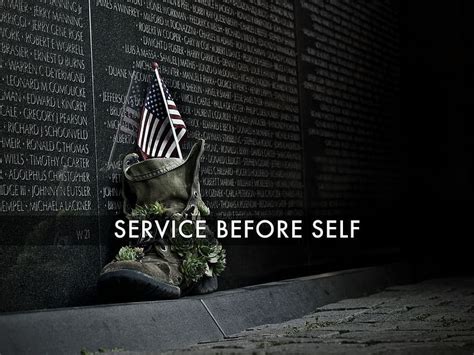
There I was, in the airport, just minding my own business. I was completing a needed book, Coleman Luck’s Day of the Wolf. I only had a few pages left when a polite, soft-spoken, tall man approached me over my right shoulder. He held out a blue business card with his name and organization’s information on it. As I took the card with my left hand, he shook my hand, saying, “Thank you for your service.”
I could tell right away he was prior military. The way he carried himself, his self-confidence, his poise. I looked at his black shirt. One of the writings over his left breast pocket indicated he’d been with U.S. Army Special Forces. And his demeanor bore that out.
“I’m part of a Christian faith-based resilience program to help us heal. Thanks, again,” he said.
“I appreciate your service, too,” I said. “I think I understand more now.”
We shook hands again. He gently walked across the white tile corridor to board his flight to Miami.
I looked at the card he’d handed me and navigated to his organization’s website. Just like he said, there it was–the organization, his bio, the organization’s Christian worldview and outreach, and the backstory of how/why he and another retired soldier had begun the work together.
I’m invariably relearning how others-focused Godly leaders are.
One of my favorite lines about Christian service is this: “Our lives are the grapes that He [Christ] crushes into drink for parched souls.”
Abel, I appreciate your years of service in uniform and your now (arguably more signficant) Christian service to America’s warriors whose souls need the balm of Gildead more than we realize or admit. Salute.
Introduction: Over the last 23 years, I have taught English either part-time, online, full-time, or some combination thereof, in addition to serving my nation as a chaplain and soldier. And one of the literary zingers I have often shared with students is this line from American poet Emily Dickinson:
“Hope” is the thing with feathers – /That perches in the soul –
It remains one of literature’s greatest lines, in my view. Why? Because we can survive sleep deprivation for a bit, hunger for a bit, thirst for a bit, isolation for a bit, fatigue, and even dehydration for a bit, but what’s needed to sustain a soldier, male or female, rich or poor, day in and day out, is what Dickinson was calling our attention to: hope.
Connection & Encouragement: In the Christian tradition, many would be familiar with the apostle Paul. And one of his most powerful pieces of the New Testament centers on this theme of hope because of the gospel’s truth:
16 So we do not lose heart. Though our outer self is wasting away, our inner self is being renewed day by day. 17For this light momentary affliction is preparing for us an eternal weight of glory beyond all comparison, 18 as we look not to the things that are seen but to the things that are unseen. For the things that are seen are transient, but the things that are unseen are eternal. (2 Cor 4:16-18 ESV)
Why did Paul write that? Because he knew the Author of men’s souls, the Author of all things. Therefore, he endured. And so can we. Press on, looking to the Anchor of the souls of men, the Author of hope.
Each month with a group of believers from church, our Sunday school class gathers multiple times for fellowship. We do what we call “Breakfast Sunday” the first Sunday of each month before I begin teaching. Then on the second Saturday of each month, we gather for a time of fellowship and fun, invariably as part of eating together and just hanging out for games and time together. “Monthly Fellowship” (such a clever title, right?) God uses to craft and deepen Christian relationships. We are not in our “Sunday clothes,” if you will, but in our everyday threads.
What has happened over the years is that the class has grown of course; but more than that, it has deepened theologically. That’s the key. There is a spirit among the people that is special. Why? It’s because they understand that the spiritual connection that exists among them is the most important one. We are designed for spiritual connection. And when we act in accordance with God’s design, we (to change the metaphor) fire on all cylinders.
Connection & Encouragement: I am quite aware that a nation’s army is not the church. But the centrality of soldiers’ spiritual lives ought not be annexed to a check-the-box bureaucratic regimen. Believe me, when things get real, soldiers and families are spiritual. Those theological terms some people banter around on holidays suddenly are not mere terms; they become viscerally important. I’ve never led a memorial service at a unit where I didn’t see commanders, 1SGs, and soldiers break down when they stood before a downturned weapon with a fellow soldier’s dog tags hanging from the pistol grip. We are designed for spiritual connection.
May we have the intellectual honesty and courage to follow the true and wise one, or as Christ says in Scripture, ” . . . wisdom is justified [shown to be right/vindicated] by all her children” (Luke 7:35).
Had a blast at the TTB concert in ATL. Their band showcased talents in live performance that sounded just as fine as their records, even better. Derek’s playing is incomparable, esp. with what he does with a slide, as if he channels Duane Allman and even raised the bar. And Susan’s voice (her blues guitar is also wonderful) is as moving as scents of honeysuckle in spring and cicadas at twilight. They played their own tunes, plus some classic Dylan tunes like “Tangled Up in Blue” and “Don’t Think Twice, It’s All Right.” A sold-out show for good reason, salute to TTB for continuing to produce great blues music that honors the genre, great songwriters and musicians of the past, and contributes to the soulful musical canon.















 MIND & MATTERS