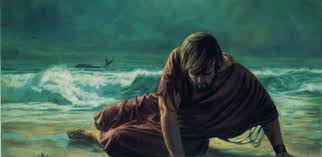
Jonah as Forerunner

Intro: Currently with our church, I am teaching through Matthew’s gospel. This Sunday we are up to verses 38-42 of Matthew 12. This is the passage, “The Sign of Jonah,” that Christ delivers to unbelieving Pharisees and others as he continues His path to Calvary:

Text:

38 Then some of the scribes and Pharisees answered him, saying, “Teacher, we wish to see a sign from you.” 39 But he answered them, “An evil and adulterous generation seeks for a sign, but no sign will be given to it except the sign of the prophet Jonah40 For just as Jonah was three days and three nights in the belly of the great fish, so will the Son of Man be three days and three nights in the heart of the earth. 41 The men of Nineveh will rise up at the judgment with this generation and condemn it, for they repented at the preaching of Jonah, and behold, something greater than Jonah is here42 The queen of the South will rise up at the judgment with this generation and condemn it, for she came from the ends of the earth to hear the wisdom of Solomon, and behold, something greater than Solomon is here. (Mt 12:38-42 ESV)

The Matter at Hand: Is the Christian faith a call to the abnegation of reason? Absolutely not! On the contrary, it is rooted in the historical realities easily verified empirically by the intellectually honest. The list is long of skeptics who set out to disprove Christianity and ended up becoming stalwart defenders: C.S. Lewis, Lee Stroebel, the apostle Paul, Doubting Thomas, J. Warner Wallace, Josh McDowell, et al.

Encouragement: Jesus predicted His betrayal, arrest, crucifixion, three days in the tomb, and his resurrection. World history has never gotten over it, and never will. Because all of the promises of God find their ‘Yes’ and ‘Amen’ in Him, as the NT makes clear (2 Corinthians 1:20). There’s a reason our calendars’ fixed point of reference is Christ: B.C. (before Christ) and anno Domini (in the year of our Lord). Christianity is the true, historical, redeeming reality of God taking on flesh and ransoming a people for Himself. It is theology made visible. We don’t have to check our minds to believe Christianity; we have to check our pride. Christ refences Jonah’s historicity as a way of teaching the people: the greater Jonah had come. Just as Jonah was the prophet and truth-teller to Nineveh (present-day Iraq), Christ was and is the truth-teller to all who will listen. Churchill wrote that the truth was such a valuable thing that it had to be surrounded by a bodyguard of lies. Exactly.

Because the veracity of the Christian worldview and of the God-man are undefeatable, those who refuse truth reveal themselves as the enemies of all righteousness.

If you sometimes struggle with wondering, “Lord, will the wicked always prosper and the righteous always suffer mockery in this world?” the answers involve the reality that there’s always the cross before the crown. God will set everything to rights, and all will be revealed. Trust the Lord, do good even unto His enemies, and fight the good fight, knowing that this is God’s world, and we all will answer. Press on.


Theology Made Visible

Today I completed editing and re-editing my message for Sunday. It is good to gather with the saints of church. We are in Matthew 12:33-42, about (among other things) our words. Our professions of faith must be evidenced via matching deeds (vv. 33-37). The authentication of Christ’s prophetic words about His resurrection was unconquerable–because of His works. Think of this vis-a-vis the historical person of Jonah (vv. 38-42). Christ referenced Jonah because he (Jonah) was a real flesh-and-blood man, too–a man of history whose life and imprint were known to countless people. (Can you say, Nineveh?)

Jesus predicted His resurrection. And world history has never gotten over it, and never will. Why? Because all of the promises of God find their ‘Yes’ and ‘Amen’ in Him, as the NT makes clear (2 Corinthians 1:20). Because of 1 Corinthians 15. Because He rose, just as He said.

Christianity is the true, historical, redeeming reality of God taking on flesh and ransoming a people for Himself. It is theology made visible. We don’t have to check our minds to believe Christianity; we have to check our pride.

A Favorite Prayer

This morning in my reading I came to one of my favorite prayers recorded in the Bible. There are countless moving and profound prayers in Scripture. Daniel’s prayer is majestic; David’s countless poetic outpourings in Psalms are inexhaustible; and many pastors love to reference John 17, of course; and there is the Lord’s Prayer that Scripture records for us.

But for me, one of my enduring favorites is found in Luke 18. The context is crucial. It centers upon a Pharisee and the tax collector:

10 Two men went up into the temple to pray, one a Pharisee and the other a tax collector. 11 The Pharisee, standing by himself, prayed thus: ‘God, I thank you that I am not like other men, extortioners, unjust, adulterers, or even like this tax collector. 12 I fast twice a week; I give tithes of all that I get.’ 13 But the tax collector, standing far off, would not even lift up his eyes to heaven, but beat his breast, saying, ‘God, be merciful to me, a sinner!’ 14 I tell you, this man went down to his house justified, rather than the other. For everyone who exalts himself will be humbled, but the one who humbles himself will be exalted.” (Luke 18:10-14 ESV)

There is so much here. We can misspend a lot of time and energy playing the lethal comparison game. You know, the “Well, I’m not like _________” game, wherein we make ourselves into fine, upstanding blessings to the world. We so quicky forget that God is the Judge, not a fellow sinner.

The Pharisee, per Jesus, remained spiritually condemned. His pride damned him. But the repentant, humble, contrite tax collector, how did he fare, per Jesus?

“I tell you, this man [the tax collector] went down to his house justified, rather than the other [the Pharisee]” (Luke 18:14a ESV).

And the tax collector’s prayer? “God, be merciful to me, a sinner!” (Luke 18:13 ESV)

Happy Reformation Day!

Post tenebras lux. After darkness, light. Ad fontes. Back to the sources. Martin Luther, indubitably among the most important and influtential men to ever make his mark, we remain indbebted to you, sir. So very indebted.

This gem from Martin Luther: “Peace if possible; truth at all costs.”

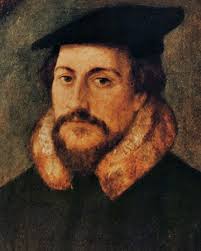
And this gem from John Calvin: “Faith is like an empty, open hand stretched out toward God, with nothing to offer and everything to receive.”

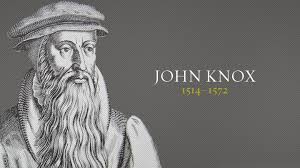
And this gem from John Knox: “The Scriptures of God are my only foundation and substance in all matters of weight and importance.”

I say again: Happy Reformation Day!

Gain Through Loss

Aging is humbling. Driving back to work after my audiology appointment, I could still hear (forgive the pun) the audiologist’s unsympathetic voice in my mind: “Your hearing has gotten worse.” She had uttered it with about as much concern as a government minion when he tells you that you owe still more taxes.

The audiologist ordered new hearing aids for me. Again, she was so friendly. She reminded me of Laurence Olivier’s character of Szell, the Nazi dentist, in the 1971 film Marathon Man. She had similar bedside manners–about as friendly as ice with frost on top–just for grins and giggles.

I read the novel Marathon Man for the first time in my 10th-grade A.P. English class, and neither that reading nor the terrifying film left me. I can still hear (irresistible hearing pun again) the slapping-upon-pavement sounds of Dustin Hoffman’s tennis shoes as he ran the streets of New York, and later arranged for his ‘neighbors’ to rob him. (It’s a wonderful story and film, in my view.)

But back to the point. My hearing had worsened. It is embarrassing. I should probably rue my many days of blasting shooting cans at the end of the dirt road by my great grandparents’ farm in south GA, and shooting quail and doves as a boy (again with no hearing protection), and years of serving in infantry, cavalry, and artillery units . . . well, the eardrums can take a beating.

Some of my buddies joked about me today as I returned. I took it all, as was fitting. I love these guys–so young, so vibrant, so Icarus-like. The sun’s no threat, they exude. You can’t listen to “I Am the Walrus” on low, they imply. Right. Tell me that when you get hearing aids.

But as I walked out late this evening, a buddy of mine asked me to come shoot over the next few weeks at our various ranges. I get to not be a chaplain for a few minutes, and get some more trigger time with the guys after hours. That’s it, folks; that’s the beauty. It involves guys who love to shoot, and to shoot well, and get more trigger time. I can’t wait; I’m already practicing my breathing and trigger squeeze. (I’ll even wear ear protection, though it’s many years too late now.) Lock and load. How can one not love that phrase?

MTOE for the Soul

BLUF: MTOE for the Soul

When I was in combat arms units (often cavalry squadrons and light and/or mechanized infantry units), our Modified Table of Organization and Equipment (MTOE) was just that … modified per the mission set. Today when I returned from an audiology appointment, I was again reminded of how things necessarily modify. My hearing (forgive the grammar) ain’t what it was when I began in the military, but it is what it is, as the saying goes. As I drove to work later, I came in and our supply and signal Soldiers helped install a new laptop and monitor in my office, and I was thrilled. Suddenly my documents were quickly accessible, and the colors were clear on my screen. There remain a few hiccups, of course, in terms of login information and the credentials on the ID card, but that is often the way it goes when you get new equipment. Trying to get the myriad systems to crosstalk invariably brings challenges.

But all these modifications got me thinking. These adaptive means are part and parcel of soldiering. How much more vital, then, is our spiritual readiness, our spiritual armor? It is so often referenced that I fear sometimes that we have become numb to it, but there is a vital passage of Scripture penned by the apostle Paul and written to Christians in Ephesus (a port city in modern-day Turkey), about the spiritual MTOE God’s people are to have:

 11 Put on the whole armor of God, that you may be able to stand against the schemes of the devil. 12 For we do not wrestle against flesh and blood, but against the rulers, against the authorities, against the cosmic powers over this present darkness, against the spiritual forces of evil in the heavenly places. 13 Therefore take up the whole armor of God, that you may be able to withstand in the evil day, and having done all, to stand firm. 14 Stand therefore, having fastened on the belt of truth, and having put on the breastplate of righteousness, 15 and, as shoes for your feet, having put on the readiness given by the gospel of peace. 16 In all circumstances take up the shield of faith, with which you can extinguish all the flaming darts of the evil one; 17 and take the helmet of salvation, and the sword of the Spirit, which is the word of God, 18 praying at all times in the Spirit, with all prayer and supplication. To that end, keep alert with all perseverance, making supplication for all the saints, 19 and also for me, that words may be given to me in opening my mouth boldly to proclaim the mystery of the gospel . . . (Ephesians 6:11-19 ESV)

Encouragement: Our MTOE is comprised (among other things) of gear for the soul: 1) a recognition of the true enemy (Satan and his minions); 2) endurance; 3) courage; 4) faith in the trustworthiness of God; and 5) prayer. But above all, it’s simple perseverance, the refusal to quit. I have a buddy who is one of the humblest guys I know, but also one of the toughest. I have asked him on multiple occasions to tell me about those long nights and days in some of his rigorous schools and he invariably says this to me: “You just can’t quit. Just keep going.” Well, there you go. There it is.

Dostoyevsky’s Brilliance (Pt. 1)

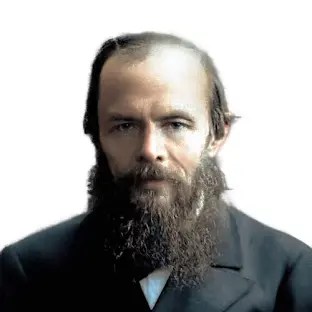
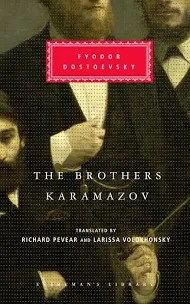
It is hard to say why but I get on runs where I read my favorite writers’ works over and over. 2024 has been filled so far with some of my enduring favorites. I reread Notes from the Underground and Crime and Punishment again this year, but now I’m about 200 pages into The Brothers Karamazov again.

Just when I thought I knew what there was to know about it, upon this rereading, I keep discovering brilliance at each turn–the seeds of discernment Dostoyevsky plants early on in the book about Alyosha and the trajectory Ivan’s going to take, and of Dmitri’s dangers, and of the father’s toxicity, and of the damage a toxic weak father wreaks.

The novel consistently ranks among the most important and best works of literature, and upon this rereading, I could not agree more.

A few years ago, I got on a kick where I read a bunch of biographies of Dostoyevsky. I would very much like to pursue further studies in that area, but that aside, what I continue to find in his work is that he saw to the heart of the issues regarding Christ or chaos, truth or the lie, God or Satan.

If you will do the work (Dostoyevsky’s literary world is admittedly heavy and lengthy), the rewards are so worthwhile. Tolle lege.

Eliot’s Poetry, God’s Wisdom, & a Summons

The world turns and changes,

But one thing does not change.

In all of my years, one thing does not change,

However you disguise it, this thing does not change:

The perpetual struggle of good and evil (T.S. Eliot, “The Rock”)

When I reread that recently, it struck me like never before. Why? I think it may because I read some articles from various cultural prognosticators and their themes were the same. And you might surmise what those predictions were. One side of the culture in our nation has openly declared they will cause massive disruptions if this election does not go their way. They’re promising destruction and upheaval that will make their riots ostensibly related to George Floyd and all the BLM violence, and the burning down of police precincts, and the destruction of private property, and the barricading of zones, etc.  seem like warm-up exercises.

And that terrifies me. Why? Because I would like to think that America has enough wisdom and self-discipline to not have another hot Civil War.

I would argue that we’re in a cold Civil War already. The polarization is so clear that I do not think you can reconcile parties that have completely different views of reality. When you have an entire party that thinks you can have a nation without borders, you cannot reason with such a person. (Isn’t it ironic that when the criminal shows up on such a person’s private property and loots, the criminal is met by walls, security, resistance, guns, law enforcement, and punishment?)

But somehow that paradigm is inappropriate at the national level? Anyone else go, “Huh?” That’s what I mean by a cold Civil War. The values of the conflicting worldviews are irreconcilable. One way will prevail. Neutrality is a myth.

All this is just another way of stating what the poet Eliot was driving at in verse. There are such things as good and evil. To quote the Old Testament prophet Isaiah, “Woe to those who call evil good and good evil, who put darkness for light and light for darkness, who put bitter for sweet and sweet for bitter!” (Isaiah 5:20 ESV).

When you have a culture that insists upon folly, divine judgment falls. It’s what is known in theology as oracles of woe. They are judgments of God upon the recalcitrance of people. But they have a purpose—to turn us to our senses and the righteous ways of God.

Encouragement: Here’s what I long for folks to understand: God desires to do good unto His people, but humility always comes before honor:

13 Oh, that my people would listen to me,
    that Israel would walk in my ways!
14 I would soon subdue their enemies
    and turn my hand against their foes.
15 Those who hate the Lord would cringe toward him,
    and their fate would last forever.
16 But he would feed youwith the finest of the wheat,
    and with honey from the rock I would satisfy you.” (Psalm 81:13-16 ESV)

Moral Leadership

BLUF: Moral Leadership Training (MLT) is unavoidable; it is only a matter of which morality is being instilled. Per Army Regulation 165-1, “Many moral issues affect the lives of Soldiers, Civilians, and Families, impacting effectiveness of service, command climate, unit readiness and cohesion. The commander uses MLT [Moral Leadership Training] to promote unit readiness, good order and discipline, warrior ethos, spiritual fitness, positive moral choices and Soldier and Family care” (Section IV, p. 27). It should be obvious, but the West, America, and the Army are amidst a cataclysmic cultural and moral sea change. A crucial series of questions will invariably be explored, and some set of values will take precedence. Again, it is only a matter of which values, and which morality will be atop the pyramid.

Will the values be those rooted in the unchanging truths of Scripture, or will they be the shifting opinions of individual men and women whose feet are planted firmly in mid-air? By what standard will values be inculcated in any culture and in a nation’s armies? These are not unimportant questions; they are profoundly important.

I remember when I was a young, enlisted Soldier many years ago, and days and nights when the drill sergeants were teaching us young scouts the basics of land navigation. We’d go out into those hills of Ft. Knox, KY and we’d plot points using protractors, pencils, maps, and our Army-issued compasses. But I was most enjoyed about navigation was terrain association. We would pick major objects that served as solid points of reference; that way, if and when we got turned around at night (and we did), or if the fog had set in, or we had plotted incorrectly, we could always go back to the benchmark, to that fixed point, and say, “Ah, now I see where we went wrong. Let’s start over and be sure we fix our eyes on that which is immovable.”

Those ‘basic’ lessons are fundamentals for a reason. We all need a fixed point. It’s the same regarding Moral Leadership Training (MLT); it’s not a matter of if a morality is being inculcated but only a matter of which one. “Jesus Christ is the same yesterday and today and forever” (Hebrews 13:8 ESV). I sense that we are in a day when there’s a lot of heat and passion about these ideas but often much less light and wisdom. My prayer is that wisdom would be sought and heeded. The fixed point of truth is still where it has always been; the question is, will we have the humility and wisdom to abide by it?

Putting to Silence the Ignorance

Introduction: Recently I was with fellow soldiers in Indiana. Because I have the affections of a country boy, I love my times in America’s heartland. Churches dot the region. And the folks are generally friendly. Though I know nothing about cars or racing, those pastimes are obviously important to a lot of folks from that region. And engines, trucking, and logistics industries thrive there—things like Cummins, and myriad trucking companies, and companies like FedEx and Amazon, etc. But what I love most is the land—the long and wide plaids of fields. When I’m flying into Indy on clear days, Indiana appears as an earth-tone plaid, with seemingly endless furrows, and the trees that border the massive fields this week were ablaze with autumnal pride, as if pumpkins were in their boughs, so orange was the blaze.

Questions: What does this have to do with theological encouragement? I mean, shouldn’t I write about all the political sloganeering and pandering and the stoked animosity? Isn’t that what’s important?

Well, it is not unimportant, I would say. I do think American citizens should vote. And as a Christian, I think we are obligated to vote for the candidate that more closely has demonstrated biblical values-like the sanctity of life, the protection of biblical marriage, the end of all the DEI and woke madness and folly, and the upholding of law and order. Yes.

But what I relearn each time I’m across the country is that the folks with whom I dialogue are so much nicer, so much more humane, so much richer and more complex than political sloganeering would have us believe.

Even folks with whom I might disagree are generally kind people. Sure, there’s always the obnoxious guy/gal; that person’s in every crowd. But generally, folks are just folks. They have a family, friends, work a job/vocation, try to go on vacations occasionally, feed their pets, buy groceries in their zip code, some go to church, and are just normal folks. They’re doing their best to keep a lid on their emotions as they see polarization tempt them towards invective, but by and large, they resist.

So, here’s my encouragement: It comes from the pen of the apostle Peter, writing less than 30 years after the crucifixion and resurrection of Christ:

For this is the will of God, that by doing good you should put to silence the ignorance of foolish people. (1 Peter 2:15 ESV)

We can succumb to the temptation to parrot slanderous bromides; we can descend into tribalism and us vs. them emoting, but we shouldn’t. How do those means invariably play out? Not well. Why not act the way God commends—by “doing good” so that we “put to silence the ignorance of foolish people”? In the end, folly is not a winning strategy. Wisdom is called wisdom for a reason, and folly is called folly for a reason, and trees are known by their fruit.