The Failure of Atheism

Illustration: Recently I listened to two atheists discuss how atheism has failed, and that they fear the West may likely crumble if it insists upon atheism/secularism. But what interested me even more was how shocked the audience members were at this discussion. It was as if they had never connected the dots in their thinking, that secularism/atheism has its feet firmly planted in mid-air. There is no fixed point in atheism. Because there is no fixed point, no transcendent anchor, what remains is opinion/preference. This seems so simple to understand, but it is taking the West so very long to wake up to the insanity of a progressive/secular/atheist utopia. Folks, when you hear people promise heaven on earth, run. Why? Because terror is at the gate. Like Arnold’s poem phrases it, ignorant armies clash by night. Darkness is the predominant metaphor, not light.

The Anchored Lighthouse: The alternative to the insanity of atheism is Christianity. Why? Because it’s Christ or chaos. If that sounds reductionistic, I welcome someone to prove otherwise. We are in a time of moral chaos because we are trying to sail ships on a sea of darkness. There is no fixed point, no anchor, no lighthouse that is unmoving. But the great truth of Christianity is that there is a fixed point, an anchor, a lighthouse that is not only unmoving, but also holy and who redeems. Will you listen to just one verse from David in Psalm 27:1, ESV: “The LORD is my light and my salvation; who shall I fear? The LORD is the stronghold of my life; of whom shall I be afraid?”

Folks, that is not braggadocio or bravado or any such thing. That is a poetic way of saying that God is the anchored lighthouse, that God is the unmoving and transcendent, that God is the fixed point, that God is the Light amidst the darkness. It has always been the choice between Christ or chaos, and the wise person understands the times and knows what he/she ought to do.

While Reading Tonight …

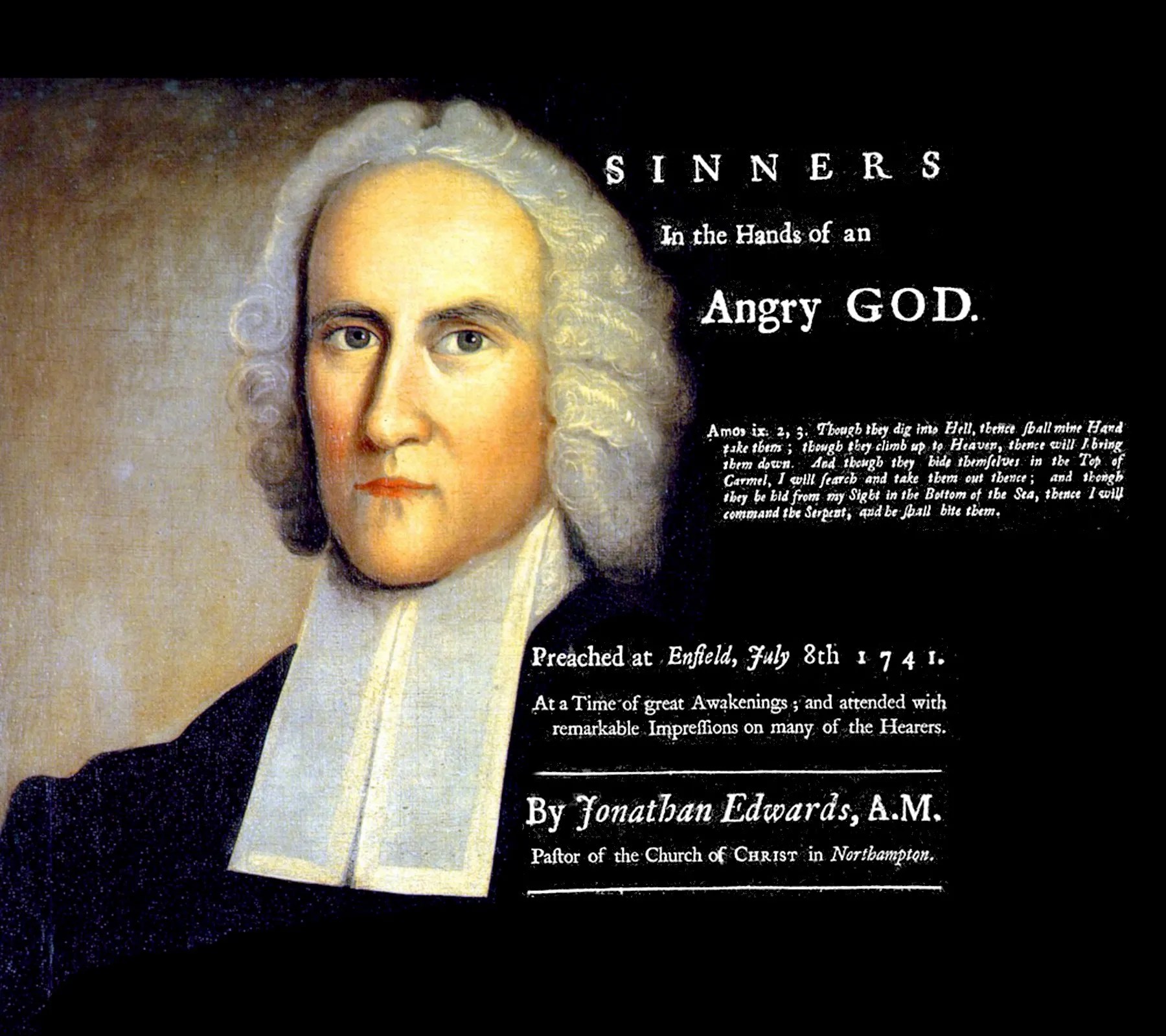
While reading tonight I was in the middle of a long chapter on the reasons Jonathan Edwards preached with deadly concern for himself and his hearers about the biblical doctrine and reality of eternal hell/conscious torment for rejection of God’s grace.

And the writer penned this:

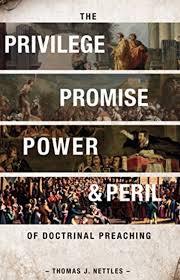
“. . . Edwards preached the doctrine of hell that none should doubt the infinite criminality of refusal to love an infinitely lovely being” (Nettles, The Privilege, Promise, Power, & Peril of Doctrinal Preaching, 61).

Love that phrase from Nettles, “that none should doubt.”

See, folks? That’s a pastor’s concern and deep love for his people. That none should doubt. That’s part of what it looks like to love your people enough to shepherd them–not just to collect a check for “being a pastor” but to actually invest in your people by being with them, stewarding them, shepherding them, caring for them, visiting them, loving them, feeding them truth.

The biblical shepherd preaches and teaches on hell in order to shepherd God’s people into the light of heaven rather than the flames of hell. These are not metaphors.

Pastor Edwards, you good and faithful doulos.

My Current (4) Books:

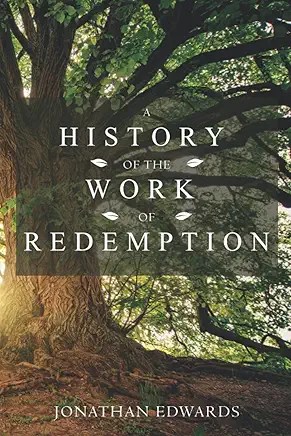
I do not go long without rereading Jonathan Edwards.

  1. I have not discovered a theologian whose mind was as alive to God, or who wielded a pen as deft with language, as that of Edwards. His HWR is a masterpiece.

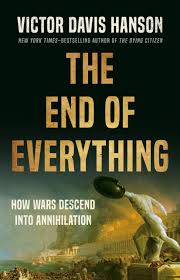
2. Victor Hanson is perhaps the most respected historian writing today, and this volume (like his other books) bears out his deserved reputation.

3. For fiction I am reading one from several years back that I somehow never got to. So far, it is excellent.

4. Fourthly, I am reading another of Tom Nettles’ books. He was my favorite lecturer in church history during my seminary years. Again, highly recommended. If you want to see what preaching is supposed to be, read this book, and then lament over what passes for preaching from most pulpits today.

I Came Across This Zinger

In studying to teach on Matthew 12 this coming Sunday, I was perusing some of my notes and books and Bibles. Inside the front cover of one of my Bibles, I found a quote written down from years ago, but I cannot remember who wrote it. It was nonetheless powerful:

“Our world is not divided by race, color, gender, or religion. Our world is divided into wise people and fools. And fools divide themselves by race, color, gender, or religion.”

“The way of a fool is right in his own eyes, but a wise man listens to advice” (Proverbs 12:15, ESV).

One View Will Triumph, but Which?

“You are what you love because you live toward what you want.” I underscored that line in some of my reading. It reminded me of one the most helpful pieces of counsel I received years ago from a fellow minister: “People do what they want to do.”

When I heard Charlie say that my initial reaction was one of, “Okay, and?” But as the years have worn on and I have suffered some slings and arrows in ministry, and have learned a few things, his words carry more power than ever for me. He expressed what Smith expressed in his book You Are What You Love, namely, that we are inescapably teleological/purpose-driven creatures. We will live toward something—whether that’s God, self, family, career, power, wealth, or whatever.

When one surveys the polarization of the West today, the divisions could not be more overt:

BordersVs.Borderlessness
Prosecution of CrimeVs.Thugocracy; Nihilism
Traditional FamilyVs.Eradication &/or Mockery of Traditional Family
Sanctity of Human LifeVs.Infanticide; Abortion of ‘Undesirables’
Fiscal ResponsibilityVs.Debt, Debt, & More Debt
CharacterVs.Skin Color; Pronouns; Group Identity

And so, I ask myself, what does it appear the West is living toward? The dividing lines are so clear, but what they reveal (one of the things, anyway) is that the two ways are irreconcilable. It’s either revival or bust, as one pundit phrased it. Either we are going to prosecute crimes or we’re not. Either we believe that children should be raised by their mother and father, or that’s just silliness, and all of world history should be ignored. Either we judge people by their character, or we judge them based off the pigment of their skin or how many colors they’ve painted their hair. But the principle remains the same: irreconcilability. One or the other worldview will triumph. We live toward what we want. My hope and prayer for my nation, and for what’s left of Western Civilization, is that we once again return to want the right things.

Living with Uncertainty?

Theme: Living with Uncertainty

Illustration: Because I do not watch TV and restrict paying too much attention to mass media, I knew little of the strikes going on currently by America’s longshoremen. It seems they, too, are reeling from the downturn in our economy of the last three years or so. If you know anything about trade, you know that shipping is essential.

America is wide open to any who will cross, and it is not hard to understand why we are so often struck by the news of more rapes, more murders, more assaults, more robberies, more looting, etc.

Plus, we have a former POTUS nearly murdered on camera. Twice.

And now, America’s military in the Middle East is on high alert due to Iranian missiles being launched into Israel, and continued terrorism from Hezbollah and other Islamic groups.

And another $8 billion are made available to Ukraine. Is anyone else scratching his head? Borderlessness for America, and no funds for soldiers to cover down on America’s soldiers, but another $8 billion for Ukraine and their borders and defense?  

Parts of western NC, eastern TN, GA, SC, and FL are still under water, and lives have been eclipsed and livelihoods devastated by Helene, yet politicians continue with more of the same insanity. Even the most tranquil minds must go, “Huh?” at the current state of affairs.

Politicians go, “It’s his/her fault,” ad infinitum. It’s just more of the same each day. We print money that is worth less and less, and we finance other countries, and the wars just go on and on, and many people get rich. I love soldiering with all my heart, but real life is not like the movies.

Many people are expressing uncertainty. Regardless of political leanings, regardless of what color jersey your team wears, folks are nervous, and there is a massive erosion of confidence in current leadership. How should we then live?

Takeaway:  First, we are told up front that there would be wars and rumors of wars (Matthew 24:6).

Second, we are led by sinners (Romans 3:23). Even wise leaders are but vessels of clay (see Isaiah 18).

Third, leaders (as incompetent or evil as some are) remain under the sovereign rule of God: “The king’s heart is a stream of water in the hand of the LORD; he turns it wherever he will” (Proverbs 21:1, ESV).

Fourth, man’s deepest problem is not the current war or the ones after that, but it is his wicked heart in rebellion against his Creator (Genesis 3:6-8; Ephesians 2:1-3; Jeremiah 17:9; Romans 3:10-19).

Perhaps my favorite nugget of wisdom from some people who influenced my worldview is this:  “What’s down in the well comes up in the bucket.” Yes and amen.

When exiles from Eden slaughter one another for money and power, it’s but more testimony to the veracity of God’s indictment and to his offer of redemption—for all who will come in repentance and faith.

A Man & His Speech

Illustration: Born and raised a Southerner, my love for many Southern ways abideth still. Stereotypes exist for valid reasons oftentimes, and I certainly fit many of the stereotypes of heretofore “Southern” ways–religiously Christian, fond of the outdoors, a lover of the traditional family, patriotic, etc. I am unashamed of these characteristics. I still speak with my grandparents in my spirit, though they died years ago. I still say “Yes, sir” and “Yes, ma’am” to my elders and to my superiors. If I did not, my conscience would be pricked. These are not sentimental vestiges of times gone with the wind, etc. but are characteristics I want to see in my own children and grandchildren. The ways in which we speak to one another reveal a great deal more than words’ denotations and connotations.

Connection to Scripture: This week I am studying Matthew 12 as part of our ongoing study of that gospel. We are going through the entire book verse-by-verse with the goals of biblical literacy, transformation, discernment, and biblical courage. Today as I was reading Matthew’s gospel yet again, I was struck again by the clarity and bluntness of Christ’s teaching about the tongue.

You remember the setting, right? The Pharisees in this passage reveal their hatred and jealousy of Jesus. Here is one example of their hatred of him: “But the Pharisees went out and conspired against him, how to destroy him [Jesus]” (Matthew 12:14, ESV).

Then Jesus utters some of the most powerful, enduring words in world history: ” . . . for the tree is known by its fruit. You brood of vipers! How can you speak good, when you are evil? For out of the abundance of the heart the mouth speaks. The good person out of his good treasure brings forth good, and the evil person out of his evil treasure brings forth evil” (Matthew 12:33b-34, ESV).

In modern parlance, some could adequately term that a mic drop. Bam! Christ calls these people snakes, a brood of vipers. Why? He saw that their lives were mainly “evil treasure.” And how they spoke revealed their hearts, their natures. Death and life are in the power of the tongue (Proverbs 18:21).

“For out of the abundance of the heart the mouth speaks” (Matthew 12:34b, ESV). The half-brother of the Lord Jesus reiterates the same principle:

If we put bits into the mouths of horses so that they obey us, we guide their whole bodies as well. Look at the ships also: though they are so large and are driven by strong winds, they are guided by a very small rudder wherever the will of the pilot directs. So also the tongue is a small member, yet it boasts of great things. How great a forest is set ablaze by such a small fire! And the tongue is a fire, a world of unrighteousness. The tongue is set among our members, staining the whole body, setting on fire the entire course of life, and set on fire by hell. (James 3:3-6, ESV)

A couple of the blessings of my current position in ministry are my bosses, both of whom have more military experience than I do, more accomplishments than I do, and men who do not have to brag about their accomplishments; those accomplishments speak for themselves. But a characteristic they both share is that they know how to use the tongue wisely. Their speech reveals their character. When I must go to them at times with hard news regarding soldiers or situations, I’m invariably met with equipoise and almost always humor. They are masters at not letting small things become big things. All that to say, how we speak to one another is more important than I think we realize. Many times I have wished I had a retract/undo button for something I have said, but alas, no do overs. That “abundance of the heart” that Christ refers to, at least for this guy, needs a great deal of tending to, as my grandparents would have said in their old Southern speech.

When the Tears Won’t Stop

Bottom Line, Up Front (BLUF): Simple & Simultaneously Profound

Slice of Life: In our Christian discipleship and fellowship class at church, my wife and I are blessed to be part of a group of people who turn out week after week, month after month, year after year, to love the saints, to read the Scriptures, to submit ourselves to the authority of the Bible, and to herald it to all who will hear. We are blessed to practice the biblical paradigm: “And they devoted themselves to the apostles’ teaching and the fellowship, to the breaking of bread and the prayers” (Acts 2:42). Why do I share this? To sound holier-than-thou? To appear super-spiritual? To shame others who are likewise fellow believers but who practice biblical faith differently? No, to all three. Trust me: I am quite aware of my sin, and God is supremely aware of it, too. I share it because of its simplicity. God’s means of grace are simple and simultaneously profound. 

We read the Scriptures together because where Scripture speaks, God has spoken, and God’s people need to hear. We aim to submit to the authority of the Scriptures because they are the means by which the saints learn the revealed will of God. We herald the Scriptures because “faith comes through hearing, and hearing through the word of Christ” (Romans 10:17). We break bread together over the table, over the campfire, next to one another, beside one another, etc. because there is something about sharing meals together that is of course physiological, biological, chemical, and visceral, but it is also spiritual. This is why the Lord’s Supper is crucial as a means of grace in the Christian worldview. We are feeding upon the bread of life who came down from heaven, God the Son, the Word made flesh. Looking to him, feeding upon him. As one of Christianity’s great confessions phrases it, we “do then also, inwardly by faith, really and indeed, yet not carnally and corporally, but spiritually, receive, and feed upon, Christ crucified, and all benefits of his death: the body and blood of Christ being then, not corporally or carnally, in, with, or under the bread and wine; yet, as really, but spiritually, present to the faith of believers in that ordinance, as the elements themselves are to their outward senses.” 

This morning as the Table was before us in the congregation, I could not go forward. I held my head in my hands and wept. A woman seated behind me tapped me on the shoulder. “It’s time to go forward for the elements,” she intimated. But I sat still, head in hands, sobbing. I did not look up. But there was no use in pretending. A child on the row in front of me could tell I was crying, and she looked at me. I know she was watching me because I could feel it. I raised my blurry eyes to see her, a precious little blond girl in a yellow dress and white sandals, her hair in pigtails. I’m sure I appeared a sad weepy old man, a strange and ostensibly scary sight to a young girl in pigtails and who is still learning the English alphabet. But I was broken. I understood once again that Christ came into his world to save sinners, and I am chief among them.

I grew up in the Baptist tradition and we don’t (this is just my opinion) teach upon the crucial nature of the Lord’s Supper as I think Scripture commends, but I don’t wish to start theological skirmishes with brothers and sisters who are genuine believers. I could be wrong, but I think it’s quite important. And so the natural question might be, “Then why did you not partake?” Short answer: Because I examined myself in light of God’s holiness and I was ashamed. 

Very often when I read through Scripture, what I see over and over again is that God crushes those he uses. That is, he brings them low so that they might love him rather than themselves, that we sinners might learn to put others before ourselves, that we might endure sufferings in order to get a taste of what the Son endured as he despised the shame and became sin for us. And it brings me to my spiritual knees because I know that God is perfectly just to damn me, a sinner in word and deed. Perfectly just. 

 I listened to the song’s lyrics being played and labored to dry my tears without attracting attention:

Were creation suddenly articulate
With a thousand tongues to lift one cry
Then from north to south and east to west
We’d hear Christ be magnified

Were the whole earth echoing His eminence
His name would burst from sea and sky
From rivers to the mountain tops
We’d hear Christ be magnified

O! Christ be magnified
Let His praise arise
Christ be magnified in me
O! Christ be magnified
From the altar of my life
Christ be magnified in me

When every creature finds its inmost melody/And every human heart its native cry/Oh then in one enraptured hymn of praise/We’ll sing Christ be magnified

O! Christ be magnified
Let His praise arise
Christ be magnified in me
O! Christ be magnified
From the altar of my life
Christ be magnified in me

I won’t bow to idols
I’ll stand strong and worship You
If it puts me in the fire
I’ll rejoice ’cause You’re there too

I won’t be formed by feelings
I’ll hold fast to what is true
If the Cross brings transformation
Then I’ll be crucified with You

‘Cause death is just the doorway
Into resurrection life
And If I join You in Your suffering
Then I’ll join You when You rise

And when You return in glory
With all the angels and the saints
My heart will still be singing
My song will be the same

I won’t bow to idols
I’ll stand strong and worship You
If it puts me in the fire
I’ll rejoice ’cause You’re there too

I won’t be formed by feelings
I’ll hold fast to what is true

If the Cross brings transformation
Then I’ll be crucified with You

‘Cause death is just the doorway
Into resurrection life
And If I join You in Your suffering
Then I’ll join You when You rise

And when You return in glory
With all the angels and the saints
My heart will still be singing
My song will be the same


O! Christ be magnified
Let His praise arise
Christ be magnified in me
O! Christ be magnified
From the altar of my life
Christ be magnified in me
O! Christ be magnified
Let His praise arise
Christ be magnified in me
O! Christ be magnified
From the altar of my life
Christ be magnified in me

But with each thunder of the chords on the piano, with each cymbalic resonance through the sanctuary, there I was–reduced to tears and in awe of the God who came to save sinners.

This may come across as a preachy missive, or as an anecdote of a self-obsessed navel-gazing pietist. But it is not. I assure you that is not my intention. My intention is simple–to teach myself (before anyone else) that God’s means of grace are both simple and profound: prayer, fellowship, Scripture, the Lord’s Supper (breaking of bread), and teaching of the Scriptures. These ostensibly simple means are more than sufficient to grip sinners’ souls, call them to the One who loved them with the everlasting love, and present them faultless before the throne. 
Scenes from Midwest America

This week ’twas able to cover down on some of my fellow soldiers in America’s heartland again. The more time I spend here, the more I feel at home. The land appears to stretch indefinitely into the horizon. Tractor companies dot the roads. Transportation industries boom via the roads and rails.

It grieves me to see so much of nature gobbled up via massive yellow, red, and green mechanized predators. I do not think the evidence indicates man is, generally speaking, a good or wise steward of creation.

Most folks desire comfort rather than sagacious stewardship. This is not a political screed, but only one man’s observation of this creation that I think we should steward well; it is a microcosm of a much more signficant issue.

I remain so grateful for the opportunities I have to pour into fellow soldiers, to listen to their stories, and to speak without speaking the themes of brotherhood and service.

The Necessity of the Anchor

BLUF (Bottom Line, Up Front): Where there is no transcendent anchor, power/ruthlessness becomes the transcendent. 

Since my high school days, I have been a voracious reader, especially of the classics of literature, history, and theology. One of the most-referenced quotes in the best of literature comes from one of Dostoyevsky’s masterpieces, The Brothers Karamazov: “If there is no God, all is permissible.”

There is more wisdom in that sentence than in many entire volumes of theology and philosophy. True to Dostoyevsky’s nature, he saw to the heart of the matter. If the God of the Bible is not the way, truth, and the life, then there is no transcendent holy eternal anchor, and all things are permissible. 

Connection: This is why you see a world that is fascinated with the behavior of Sean ‘Diddy’ Combs, and his ilk. The curtains are being pulled back on depravity, and the train of wickedness is long, long, long. People begin looking at one another with doubt. “Are you going to talk? If so, then I will, too.” And so it goes. Non-disclosure agreements, hush money, racketeering, trafficking, etc. The list goes on and on. Why? It goes right back to what I penned above: Where there is no transcendent anchor, power/ruthlessness becomes the transcendent. If the one true and living God and his law are jettisoned, then don’t be surprised when wickedness reigns. 

Takeaway: Theology is unavoidable, folks. Every person is a theologian, whether he is aware of it or not. We all have a “God of the system.” The “god of the system” for Combs and his ilk is self. If people do not worship the only true and living God, then you have idolatry. And paganism or any ism is insufficient to deal with man’s sin. Only Christianity conquers man’s sin. The question is: What will it take for that truth to break through to the hard hearts of men? You are witnessing the results of rejecting the true and living God moment by moment. There has to be an anchor, something that roots morality. And when you have a person and culture suppress, reject, and deny the one and only true and living anchor (Christ), you have chaos, and what you see is pagans worshiping their god.