Chaplain Daily Touchpoint #359: Wisdom from the Apostle Peter (Part 1)

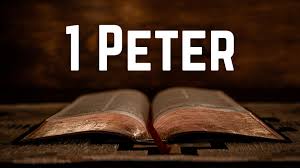
Currently I am teaching the saints from one of my favorite men in the early church: Peter. Peter’s two New Testament letters are short epistles that are dense with wisdom. Why are Peter’s letters so important for us? For at least three reasons, they are crucial:

  • They speak to the reality of suffering as a Christian
  • They speak to the issue of maintaining an eternal perspective amidst temporal trials
  • They speak to the issue of the meaning/purpose of trials

This week, we are focusing on verses 3-5 from chapter 1. Those three verses read as follows:

“Blessed be the God and Father of our Lord Jesus Christ! According to his great mercy, he has caused us to be born again to a living hope through the resurrection of Jesus Christ from the dead, to an inheritance that is imperishable, undefiled, and unfading, kept in heaven for you, who by God’s power are being guarded through faith for a salvation ready to be revealed in the last time” (1 Pt 1:3-5).

Context, Context, Context: You remember the historical context out of which Peter’s writing, don’t you? It is A.D. 62-63 and Peter’s writing from Rome, Italy (called “Babylon” in Peter’s letters because of its moral rottenness and corruption). As just one example, “She who is at Babylon, who is likewise chosen, sends you greetings, and so does Mark, my son” (1 Pt 5:13).

In the immediate context, Peter writes to “elect exiles” (1 Pt 1:1) who are scattered across what is modern-day Turkey. In the larger context, Peter writes to believers of each generation who are likewise elect exiles in a hostile culture. His purpose is straightforward: to encourage the saints to endure because God’s mission will triumph, but that mission entails suffering.

That’s where verses 3-5 of chapter one are so foundational. Peter reminds Christians/elect exiles of important doctrines that undergird the gospel’s triumph:

  • God is the first cause. That is, God “caused us to be born again to a living hope” (1 Pt 1:3). This is not some man-made decision; it’s God monergistic work.
  • The resurrection of Jesus Christ from the dead is the proof of Jesus’ identity and the ultimate reason for the hope Christians have (1 Pt 1:3-4).
  • God does not lose any of those who are truly Christians (1 Pt 1:5). We are safe because “by God’s power” we “are being guarded through faith for a salvation ready to be revealed in the last time” (1 Pt 1:5).

Encouragement: In church history, Peter is known as the apostle of hope. I hope that you find encouragement in the truths Peter unfolds in his two New Testament epistles. I hope you will find encouragement in this and the following installments. And I hope you’ll experience the transforming gospel for which Peter laid down his life.

Chaplain Daily Touchpoint #358: Wise Fear

Introduction: Probably like many military service members through the ages, I was fascinated by larger-than-life military figures as a child. When I was a high school boy in Atlanta, my A.P. sophomore English teacher introduced me to a love affair with reading–especially narratives about soldiers and Marines in the Vietnam War. When I read Going After Cacciato as a sixteen-year-old boy, that launched me into all things soldierish. I read the novels and memoirs of Philip Caputo and Tim O’Brien and other writers.

I devoured the movies, too, typical of boys fascinated by war and military things. I viewed Apocalypse Now, The Bridge On the River Kwai, Full Metal Jacket, The Deer Hunter, Deliverance, Platoon, etc. more times than I should have. Then I of course watched all the Rambo films, too; I loved the stories of what war can do to certain men, what the men’s larger contexts were regarding why they served, where they came from, what their childhoods were like, etc. I was consumed by it all. I served in our high school’s R.O.T.C. program and the rifle team, etc. I have always been a good shot, so I excelled in marksmanship. (Now that I’m a chaplain, it’s difficult not to be envious of the other guys when they’re shooting on the ranges, and I am officially a non-combatant, and not allowed to bear arms as clergy. But that’s a discussion for another time.)

My point so far is straightforward: I have been drawn to soldiers’ stories for as long as I can remember. And one of the characteristics that often came through all (or at least most) of the novels, memoirs, and movies was that soldiers must deal with fear. They are to be brave. We call it intestinal fortitude, courage, resolve, grit, and any number of other titles. But we all understand what the message is: soldiering hinges upon courage and bravery.

Connection: This morning I was meditating upon Proverbs 10:27. It reads as follows: “The fear of the LORD prolongs life, but the years of the wicked will be short.” I was wrestling Jacob-like in my mind over the issues involved in the relationship of courage and what I call wise fear. There is, in my view, a type of fear that is wise to inculcate.

We are, according to Scripture, to fear the Lord. The Bible teaches the “fear of the LORD is the beginning of wisdom” (Pr 9:10a). The beginning of wisdom. The genesis. The starting point. In other words, we must put first things, well, first. We must get our theology (our doctrine of God) correct. We must know God accurately and in accordance with how He’s revealed Himself.

Encouragement/takeaway: So what does wise fear of God have to do with soldiering, bravery, and courage? Everything. When I look at the shelves of books I have read over these many years, rows upon rows of those volumes are stories of men who encountered staggering obstacles. Sometimes those men were crushed by them. Sometimes they adopted postures of bravado and other innocent men died due to fools being in charge. Sometimes the men pressed on step-by-step and overcame formidable odds. And sometimes God quickened soldiers and showed them Himself in ways that taught them that He was their rock and redeemer. The wise soldier–whether in the jungles of Vietnam or on the mission fields of today–is to fear the Lord.

Chaplain Daily Touchpoint #357: The Sadness of Secularism


“For secularism, all life, every human value, every human activity must be understood in light of this present time. . . . What matters is now and only now. All access to the above and the beyond is blocked. There is no exit from the confines of this present world” (R.C. Sproul). 

That is truly a sad reality. You came from nothing; you’re a cosmic accident; you’ve no transcendent purpose; solipsism is your worldview; and extinction is your destiny. But that’s what secularism rests upon. Christianity, on the other hand, reveals the emptiness of secularism, and explains origins, meaning, morality, and destiny. That’s what Sproul and Boice spent their ministries doing, namely, trying to shine the light of truth on the utter emptiness, contradictions, and sadness that are inextricable from secularism in contrast to the redemptive, transcendent, coherent worldview of biblical Christianity.

I was reading a book recently by James Montgomery Boice. The title was Renewing Your Mind In a Mindless World. Like Boice’s other books, it was a rock-solid read. The issue Boice explored in this particular volume were the first two verses of Romans 12. They read as follows:

I appeal to you therefore, brothers, by the mercies of God, to present your bodies as a living sacrifice, holy and acceptable to God, which is your spiritual worship. Do not be conformed to this world, but be transformed by the renewal of your mind, that by testing you may discern what is the will of God, what is good and acceptable and perfect. (Rom 12:1-2, ESV)

In my circles, those verses are so familiar I don’t think I could ever forget them. I have read them and heard them so often, they’re ingrained in my intellectual DNA.

In the atheist Richard Dawkins’ book River Out of Eden: A Darwinian View of Life, the author writes:

The total amount of suffering per year in the natural world is beyond all decent contemplation. During the minute that it takes me to compose this sentence, thousands of animals are being eaten alive, many others are running for their lives, whimpering with fear, others are slowly being devoured from within by rasping parasites, thousands of all kinds are dying of starvation, thirst, and disease. It must be so. If there ever is a time of plenty, this very fact will automatically lead to an increase in the population until the natural state of starvation and misery is restored. In a universe of electrons and selfish genes, blind physical forces and genetic replication, some people are going to get hurt, other people are going to get lucky, and you won’t find any rhyme or reason in it, nor any justice. The universe that we observe has precisely the properties we should expect if there is, at bottom, no design, no purpose, no evil, no good, nothing but pitiless indifference.

Questions: No design? No purpose? No evil? No good? Nothing but pitiless indifference? Think about that, will you. Do you honestly look at anything and think to yourself, “Yup, no design to that BMW. Those gears just happened to be assembled like that”? or “I sure do love my children, but I know they’re actually just cosmic accidents, just grown-up pond scum in sneakers”?

No sane person thinks that way. Why write a book trying to convince others of truth claims in a worldview where there’s only pitiless indifference? On what basis should we esteem Dawkins’ thoughts? After all, thoughts are just molecules in motion, physical brain fizz bubbling on the surface. Effluvia.

Encouragement/takeaway: In the biblical worldview, however, man is not a cosmic accident. He is the creation of the infinite-personal Creator God who forms all people in their mothers’ wombs (Psalm 139:13). We were made for God. God “put eternity into man’s heart” (Ecclesiastes 3:11). Why? So that we would go to God. As a contemporary Christian hymn expresses it, “You were made for more.” He who has ears to hear, let him hear.

Chaplain Daily Touchpoint #355: Don’t Underestimate

Introduction: This is a second segue into Galatians, Paul’s letter defending his apostleship, and the absolute imperative of heralding the true gospel and not some false gospel (which is no gospel at all). 

In verses 11-17 of chapter 1 of Galatians, Paul spells out just a bit of his intellectual pedigree prior to God’s converting him. Paul writes that he “was advancing in Judaism beyond many of [his] own age among [his] people, so extremely zealous was [he] . . .” (Gal 1:14). 

In 2 Corinthians, Paul revealed a little more of his background:

Are they Hebrews? So am I. Are they Israelites? So am I. Are they offspring of Abraham? So am I. Are they servants of Christ? I am a better one—I am talking like a madman—with far greater labors, far more imprisonments, with countless beatings, and often near death. Five times I received at the hands of the Jews the forty lashes less one. Three times I was beaten with rods. Once I was stoned. Three times I was shipwrecked; a night and a day I was adrift at sea; on frequent journeys, in danger from rivers, danger from robbers, danger from my own people, danger from Gentiles, danger in the city, danger in the wilderness, danger at sea, danger from false brothers; in toil and hardship, through many a sleepless night, in hunger and thirst, often without food, in cold and exposure. And, apart from other things, there is the daily pressure on me of my anxiety for all the churches. Who is weak, and I am not weak? Who is made to fall, and I am not indignant? (2 Cor 11:22-29)

Paul’s point was not to exalt himself but to make much of Jesus. “[F]or the sake of his (Jesus’) name,” is the way Paul phrased it in Romans 1:5. Paul was not impressed with Paul. He knew his own sin. “Wretched man that I am! Who will deliver me from this body of death?” (Rom 7:24). 

Paul was by all historical accounts an intellectual giant among men. He wrote and spoke multiple languages; he studied philosophy, religion, and poetry; he knew literature and the history of thought, etc. But after God saved him, his boast was only  in the gospel of Christ: “But far be it from me to boast except in the cross of our Lord Jesus Christ, by which the world has been crucified to me, and I to the world” (Gal 6:14). 

The Issue: Why did Paul have to defend his apostleship so vehemently? Because it defies human explanation how such a zealous persecutor of Christians was transformed from a murderous Pharisee into an evangelist, pastor, church planter, and unparalleled defender of Christianity, that’s why. 

He writes in Galatians, “And I was still unknown in person to the churches of Judea that are in Christ. They only were hearing it said, “He who used to persecute us is now preaching the faith he once tried to destroy.” And they glorified God because of me” (Gal 1:22-24). 

From persecutor to pastor; from murderer to missionary; from hater to herald . . . that’s the apostle Paul. 

Encouragement/takeaway: I have no idea who reads these, but I bet that if you’re a believer, you have at least one person on your heart and mind often, a person you long to reach with the saving gospel. Don’t give up. Press on in the faith and labor to be faithful. Why? Because if we were wagering, I bet we would not have put our money on Paul ever being converted. We would likely have said, “Not that guy. He’s beyond saving.” 

But God, dear ones. But God. Don’t underestimate God. He takes our rags and turns them into riches, out of his sheer grace. Our duty is just to be faithful with the message.

Chaplain Daily Touchpoint #354: Depth of Character

Issue: A Fundamental: How and Why to Appreciate Depth of Character

Context: The New Testament letter of Galatians is one of my favorite books of Scripture because it deals with fundamentals. In the late 40s A.D. Paul had been accused by false teachers of not being a true apostle. Apostle means “one who is sent” or “messenger” or who personally saw the Lord Jesus. Paul was not one of the 12 disciples. Paul was later personally blinded and converted and granted spiritual sight by the Lord Jesus himself in Acts 9. (Superscriptions in Acts 9 in English read “The Conversion of Saul” to aid understanding of the metanarrative of what’s happening there.) The Pharisee Saul was born again by the sovereign grace of God, and his name was changed from Saul to Paul, and he was commissioned as the apostle to the Gentiles. Why? Because the Jews were spiritually hardened due to their rejection of the Messiah Jesus (Romans 11:25-26).

The Fundamentals in Galatians: Paul’s depth of character was evident in sundry ways. First, his humility. Paul had been a particularly zealous man as a Pharisee. You would not have wanted to have engaged in intellectual combat with the Pharisee Saul of Tarsus. But God’s grace humbled him permanently. Saul became Paul, just like Jacob became Israel—not by human effort or accomplishment but by the sovereign grace of God. Prideful Saul was transformed into the servant/pastor/missionary Paul. Second, his wisdom. When you deal with Pauline writings in Scripture, you are cast into a sea of wisdom that is perhaps best expressed by Paul himself: “Oh, the depth of the riches and wisdom and knowledge of God! How unsearchable are his judgments and how inscrutable his ways!” (Romans 11:33) and “For from him and through him and to him are all things. To him be glory forever. Amen.” (Romans 11:36)

Encouragement/takeaway: When humility and wisdom are united in one person, the fundamental character of the person is deepened. That fundamental depth of character attracts quality in others. May the tribe of such saints increase.

Chaplain Daily Touchpoint #353: Dostoyevsky’s Wisdom

Sometimes Dostoyevsky’s surname name is spelled with a y by translators into English from Russian. Other translators sometimes omit the first y. It does not really matter for my purposes here. I just wanted to acknowledge that issue of spelling.

I’m on a Dostoyevsky kick again. When I fell in love with reading as a boy, it was largley through the great 19th century British masters like Dickens and Hardy. But I also discovered Dostoyevsky and the other Russian masters. They wrote long books, sometimes near a 1,000 pages. But they’re more than worth the investment of time required to plumb their depths.

In The Brothers Karamazov, Dostoyevsky wrote (among countless other gems): “They [the progressives/atheists/humanists] think to order all things wisely; but having rejected Christ they will end by drenching the world with blood.”

In other words, it’s Christ or chaos–always. Man will either worship the truth or an idol. If there’s no god above the government, government is your god. If there’s no god above the state, statism is your religion. If man is the measure of all things, it’ll come down to brute power of which man will rule. Again, it’s Christ or chaos.

That’s why Dostoyevsky’s line is so packed with wisdom. The secularists spout emotive bromides about progress, brotherhood, and human rights, yet the murders continue unabated. Ask the Christians in Nigeria how tolerant other worldviews are towards them. So much for tolerance.

We can kick against reality, but reality does not disappear just because we don’t like it. It’s there. Folks can and will hate the truth of Christianity, and yet it endures because its King walked out of the grave after three days, despite added Roman guards at the tomb of a corpse.

Folks can mock, deride, and slander–but the truth endures. Why? Because it’s Christ or chaos.

Again, listen to Dostoyevsky: “They [the progressives/atheists/humanists] think to order all things wisely; but having rejected Christ they will end by drenching the world with blood.”

Chaplain Daily Touchpoint #352: Doing the Right Things for the Right Reasons

Bottom line up front: Doing the Right Things for the Right Reasons

Intro: One of the greatest of satirists, Ambrose Bierce, wrote the following: “Politics: A strife of interests masquerading as a contest of principles, the conduct of public affairs for private advantage.”

That qualifies as a mic drop in my book. Regardless of our political affiliations, I’m sure we could all agree that politics is, to employ an oxymoron, pretty ugly. I have a couple of cousins who are lifelong lawyers, but one of them is very drawn to politics. I love my cousins, and have many fond memories of fishing and hunting together when we were all boys in middle GA, and of being together during holidays over at Momo and Granddaddy’s house for the best food this side of anywhere. If you know what iron skillet-baked cornbread is with fatback in the collards, we may be of the same ilk. Anyway, we were all boys in those days but I would not trade those times for anything. They are sweet, sweet memories.

But I wonder sometimes what it is that draws some folks to politics. I know Christians are commanded to pray for our leaders and those in authority. Scripture is clear (Rom 13:1-7; 1 Tim 2:1-2). But as for me, I just could not pursue politics. I think it comes down to one’s motives, really. Do we do the right things with the right reasons? Motive is key. What’s one’s motive? Do we really aim for genuineness and selfless service or is politics exactly what Ambrose Bierce said it is? You might be able to infer my instinctual answer.

Encouragement: When Paul was passing his baton of ministry to Timothy, he (Paul) wrote, “The aim of our charge is love that issues from a pure heart and a good conscience and a sincere faith” (1 Tim 1:5). That’s foundational. In modern parlance, it’s doing the right things for the right reasons.

Chaplain Daily Touchpoint #351: The Road Taken

Introduction: No, it’s not the Robert Frost poem I have in mind here. It’s instead Solomon’s writing in Proverbs: “Do not envy a man of violence/and do not choose any of his ways,/for the devious person is an abomination to the LORD,/but the upright are in his confidence” (Proverbs 3:31-32).

Questions:

  • Why might the Lord speak through Solomon’s pen that Christians are not to envy a man of violence?
  • Why is wisdom rooted in not choosing any of the violent and devious person’s ways?

Answers:

  • True to the form of Hebrew literary parallelism, the second half of the construct answers the first section’s question. As to why might the Lord speak through Solomon’s pen on whom not to envy, it’s because we’re mimetic by nature. We all look to examples. I have certain men I esteem more than others. And those men had their men whom they emulated. We’re all imitators. Anyone who says he/she isn’t is dishonest. Imitation is not bad in and of itself. It’s about imitating the proper role models.
  • As to why we’re not to envy the man of violence or the devious person, it’s because the moral character of such people is that of rottenness. God calls them an abomination in verse 32 of Proverbs 3.

Encouragement/takeaway: In Scripture, we are told by the apostle Paul not only whom to imitate, but also why: “Be imitators of me, as I am of Christ” (1 Cor 11:1). We’re to have wise, proper, godly paradigms, the ultimate of whom is Christ for the believer. In the same way that Solomon taught whom not to emulate (and also why not to emulate certain types of people), Paul taught the same thing, but in positive language. The wisdom should be clear: those we choose to emulate reveals a lot about our own values and what we deem important. Are those values wise, biblical, and redemptive or are they foolish, anti-biblical, and corrupting? This is the issue, or, to return to the title, the matter of the road taken.

Chaplain Daily Touchpoint #350: Yes, God Hates (& that’s a good thing)

Introduction: We live in a world of simulacra, emojis, and memes. Depth can be hard to find. It’s the age of shallowness, that’s certain. But there is at least one emoji I admit to relishing: it’s the one of having one’s mind blown. It looks like this:

I use it often when, paradoxically, something is mind-numbingly stupid. I just shake my head and go, “Lord, have mercy.” Or as older generations were wont to say, “Bless your heart,” a genteel way of saying you’re less than bright.

Questions: Have you ever heard folks say, “God is love”? Sure. Some folks might even allude to the actual text from 1 John 4. The entire verse 8 reads, “Anyone who does not love does not know God, because God is love.” But the first part of that verse, much less the larger context of the entire passage, is usually dropped, and all we hear is the “God is love” part, clipped from the rest of the context.

But when’s the last time you heard that God hates, too? I’d wager it’s not often, if ever. But guess what? God does hate. His hatred pervades Scripture, in fact. Here’s just a small sample:

  • Proverbs 6:16-19 lists more than half a dozen things God hates:

There are six things that the Lord hates,
seven that are an abomination to him:
haughty eyes, a lying tongue,
and hands that shed innocent blood,
a heart that devises wicked plans,
feet that make haste to run to evil,
a false witness who breathes out lies,
and one who sows discord among brothers.

  • In Psalm 5, David writes, “You [God] destroy those who speak lies; the LORD abhors the bloodthirsty and deceitful man” (Psalm 5:6).

Proverbs 8:13 says, “The fear of the LORD is hatred of evil/Pride and arrogance and the way of evil and perverted speech I hate.”

Encouragement/takeaway: Here’s the point, dear ones. It’s a good thing that God hates because it’s hatred of evil that reveals God’s utter holiness. If He did not abhor what is evil, He would not be good. Hell, therefore, is a good thing, because it demonstrates God’s holiness and hatred of evil and His love of righteousness.

To return to the above reference to the emoji of having one’s mind blown, that’s why I appreciate that particular simulacrum. It reveals how utterly shallow it is when people say utter “God is love, love, love” bromides divorced from the biblical witness. God is love, yes; but God loves holiness and abhors sin. That’s why God’s hatred is a good hatred. “Brothers, do not be children in your thinking. Be infants in evil, but in your thinking be mature” (1 Corinthians 14:20).

Chaplain Daily Touchpoint #349

Bottom line up front: The Spiritual Rock Is Christ

Introduction: As military chaplains, our bread and butter is ministry to Soldiers, authorized Civilians, and their Families. That ministry, per Army regulation, reads as follows: “As a professional military religious leader, the chaplain must have the capability to perform or provide religious support that accommodates the Soldier’s right to the free exercise of religion, and support resilience efforts to sustain Soldiers, Family members, and authorized Civilians” (AR 165-1, 2-3, Section 1).

Relevance: One of the vital realities of military chaplaincy is laboring to bring to the table spiritual resilience. The reason is straightforward. Where do we turn in times of crisis? Family? Friends? Battle buddies? Fellow vets? Exercise? Yes, to all of those, of course. But what if they’re insufficient? Does it not make the most sense to turn to the Creator of heaven and earth, the One who knows all things, the One who knit us together in the womb?

Scripture Speaks to This: In 1 Corinthians 10, Paul writes of Old Testament believers. You know what Paul says of them and of how they endured, and regarding to whom they turned for spiritual resilience? Here it is: “and all drank the same spiritual drink. For they drank from the spiritual Rock that followed them, and the Rock was Christ” (1 Corinthians 10:4).

Encouragement/takeaway: In short, the manna from heaven, the water from the rock, the light before, behind, and above them, was Christ. Christ was and is near to all who call upon him. The spiritual rock is not a thing but a person, and he has a name. It’s the name above all names, in fact (Philippians 1:9). No sort of psychological mumbo jumbo will suffice. We don’t need spiritual gimmicks but the crucified and risen Savior.