Got home today for a day, and piddled in the woods around the house some.
Some of the critters came out to say hi, as is our pattern.
The buck was still in velvet, and the does were browsing.




Got home today for a day, and piddled in the woods around the house some.
Some of the critters came out to say hi, as is our pattern.
The buck was still in velvet, and the does were browsing.
Topic: Genuine connection.

“Whenever you go out, walk together, and when you reach your destination, stay together,” wrote one of my favorite theologians many years ago. It speaks just as powerfully now as it did in the 300s when he wrote it.
The idea revolves around genuine connection. The irony of our day is that technology has connected the world but simultaneously torn us asunder. The image that invariably comes to mind is when I am in the nation’s airports. I love to watch people. And what I am about to write is the absolute truth: I will put down the book I am reading between flights and watch the people for minutes at a time. Almost always, no one is making eye contact. Why? Because their eyes are bent downward onto an illumined screen. It is either a phone or a laptop. Just try the experiment yourself next time you have the opportunity. People will sit right next to one another, but not talk. They will put their heads down and scroll, scroll, scroll. Sometimes I think if someone were to burst into flames, others would not extinguish the flames but hit the record button on their gadgets and post it on the internet.

Technology has been a massive blessing in so many ways, of course. But my prayer is that we don’t jettison the human connection that is essential if we are to live lives of depth and not just breadth.
Encouragement: Technology comes from the Greek word techne (τέχνη). Its corollaries are art, skill, and craft. May we be a people who have the wisdom to know that our gadgets should connect rather than divide us, because human and divine connections are ways in which the Author of life blesses his creation.
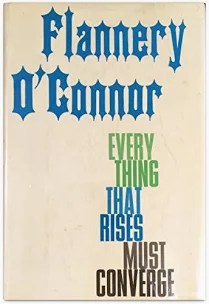
Bottom Line, Up Front: O’Connor recognized that most people live as if shame is to be eradicated. “Ashamed of Shame” summarizes O’Connor’s biblical anthropology. “Man-centeredness is king,” boasts our culture. Glory to man in the highest!
Truth Remains: The half-brother of Christ penned, “For you are a mist that appears for a little time and then vanishes” (James 4:14b ESV). The psalmist wrote, “For my days pass away like smoke, and my bones burn like a furnace” (Psalm 102:3 ESV).
But perhaps the most direct: “Man in his pomp yet without understanding is like the beasts that perish” (Psalm 49:20 ESV).
We Suppress to Our Judgment: I finished O’Connor’s volume of masterful short stories again this week. I should not say I finished them; I reread them with immense appreciation. She saw man’s problem; we think we are smartest, that we have outwitted our Maker. But that is the pot calling the Potter a fool, and that only reveals the pot’s hubristic folly.
“Lord, have mercy,” remains one of the true church’s most necessary prayers, for we–breath by breath–reveal why we merit God’s justice.
Holy God, have mercy, for if you give us justice, we perish. And the justice that follows is just that–just.
Flannery, I love and appreciate you. We grew up just miles apart, and I know your zip codes like the back of my hand. Thank you for employing your gifts to quicken a deaf and blind people.
Bottom Line, Up Front: Sin diminishes both individuals, nations, and epochs but righteousness honors the Lord and finds favor from the Author of life.

Our Days: The behaviors of some men and women at the opening ceremony of the Olympics in France this month mocked the Christian ordinance of the Lord’s Supper at levels that stagger the senses of both believers and unbelievers. We are living amidst a time where crassness is celebrated, and godliness and humility are derided. Speaking just for myself, it breaks my heart. Why? Because I have studied history enough to know that vileness of this level merits the judgment of God, and God is not mocked, because what man sows, he reaps. “Do not be deceived: God is not mocked, for whatever one sows, that will he also reap” (Galatians 6:7, ESV). Generally speaking, people do not fear God. And that is dangerous, folks. We did not create ourselves (we all have birthdays and navels), and we are therefore foolish when we spit in the face of the holy and divine.
Historical Example: In 2 Kings, Manasseh made a lifestyle of doing “evil in the sight of the LORD” (2 Kings 21:2). He built altars to demons; he sacrificed children; he dealt in necromancy and witchcraft; he mocked God. 2 Kings 21 is one of the darkest chapters of the Bible. But it’s there for our instruction and warning. We’re to learn not to be foolish, but to repent and return to the Lord. That’s the hallmark of wisdom, you will remember: “The fear of the LORD is the beginning of wisdom” (Proverbs 9:10a, ESV).
Encouragement: I heard someone say recently that we have reached a tipping point in our culture. And then he uttered this zinger: “It’s revival or bust.” I think he is right. As for me and my household, we want to be part of “the good guys,” because God is the Author of all that is good, beautiful, and true. And I pray with all I have that God will raise up courageous truth-tellers who will count the costs and be found faithful at such a time as this. Because we are flirting with judgment of biblical/cosmic proportions.

Introduction: This evening as I arrived back at my work location after a brief blessing of time with family, church, friends, and fellow soldiers, I was eager to reread one of the most profound books of Scripture–Isaiah. This evening I was struck once again by Isaiah 57:15:
15 For thus says the One who is high and lifted up,
who inhabits eternity, whose name is Holy:
“I dwell in the high and holy place,
and also with him who is of a contrite and lowly spirit,
to revive the spirit of the lowly,
and to revive the heart of the contrite (Isaiah 57:15, ESV).
Doctrine: God is transcendent; he is ‘above’ us creatures and all of creation in every sense. But he is simultaneously ‘amidst’ us via his immanence. He came to us via the incarnation. He is both exalted and also knowable. He is terrifyingly beautiful and powerful, but at the same time, he calls us sinners to himself.

He is, in sum, both above and amidst. And when we come to understand that, and be gripped by that, it satisfies hungers we have to worship the majestic and be known by the One who knows us better than we know ourselves, and yet still loves us. Christ came to the world for sinners:
15 The saying is trustworthy and deserving of full acceptance, that Christ Jesus came into the world to save sinners, of whom I am the foremost. 16 But I received mercy for this reason, that in me, as the foremost, Jesus Christ might display his perfect patience as an example to those who were to believe in him for eternal life (1 Timothy 1:15-16, ESV).
Encouragement: God is both above and amidst, and he calls us sinners to respond in repentance and faith, and he bids us welcome.
Much to my chagrin, houses are being built all around us, and so the deer are discombulated, looking around as if in lamentation. A few of them remained with me this morning as I picked up downed limbs from the wind and litter left by construction workers.




The mom (at the back of the last picture) looks out. I do, too, lovely lady, and miss the trees and forest that were there only days ago.

Bottom Line, Up Front (BLUF): David’s forgiveness of his and God’s enemies is a picture of God’s forgiveness of sins of all those who flee to Christ in repentance and faith.
Historical Context: Wicked King Saul had committed suicide (1 Samuel 31:4); David had been anointed by Samuel to be the rightful king, the one of God’s choosing (1 Samuel 16). Now the king of Judah, what might you think David would do? What would a wise ruler do?
Listen to 2 Samuel 2:1: “After this David inquired of the LORD . . . .” Remarkable. If he had been a lesser man, he would have made everything about himself. He would have been narcissistic. He would have found himself amidst braggadocio.
But that’s not what we see. David knew he was a great sinner; he never got “too big for his britches,” if you will. He knew his promotion was all of God’s grace.
What’s more, David forgave his and God’s enemies, and even praised the ones who had been loyal to King Saul, wicked though he was, while he (Saul) had been the people’s ruler. In other words, don’t miss this: the king was forgiving sinners. Sound familiar? Sound like the gospel?
Encouragement: When we recognize that we are sinners, we come to understand and grasp the profundity of what it means to be debtors to the grace of God. It’s the gospel right there in 1-2 Samuel, guys, and it is beautiful to behold.
Bottom Line, Up Front (BLUF): Our theology inescapably manifests in our choices.
Illustration: 1 Samuel 16 is the classic passage of David being anointed king (God’s choice) over and against wicked King Saul (the people’s choice):
The LORD said to Samuel, “How long will you grieve over Saul, since I have rejected him from being king over Israel? Fill your horn with oil, and go. I will send you to Jesse the Bethlehemite, for I have provided for myself a king among his sons” (1 Samuel 1:1, ESV).

Questions: Why not Saul? Why was he rejected? What theological views did Saul demonstrate that revealed his true nature? And what was it about David? How was he so crucially different from Saul?
Saul failed to live as God’s man, a king who reflected God’s good rule and reign over his people. Saul had an outward appearance that was only a veneer; his heart and mind were never converted to the ways of God. He was “all suit,” we might say, but devoid of godly substance.
And why David? David was of the tribe of Judah, a precise type and forerunner of the ultimate King of kings who would come (Christ). David was a shepherd by nature. David, though a great sinner, was a converted man. David was God’s choice.
Encouragement: We sinners tend to look on what Scripture calls the “outer appearance” (1 Samuel 16:7 ESV). We tend to fall for sound bites and talking heads. Many people are pimped by smooth talkers like Saul. They lack biblical discernment and therefore get the leaders they merit.
But God intervenes, you see, graciously, to provide leaders of his choosing, and graciously acts to call a people to himself, to point the way to the King of kings, the only One who is totally faithful and true (Revelation 19:11, ESV).
Precept for Reflection: Why is gratitude so linked to joy/fulfillment?

One of my favorite writers penned this line: “O Thou who has given us so much, mercifully grant us one more thing–a grateful heart” (George Herbert).
Have you ever met an inveterate malcontent, someone who traffics in resentment and anger? Usually, ingratitude is not far from the picture. Ungrateful people tend to be quite sad people. And grateful people tend to manifest joy/fulfillment.
Sure, we all have reasons to be resentful, angry, and sad over injustices, unfairnesses, or misdeeds done to us; I am no stranger to those feelings either. But if we allow those emotions to overwhelm us, they atrophy the joys we might otherwise discover.
Scripture: I appreciate Scripture’s teaching on this issue. Paul was writing from prison. (Don’t miss that: prison!), and he penned these words: Finally, brothers, whatever is true, whatever is honorable, whatever is just, whatever is pure, whatever is lovely, whatever is commendable, if there is any excellence, if there is anything worthy of praise, think about these things (Philippians 4:8, ESV).
I am no Pollyanna; I’m quite aware of human nature and of what we call in theology human depravity. But I’m also aware of the role of gratitude for the blessings that come to us by the kind providence of God.
Encouragement: Yes, the world is a mess. Yes, we’re amidst a cultural/values civil war in the West. Yes, these are times charged with peril. How much more important, then, is it that believers manifest gratitude for being able to bear witness to the good news that God has come to save sinners? And we certainly qualify for that label.

Introduction of Theme: It is as old as time itself, this lesson, but we minimize it to our peril: “Pride goes before destruction, and a haughty spirit before a fall” (Proverbs 16:18 ESV). But wicked King Saul did not learn that until it was too late for him. God removed the kingdom from Saul and anointed the man (David) after his (God’s) own heart. God, in other words, installs leaders but also removes them.
Context: God had commanded Saul to “devote to destruction all” that they (the Amalekites) had. Israel was not to spare them, but to be fully obedient to wipe out the Amalekites because of their great wickedness. Israel was supposed to be faithful to do what God had called them to do; part of that was vanquishing evil and the ways of wickedness (1 Samuel 15:1-3).
Saul’s Sins: But Saul was not faithful to do what God commanded. Saul “spared Agag and the best of the sheep and of the oxen and of the fattened calves and the lambs, and all that was good, and would not utterly destroy them” (1 Samuel 15:9 ESV).
But there is another crucial verse in chapter 15 I think we often overlook. It’s verse 12b: “Saul came to Carmel, and behold, he set up a monument for himself and turned and passed on and went down to Gilgal.”
To whom did Saul erect a monument? To himself.
Saul’s god was himself, and it cost him the kingdom.
Encouragement: God delights in exalting the humble and humbling the proud. “Whoever exalts himself will be humbled, and whoever humbles himself will be exalted” (Matthew 23:12 ESV).
 MIND & MATTERS