Willful Blindness: Thoughts Upon 1 Samuel (Pt. 1)

‘Willful blindness’ is “a legal term that describes when someone intentionally avoids knowing facts that could make them liable for a wrongful act. It’s also known as conscious avoidance.”

Putting one’s head in the sand, in other words, so as not to see what should otherwise be obvious to the honest and seeing person.

Over recent days I have again read 1 Samuel with profound appreciation. 1 Samuel addresses so many issues that pertain to us each and every day. It addresses leaders. It addresses pastor-shepherds. It addresses selfishness vs. selflessness. It addresses pride vs. humility. It addresses, perhaps above all, one of the most enduring themes in literature and history–the contrast between appearance and reality. Let me explain.

in 1 Samuel 14, Jonathan (the son of wicked King Saul) was the real deal. He was a good man, a warrior, a follower of the one and only true God, and he served as the foil to his despicable father, Saul, who was the opposite of his son–a wicked man, a moral coward, a false convert, etc.

In the fourteenth chapter of 1 Samuel, Jonathan goes out with his armor-bearer to battle the pagan Philistines. Jonathan and his armor-bearer are given victory by the Lord, and it appeared that God was vanquishing the enemies of God via his servant Jonathan.

But this is where Jonathan’s wicked father Saul intervenes. He makes it about him (Saul), not about God. And this is how you recognize, how you see the false shepherd. He’s in it for himself, not for the sheep.

If you’re not willfully blind, you will see it. Saul said, “Cursed be the man who eats food until it is evening and I am avenged on my enemies” (1 Samuel 14:24a ESV). See what Saul did? He made it all about himself. The Philistines were not so much God’s enemies as Saul’s enemies. Saul’s concern was his own legacy rather than the glory of God and faithful stewardship of the sheep.

If that were not clear enough, the chapter ends with this: “There was hard fighting against the Philistines all the days of Saul. And when Saul saw any strong man, or any valiant man, he attached him to himself” (1 Samuel 14:52 ESV).

See it? Saul was a moral coward and so he hid behind strong men, valiant men, that he thought would serve as shields amidst his machinations and schemes. And in the very next chapter, God rejects Saul.

He who has ears to hear, let him hear (Matthew 11:15 ESV).
Muse: The Music of David Crosby

It's been a long time comin'
It's goin' to be a long time gone.
Appears to be a long time,
Yes, a long, long, log time
Before the dawn.

Turn, turn any corner.
Hear, you must hear what the people say,
You know there's something that's goin' on here,
That surely, surely, surely won't stand the light of day.
And it appears to be a long,
Such a long, long, long time before the dawn.
Speak out, you got to speak out against
The madness, you got to speak your mind,
If you dare.

But don't try to get yourself elected.
If you do you had better cut your hair.
'Cause it appears to be a long time,
Before the dawn.

It's been a long time comin',
It's been a long time gone.
But you know, the darkest hour,
Is always just before the dawn.
And it appears to be a long time,
Such a long, long, long time before the dawn.

Here’s a video of David performing towards the end of his life:

I do not go with his politics.

Do not.

But he had a gift for harmony, for melody, for writers, and for getting to the heart of those who love lyrically rich music.

Miss you, David. And … thank you.

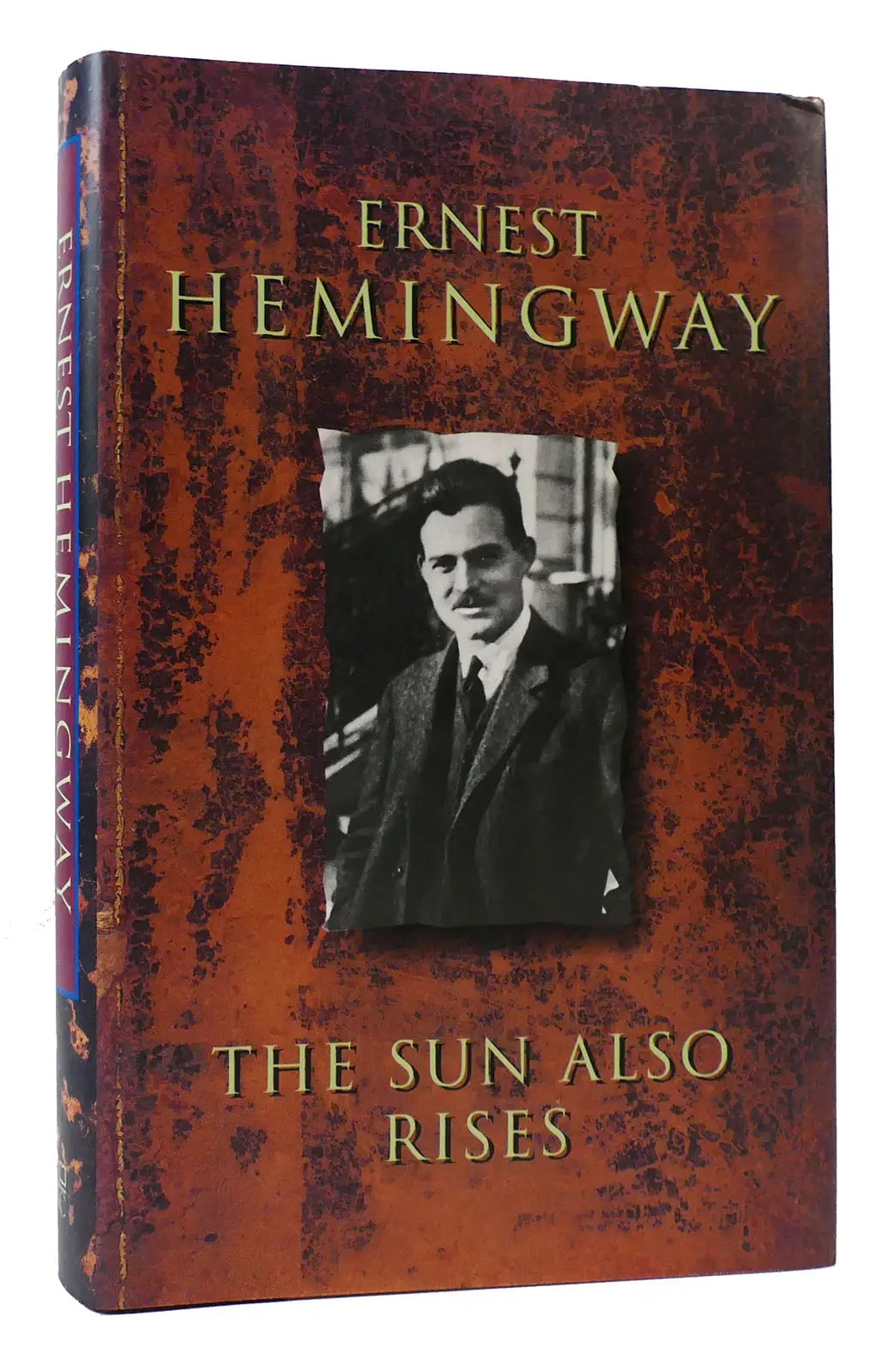
Thoughts upon Hemingway’s The Sun Also Rises (again)

Due to the fallout, delays, and cancellations related to the most recent Microsoft/CrowdStrike attack, and the ensuing ‘interferences’ (let the reader understand; it is coming again around election time, just watch), I read Hemingway’s breakthrough novel The Sun Also Rises again. This is my fourth or fifth time through it, I think, and probably my favorite so far.

I especially appreciate the inscription at the beginning of the book from the King James Version of Scripture. It is taken from Ecclesiastes, my enduring favorite of the 66 books of Scripture:

One generation passeth away, and another generation cometh; but the earth abideth forever… The sun also ariseth, and the sun goeth down, and hasteth to the place where he aros… The wind goeth toward the south, and turneth about unto the north; it whirleth about continually, and the wind returneth again according to his circuists…. All the rivers run into the sea; yet the sea is not full; unto the place from whence the river come, thither they return again.

All the goeth and whirleth and turneth Elizabethan English is gone, but the principles of Ecclesiastes are clear as ever.

I prefer Hemingway’s short stories (that was his strongest work, in my estimation), but he cuts right to the point in The Sun Also Rises, too. The story explores “the lost generation,” of post-WWI writers and artists, those who endured the effects of WWI’s massive horrors, and who felt empty and lost, exiles from Eden.

Though Hemingway never appeared to repent and flee to Christ in the gospel, he did at least dramatically illustrate how so many go through life, skating upon the surface, and he proved exactly what Solomon taught in Ecclesiastes, about the ephemerality of so many people’s lives–just going through the motions until it’s too late.

More Cyber ‘Glitches’: Delayed in Seattle

“Your flight was cancelled. Our apologies. Delta.”

That was the email I received. Then, when I got to the airport, returned my rental car, and tried to figure out what to do, it got even more interesting. My flight was truly cancelled. Not delayed. Just completely cancelled. Well, this was becoming more fun by the minute. My checked luggage was ostensibly going to Atlanta, but how would it or I arrive back at post?

I pulled out my laptop and tried to see if the ‘news’ sites could bring any clarity or help. As close as they came was to write that Microsoft/CrowdStrike were responsible. Okay, but what price will Microsoft/CrowdStrike pay for cancelled flights, delayed flights, lost luggage, sleeplessness, rental car expenses, Ubers, etc? I’m guessing $0.

I went to a coffee kiosk, purchased a black coffee and sandwich, and sat down. Breathe. Again. Breathe.

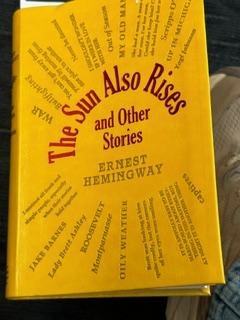
I finished my items, and knew I needed to find a bookstore. Fortunately, Seattle’s airport had a decent bookstore with a Classics section. I found a volume containing Hemingway’s debut novel as well as a few of his short stories. I have now read almost the entire thing through as I try to grin through this lovely adventure courtesy of Microsoft/CrowdStrike, and see when exactly I might return to post.

For now, though, I am finishing up the wonderfully sad story of Jake Barnes, Brett Ashley, and the lost generation. How fitting: lost. Kind of like the wisdom of this current situation.

Perspective

“In his hand are the depths of the earth; the heights of the mountains are his also. The sea is his, for he made it, and his hands formed the dry land” (Psalm 95:4-5 ESV).
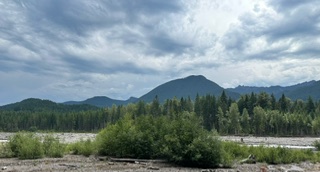
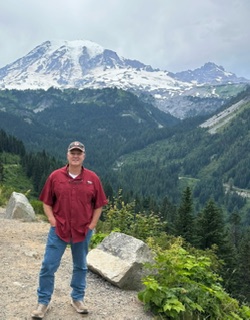
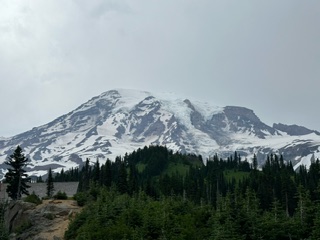
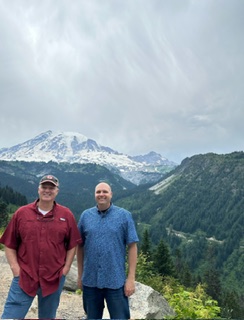
Pictures from Washington (Pt. 2/2)

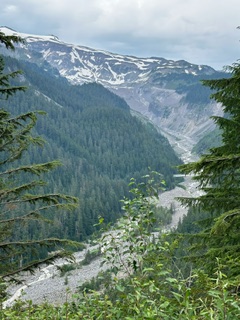
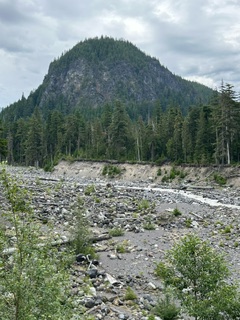
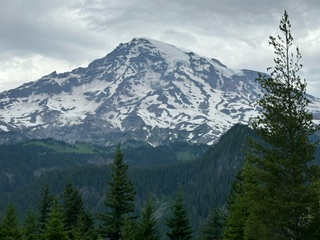
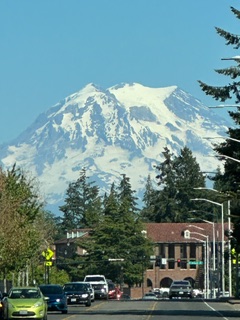
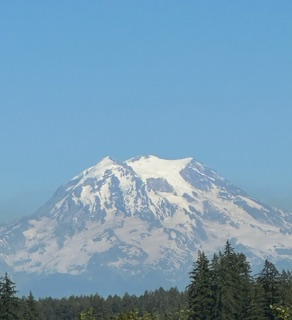
“Of all the fire mountains which, like beacons, once blazed along the Pacific Coast, Mount Rainier is the noblest” (John Muir, 1901).

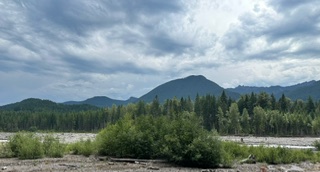
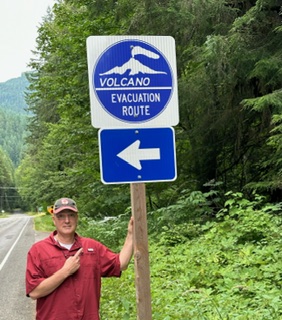
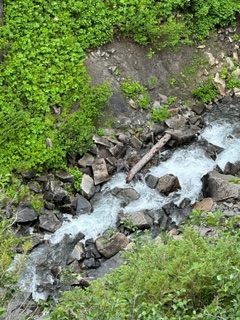
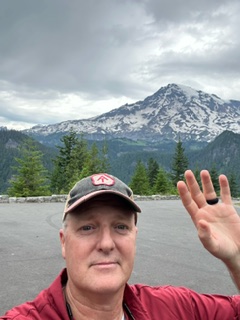
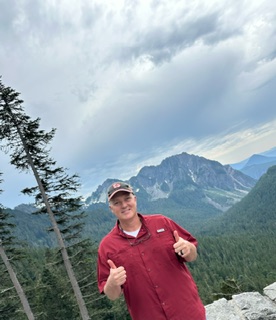
Mt. Rainier and surrounding areas. In a word, spectacular:

Thankful for the afternoon to hang with a few peers from the Army and Air Force and explore the Seattle/Tacoma/Mt. Rainier area. Great views, good food, and solid fellowship. My cup is full.

Pictures from Washington (Pt. 1)

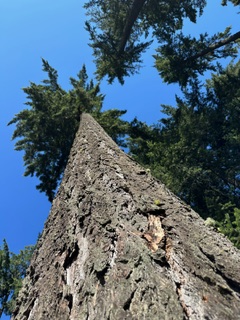
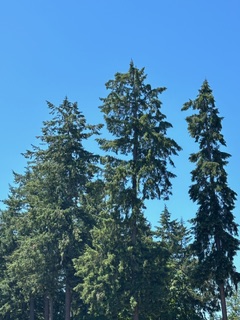
Am grateful to be able to train with fellow chaplains out West. Mt. Rainier towers over us with its rugged rocky snowy presence. The meadows below burst summertime colors like something out of an e.e. cummings poem. The Ponderosa pines stand majestic and straight with bark so large its layers appear like vertical rivers.

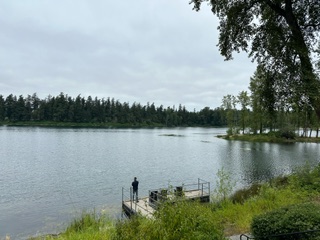
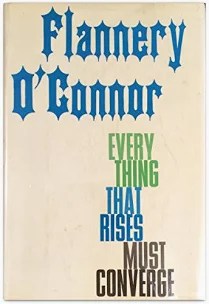
Was able to read some Flannery O’Connor stories during lunch break by a lake where soldiers and families can relish the joys of creation.

Enjoyed a great steak dinner tonight with peers who have similar callings in ministry. Thankful for these guys and for the opportunities we have to reach those who might not otherwise hear the gospel.

On the way to the track, this is the view (not too shabby):

On the flight in:

When I was walking last evening, this was a view from near the aviation unit:

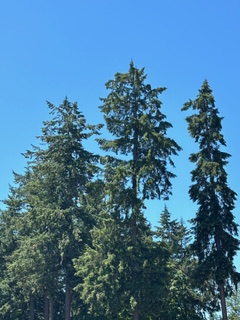
I am in love with the trees out here:

Am headed to hike part of Mt. Rainier some tomorrow with buddies after class. More pictures to come.

O’Connor’s Ruthlessness

On a flight out West I had opportunity to again dare to immerse my soul in the gut-wrenching blood sacrifices that pierce O’Connor’s masterful short stories.

For much of my time, I focused relentlessly upon “Greenleaf,” a situationally ironic surname if ever there was one. Mrs. May, the protagonist, has a low view of most everyone outside of herself and her imagined importance. She looks down upon Mrs. Greenleaf, who prays and prostrates herself on the dirt out in the woods, petitioning the heavens over her own sinful condition, and she pleads for God’s wrath to pass her by.

But not Mrs. May. She’s got it all together. Or so she thinks.

Until a blood sacrifice occurs; until she is pierced by the bull; until she’s bloodied and broken. Then, in the unbearable light, she understands what she’s hated and resisted all along.

*I do not know how one reads O’Connor without coming away in spiritual sackcloth and ashes; she’s that biblical and piercing.

What Story Are We Living?

BLUF: The centrality of knowing one’s ‘ultimate’.

Illustration: Recently I read a book by James K.A. Smith entitled You Are What You Love. In it, Smith penned more than a few zingers, one of which follows: “I cannot answer the question, ‘What ought I to do?’ unless I first answer the question, ‘Of which story am I a part?’” (p. 89).

Connection to Daily Life: Today is a milestone in the military unit I am blessed to serve as chaplain. A great deal of ceremony and speeches will occur; VIPs and dignitaries will be present; cameras will be rolling; and a new chapter of one part of the Army’s continued importance will have its first pages written. It is exciting to be part of it, and to celebrate the achievements and hard work of these men and women. But here’s the thing. It would not have happened without focus and determination. The centrality of knowing one’s ultimate provides the range fans—the left and right limits, if you will—of one’s mission.

Why do we do what we do? Why does anyone do what he/she does? Because each of us is living a narrative—a story—wherein our love has an object. For some, the object of that love is self; for others, it’s recognition; for some, it is stability and structure; for some, it is the glory of God and faithfulness. But each of us is living out a story based upon our ultimate.

Encouragement: When we come to answer honestly the question, ‘Of which story am I a part?’ we can begin to orient ourselves to true north, the unmoving point of reference, whose Word is truth because he is truth himself (John 14:6).

Soldiers’ Stories, Beautiful Women, & Aesthetics

While teaching college undergraduates English literature and writing, I discovered the literary works of Mark Helprin. I owe a debt of gratitude to Hillsdale College. Their English and History professors continue to bless me.

If you love language–especially beautiful language–or if you have ever lost yourself in a Thomas Hardy novel on a rainy Saturday, or read Hemingway’s stories through the night, or wandered your own imaginary heath with Cathy and Heathcliff, or felt P. Caputo or Tim O’Brien in your reading boot soles, Helprin’s words may reach you.