Making a Difference

BLUF: Seemingly ‘small,’ steady steps in the right direction pay dividends.

In a book I read recently, the authors shared the following story:

Charles Francis Adams, nineteenth-century political figure and diplomat, kept a diary. One day he entered, “Went fishing with my son today—a day wasted.” His son, Brook Adams, also kept a diary that is still in existence. On the same day he made this entry: “Went fishing with my father—the most wonderful day of my life!” (Making Sense of Your World, W. Gary Phillips, William E. Brown, John Stonestreet, p. 234).

There are few things I enjoy more than fishing (okay, catching), but you get the idea. So, this illustration hits home with me. When I reflect upon my fondest memories of boyhood, many of them involve time with my stepfather and fishing together. We’ve caught hundreds together. He taught me from my earliest cane poles, then on to Zebco-33 reels, then on to open face/spinning reels, then on to bait casters, etc. I’m sure he grew frustrated with me more than a few times when I was a little fellow, and he’d have to help me. But I’d give anything to recapture those times. On the ponds, rivers, and lakes, it was heaven to me. He probably had no idea how much all those times would shape me for life.

Encouragement:  If you are battling discouragement or think and feel that your efforts are for naught, remember the diary entry from the son in the opening illustration. You are making a difference; let’s just aim for it to be a good and wise difference.
Zinger from Thomas Sowell

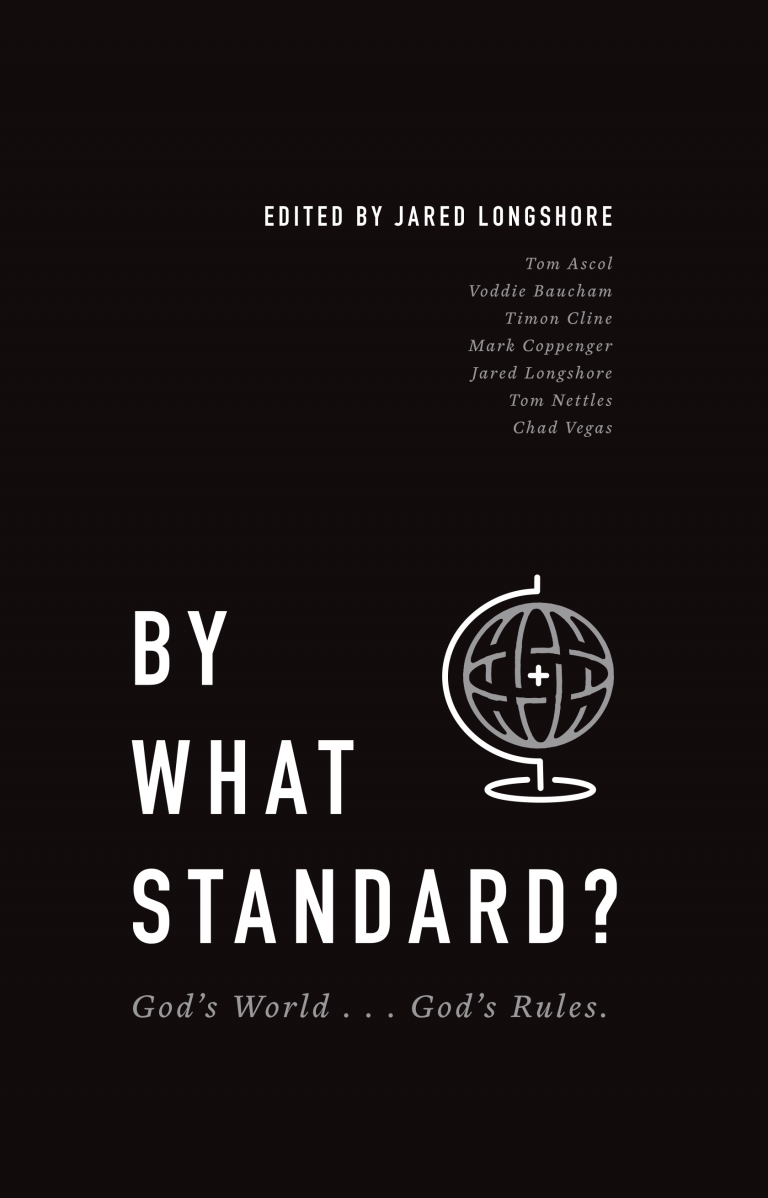
Some time ago I read By What Standard? The men whose writings comprise the book are warriors for truth. I have had some of them as professors, and they are as solid in person as they are on the page.

One of the zingers from this book still sticks with me.

It is from Thomas Sowell: “When you want to help people, you tell them the truth. When you want to help yourself, you tell them what they want to hear.”

Now, that’s a sermon we need to hear and heed.

Why I Still Love Reading Pat Conroy

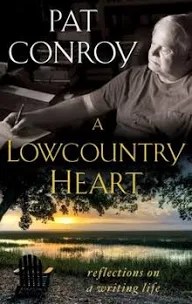
Conroy’s early books were my threshold into a lifetime of voracious reading. Here’s one example from one of his last works of why he’ll always remain special to me:


Here’s what I know: If a story is not told, it’s the silence around that untold story that ends up killing people. The story can open a secret up to the light (Pat Conroy, A Lowcountry Heart, p. 238). 

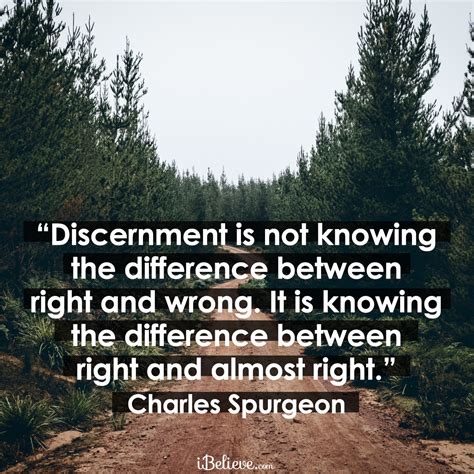
Discernment: Anyone? Bueller? Anyone?

Discern: (verb) To perceive or recognize the difference or distinction between (two or more things); also “distinguish (an object) with the eyes, see distinctly, behold;” also “perceive rationally, understand;” late 14c., from Old French discerner (13c.) “distinguish (between), separate” (by sifting), and directly from Latin discernere “to separate, set apart, divide, distribute; distinguish, perceive,” from dis- “off, away” (see dis-) + cernere “distinguish, separate, sift” (from PIE root *krei- “to sieve,” thus “discriminate, distinguish”).

Illustration: About 10 years ago, I had to get prescription glasses. I have been a voracious reader since my late teenage years, and I had finally crossed that middle-aged threshold when the looming optometry appointment comes and you hear the now familiar questions, “Better or worse? Better or worse?” Through one lens, the picture is blurry. Through the other lens, ah! You can see.

I remember the first set of glasses I got; the optometrist said, “You’ve read your eyes out. Welcome to glasses.” But it has been worth it. With the correct lenses, it’s such a blessing. I can see from Tampa to Toledo without glasses, but when it comes to close distances, to see what is right in front of me, I need the spectacles.

Connection: Since this is true in the physical world, how much more important is it for us in the spiritual world? We need to be able to see what is there. To change to a shooting analogy, we need an accurate sight picture.

One of my favorite Christian ministries is Ligonier Ministries. They took the name of their teaching broadcast from Romans 12:2. “Renewing Your Mind” is the broadcast. Here are God’s words to his people via the pen of the apostle Paul:

Do not be conformed to this world, but be transformed by the renewal of your mind, that by testing you may discern what is the will of God, what is good and acceptable and perfect (Romans 12:2 ESV).

Renewing your mind? Yes. Why? In order to discern.

It’s a command directly from God for his people.

Questions: How are we faring? Does the evidence reveal we are renewing our minds? Are we being a discerning people? To ask the question is to answer it. Where is the prophetic vision, a la Proverbs 29:18? The Lord has called his people to feast upon the deep things of God and his revealed Word, and instead, the masses have chosen to eat cereal and watch cartoons.

A Prayer: ‘Speak, LORD, for your servant hears’, Samuel said. Give your people a heart of wisdom, discernment, and courage. James tells us to ask for wisdom and you, Lord, will grant it. But we know that we must long for it, so will you grant that hunger? Hear the prayer, Lord, for Christ’s great name. Amen.

Trust Deficit?

BLUF: Trust the wisdom of God rather than the lies of men.

Scripture: “The lot is cast into the lap, but its every decision is from the LORD” (Proverbs 16:33).

Contemporary Life:  If you are at all like I am, you may have grown doubtful and/or even skeptical about being able to get the truth about much of anything lately, especially politics. It seems a lot of folks just go into their preferred echo chambers and listen to those with whom they already agree. Meanwhile, the world appears to be unraveling. Political parties are sniping at each other. Political fratricide is occurring. I read a headline recently that referred to it as ‘frenemies’ running the show. It is a scary time, if you think that the cosmos is being run by politicians. But as for the Christian, he knows better. The metaphor in Proverbs 16:33 is of an ancient custom of discerning the will of the Lord in matters, but Solomon puts a wise spin on it, namely, that every ultimate outcome is from God. That is, the cosmos is not ultimately run by those for sale to the highest bidder, or by those whose god is themselves, or by those who foolishly are modern-day Nebuchadnezzars, who think that they’re not going to be humbled and replaced by the God who rules all nations and all things.  

Encouragement: Yes, we are in crazy times, that much is certain, but God will be glorified via the outcome. His way invariably involves judgment of sin, and that is what we are seeing in our day. May we trust the Lord and live in such a way as to reach as many as possible with the good news.

Poetry & Desire: Indicators of the Glory of God

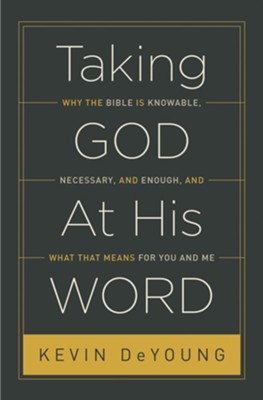
Recently I had another birthday and some friends gave me DeYoung’s Taking God as His Word as a present. I devoured the slim volume. There were several reasons why.

For one, the small book is rich with gems regarding the literariness of the Bible, especially the Psams. The Bible reveals the historical and narrative true story of what God has done to redeem a people for himself. It tells the story of creation, redemption, fall, and restoration. It is the grand narrative that tells the story of why the world is the way it is, why people are the way we are, what God has done to redeem a remnant of people, and of how all humanity will answer to God in Christ.

Second, DeYoung’s volume stresses the fact that the Bible is the standard of truth, because it is authored by the unchanging holy God himself. Those who long for truth, therefore, will long for the 66 books of sacred Scripture, because God is the God of truth.

Third, the book focuses on the sufficiency and authority of Scripture. I appreciated this quote from chapter 2:

You do not need another special revelation from God outside the Bible. You can listen to the voice of God every day. Christ still speaks, because the Spirit has already spoken. If you want to hear from God, go to the book that records only what he has said. Immerse yourself in the word of God. You will not find anything more sure (p. 42).

*A sincere thank you to our friends for this volume. It focused my attention where it should be, and reminds me of the good ways God continually brings joys into my life–through friendship, through books, and through the Author of life and his gospel. I do not think I will read Psalm 119 the same way again, thanks to this volume.

Understanding Christology

There are some books I wish I had written. Sproul’s The Truth of the Cross is such a book. In 150 pages, he covers crucial fundamental theological doctrines regarding the justice of God, definite atonement, fulfillment of prophesies, and more.

If I could give only one book to thoughful seekers, to new Christians, or to anyone who wanted clear biblical answers to existential questions of sin, judgment, election, reprobation, forgiveness, and security, this would be it.

I miss you, R.C. Sproul. Well done, good and faithful doulos.

Stewardship Reflects Theology

BLUF: Stewardship reflects design and the Designer; how we treat creation is directly tied to our theology (doctrine of God).

Illustration: This morning after PT I was driving to work, and the crews were out by the highway I take. Their blaze orange vests, eye protection, gloves, boots, and sweat rags bespoke their mission—to steward the grounds adjacent to the highway. I could hear the weed-eaters buzz as they cut through the Bahia and other grasses and weeds. With the GA humidity, the smell of cut grass was pungent and pervasive. It was already hot and sticky, so muggy in fact that my reading glasses fogged. Yet here were these men, picking up litter, weed eating, and helping take care of the area.

Connection to Scripture: When God created man, God gave him a creation mandate that involved wise stewardship of creation. We were not to worship the earth; we were not to destroy the earth; we were to wisely steward the earth (Genesis 1:28; 2:15).

And later in the Pentateuch, we are taught the importance of wise stewardship: You shall not pollute the land in which you live, for blood pollutes the land, and no atonement can be made for the land for the blood that is shed in it, except by the blood of the one who shed it. You shall not defile the land in which you live, in the midst of which I dwell, for I the Lord dwell in the midst of the people of Israel (Numbers 35:33-34 ESV).

I have been blessed to travel a great many parts of the earth. Some countries and regions are staggeringly clean and beautiful. Switzerland and much of Germany come to mind, as examples. Almost no litter. I have also seen other countries and regions where litter is nearly everywhere. I will not mention the areas, but you might be able to discern them.

The principle, however, is clear: One’s theology directly informs one’s view of creation stewardship. If you think you’re just cosmic dust, then why take care of the planet? But if you’re created in the image of the holy, sovereign, and wise God who has provided you everything to steward well for your good and his glory, it directly affects the way you live.

Encouragement: The Lord knows best. Would we but hear and heed him, we would not need men to pick up litter along the highways because it would not be there in the first place. Our theology directly affects our choices regarding stewardship of creation.

The Difference

BLUF: There is a world of difference between information and wisdom.

Introduction: I am old enough to remember life pre-internet. So old, in fact, that when teachers assigned us students to research a person/event/topic, etc. we had to go to these things called libraries and use a card catalog system. If one were indolent, he might dart straight to the set of heavy pleather-bound encyclopedias along the walls or on rolling carts. It is funny to me now when someone is asked a question about a person/event/topic, etc. the default position by most folks is to ‘google it’. There is a reason Google has amassed myriad data on all its users; Google knows us perhaps better than we know ourselves. But having information, or even easy access to it, is quite a different matter than having and inculcating wisdom. Wisdom involves proper application of accurate information; it involves, if you will, daily living.

Segue: In the book of Proverbs, Solomon portrays two main women throughout its 31 chapters to teach on the differences between folly and wisdom. Listen to how Lady Wisdom speaks: “I love those who love me, and those who seek me diligently find me” (Pr 8:17 ESV). And “Blessed is the one who listens to me, watching daily at my gates, waiting beside my doors” (Pr 8:34 ESV).

Encouragement: We are perhaps blessed unlike previous generations vis-à-vis our access to more information than we could ever sift through as individuals, but information alone is just that; what is always needed is wisdom. It is one thing to be able to use a search engine to excavate data; it is quite another to know how to appropriately use said information.

Ecclesiastes–Always Relevant

Introduction: Today I read Ecclesiastes through twice more. The reasons are as numerous as the aphorisms in Ecclesiastes itself.

I had time to read; nothing substantive was being said where I was. I crave depth, not just verbiage. Say something, but please … do not blather.

Illustration: A few moments ago after a supper prepared by Carrie Jane, once again some of the words from Ecclesiastes 5 washed over me:

When you vow a vow to God, do not delay paying it, for he has no pleasure in fools. Pay what you vow. It is better that you should not vow than that you should vow and not pay (vv. 4-5).

Question: How clear is that? Crystal.

My thoughts turned to the saints from class at church. There are those who are there rain or shine, week in and week out, those we can count on. And that is the diamond in the rough, you see.

As the called-out ones gathered around Scripture, around the Lord, and fellowshipped with one another, we listened to fellow committed Christian pilgrims share. I listened to a precious lady, whose decades of faithful witness speak for themselves, share how she is amidst the throes of cancer but also of how she knows her fellow brothers and sisters are interceding for her.

We listened to seasoned saints share of calling upon the Lord to heal their loved ones of cancer, of waywardness, of heart issues, of ‘accidents’, etc. but sometimes the Lord determined other resolutions than what we finite creatures tend to desire.

And yet we gathered nonetheless around the same truths regarding God’s sovereignty and our dependence upon him as the wise and good shepherd of the sheep.

God has, per Ecclesiastes, no pleasure in fools. If we are his sheep, we will remain. We will persevere. We will not fall away.

There is so much mere blather out there. Words, words, words, as Hamlet expressed. If one were to focus on the negative only, it would be easy to lose hope.

But we are not of those who lose hope. Why? Because God’s people are kept, sustained, upheld, and encouraged by God himself, and by the under-shepherds who care for God’s people.

It is a privilege and a sacred calling to be part of caring for those who make good on their promises–who assemble, who gather, who contribute, who build up the body, and prove themselves to be the bride for whom Christ died and wed to himself.