Lessons from Jonah (Part 1/5)

This week I wanted to focus on main ideas from the Old Testament book of Jonah. Despite its brevity it is a leviathan of theological power. I hope you enjoy.

Context: Jonah was probably written in the 700s B.C. And Christ himself refers to the historical person of Jonah (Mt 12:39-41). Christ clearly believed Jonah and referenced Jonah’s experiences as germane to the Christian gospel. This matters because it reveals once again the coherence of the Bible’s storyline. And Jonah’s strengths and weaknesses speak directly to those who are Christian pilgrims on the way.

Issue # 1: The call to obey God despite human hostility. Jonah was a reluctant prophet. When God called him to go to Nineveh, Jonah rebelled against the Lord. Rather than accepting God’s word, he tried to evade it by literally going the opposite direction. (Jonah 1:1-3). Jonah was determined to go “away from the presence of the LORD” (Jonah 1:3, ESV).

Let that sink in. Jonah was God’s man, God’s prophet. But the scope of Jonah’s ministry was to pronounce God’s judgment to a people that hated Jonah, hated people of Jonah’s ethnicity, and certainly hated Jonah’s message. Perhaps we can cut Jonah some slack for his reluctance. In modern parlance, we might read Jonah’s initial response to God like this: “What? Them? Are you kidding? They’re the worst. They hate you (God), me (your messenger), and most of all your message (repentance of sin and faith in the Redeemer)!”

Encouragement & Application: I could go on, but for today, I just want us to consider and camp out on this one basic principle—the call to obey God despite human hostility.

The world system scoffs at the gospel message, folks. It always has. The New Testament teaches the same truth (see John 15:18-25, e.g.). Therefore, let Christian pilgrims learn from Jonah. God calls his people to go with his message despite human hostility, to count the costs, and to press on.


Young Boys in Velvet

Saw some of the boys who’ll be men in a few years. They came out today to browse after spring showers. Their coats are russet, and their blood-filled, nutrient-rich young racks fat with velvet. These young fellows are ostensibly buds for now. But fall is coming. And the girls will work their magic, and the boys will be less friendly, and the cycle will continue. But for now, it’s just boys in the sunlight, munching on leaves and browsing upon clover and rye, etc.

Thoughts on the Fallout, Why, & the Way Ahead

Introduction: I am nervous about writing anything today because Americans are so polarized over personality. President Trump this and President Trump that … We are amidst tumultuous times, where it seems one man is a lightning rod to easily-provoked people. It’s like America is one big embarrassing Jerry Springer Show.

I don’t know where things are headed. All I know with certainty is that we’re amidst spiritually dark times. It’s a time of hate for so many. Folks are resorting into tribes and tribalistic thinking. As a student of history, what I see is a return of full-blown paganism, similar to the despotic reign of Caligula.

Evidence: We do the same things: child sacrifice, infanticide, sexual deviance, a redefining of terms, a hatred of the Bible (Christianity, in particular), etc.

And you’ll remember that Rome fell. It was not just because of foreign invasion. That was certainly part of it. But mostly it was due to internal moral rottenness. Guess what? We’re in the same kind of sinking ship.

Scripture speaks to this:  When Paul was in prison for his Christian witness (don’t miss that, Christian; persecution has been the pattern always for truth-tellers), he wrote the following … from prison:

Finally, brothers, whatever is true, whatever is honorable, whatever is just, whatever is pure, whatever is lovely, whatever is commendable, if there is any excellence, if there is anything worthy of praise, think about these things. What you have learned and received and heard and seen in me—practice these things, and the God of peace will be with you (Philippians 4:8-9, ESV).

Encouragement: We’re in a mess, yes. But the answer is not a politician, folks. The answer to the sin problem is the Savior. That Savior is Christ. Look to him. Flee to him. Learn from the apostle Paul’s witness. Read church history. Be salt and light to your neighbor, to your coworker, to your child, to your friend, to your enemy. But by all means, stand your ground with grace and truth. Why? Because he who calls you is faithful.

Morality & the Matter of Authorship

Context: I’m redesigning training on Moral Leadership to present to my fellow Soldiers that aligns with what the Army doctrine calls “Spiritual Wellness” and Army Pamphlet 165-19, Moral Leadership. Why? Because worldview is destiny. How one answers the “big questions” shapes the individual, the organization, and the culture. The “big questions,” per James Sire, are issues like the following:

  1. What is prime reality – the really real?
  2. What is the nature of external reality, that is, the world around us?
  3. What is a human being?
  4. What happens to a person at death?
  5. Why is it possible to know anything at all?
  6. How do we know what is right and wrong?
  7. What is the meaning of human history?

To state the obvious, how one answers those questions reveals a person’s worldview. Is a person created in the image of God or is a person simply matter in motion, of no more value than rocks or flotsam? Is truth objective or is it just how anyone ‘feels’ at a given moment? Is something just ‘her truth’ but not ‘the truth’?

These questions are fundamental and unavoidable. Every worldview must grapple with them.

Text: And he said to him, “You shall love the Lord your God with all your heart and with all your soul and with all your mind. This is the great and first commandment. And a second is like it: You shall love your neighbor as yourself” (Matthew 22:37-39, ESV).

Encouragement & Application: There is always a God of the system, folks. Always, there is an authority. And that authority is rooted in the reality of the Author. It’s the root of the word. Who defines the terms defines the world. And when you see an individual, an organization, or a culture purport to define the terms with disregard for God as the authority, you find insanity. Ergo, moral leadership is to be rooted in the holy and wise Author who is goodness and holiness in His very nature. Moral leadership, therefore, invariably hinges upon the locus of authority. Moral leadership, if is to be truly moral, will reflect the author of the true, good, and beautiful, and that is God.

The Look We Got

I had to make a Walmart run for some hotdog buns, mustard, pickles, and a few other common items as I wanted to finish my leftovers from Memorial Day weekend. I found my items easily, spoke with the friendly girl at the cash register, and was exiting through the doors when a man in a wheelchair had a box in front of him that he must’ve dropped, or it had tumbled to the floor by accident. I’m not sure what had happened, but there he was, an elderly black man in a wheelchair, and a box of items he’d purchased, but the contents of the box were scattered all over the exit.

I only had a couple of light plastic bags in one hand, so I set my bags down by the bubblegum machines, picked up the styrofoam cups, plates, napkins, and other items that had fallen from the man’s box. I repackaged them and handed the box to the man. He was so gentle and thankful.

“Thank you, my friend,” he said. We had never met before, but he had the look of a veteran. Then I noticed his cap: Vietnam vet.

“You’re welcome, brother,” I said.

I felt someone looking at us. I looked over my shoulder in the direction of where I felt the stare coming. It was another black man, but he was clearly a civilian and seemed rather miffed at this conversation and at the interaction occurring between me and my new buddy in the wheelchair.

I cannot read another’s heart, of course, but I almost wish we could have spoken longer. I think all three of us learned something that, I believe, we could use more of.

The Timbre of the Testimony

Principle: The Timbre of the Testimony

Introduction: One of my enduring favorite passages of Scripture is Paul’s conclusion to his last epistle. Paul is about to go to his death. He is writing to a man he has mentored for years. He’s telling and showing him that the Christian’s life is a battle, yes, but it is to be waged God’s way. In other words, the tone/timbre/fragrance of the Christian’s walk is to honor Christ.

Consider the opposite behavior, where it’s just rancor and screaming and childishness. This morning, for example, I read the news of how one of the great actors (in my opinion), Robet De Niro, continues to embarrass himself and those whose values align with his. It seems any effort to persuade people of one’s views via rational discourse, logic, and cool heads is off the table for some. They cannot control their emotions, and the fallout is both laughable and sad.

The Alternative: But just listen to how Christianity and the timbre of the Christian’s testimony completely differs from the childishness you see in the world:

11 But as for you, O man of God, flee these things. Pursue righteousness, godliness, faith, love, steadfastness, gentleness. 12 Fight the good fight of the faith. Take hold of the eternal life to which you were called and about which you made the good confession in the presence of many witnesses. 13 I charge you in the presence of God, who gives life to all things, and of Christ Jesus, who in his testimony before Pontius Pilate made the good confession, 14 to keep the commandment unstained and free from reproach until the appearing of our Lord Jesus Christ, 15 which he will display at the proper time—he who is the blessed and only Sovereign, the King of kings and Lord of lords, 16 who alone has immortality, who dwells in unapproachable light, whom no one has ever seen or can see. To him be honor and eternal dominion. Amen (1 Timothy 6:11-16, ESV).

Encouragement & Application: As the culture continues its descent into paganism and cruelty, this is where the metaphors of salt and light of the Christian faith should be most evident. Things are being shaken up in order that the things that cannot be shaken remain, you see (Hebrews 12:28). Just when the world system thinks they’ve shut out the Light, vanquished the Faithful and True, He walks out of the grave three days later and says to Doubting Thomas and to all who will hear: “Do not disbelieve, but believe” (John 20:27). May we be like Timothy, like Paul, like the great cloud of witnesses through the true church’s history by living out a testimony with the timbre of redeeming grace.

The Blessing of Departure

Principle: Some will depart. Departure may be a blessing for the health of the genuine body.

Text: Now the Spirit expressly says that in later times some will depart from the faith by devoting themselves to deceitful spirits and teachings of demons, through the insincerity of liars whose consciences are seared, who forbid marriage and require abstinence from foods that God created to be received with thanksgiving by those who believe and know the truth (1 Timothy 4:1-3, ESV). 

Context: Paul wrote to his child in the faith (Timothy) in the mid-60s A.D. Why? To mentor him, to advise him, to impart wisdom in order to shepherd the congregation at Ephesus well. That was the immediate context. Why? Because shepherding the true sheep involves recognizing and guarding against the false believers (wolves).  

Application & Encouragement: Nothing has changed. Tares still reside right alongside the wheat. Why do false converts remain and sow seeds of false doctrine? Because their “consciences are seared” (v. 2). Because their commander is satanic/demonic (v. 1). 

But there remains a blessing in all this. What is it? A sifting of the genuine from the false. There are those “who believe and know the truth” (v. 3). The wise shepherd is to train himself for godliness (v. 7). That training hinges upon discernment and spiritual courage. 

Willing to Pay

I was reading a book recently on a rainy evening. I think I could just about read forever when the rain is slow and steady outside and coffee is beside me, and the story grasps me.

But this was not a narrative like I usually enjoy on a rainy evening. This was a read on practical theology and Christian living. But what the author wrote has remained with me:

Sin will always cost you, but sometimes purity can cost you, too. But that’s a price that strong finishers are always willing to pay.

The cost of the book was worth it, just for that nugget.

When I look back over the men and women I most respect, those I hold up as heroes for one reason or another, they do share that character trait: they were willing to pay the price, and their reasons were rooted not in vainglory or personal ambition but in goodness and truth and beauty.

And what they paid, they paid in service of and because of that goodness, truth, and beauty.

Keats’ wisdom abideth still.

Ode on a Grecian Urn 

BY JOHN KEATS

Thou still unravish’d bride of quietness,

       Thou foster-child of silence and slow time,

Sylvan historian, who canst thus express

       A flowery tale more sweetly than our rhyme:

What leaf-fring’d legend haunts about thy shape

       Of deities or mortals, or of both,

               In Tempe or the dales of Arcady?

       What men or gods are these? What maidens loth?

What mad pursuit? What struggle to escape?

               What pipes and timbrels? What wild ecstasy?

Heard melodies are sweet, but those unheard

       Are sweeter; therefore, ye soft pipes, play on;

Not to the sensual ear, but, more endear’d,

       Pipe to the spirit ditties of no tone:

Fair youth, beneath the trees, thou canst not leave

       Thy song, nor ever can those trees be bare;

               Bold Lover, never, never canst thou kiss,

Though winning near the goal yet, do not grieve;

       She cannot fade, though thou hast not thy bliss,

               For ever wilt thou love, and she be fair!

Ah, happy, happy boughs! that cannot shed

         Your leaves, nor ever bid the Spring adieu;

And, happy melodist, unwearied,

         For ever piping songs for ever new;

More happy love! more happy, happy love!

         For ever warm and still to be enjoy’d,

                For ever panting, and for ever young;

All breathing human passion far above,

         That leaves a heart high-sorrowful and cloy’d,

                A burning forehead, and a parching tongue.

Who are these coming to the sacrifice?

         To what green altar, O mysterious priest,

Lead’st thou that heifer lowing at the skies,

         And all her silken flanks with garlands drest?

What little town by river or sea shore,

         Or mountain-built with peaceful citadel,

                Is emptied of this folk, this pious morn?

And, little town, thy streets for evermore

         Will silent be; and not a soul to tell

                Why thou art desolate, can e’er return.

O Attic shape! Fair attitude! with brede

         Of marble men and maidens overwrought,

With forest branches and the trodden weed;

         Thou, silent form, dost tease us out of thought

As doth eternity: Cold Pastoral!

         When old age shall this generation waste,

                Thou shalt remain, in midst of other woe

Than ours, a friend to man, to whom thou say’st,

         “Beauty is truth, truth beauty,—that is all

                Ye know on earth, and all ye need to know.”

Spurgeon’s Zinger, Patton’s Insight, & the Wisdom of God: Some Thoughts Upon Spiritual Warfare

“Beware of no man more than yourself; we carry our worst enemies within us,” wrote the powerful Baptist preacher/pastor/soldier for the Christian worldview, Charles Haddon Spurgeon.

I came across this Spurgeon zinger in a book recommended to me by a former pastor of mine. The book, a simple but not simplistic book, is Farrar’s Finishing Strong.

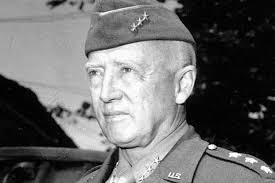
Another zinger from the book is this one from the great American military officer George S. Patton, Jr. Patton wrote, “Untutored courage is useless in the face of educated bullets.”

Satan is wickedly smart. Crafty is the better adjective. He is crafty and wicked. His motives are demonic and he is a liar and thief by nature. He knows how to sabotage us and is determined to shipwreck God’s people. Therefore, God’s people must do battle with the wicked one but by fighting the wise and right way. That wise and right way, of course, is God’s way:

Some trust in chariots and some in horses, but we trust in the name of the LORD our God (Psalm 20:7, ESV).

It was not David’s wisdom and strength that slew Goliath, after all, but God’s. David, after all, went from hero to zero, in many ways. He was anointed king but when he should have been a wise and humble king, he made shipwreck of his testimony in many ways via his sins against Uriah, Bathsheba, his own nation’s armies, and most fundamentally, against God.

In Psalm 51, we see David’s brokenness:

Against you, you only, have I sinned and done what is evil in your sight, so that you may be justified in your words and blameless in your judgment (Psalm 51:4, ESV).

Recently I came through a process where I was highly emotionally invested. I had written papers, studied, read dozens of books, taught scores of students, etc. but I was being questioned by a panel of people who held the exact opposite worldview as I. I believe the God of the Bible. I believe that people bear the imago Dei (the image of God), as recorded in Scripture. I believe that we are created either male or female. I believe marriage is a covenant between one man and one woman for life. I believe we’re to marry and raise children in the discipline and instruction of the Lord.

All of these things are so fundamental, so overt in Scripture, so self-evidently wise that it’s pure folly to kick against their wisdom. But the panel was peopled by three-out-of-four who denied those truths. They rejected the biblical worldview and me as a follower of that worldview.

And I had to come to terms with my rejection. I held a view that simply cannot be tolerated by the secular Left. There’s to be no tolerance for those with biblical values. And this is yet another example of what the Bible means when the 66 books of Scripture illustrate and teach on spiritual warfare.

Believers are told up front that we will be hated:

If the world hates you, know that it has hated me before it hated you. If you were of the world, the world would love you as its own; but because you are not of the world, but I chose you out of the world, therefore the world hates you. Remember the word that I said to you: ‘A servant is not greater than his master.’ If they persecuted me, they will also persecute you. If they kept my word, they will also keep yours. But all these things they will do to you on account of my name, because they do not know him who sent me. If I had not come and spoken to them, they would not have been guilty of sin, but now they have no excuse for their sin. Whoever hates me hates my Father also. If I had not done among them the works that no one else did, they would not be guilty of sin, but now they have seen and hated both me and my Father. But the word that is written in their Law must be fulfilled: ‘They hated me without a cause.’ (John 15:18-25, ESV).

But we’re also told to rejoice:

Blessed are you when people hate you and when they exclude you and revile you and spurn your name as evil, on account of the Son of Man! Rejoice in that day, and leap for joy, for behold, your reward is great in heaven; for so their father did to the prophets (Luke 6:22-23, ESV).

Encouragement: We were told up front, fellow pilgrim; we were told we should not be surprised (1 Peter 4:12). So let us be faithful, trust the Lord, and know that ultimately truth wins.