Values? Yes. But Which Ones & Who Says?

David Foster Wallace wrote, “To function effectively in an environment that precludes everything vital and human is the key to modern life.” True to his timbre, Wallace was a prophetic voice, a John the Baptist with razor-sharp wit, a man crying in the wilderness that is the modern West. His point was that we’re jettisoning the proper values and ingesting toxic values. We’re upside down. We’re calling darkness the light and light the darkness. You remember the prophet’s words, right (cf. Is 5:20)? 

Connection to today: The U.S. Military Academy jettisoned “Duty, Honor, Country!” as the school’s motto. You see, there’s always a god of the system in everyone’s worldview, folks. Who would want the Army’s officers to espouse duty, honor, and country anymore? That’s now passe. But why? Who says? By what standard? 

Modern secularism knows better, you see. That’s the message. The pivot is to the Army Values. Did you catch it? It’s never a question of whether but which. Always, always, always, a set of values is put forth. But which values will they be, that’s the issue? By what standard are values evaluated? Fallen men’s standards? If so, which men? 

I fully support the current list comprising the Army Values. That’s not my point. My point is that there’s always a god of the system, someone whose values are to be followed. If the USMA can jettison its motto and attendant values with the stroke of a pen, on what basis should one think the current Army Values will endure? 

“There is a way that seems right to a man, but its end is the way to death” (Pr 14:12). 

This past week, I was TDY for some training in skillsets we chaplains are still allowed to teach—principles regarding families, marriage, spiritual fitness, and more. I love chaplaincy to my core, I truly do. But we are living through a values revolution in our nation where one set of values will attain dominance. The question is, Which set? Will it be those that reflect what is best for human flourishing because they are rooted in their Creator’s Word, or will they be those erected on shifting sands of human secularism? 

Rejoice in hope: My prayer is that God is raising up courageous and biblical leaders who will live and speak truth to those in power, in full knowledge that we all will answer to the Judge of all the earth who always does what is just (cf. Gen 18:25). May God see fit to raise up another generation of Josephs, of Gideons, of Jeremiahs, of Nehemiahs, and more who know what they believe and why they believe it–because the forces of darkness know, and they show no signs of letting up.


Two Ways of Viewing Death

It is odd the way it happened. I was tired from writing, rewriting, and editing a paper on human development. It is one of the papers I am revising as part of professional development. I quite enjoy research and am a voracious reader, so it was not the work that was wearing me down. I was rather spiritually worn down by the content I again and again discovered when reading academic books that viewed human personality via a clinical lens. Something, I thought to myself, is lost via that approach.

So I pulled my chair back from the desk on which my computer sat. I walked over to a stack of books I keep by my reading chair. I took up a biography of Charles Dickens I’m currently reading. It is superb. But I am admittedly biased; I adore Dickens’ novels.

I am about halfway through this long bio of Dickens. And I was reading of Dickens’ fascination with death. It was a theme that occupied much of Dickens’ literary world. The death of children especially grieved Dickens. And then Kaplan wrote of Dickens’ views regarding death:

Even in Paris, the wages of sin were death, death inexplicable, nontheological, a fact that from childhood on he had had as an obsessive part of his imagination and consciousness. To look at a corpse was to look at the ultimate, most threatening mystery, the body without spirit, the flesh without animating life, turned into meat for carrion, into the infant corpses in Rochester that had seemed to him as a child like pigs’ feet set out in a butcher shop, into the dead river-eaten bodies of suicides fished out of the Thames, into the victims of the devil-rat, Chips, into the corpses preserved by the cold at the great St. Bernard Convent, into the row of dead sibling infants represented for Pip by the small tombstones in the graveyard in Kent. (214-15)

The other view, of course, is the Christian one. In that one, death is not a cessation of consciousness where material becomes worm food. No; in Scripture, we see a vastly different worldview. At physical death, “the souls of believers are at their death made perfect in holiness, and do immediately pass into glory; and their bodies, being still united in Christ, do rest in their graves, till the resurrection” (WSC, A.37).

The way Paul phrases it in his second letter to the Corinthian believers is, “So we are always of good courage. We know that while we are at home in the body we are away from the Lord. Yes, we are of good courage, and we would rather be away from the body and at home with the Lord” (2 Cor 5:6, 8).

The biblical view of human development is so beautifully different from secular clinical views of people and of death. In the gospel, there is hope.

In secularism, there is insignificance and silence. As John Lennon wrote, “no hell below us, above us only sky.” We’re all ‘nowhere men/women’ in that worldview.

As I wrote above, I adore Dickens’ stories. I resonate with his hatred of the enemy, death. But my fear is that he did not go far enough in his thinking. He didn’t come to see that death is swallowed up in victory for all those who are in Christ.

In the biblical storyline, the reason believers have hope is because the Creator Himself laid down His life for His people, submitted to an ignominious death via crucifixion on a Friday in Jerusalem, Israel, but who took His life up again three days later by walking out of a guarded tomb (Why guard the tomb of a corpse, by the way, unless you knew that the corpse had power over death, hell, and the grave?).

These are two very different ways of viewing death–the secular one and the Christian one. The first leads to no ultimate answers. You’re here and then you’re gone. No significance. No objective meaning.

But in the Christian view, you have ultimate answers. You’re here, your actions matter; you are signficant. You have objective meaning. And when physical death takes the Christian, believers will see Him who overcame sin, banishment, and the curse on their behalf.

And now I get to return to editing this paper on human development, but it is with a renewed spirit. It is almost as if even my beloved Charles Dickens’ anthropology was used to remind me of what I know to be true: Death, where is your victory? Death, where is your sting? 1 Corinthians 15 is there; it abideth still. And it is beyond good news.

(2) Minutes at Dawn

This morning before class I was able to enjoy my favorite time of the day. As I sat on the bench, the sun was rising at my 2 o’clock position. Pelicans flew solo and in squadrons above. A lone seagull landed upon a pole. The city was on the left horizon. A breeze blew westward. And for the 90 seconds – (2) minutes captured in these pictures, I don’t know how anyone who is intellectually honest can be an atheist. Creation screams design. The gulls, the fish, the bay, the city, the order, the repetition, the pattern. “Let everything that has breath praise the LORD” (Ps 150:6a, ESV).

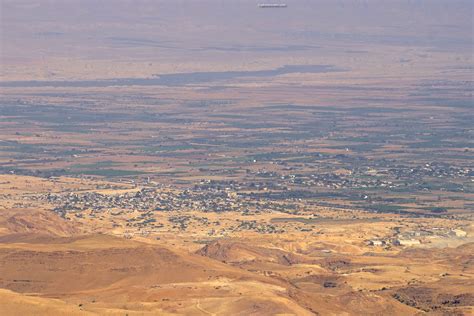
Moses on Nebo: This One’s Personal

I have learned to be reserved in my judgments when I hear people say they’re Christians or they read their Bibles. When you talk to them and ask even the most basic of questions, what you’re liable to hear is “Well, I feel that …” or “In my view, God wouldn’t do _______” or “I think that God is _______.” And what you learn is that their view of God is based upon their feelings, their wants, their desires, and not upon the actual text of the 66 books comprising Scripture.

When I talk to my wife, however, I don’t get that. Follow me as I let you in on a recent conversation we had about Moses, his denial by God, and yet his (Moses’) commendation.

For as long as I can remember, my wife has loved the book of Deuteronomy. It’s the Old Testament book most often quoted by Jesus in the New Testament, of course. It’s the last book of the Torah, the Pentateuch, penned by Moses. Moses was, to be sure, unique and mighty, a mighty man of God.

Anyway, the conversation with my wife went like this:

CJ: I just cried this morning as I finished Deuternonomy again.

Me: Why?

CJ: Moses. He was up on Mount Nebo. After all the struggles he’d put up. After all the years leading the people. And he was allowed to see the Promised Land. But God wouldn’t let him enter … because of his sin. And it just killed me. This was Moses. I just broke down and cried.

Me: I know. It’s heartbreaking.

CJ: All because Moses sinned in his striking of the rock. He didn’t want to give God the glory that time. And God kept him out of the very place to which he’d led the people.

Me: I know. It’s staggering.

CJ: And Moses is called great in the New Testament. We’re told he is in heaven, that he was one of the greatest of men.

Me: Yes, exactly.

CJ: I just love Moses. And I don’t want to be told “No, You can’t enter,” like Moses was. (She cries some more.)

Me: You know this, but I’ll say it anyway. That’s why we flee to Christ. He’s the greater exodus. He’s the One who brings Moses in, who brings any and all in who flee to Him in the gospel. It’s God’s grace from beginning to end. That’s the point: It’s not a human work; it’s a 100% divine work of God’s grace towards sinners.

Encouragement: I have been married several decades now to the same woman. She’s in the Scriptures every day. She’s steeped in prayer every day. And we have such conversations sometimes where, well, all I know how to do is write and try and share the story. And my hope is that you’ll see the encouragement here, and flee to the gospel. We are told that he who finds a wife finds a good thing. When I hear my wife’s tears over the phone, of where she’s been so moved by the closing chapter of Deuteronomy, when Moses’ life was taken by the Lord he served all those years, and yet we’re told in the NT that Moses was a saint, uniquely used by God in his generation, it moves me. And it summons from my heart of hearts one banal but sincere phrase: Thank you, Lord.

Do We Really Want It?

Question: Do we really want God’s active presence?

Anecdote: This morning, I was again in Psalm 67. The first sentence in the poem reads, “May God be gracious to us and bless us/and make his face to shine upon us,/that your way may be known on earth, your saving power among all nations” (Ps 67:1-2, ESV).

Recently I was able to attend a prayer breakfast. 15 Soldiers out of hundreds were present. Some civilians came to provide music. And a dance team was used to artistically dramatize the gospel narrative. And I heard a fellow chaplain for whom I have a great deal of respect speak from Luke’s gospel on the ‘unnaturalness’ of prayer. His point was that the default humanistic position is to live and act in a “I’ve got this” posture. But the oh-so-obvious question one might ask the humanists is, “Well, how’s that working out for you?”

The chaplain was right. God breaks His people in order to restore them. The cross before a crown, if you will. Repentance precedes any restoration and redemption. Prayer is unnatural in that it assumes human weakness and the sovereignty of God. If we didn’t believe God is sovereign, why would we pray?

This all seems so basic, so foundational, that you’d think we all get it. But …

Contrast it with just this first sentence of Psalm 67 above. There we see the speaker in the poem cry out to God in prayer for His blessing, for His active presence, that His face might shine upon them, that His countenance of benediction superintend their ways. And yet when we look out at our culture, what do we see instead? The active suppression of God, the increasing hostility to any ability of heralds of the gospel to inform and shape culture. We have folks that’ll set themselves aflame in D.C. over political leanings while screaming talking points, but where do we see Christian soldiers praying for God’s presence?   

Again, the question: Do we really want God’s active presence? The chaplain was right. Believers need to pray more. We need to be broken and driven to our knees so that we call out for the one and only true God. We need to be brought to the place of the psalm writer when he writes in verse 3, “Let the peoples praise you, O God;/let all the people praise you!”

How are things working out via the humanistic and pagan way? The answer seems obvious. Psalm 67 is so straightforward and so powerful. May we have the wisdom that even the prodigal son eventually came to: humility precedes honor. We need to learn how much in the pigsty we really are as a culture. Because then we will see the Father, the more than willing Father, ready to clothe us in robes and celebrate, “Welcome home.”

(6) Books: (3) Recent, (3) Current

Life without great books would be worse than a tale told by an idiot, signifying nothing. It would remain untold and thereby unshared, which would be worse.

Pictured above are six books. I enjoyed them recently (the Franklin study; Crane’s stories; and Cheever’s masterful novel) and three I’m currently still reading (the Dickens bio; Herbert’s sci-fi tome; and another DeLillo gem).

The Kidd volume on Franklin I deeply enjoyed. I am a big fan of Kidd’s books, so I am biased in his favor, as his interests and mine intersect greatly.

Falconer was amazingly sad but so brilliantly written by the plagued John Cheever that I read it in a 12-hour sitting.

Crane was tough as nails, as ever. I don’t espouse his atheism, but he gets soldiers and military life, and is not afraid to portray the darker and more brutal sides of our nature, and (in his view) the indifference of heaven to our suffering.

For me, Dickens remains among my favorites. I’m going through this bio of him, and it is massively thick but worth every page.

Dune, though I’m not a science fiction guy, was recommended to me. So far, it is okay. I’m sure it will grow on me.

DeLillo’s Players is, true to DeLillo’s angle, his linguistic deftness, and his haunting timbre, right up my alley. I believe DeLillo was and is a prophet, just like Cormac McCarthy was. But so few listen. Again, just as both writers predicted.

The Power of ‘If’

The crucial thing: If

If is vital. It’s a conjunction. In logic, it’s what’s known as the grounds of a conditional statement. If this, then that, for example.

I think we all are mimetic by nature. That is, we try to emulate those we admire, whether they’re still with us or have passed on. Some of the men I’ve most admired are those who kept their cool when many others were squirreling out. It reminds me of one of Kipling’s most famous poems. “If” is the title. It is cute, but wise. Don’t let the light timbre fool you:

If you can dream—and not make dreams your master;   

    If you can think—and not make thoughts your aim;   

If you can meet with Triumph and Disaster

    And treat those two impostors just the same;   

If you can bear to hear the truth you’ve spoken

    Twisted by knaves to make a trap for fools,

Or watch the things you gave your life to, broken,

    And stoop and build ’em up with worn-out tools:

If you can make one heap of all your winnings

    And risk it on one turn of pitch-and-toss,

And lose, and start again at your beginnings

    And never breathe a word about your loss;

If you can force your heart and nerve and sinew

    To serve your turn long after they are gone,   

And so hold on when there is nothing in you

    Except the Will which says to them: ‘Hold on!’

If you can talk with crowds and keep your virtue,   

    Or walk with Kings—nor lose the common touch,

If neither foes nor loving friends can hurt you,

    If all men count with you, but none too much;

If you can fill the unforgiving minute

    With sixty seconds’ worth of distance run,   

Yours is the Earth and everything that’s in it,   

    And—which is more—you’ll be a Man, my son!

So very often the quality of an organization hinges upon the If-factor. That is, if the people are wise, if they are good, if they are faithful, if they demonstrate that calmness of spirit when the wheels are coming off the trains in so many other areas of life–a wise and calm perseverance of spirit and mind are not be underestimated. If is a condition, a crucial one. I’m grateful to have had a few such precious men in my life. May I do likewise and emulate well.

“Whoever restrains his words has knowledge, and he who has a cool spirit is a man of understanding” (Proverbs 27:17).

Not Whether but Which: Values

Introduction: I’ve been a Soldier long enough to have lived through multiple iterations of values the Army lauded. When I was in Basic and AIT at Ft. Knox, we had to memorize such things as the “Three General Orders,” which were:

  • I will guard everything within the limits of my post and quit my post only when properly relieved.
  • I will obey my special orders and perform all my duties in a military manner.
  • I will report violations of my special orders, emergencies, and anything not covered in my instructions to the commander of the relief.

Some lessons just stick with you, regardless of the passage of time.

I also remember vividly knocking out pullups before and after chow in those fun days when we’d shout, “Duty, Honor, Country … Hooah!” before the drill sergeants PTd us some more … just for grins and giggles.

But I look out today and sometimes wonder about my nation’s Army of the future. When I joined, I didn’t join for what the Army could do for me, as naïve as that may sound. I really did join because I wanted to be part of something noble, be part of a team, serve my country, travel the world (even the less-than-ideal locations), and be part of America’s history … but in a good and helpful way, not in a way to tear it down. To some that may sound sentimental, but that was me. I loved saying the pledge. I love standing for my country’s anthem. If not in uniform, I still put my hand over my heart. When in uniform, I of course, turn towards the nearest display of my country’s colors and render a salute.

The acronyms are legion in the Army. We have the Army VALUES: Loyalty, Duty, Respect, Selfless Service, Honor, Integrity, and Personal Courage.

As a chaplain, one of my favorites that’s ingrained in my heart of hearts is one we have in the Chaplain Corps: Nurture the living; Care for the wounded; Honor the fallen.

But as Dylan penned decades ago, the times, they are a-changing. The reasons young people join America’s Army are often quite different now. And ideas of selfless service have often fallen on hard times. Now, unless college, grad school, bonuses, and perks attend enlistment promises, our recruiters often find themselves nervous about making quotas.

Encouragement: But here’s the encouragement I try to give myself and others: Values are inescapable; it’s just a matter of which set of values a culture (and its individual members) follow. But there’s always a God of the system, a set of values recognized as the ones to follow.

I know we are a deeply troubled, divided, and politicized nation. Anyone who is honest recognizes that. But my prayer for my country (and your country) is that we recognize good values from bad ones, and have the humility to humble ourselves under the one true God who is truth Himself so that He might form America to what she can be and what her Founders intended.